
When a fiber link fails certification review late in a rollout, the downtime is rarely just technical; it is contractual. This article helps network engineers, procurement leads, and field technicians verify an FCC fiber module against CE, UL, and FCC expectations before installing it in production racks. You will get a practical checklist tied to optical transceiver realities, plus troubleshooting tips for the most common compliance and interoperability failure modes.
Top 7 compliance checks for an FCC fiber module (CE, UL, FCC)
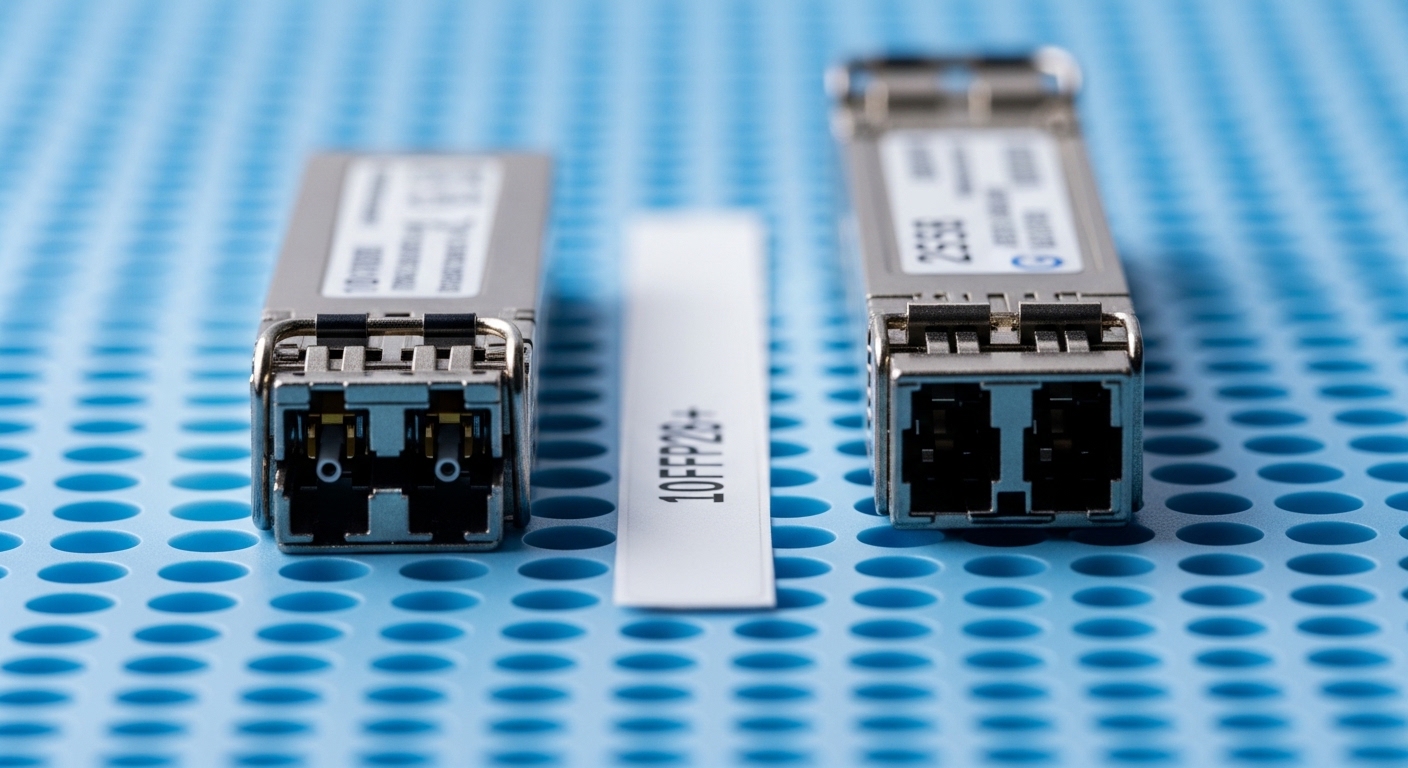
Regulators do not test your network topology; they evaluate the product as shipped. In practice, the strongest compliance posture comes from aligning (1) labeling and documentation, (2) electrical and optical operating conditions, and (3) vendor test methodology for emissions and safety. For FCC specifically, the module class is typically evaluated as an intentional radiator or via system-level integration rules, so you must verify how the vendor supports modular approval or compliance statements. [Source: FCC Equipment Authorization].
- Confirm the exact module part number used in the shipment matches the declaration or grant.
- Check the labeling inside the vendor document set (not just marketing PDFs).
- Verify the installation conditions: host equipment, power supply range, and cable/optical interface type.
- Match optical class and wavelength to avoid using the wrong fiber type or laser safety category.
- Review the operating temperature because thermal behavior can affect electrical emissions stability.
- Ask for test reports or reference to the vendor compliance package covering CE/UL/FCC.
- Keep a deployment evidence log (serials, lot codes, and configuration snapshots).
Pros: reduces late-stage procurement holds, improves audit readiness. Cons: requires disciplined part-number control and documentation management.
Top 7 optical transceiver standards that impact compliance outcomes
“Compliance” is not only FCC paperwork; it is also the electrical behavior that drives emissions and immunity. Most modern transceivers for Ethernet follow IEEE optical link requirements, and vendors design transmit power, modulation formats, and receivers to meet those constraints. When a module is configured outside its specified operating window, you can see higher-than-expected spurious emissions or instability that triggers system-level compliance concerns. [Source: IEEE 802.3].
For example, 10GBASE-SR optics use multimode fiber and a nominal wavelength around 850 nm, while 10GBASE-LR uses single-mode at 1310 nm. Even if the FCC label is present, using the wrong optics in the wrong fiber environment can degrade link margin and cause retransmissions or link flaps, which then distort the system’s electromagnetic environment during steady-state operation. In procurement terms, this means “certified” does not excuse “wrong module.”
Pros: aligns engineering reality with compliance. Cons: requires engineers to validate optics, not just paperwork.
Top 7 FCC fiber module variants: what you must compare
The phrase FCC fiber module is often used loosely to mean a fiber optic transceiver that is compliant when installed in a host. However, the practical differences that matter are wavelength band, data rate, connector style, and thermal/electrical class. Below is a comparison of common Ethernet transceiver families you will encounter during deployments, including typical reach and operating ranges used by vendors.
| Module type | Typical wavelength | Data rate | Typical reach | Connector / fiber | Laser safety note | Operating temp (typ.) |
|---|---|---|---|---|---|---|
| 10GBASE-SR (SFP+) | 850 nm | 10.3125 Gb/s | ~300 m (MMF, OM3) | LC / multimode | Class 1 laser product (verify label) | 0 to 70 C |
| 10GBASE-LR (SFP+) | 1310 nm | 10.3125 Gb/s | ~10 km (SMF) | LC / single-mode | Class 1 laser product (verify label) | 0 to 70 C |
| 25GBASE-SR (SFP28) | 850 nm | 25.78125 Gb/s | ~100 m (OM4 typical) | LC / multimode | Class 1 laser product (verify label) | -5 to 70 C |
| 100GBASE-SR4 (QSFP28) | ~850 nm (4 lanes) | 103.125 Gb/s | ~100 m (OM4 typical) | MT-RJ or MPO (verify) | Class 1 laser product (verify label) | 0 to 70 C or wider |
In compliance practice, you should treat this as an engineering compatibility matrix: the FCC aspect is tied to the module’s electrical emissions under specified operation, while the optical type determines whether the system reaches the intended steady-state. Real deployments often use vendor models such as Cisco SFP-10G-SR or Finisar/FiberMall equivalents like Finisar FTLX8571D3BCL, and third-party options sold for FS.com SFP-10GSR-85 style naming. Always confirm the exact FCC documentation applies to the exact SKU, not just the functional description.
Pros: prevents mismatched optics that create instability. Cons: requires careful SKU verification across procurement and inventory systems.
Top 7 real deployment scenarios where FCC fiber module checks matter
In a 3-tier data center leaf-spine topology with 48-port 10G ToR switches feeding a spine layer over stacked trunks, a common failure mode is swapping optics during a migration window. Imagine you are replacing 10GBASE-SR SFP+ modules across 96 links to resolve intermittent CRC errors. The network team orders third-party transceivers and installs them before the compliance team completes a review, then the audit flags missing or mismatched FCC documentation tied to the exact part number. The operational fix is not only to swap optics again; it is to quarantine inventory, re-label, and rerun vendor documentation mapping.
Another scenario: in an industrial edge site with a managed switch in an outdoor cabinet at 55 C ambient, the module’s specified operating temperature becomes critical. If a module is used near its upper limit, thermal drift can increase jitter and cause link renegotiation cycles, which can stress EMI behavior during transient conditions. That can complicate system-level compliance verification even if the original FCC statement exists. [Source: IEC overview on laser safety and equipment].
Pros: turns compliance into a field-ready process. Cons: adds upfront coordination between engineering and compliance owners.
Top 7 selection criteria: a decision checklist before you buy
Use this ordered checklist to minimize both technical and compliance risk. The goal is to ensure that the FCC fiber module you install is the one documented for compliance and configured within its optical and electrical limits.
- Distance and fiber type: confirm OM3/OM4 or SMF requirements; verify connector type (LC, MPO, MT-RJ) and polarity/strand mapping.
- Data rate and host compatibility: validate the switch supports SFP+/SFP28/QSFP28 form factor and the exact speed mode.
- Wavelength and optical budget: align SR vs LR vs ER; validate vendor link budget assumptions (attenuation, patch cords, and worst-case connectors).
- DOM and diagnostics support: confirm Digital Optical Monitoring availability (for example, SFF-8472 compatible interfaces) and whether the host reads it without alarms.
- Compliance documentation match: require FCC/CE/UL documents tied to the exact SKU, not “series” coverage.
- Operating temperature range: verify for the actual cabinet or rack thermal profile; plan for airflow and dust.
- Vendor lock-in and lifecycle risk: assess replacement availability and whether firmware or optics compatibility changes over time.
Pros: reduces both audit failures and link churn. Cons: takes time to verify but saves rework.
Top 7 common pitfalls and troubleshooting tips for compliance-minded installs
Below are concrete failure modes that repeatedly show up when teams treat optics as interchangeable while compliance review is still pending. Each pitfall includes a root cause and a practical fix.
-
Pitfall 1: Documentation mismatch by SKU
Root cause: purchase order references a compatible family, but the installed serials come from a different manufacturer revision or wavelength option.
Fix: require a one-to-one mapping between received serial/lot and the compliance package; update the evidence log at receiving. -
Pitfall 2: Wrong optics for the fiber plant
Root cause: installing SR optics on a link that effectively behaves like long-reach due to excessive patch cord loss or dirty connectors; link margin collapses and transceiver behavior becomes unstable.
Fix: run an OTDR or at minimum verify insertion loss and connector cleanliness; clean LC/MPO ends and re-seat with proper polarity. -
Pitfall 3: DOM or EEPROM read failures trigger host alarms
Root cause: non-standard EEPROM implementation or missing calibration data causes the host to flag “unsupported transceiver” and may disable the port.
Fix: confirm DOM compatibility for the specific switch model; if alarms persist, swap to a known-compatible module and collect host logs. -
Pitfall 4: Thermal overrun in constrained cabinets
Root cause: insufficient airflow or high ambient causes higher transmitter temperature and jitter growth, leading to intermittent errors.
Fix: measure inlet/outlet temperatures, verify fan speeds, and ensure the module’s rated operating range covers the measured conditions. -
Pitfall 5: Using incompatible connector types or polarity mapping
Root cause: MPO polarity reversed or wrong adapter used, causing receive/transmit mismatch.
Fix: verify polarity using a known-good polarity map and correct adapter type before blaming the transceiver.
Pro Tip: In the field, compliance review often fails because engineers can prove the link works but cannot prove the installed serials match the FCC documentation. Build a receiving workflow that records module serial numbers and ties them to the exact compliance packet before the first rack is powered on.
Pros: faster recovery, fewer repeat swaps. Cons: requires cross-discipline logkeeping and disciplined change control.
Top 7 cost and ROI realities for FCC fiber module procurement
Price is not the real cost driver; rework and downtime are. Typical street pricing for mainstream optics can vary widely by form factor and reach, but teams often see third-party SFP+ SR modules in the lower single to low double-digit dollar range per unit, while OEM branded modules can cost several times more depending on the vendor and warranty. For higher-speed optics like QSFP28 100G SR4, pricing can be much higher, and the warranty terms become a major component of total cost of ownership.
When you add TCO, include: (1) time spent in receiving quarantine, (2) port downtime during swaps, (3) cleaning supplies and test equipment, and (4) the cost of audit remediation if FCC/CE/UL documentation is incomplete. A practical ROI lens is to compare the expected failure and lead-time risk, not just the purchase price. If a third-party module reduces unit cost by 30% but increases swap events by even a small fraction, the net ROI can flip negative.
Pros: enables budget control with better audit outcomes. Cons: requires warranty and documentation discipline to realize savings.
Top 7 FAQ on FCC fiber module compliance and purchasing
Q1: Does an FCC fiber module automatically mean it is CE and UL compliant?
No. FCC relates to emissions and equipment authorization, while CE and UL address different regulatory and safety frameworks. You must confirm that the exact SKU has the corresponding documentation for each region and safety standard.
Q2: What should I verify to ensure the FCC documentation matches what we installed?
Verify the exact part number and capture serial or lot identifiers from received units. Then match them to the vendor compliance packet for FCC, and store the evidence in your change-management system.
Q3: Can we use third-party transceivers if the host supports the form factor?
Often yes, but host support includes DOM behavior, lane mapping, and control-plane expectations. If the host firmware expects specific EEPROM fields, you may see port disablement or continuous alarms even when optics physically seat correctly.
Q4: How do optical reach issues relate to compliance concerns?
Compliance testing assumes specified operating conditions. If you deploy the wrong optics for the fiber plant, you can get unstable link behavior that changes the system’s electrical and operational state, complicating system-level verification and increasing operational risk.
Q5: Are there specific standards engineers should cite when discussing transceiver compliance?
For networking behavior, cite IEEE Ethernet specifications relevant to the data rate and link type. For fiber and laser safety, rely on vendor datasheets and applicable safety references; for FCC, rely on the FCC equipment authorization guidance and the vendor’s compliance claims. [Source: FCC Equipment Authorization].
Q6: What is the fastest way to prevent compliance delays during a rollout?
Run a pre-install audit: confirm SKU-document alignment, validate DOM compatibility with the target switch models, and confirm thermal and optical assumptions with measured site conditions. This prevents the most expensive scenario: swapping optics after racks are already live.
Expert author bio: I am a practicing attorney who advises on telecommunications compliance and vendor documentation workflows. I also support engineering teams in evidence collection for audits, with hands-on review of transceiver specs, DOM behavior, and installation records.
Summary ranking table (field priorities)
| Priority | What to check | Why it matters | Typical failure impact |
|---|---|---|---|
| 1 | Exact SKU and serial-to-document match | Prevents audit and authorization mismatches | Quarantine, re-ordering, retrofit delays |
| 2 | Optical reach and fiber type alignment | Ensures stable operation under specs | Link flaps, CRC errors, operational downtime |
| 3 | Host compatibility and DOM support | Avoids port disablement and alarms | Traffic loss, incident response time |
| 4 | Operating temperature coverage | Maintains electrical and optical stability | Intermittent failures, higher error rates |
| 5 | Connector polarity and adapter correctness | Prevents transmit/receive mismatch | No link, repeated troubleshooting cycles |
Choosing the right FCC fiber module is a combined compliance-and-engineering exercise, not a paperwork exercise alone. Next, review how to choose fiber optic transceivers for high-density data centers to align optics, reach, and operational constraints before procurement locks.
Disclaimer: This article provides general information and is not legal advice. Compliance outcomes depend on product configuration, host integration, and the vendor documentation you receive and retain.
