
Factory applications break network equipment in ways office environments rarely expose. Vibration, dust, wide temperature swings, and frequent link cycling can turn a “works in the lab” transceiver into a chronic failure. This article helps field engineers and plant IT teams choose rugged industrial optics using real-world specs, compatibility checks, and troubleshooting patterns.
Top 8 industrial transceiver types for factory applications
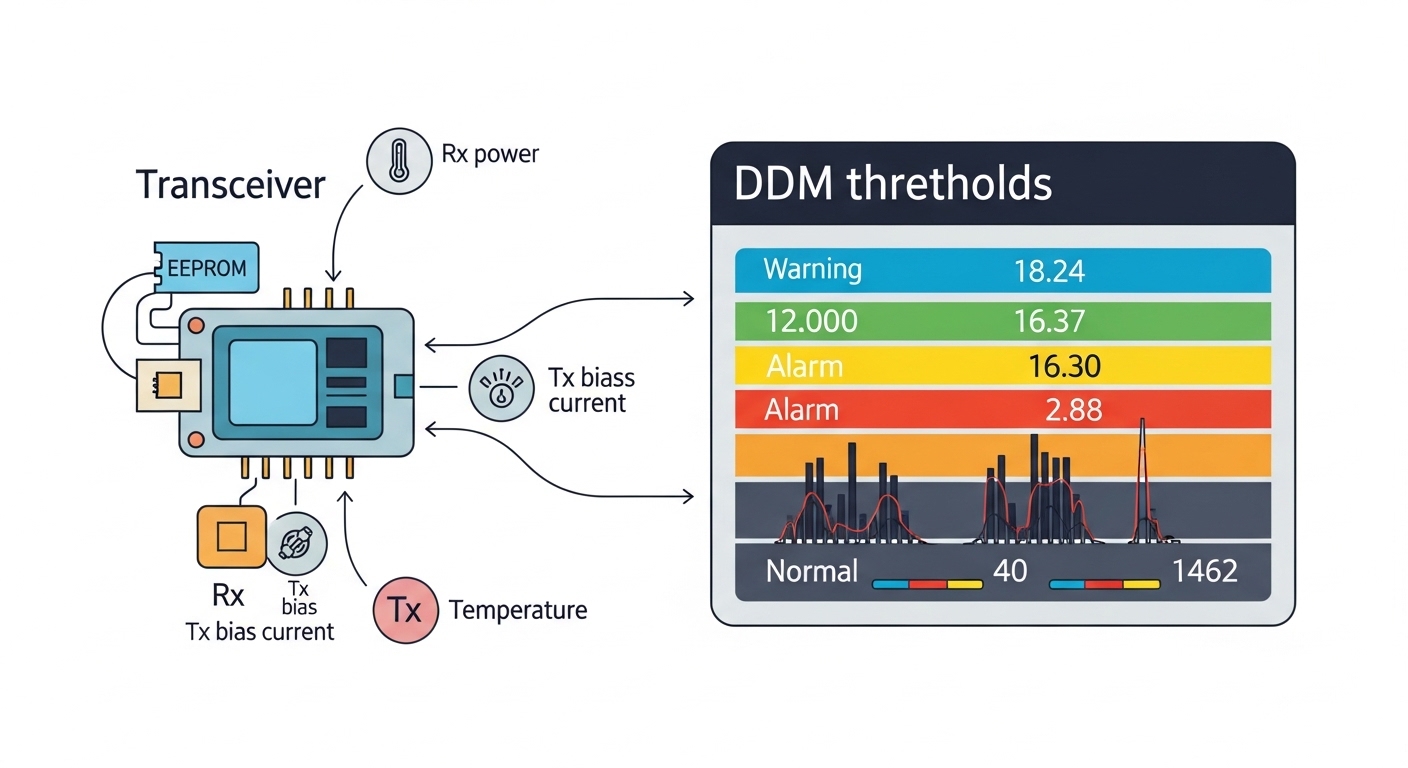
Below are the most common industrial transceiver categories used on plant floors and in industrial control networks. Each item includes key specs, best-fit scenarios, and practical pros/cons for uptime-focused deployments. I assume Ethernet over fiber where electromagnetic interference and grounding practices matter.
10G SFP+ SR for short-reach machine rooms
Where it fits: cabinet-to-switch runs, row-to-row aggregation, and machine rooms where fiber is typically OM3 or OM4. The IEEE 802.3 family supports 10GBASE-SR with multimode optics; vendors commonly ship modules such as Cisco SFP-10G-SR or compatible equivalents (for example, FS.com SFP-10GSR-85, Finisar FTLX8571D3BCL). In my installs, SR modules are a frequent choice when the switch supports SFP+ and the run lengths stay within the multimode budget.
Key specs to verify: wavelength around 850 nm, typical max reach on OM4 often up to 400 m for 10GBASE-SR, and operating temperature depending on the industrial grade (standard commercial modules may be narrower). Connector type is usually LC.
- Pros: low cost per port, strong vendor availability, easy fiber handling.
- Cons: performance depends on multimode quality and patch cord cleanliness.
10G SFP+ LR for 1–10 km plant backbones
Where it fits: linking buildings, crossing protected zones, or reaching a remote cell where pulling multimode fiber is impractical. 10GBASE-LR uses single-mode fiber optics at 1310 nm. In practice, LR modules are a common backbone choice when you want fewer fibers and more distance headroom.
Key specs to verify: wavelength 1310 nm, reach typically around 10 km for LR-class optics, and required fiber type OS2. Many industrial teams also validate receiver sensitivity and budget against measured link loss.
- Pros: long reach, lower modal effects than multimode.
- Cons: requires careful single-mode splicing and connector cleanliness.
25G SFP28 SR for modern leaf-spine upgrades
Where it fits: high-density ToR/leaf links inside data halls, plus industrial aggregation where racks are close but bandwidth matters. 25G SFP28 SR typically uses 850 nm multimode and is attractive when you are consolidating ports and reducing oversubscription.
Key specs to verify: data rate 25G, compatibility with your switch’s SFP28 cage (not SFP+), and reach based on OM4 vs OM3. I’ve found that many “it should work” failures trace back to patch cord type or dirty LC ends rather than the transceiver itself.
- Pros: higher throughput than 10G at similar optics form factor.
- Cons: multimode budget is less forgiving; check link margin.
25G SFP28 LR for longer single-mode hops
Where it fits: industrial backbone links that sit between LR and ER distances, often in the 1–10 km class. 25GBASE-LR uses 1310 nm single-mode. If you expect future bandwidth growth, 25G can reduce re-cabling later.
Key specs to verify: required OS2 fiber, link budget (including splitters and patch cords if any), and temperature range. Industrial deployments often prefer modules explicitly rated for extended temperatures rather than “commercial” parts.
- Pros: scalable bandwidth with single-mode reliability.
- Cons: expensive optics vs multimode, plus stricter cleaning.
40G QSFP+ SR4 for compact aggregation
Where it fits: aggregation blocks where you need more bandwidth without doubling fiber counts. 40GBASE-SR4 uses 850 nm multimode with four lanes (SR4). In practice, it’s common when upgrading from 10G while still using existing OM3/OM4 infrastructure.
Key specs to verify: QSFP+ form factor, SR4 lane behavior, and max reach on your installed multimode. Confirm that your switch supports QSFP+ and that the transceiver’s electrical interface aligns with the cage.
- Pros: efficient use of rack space and fiber ports.
- Cons: SR4 compatibility depends on switch configuration and cabling quality.
100G QSFP28 SR4 for high-capacity industrial uplinks
Where it fits: high-throughput uplinks from industrial aggregation to core, especially where you run short-reach multimode fiber in controlled pathways. 100GBASE-SR4 uses 850 nm with four-lane or parallel lane behavior depending on optics design.
Key specs to verify: QSFP28 cage support, optics power consumption, and temperature rating. Because 100G optics are more sensitive to cabling loss, plan to validate with a fiber tester and keep spares.
- Pros: big bandwidth jump with manageable fiber fan-out.
- Cons: stricter link budgets; small contamination can cause flaps.
Rugged industrial Ethernet optics with extended temperature and EMC focus
Where it fits: plants with high ambient temperatures near welding stations, paint lines, or outdoor substations where enclosures see wide swings. This category is less about “one wavelength” and more about qualification: extended operating temperature, tighter optical component specs, and EMC robustness. Many teams treat this as an “environmental grade” selection when uptime is more important than unit cost.
Key specs to verify: operating temperature range (for example, -40°C to 85°C or -40°C to 100°C depending on the SKU), insertion loss requirements, and whether the module supports Digital Optical Monitoring (DOM). DOM support is valuable for predictive maintenance; you can trend Tx/Rx power and detect drift before failures.
- Pros: fewer nuisance failures under harsh conditions, better maintenance visibility with DOM.
- Cons: higher cost; verify switch interoperability and vendor lists.
Copper SFP+ or SFP28 for short runs and quick retrofits
Where it fits: short connections inside a panel where fiber is not feasible due to space or cost. If your environment includes strong EMI, copper can still work with correct grounding and shielding, but you should validate with installation measurements. Copper optics are typically used for 1G, 10G, or shorter 25G depending on the module standard and cable grade.
Key specs to verify: cable type (often Twinax or Cat-class), maximum length, and whether your plant cabling meets the required bandwidth and attenuation. For factory applications with motors and VFDs, I recommend careful cable routing away from power conductors.
- Pros: fastest migration path, no fiber cleaning required.
- Cons: EMI susceptibility and limited reach versus fiber.
Specs that matter: wavelength, reach, connector, and DOM
Transceiver selection is a balancing act between optical budget, electrical compatibility, and environmental survivability. The table below captures the most commonly compared parameters for factory applications. Always confirm the exact SKU’s datasheet values because “SR” and “LR” labels can hide different reach classes across vendors.
| Transceiver type | Data rate | Wavelength | Fiber type | Typical reach | Connector | Temperature range (check datasheet) | DOM support |
|---|---|---|---|---|---|---|---|
| SFP+ SR | 10G | 850 nm | OM3/OM4 multimode | Up to ~400 m (OM4) | LC | Often 0°C to 70°C (industrial varies) | Usually yes on modern modules |
| SFP+ LR | 10G | 1310 nm | OS2 single-mode | Up to ~10 km | LC | Industrial SKUs may extend to -40°C | Commonly yes |
| SFP28 SR | 25G | 850 nm | OM3/OM4 multimode | OM4 typically several hundred meters | LC | Confirm extended rating if needed | Commonly yes |
| QSFP28 SR4 | 100G | 850 nm | OM4 multimode | Typically short-reach only | MT-style or MPO/MTP (depends on SKU) | Confirm industrial grade | Often yes |
| Industrial extended-temp optics | Varies | Varies | Varies | Varies | Varies | Extended, often -40°C to 85°C/100°C | Often yes |
Why DOM matters in factory applications: Tx/Rx power and temperature telemetry can reveal aging optics, fiber contamination, and marginal links. When paired with switch monitoring, you can alert on thresholds before a hard outage. For baseline standards, check IEEE 802.3 for link layer behavior and vendor datasheets for module electrical/optical parameters. [Source: IEEE 802.3 Ethernet PHY specifications]
Selection checklist for reliable factory applications
Use this ordered decision list as a practical checklist. It reflects the questions I see engineers ask during commissioning and during the first “why is it flapping?” incident.
- Distance and fiber plant reality: measure end-to-end loss with a fiber tester, not just “cable length.” Include patch cords and any splitters.
- Switch cage compatibility: confirm the exact optics form factor (SFP+, SFP28, QSFP+, QSFP28) and that the switch firmware supports that module class.
- Reach class vs installed fiber: match SR classes to OM3/OM4, and LR classes to OS2. If you have mixed patch cords, re-validate budget.
- DOM and monitoring needs: decide if you need telemetry for predictive maintenance and whether your switch reads it correctly.
- Operating temperature and airflow: account for cabinet internal temperature, not only room ambient. Industrial-grade modules can still be limited by cage airflow.
- Power budget and thermal constraints: check module power consumption and switch backplane thermal design.
- Vendor lock-in risk: verify optics compatibility lists and test third-party modules in a controlled pilot.
- Spare strategy: buy spares based on MTBF expectations and lead times. For critical cells, keep at least one spare per optics type.
Pro Tip: In factory applications, the fastest way to reduce link flaps is often not changing the transceiver. Clean and inspect LC/MPO connectors first, then compare DOM Tx/Rx power to a known-good baseline; marginal receiver power usually predicts the failure mode days before link loss.
Common mistakes and troubleshooting patterns
Even experienced teams run into predictable failure modes. Below are concrete pitfalls I have seen in industrial rollouts, with root causes and what to do next.
Mixing multimode patch cords and wrong fiber types
Root cause: OM3/OM4 mismatch, incorrect patch cord type, or legacy cable damaged during maintenance. SR modules can “sort of work” at first but become unstable when temperature or vibration changes alignment and connector cleanliness.
Solution: verify fiber type labels, re-test with an optical loss meter, and replace suspect patch cords with verified OM4 (for 850 nm high-speed SR use). Use connector inspection before reconnecting.
Using standard commercial optics in extended-temperature cabinets
Root cause: the module is outside its rated operating temperature, or the switch cage runs hotter than expected. Symptoms include gradual link degradation, higher error counters, and sudden dropouts during peak shifts.
Solution: check the transceiver datasheet temperature range and measure cabinet internal temperature under load. Move to an extended-temperature industrial SKU and ensure airflow over the cage.
Ignoring switch optics compatibility and firmware quirks
Root cause: some switches enforce stricter optics validation, or they require specific optics profiles. A third-party module may link up but report incorrect thresholds, leading to poor error recovery or alarms.
Solution: validate against the switch vendor’s interoperability list, then run a staged deployment: one port in production, full monitoring for 24–72 hours, then scale. Update switch firmware if the vendor notes optics compatibility fixes.
Contamination at LC or MPO ends after maintenance
Root cause: dust and micro-scratches on connectors create intermittent attenuation. In factory applications, this is common after panel door openings, cable rework, or construction dust.
Solution: adopt a cleaning workflow: inspect with a scope, clean with lint-free swabs and approved cleaning tools, then re-test. For MPO/MTP, confirm polarity and cleaning of both end facets.
Cost and ROI note for industrial optics
Pricing varies heavily by speed, reach, and temperature grade, but realistic budgeting helps avoid surprise procurement delays. In typical markets, 10G SFP+ SR modules are often relatively low cost, while 25G and 100G QSFP28 optics and extended-temperature industrial SKUs cost more per port. OEM modules may carry a premium and sometimes higher lead times, while third-party modules can reduce unit cost but increase validation effort.
TCO angle: the cheapest optics are not always the lowest total cost when you factor in downtime, truck rolls for replacement, and commissioning time. Extended-temperature modules with DOM can reduce incident frequency by enabling earlier detection of marginal optics. For authority on Ethernet PHY behavior and link requirements, consult IEEE 802.3 and vendor datasheets. [Source: IEEE 802.3; vendor transceiver datasheets]
Summary ranking table: best picks for factory applications
The table below ranks the eight items by typical factory fit. Use it as a starting point, then apply the checklist to match your distance, fiber plant, and cabinet temperatures.
| Rank | Transceiver type | Best for | Primary strength | Main limitation |
|---|---|---|---|---|
| 1 | Industrial extended-temp optics | Harsh cabinets and plant floors | Reliability under temperature and EMC stress | Higher unit cost; verify switch compatibility |
| 2 | 10G SFP+ SR | Short multimode machine rooms | Low cost and quick deployment | Multimode budget and cleanliness sensitivity |
| 3 | 10G SFP+ LR | Single-mode backbone links | Long reach with stable performance | OS2 discipline and link loss accuracy needed |
| 4 | 25G SFP28 SR | Bandwidth upgrades on OM4 | Higher throughput per port | Tighter link budget than 10G SR |
| 5 | 25G SFP28 LR | Longer single-mode hops | Scalable bandwidth | Cost and cleaning diligence |
| 6 | 40G QSFP+ SR4 | Compact aggregation with existing multimode | Port density without doubling fiber | Compatibility and cabling quality requirements |
| 7 | 100G QSFP28 SR4 | High-capacity short-reach uplinks | Massive bandwidth jump | Strict

🍪 We use cookies to improve your browsing experience and analyse site traffic.
Privacy Policy
|