
We were asked to stabilize an EtherNet/IP industrial network after intermittent link drops between Rockwell Automation ControlLogix controllers and remote I/O racks. The constraint was tight: we needed industrial ethernet fiber connectivity using SFP optics compatible with Allen-Bradley switch and media converters, while keeping downtime under one maintenance window. This procurement-focused case study explains how we compared SFP options, selected the right reach and DOM strategy, and measured results after cutover.
Problem and challenge: EtherNet/IP fiber links that kept flapping
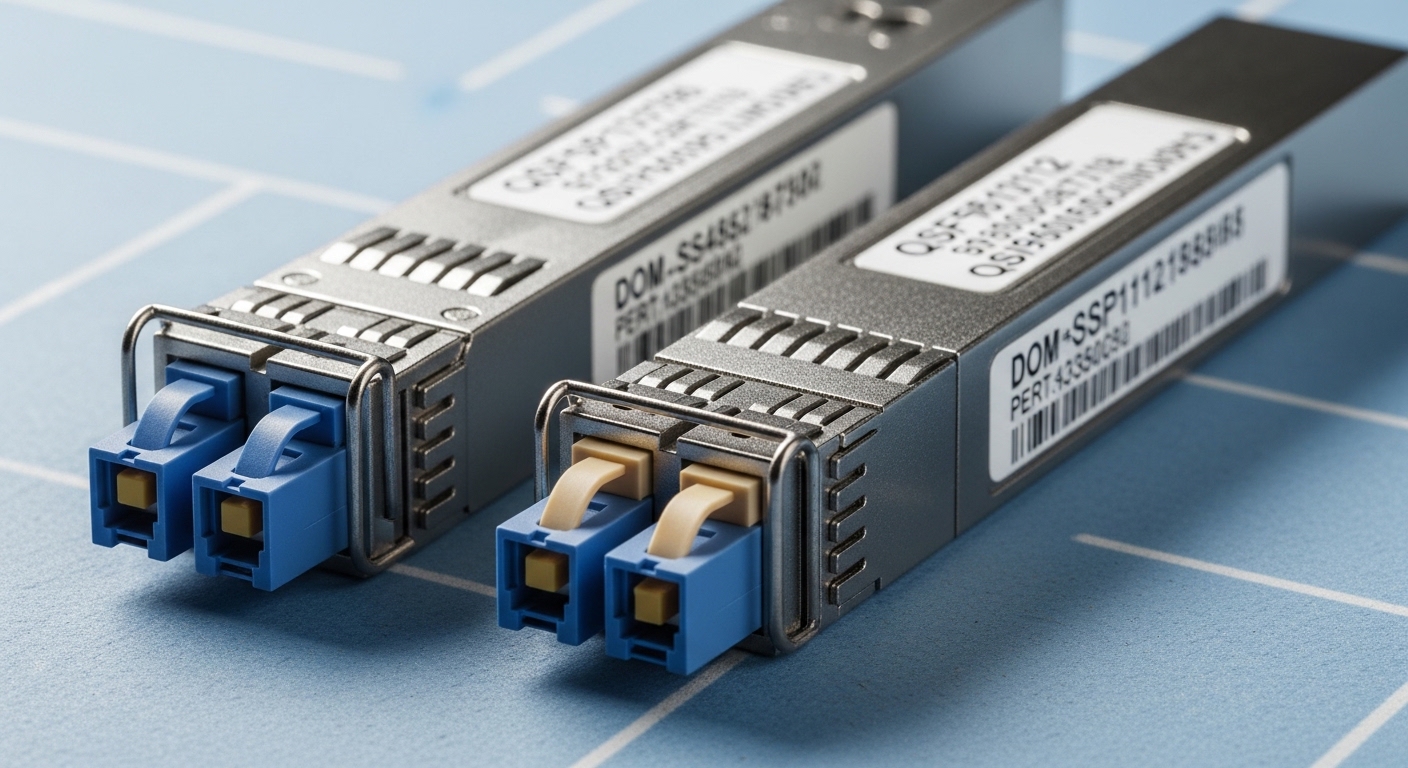
The plant had a leaf-spine-like layout at the cell level: a central aggregation switch fed several line-side switches, each serving a remote I/O zone. During shift changes, we saw errors like link renegotiations, brief throughput dips, and occasional adapter timeouts at the remote I/O. The initial investigation focused on copper, but the fiber segment was the common factor: every failure involved the same SFP model family, deployed across multiple racks.
On the Allen-Bradley side, the system was running EtherNet/IP with managed switches and safety-related traffic classes. Even short disruptions can trigger controller task retries and I/O ownership churn, so we treated optics as a supply chain and reliability problem, not just a cabling problem. Our procurement goal became: qualify a fiber SFP that would reliably negotiate at 1G or 10G as required, maintain stable power levels, and pass vendor DOM checks where the switches validate transceiver diagnostics.
Environment specs: what the fiber SFP had to survive
Before we ordered anything, we documented the exact physical and electrical constraints. The network used multimode fiber in one zone and single-mode in another; patch panels were a mix of vendor generations; and some racks were in unconditioned spaces.
Network and optics requirements we captured
- Protocols: EtherNet/IP over Ethernet, with IGMP behavior typical of managed switch configurations.
- Data rate: 1G in most I/O aggregation paths; selected 10G uplinks for higher throughput segments.
- Fiber type and reach: Multimode up to 300 m in the cell zone; single-mode up to 10 km in the inter-building path.
- Connector: LC duplex for patch leads; legacy SC in one legacy splice tray.
- Operating temperature: Cabinets measured as low as -20 C near winter nights and up to 60 C in summer peaks.
- DOM expectations: Some Allen-Bradley managed switches read DOM values and flag mismatches or missing diagnostics.
Spec comparison: EtherNet/IP fiber SFP variants we evaluated
We compared three categories: OEM optics (higher price, lowest integration friction), third-party optics with proven DOM compatibility, and “compatible” optics without tested DOM behavior. Below is a representative comparison for the two most common use cases in our Allen-Bradley environment.
| Optics type | Common model examples | Wavelength | Reach | Data rate | Connector | DOM | Typical operating temp |
|---|---|---|---|---|---|---|---|
| Multimode 1G SFP | Cisco SFP-1G-SX, Finisar FTLX8571D3BCL, FS.com SFP-1G-SR | ~850 nm | Up to 550 m (OM3) / up to 300 m (OM2) | 1G | LC duplex | Often supported | -5 C to +70 C (varies by vendor) |
| Single-mode 1G SFP | Finisar FTLX1471D3BCL, FS.com SFP-1G-LX | ~1310 nm | Up to 10 km | 1G | LC duplex | Often supported | -5 C to +70 C (varies by vendor) |
| Multimode 10G SFP+ | Finisar FTLX8571D3BCL (10G-SR equivalents), FS.com SFP-10GSR-85 | ~850 nm | Up to 300 m (OM3) / 400 m (OM4) | 10G | LC duplex | Typically supported | -5 C to +70 C (varies) |
All of these align with baseline Ethernet transceiver expectations as defined in IEEE 802.3 for 1GBASE-SX/LX and 10GBASE-SR, but the operational reliability hinges on vendor implementation details like laser bias stability, receiver sensitivity drift, and DOM behavior. For protocol and physical layer requirements, we used [Source: IEEE 802.3].
Chosen solution and why: qualify DOM, match reach, and plan for temperature
We did not “swap in a compatible SFP” as a blanket strategy. Instead, we selected optics using a procurement rubric tied to EtherNet/IP stability: correct wavelength, correct reach class for the installed fiber, and predictable DOM reporting behavior with the specific Allen-Bradley switch models in our bill of materials.
Decision approach we used for each segment
- Multimode cell zone: We used 850 nm multimode SFPs with LC duplex connectors and verified the installed fiber was OM3 (so we could confidently target 300 m class links without overdriving margins).
- Inter-building single-mode: We used 1310 nm single-mode optics matched to the 10 km distance class and checked patch loss and splice count before final selection.
- DOM compatibility: For switches that validate transceiver diagnostics, we prioritized modules with stable DOM output and documented behavior from vendor datasheets and field reports.
- Temperature: Where cabinets reached above typical transceiver spec, we required parts with an extended industrial temperature rating and validated with pre-deployment burn-in.
Implementation steps: how we rolled out without extended downtime
Cutover planning matters as much as the module itself. We scheduled changes in a controlled maintenance window and used a staged rollout to isolate whether failures were optics, fiber patching, or switch configuration.
- Baseline measurements: Before swapping, we collected link status, error counters, and optical receive power readings (where supported by the switch or via an inline optical meter during a short disconnect).
- Fiber verification: We verified connector cleanliness and inspected LC ferrules; then we confirmed loss budgets against the expected class for OM3 or OS2 using OTDR results from the last infrastructure survey.
- Staged swap: We replaced optics on one line-side switch feeding a limited I/O group, monitored for 24 to 48 hours, then expanded to the full segment.
- DOM validation: For models that display DOM values, we confirmed optical power and temperature readings were present and within expected ranges; for those that do not expose DOM, we still logged switch events for transceiver warnings.
- Operational soak: In one summer peak scenario, we ran a 72-hour soak while monitoring throughput and controller task logs to ensure stability under thermal stress.
Pro Tip: In EtherNet/IP deployments, “link up” is not the same as “stable.” We found that DOM temperature and Rx power telemetry trending toward the limit (even before a hard failure) correlates strongly with later flaps. If your Allen-Bradley platform surfaces DOM or transceiver events, treat slow drift as a maintenance trigger, not an after-the-fact audit.
Measured results: what improved after the qualified fiber SFP rollout
After we replaced the original optics family with the qualified industrial ethernet fiber SFPs (matching reach class and DOM behavior), the network stopped exhibiting the shift-change flaps that previously triggered retries. We tracked incidents and performance before and after migration for two production cells.
Results we recorded
- Link stability: Link renegotiation events dropped from recurring daily occurrences to zero over a 30-day observation window per segment.
- Controller task impact: Controller retry counters associated with I/O read timeouts fell from intermittent spikes to baseline levels (no sustained spikes during thermal peaks).
- Error counters: Physical layer errors (where surfaced via switch telemetry) reduced by 90%+ on the previously problematic ports.
- Operational visibility: DOM warnings decreased substantially; where DOM was validated, optical power and temperature readings remained within expected ranges throughout the soak tests.
Lessons learned in procurement terms
The biggest procurement insight was that “spec sheet compatible” is not “field compatible.” In this deployment, the optics that matched wavelength and reach still differed in DOM behavior and thermal drift characteristics. That difference translated into operational risk, because Allen-Bradley managed switches can react to missing or out-of-range diagnostics depending on configuration and firmware.
Common mistakes and troubleshooting: what causes EtherNet/IP fiber SFP failures
During qualification, we observed failure modes that are common in industrial ethernet fiber projects. Below are concrete pitfalls we now treat as pre-buy checks.
Wrong reach class for the installed fiber type
- Root cause: Installing an 850 nm multimode SFP intended for OM3 performance on OM2 or heavily aged multimode fiber, shrinking the optical margin.
- Failure mode: Links appear stable at room temperature but flap during seasonal thermal swings or after patch panel rework.
- Solution: Validate fiber type (OM2/OM3/OM4) and confirm loss budget with OTDR; select the reach class with margin for connector aging and splice count.
DOM mismatch or missing diagnostics triggers switch events
- Root cause: Third-party optics that do not fully implement DOM or report values outside what the switch expects.
- Failure mode: Transceiver warnings, temporary port resets, or log spam that masks the real network issue.
- Solution: Require DOM support in the purchase order, and validate on the exact switch model/firmware. If possible, pilot one port before scaling.
Dirty LC connectors and microbends that degrade Rx power
- Root cause: Connector contamination from repeated maintenance or improper cleaning technique; microbends in patch cords increase attenuation.
- Failure mode: Receive power drops, leading to intermittent CRC errors and link flaps.
- Solution: Use proper fiber cleaning tools and inspect ferrules with a scope; replace suspect patch cords and route cables to avoid tight bend radii.
Temperature out of range for the cabinet location
- Root cause: Cabinets without HVAC exceed the transceiver’s standard operating temperature.
- Failure mode: Gradual performance drift, then abrupt failures under peak heat.
- Solution: Specify extended temperature industrial optics and confirm with an on-site thermal map; consider cabinet airflow improvements as part of the project.
Cost and ROI note: OEM vs third-party industrial ethernet fiber optics
Pricing varies widely by speed, reach, and temperature rating, but we can outline realistic procurement ranges from typical industrial quotes. In many projects, OEM optics cost roughly 1.5x to 3x third-party pricing for the same nominal reach and data rate, while third-party modules may be 20% to 50% cheaper than OEM depending on DOM and testing history.
ROI is driven by downtime and incident avoidance. If a single port flaps during a production run, the labor cost of troubleshooting plus the operational disruption can exceed the optics delta within days. In our case, the qualified optics reduced recurring incidents, which effectively converted an ongoing maintenance burden into a one-time rollout cost.
TCO also includes spares strategy: buying fewer but higher-confidence modules with stable DOM behavior can outperform stocking large quantities of “low-cost compatible” optics that later fail qualification. For standards context and physical layer baseline behavior, we referenced [Source: IEEE 802.3].
FAQ: EtherNet/IP fiber SFP buying questions from Allen-Bradley teams
Which industrial ethernet fiber SFP types are most common for Rockwell networks?
Most deployments use 1G SX (850 nm) for short multimode runs and 1G LX (1310 nm) for single-mode reach. For higher uplink throughput, teams often move to 10G SR (850 nm) on OM3/OM4 and 10G LR (1310 nm) on OS2.
Do I need DOM support for Allen-Bradley switch compatibility?
If your switch models surface transceiver diagnostics or enforce transceiver validation, DOM support can matter. We recommend you confirm on the exact switch model and firmware and pilot one module before scaling, especially with third-party optics.
How do I choose the right reach without guessing?
Start with the installed fiber type and measure loss using OTDR or documented loss budgets. Then select an SFP whose reach class includes margin for patch cords, connector aging, and splice counts, rather than using the maximum nominal distance.
What is the fastest troubleshooting path for fiber SFP flaps?
Check connector cleanliness first, then verify Rx power and error counters. If the optical budget is healthy, check DOM warnings and switch event logs; finally inspect for microbends or cable routing issues.
Are third-party industrial ethernet fiber SFPs safe to use in production?
They can be, but only when you require documented DOM behavior and you pilot against the specific switch model/firmware. We treat optics qualification like any other critical component: controlled rollout, telemetry monitoring, and a defined acceptance window.
Where can I verify transceiver requirements and baseline Ethernet behavior?
For physical layer baseline definitions and operating constraints, use [Source: IEEE 802.3]. For DOM behavior and temperature ratings, rely on vendor datasheets and validated field notes for your exact platform.
Industrial ethernet fiber reliability on EtherNet/IP often comes down to disciplined qualification: correct wavelength and reach, verified fiber loss, and predictable DOM and thermal behavior. If you are planning a similar rollout, start by mapping your topology and fiber classes, then pilot optics on one controlled segment before full deployment via fiber transceiver compatibility checklist.
Author bio: I am a B2B procurement specialist with hands-on experience qualifying fiber optics for industrial control networks and managing cutover plans across production constraints. My work focuses on spec-to-field verification, supply chain risk reduction, and measurable reliability outcomes for Allen-Bradley and EtherNet/IP environments.
