
Renewable energy deployments often fail not because the fiber is wrong, but because the energy network fiber transceivers are mismatched to distance, optics, and environmental limits. This article helps network engineers and field teams choose SFP/SFP+, SFP28, and QSFP-based optics for wind farms, solar parks, and substation backhauls. You will get practical selection criteria, a spec comparison table, and troubleshooting patterns observed in real rollouts.
Why renewable energy backhauls stress energy network fiber
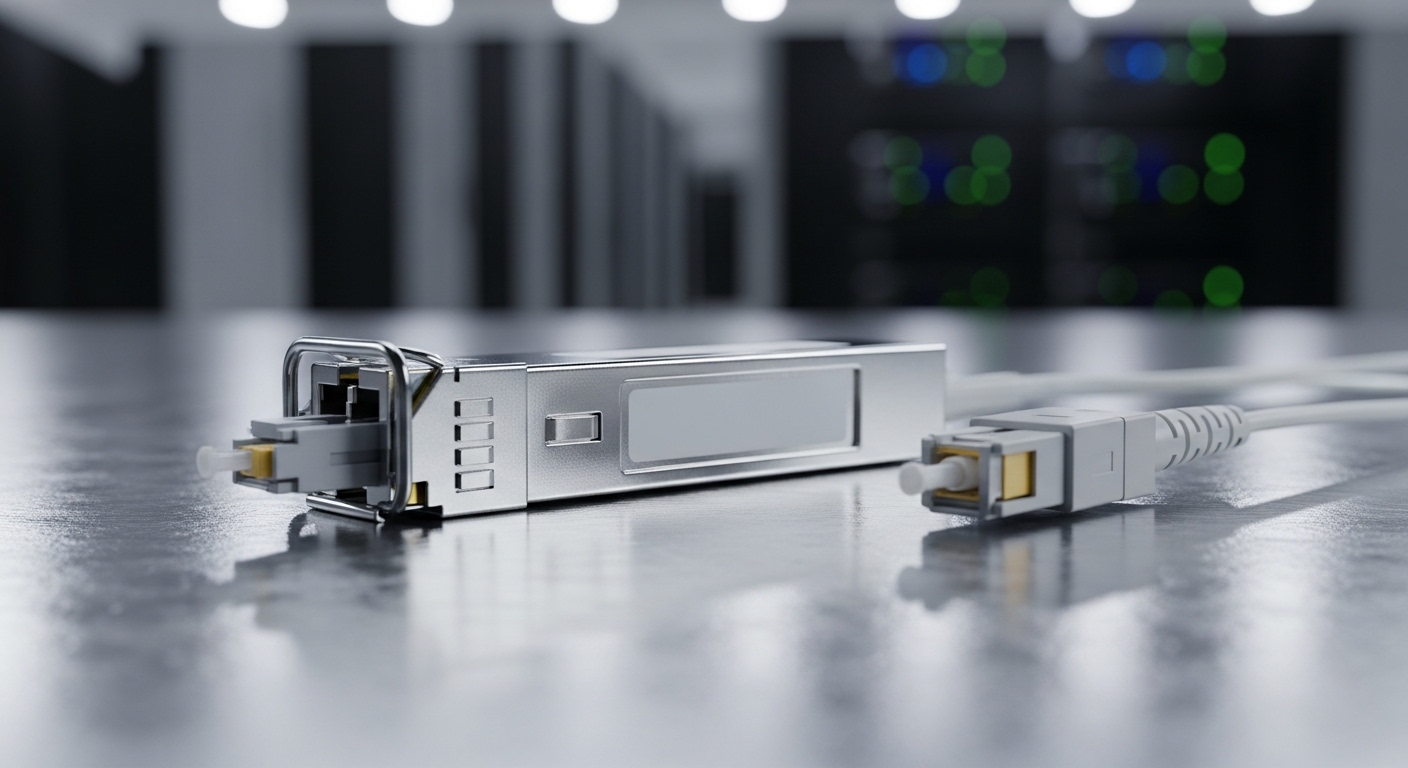
In wind and solar operations, fiber runs pass through harsh conditions: temperature swings, vibration, and occasional moisture ingress in cabinets. Many renewable sites also rely on long-reach links to connect turbine strings, inverter stations, and substation rings to a central control building. Operationally, that means your optics must meet link budget requirements for optical power, receiver sensitivity, and dispersion over the installed fiber type (OM3, OM4, or OS2).
IEEE 802.3 standards define the Ethernet electrical and optical interfaces for transceivers, while vendor datasheets define the actual optical parameters such as launch power, sensitivity, and DOM thresholds. For field reliability, you also need to consider safety margins for aging optics and connector losses after repeated maintenance cycles. If you are using managed switches, confirm that the transceiver’s digital optical monitoring (DOM) alarms map cleanly to your platform.
Optics you actually deploy: SR vs LR vs ER for renewable rings
Most renewable energy network fiber designs fall into two categories: short-reach data center style links for on-site aggregation, and long-reach links for backhaul to substations or remote operations centers. SR modules (typically for 10G/25G multimode) are common inside controlled buildings where OM3/OM4 fiber is used. LR/ER (single-mode) are common when you must span kilometers across poles, ducts, or aerial routes.
Technical specs to compare before you buy
Below is a practical comparison across typical Ethernet transceiver families used in renewable deployments. Always cross-check your switch vendor compatibility list and the exact fiber plant (core type, attenuation, and length).
| Module type | Data rate | Wavelength | Typical reach | Fiber type | Connector | DOM | Operating temp (typical) |
|---|---|---|---|---|---|---|---|
| SFP+ SR (10G) | 10G Ethernet | 850 nm | 300 m (OM3) / 400 m (OM4) | OM3/OM4 multimode | LC | Often supported | 0 to 70 C (commercial) |
| SFP28 SR (25G) | 25G Ethernet | 850 nm | 100 m (OM3) / 150 m (OM4) | OM3/OM4 multimode | LC | Often supported | -5 to 70 C (typical) |
| SFP+ LR (10G) | 10G Ethernet | 1310 nm | 10 km | OS2 single-mode | LC | Often supported | -40 to 85 C (often) |
| SFP+ ER (10G) | 10G Ethernet | 1550 nm | 40 km | OS2 single-mode | LC | Often supported | -40 to 85 C (often) |
Concrete product examples used in the field
Engineers frequently deploy OEM or vetted third-party optics such as Cisco SFP-10G-SR, Finisar/II-VI FTLX8571D3BCL (10G SR), and FS.com SFP-10GSR-85 (10G SR for multimode). For single-mode, look at typical LR/ER offerings like Cisco SFP-10G-LR and comparable 1310/1550 nm transceivers with DOM support. The key is not the brand; it is whether the module’s transmitter power and receiver sensitivity match your measured link budget for the installed fiber.
Selection checklist for energy network fiber transceivers
To avoid rework, treat transceiver selection as a network engineering exercise, not a procurement checkbox. The ordered checklist below reflects what teams weigh during renewable rollouts with strict commissioning timelines.
- Distance vs fiber type: confirm whether you need SR, LR, or ER based on measured length and fiber attenuation (dB/km) for your specific cable.
- Link budget math: use vendor launch power and receiver sensitivity, then subtract connector/splice losses and a safety margin (commonly 3 to 6 dB depending on environment).
- Switch compatibility: validate with your switch model and firmware; some platforms reject non-OEM optics or apply stricter DOM parsing.
- DOM support and thresholds: ensure DOM alarms (laser bias, optical power, temperature) are exposed and actionable in your monitoring stack.
- Operating temperature: prioritize industrial (-40 to 85 C where feasible) for outdoor cabinets; commercial optics may drift or fail early under solar heating.
- Vendor lock-in risk: decide whether you want OEM-only optics or a controlled third-party program with acceptance testing and traceable batch records.
- Connector and cleaning standard: confirm LC connector cleanliness and use an approved cleaning workflow to prevent micro-burns and intermittent links.
Pro Tip: In renewable sites, most “mysterious link flaps” trace back to connector contamination or bend-induced loss rather than a bad transceiver. Even if the optical budget looks fine on paper, verify patch-cord bend radius and perform endface inspection after every maintenance visit.
Deployment scenario: wind farm ring with substation backhaul
Consider a wind farm with 48 turbines arranged across three feeder zones. Each zone has an on-site aggregation cabinet with a managed Layer 2 switch, and the control building connects to a nearby substation via a protected Ethernet ring. The distances are 1.2 km from turbine strings to the zone cabinet, and 12 km from the zone cabinet to the substation over OS2 single-mode in buried duct.
A practical design uses 10G Ethernet LR optics (1310 nm) for the 12 km backhaul, with OS2 LC jumpers and a documented link budget. Inside buildings, shorter runs of multimode OM4 can carry 10G SR links where patching is controlled and connectors are cleaned under procedure. Field commissioning typically includes OTDR traces for continuity and splice verification, plus a link test that records DOM temperature and optical power readings during worst-case ambient conditions.
Common mistakes and troubleshooting patterns
Even experienced teams make repeatable errors. Below are frequent failure modes seen during renewable commissioning, with root causes and fixes.
“Link light works, but throughput is unstable”
Root cause: marginal optical power due to connector contamination, micro-scratches, or unaccounted splice loss. Some transceivers will maintain link but experience frequent FEC/PCS retries on higher utilization.
Solution: inspect both ends with a fiber scope, clean with the correct method, and re-test. Then compare measured received power to the module’s datasheet sensitivity and DOM alarms during peak temperature.
“Works on the bench, fails on site after temperature swings”
Root cause: using commercial temperature optics in outdoor cabinets where internal temperatures exceed spec after sun exposure. Laser bias and receiver sensitivity can drift outside the safe operating region.
Solution: swap to an industrial temperature (-40 to 85 C) transceiver model, and verify switch fan/ventilation behavior. Record DOM temperature logs during a full day cycle if possible.
“Multimode SR selected, but fiber plant is mixed or older”
Root cause: the installed fiber is not what the drawings assume (OM2 vs OM3 vs OM4), or modal bandwidth has degraded due to aging and patch-cord mismatch. SR reach assumptions become invalid.
Solution: confirm fiber type with labeling and test results; run a bandwidth validation (where available) and measure attenuation. If in doubt, migrate that segment to OS2 single-mode with LR optics.
“Switch rejects transceiver or shows DOM errors”
Root cause: transceiver EEPROM parameters or DOM implementation not matching the switch’s expectations, sometimes tightened after firmware upgrades.
Solution: maintain a compatibility matrix by switch model and firmware version; standardize on approved part numbers. For critical paths, keep spares that are validated in your lab environment.
Cost and ROI note for energy network fiber optics
Pricing varies sharply by data rate and temperature grade. As a practical range, 10G SR modules often cost roughly $50 to $200 per unit, while industrial-grade LR/ER modules may fall around $150 to $600 depending on vendor and DOM features. Third-party modules can reduce upfront cost, but they increase operational risk unless you enforce acceptance testing, batch traceability, and a documented return policy.
TCO is dominated by failure handling and downtime. A single optics replacement can require truck rolls, safety procedures, and downtime windows; teams commonly justify industrial temperature optics and vetted compatibility even when the unit price is higher. Power draw differences are usually small compared to rack and switch consumption, but reducing failed components and truck rolls often yields the strongest ROI.
FAQ about fiber transceivers for renewable energy networks
Which transceiver type is most common for energy network fiber?
For on-site aggregation with multimode fiber, SR (850 nm) is common for 10G and sometimes 25G. For substation and long backhaul segments over OS2 single-mode, LR (1310 nm) is typically the default choice, with ER (1550 nm) reserved for longer distances or tighter budgets.
How do I calculate link budget for an optics purchase?
Start with vendor launch power and receiver sensitivity, then subtract fiber attenuation (dB/km times length), plus connector and splice losses. Add a safety margin for aging and maintenance, and validate with DOM readings after installation. If you cannot obtain reliable fiber attenuation data, prefer conservative margins or single-mode migration.
Do I need DOM for renewable energy monitoring?
DOM is strongly recommended because it provides temperature and optical power telemetry that helps you detect degradation before outages. Many teams use DOM thresholds to trigger maintenance tickets when laser bias trends toward limits. Ensure your switch and monitoring stack can ingest and alert on DOM values reliably.
Are third-party transceivers safe to use in substations?
They can be, but only under a controlled program: vendor compatibility validation, acceptance testing, and batch-level traceability. Some switches enforce strict EEPROM and DOM behaviors, so you must test per switch model and firmware version before scaling.
What is the most frequent cause of intermittent links?
Connector contamination and patch-cord damage are among the most frequent causes, especially after field access. Even when optical budget calculations look healthy, contamination can cause intermittent BER spikes. Fiber inspection and a repeatable cleaning workflow are essential.
What maintenance practice improves optical reliability?
Standardize endface inspection, connector cleaning, and bend-radius enforcement for patch cords and cable routing. After any cabinet work, re-check optical power via DOM and confirm that link stability matches commissioning baselines.
If you want the next step, align your transceiver choice with your overall fiber plant strategy by reviewing fiber link budget and OTDR verification and updating your acceptance tests for renewable rollouts.
Author bio: I am a CTO focused on network reliability for energy and industrial environments, with hands-on experience deploying Ethernet rings, OTDR-based acceptance testing, and optics monitoring. I work with field teams to reduce truck-roll downtime through compatibility governance and measurable link-budget engineering.
