
In edge deployments, your ROI can evaporate quietly: a flaky optical link, a mismatched transceiver, or a “close enough” fiber build that forces constant truck rolls. This article helps network and infrastructure teams estimate edge computing ROI by connecting it to optical choices: transceiver reach, power budgets, connector loss, and switch compatibility. You will get a head-to-head comparison of common optical options, plus an engineer-friendly troubleshooting checklist.
Optical reality check: where edge computing ROI is won or lost
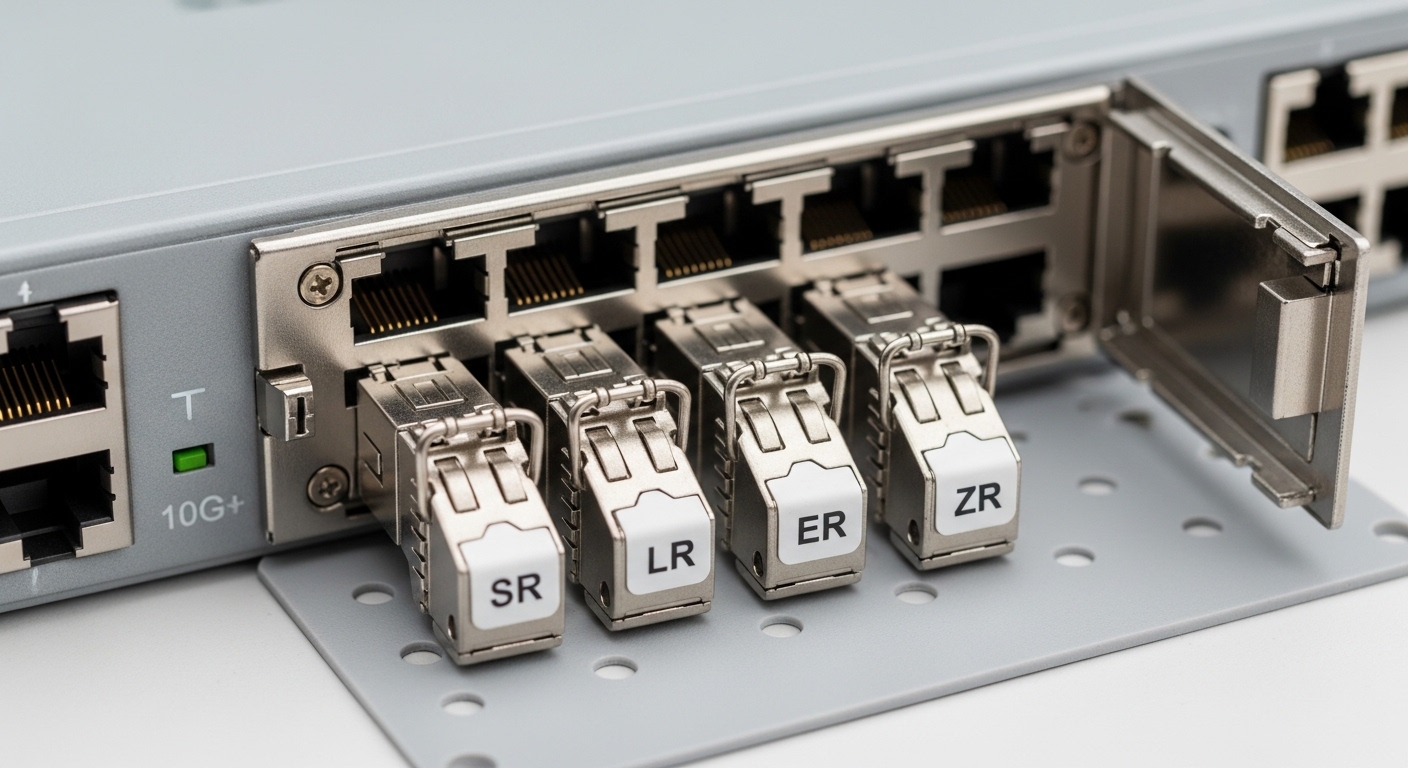
Edge computing ROI is not just about compute utilization; it is also about how reliably data moves between sensors, gateways, and the nearest compute fabric. Optical links influence downtime, maintenance labor, and upgrade cycles, which directly changes total cost of ownership (TCO). In IEEE 802.3 Ethernet PHY terms, your transceiver must meet link budget requirements for the specified distance and fiber type, or the link will negotiate down, flap, or fail under temperature drift. Vendor datasheets and the relevant physical layer requirements in IEEE 802.3 are your reality anchors, not marketing brochures. [[EXT:https://standards.ieee.org/standard/802_3 IEEE 802.3 standard]]
The ROI levers that optical designs affect
First lever: downtime cost. If an edge node loses uplink for even 10 to 30 minutes during a daily production window, your “compute” savings look like a rounding error. Second lever: truck roll frequency. A single bad splice or a connector with elevated insertion loss can turn into a weekly maintenance ritual. Third lever: upgrade cadence. If you pick a transceiver family that your switch ecosystem supports only with certain part numbers, every refresh becomes a procurement and compliance mini-drama.
Optical solutions also change power consumption: some modules draw less while running the same data rate, which matters when you have constrained edge power budgets (think outdoor cabinets with limited cooling). Finally, optical reach and wavelength selection determine whether you can reuse existing fiber plant or must pay for new runs.
Head-to-head: short-reach SR vs long-reach LR for edge links
Most edge networks fall into two buckets: short-reach links over local fiber within a building or campus, and longer-reach links when the compute cluster is farther from the aggregation point. The optical decision is usually between SR-style multimode optics and LR-style single-mode optics (or their modern equivalents). This is where edge computing ROI turns into math: CAPEX increases when you buy the “longer reach” optics, but OPEX drops when you avoid new fiber builds and reduce failures.
Key specs comparison (what engineers actually verify)
Below is a practical comparison using common real-world module examples. Always confirm with your switch vendor compatibility list and the exact optical budget for your fiber plant. In Ethernet deployments, mismatched reach assumptions are a classic ROI killer.
| Option | Example module | Wavelength | Typical reach | Connector | Data rate | Power (typ.) | Operating temperature |
|---|---|---|---|---|---|---|---|
| 10G SR (MMF) | Cisco SFP-10G-SR | 850 nm | 300 m (OM3/OM4 typical) | LC | 10GBASE-SR | ~0.9 to 1.5 W | 0 to 70 C |
| 10G LR (SMF) | Finisar FTLX8571D3BCL | 1310 nm | 10 km | LC | 10GBASE-LR | ~1.5 to 2.5 W | -5 to 70 C (varies) |
| 10G SR (third-party) | FS.com SFP-10GSR-85 | 850 nm | 300 m (MMF variants) | LC | 10GBASE-SR | ~0.8 to 1.3 W | 0 to 70 C |
Which one usually delivers better edge computing ROI?
If your edge gateway sits within a few hundred meters of the aggregation switch and you already have OM3/OM4 fiber, SR optics typically win on cost and simplicity. If you are connecting across long distances through existing single-mode plant, LR optics often win by avoiding new fiber runs and re-terminations. The ROI difference is rarely “reach only”; it is about the cost to ensure a stable link under real temperature swings, connector aging, and field splices.
Pro Tip: Before buying “longer reach” optics, measure your fiber plant end-to-end with an OTDR or at least a certified loss test. Many teams spend ROI money on optics when the real issue is connector contamination or a splice with excess loss that silently eats your optical budget.
Cost and ROI: OEM modules vs third-party optics (the compatibility tax)
Optics procurement is where budgets go to fight each other. OEM modules can cost more, but they often reduce compatibility surprises and accelerate RMA workflows. Third-party optics can be significantly cheaper, yet edge ROI can suffer if modules are rejected by strict switch firmware checks or if you hit higher failure rates in harsh environments. The trick is to treat optics like a supply chain decision, not just a line item.
What to compare for a realistic TCO
Include purchase price, expected lifetime, expected failure rate, and labor hours for swaps. In many field deployments, the “expensive” OEM module is cheaper when you factor in fewer truck rolls and faster support. Also account for power draw: if you run dozens of links 24/7, even a 1 W difference per module becomes meaningful over a year.
Typical price ranges you will actually see
Street pricing varies widely by region and vendor, but you can use these rough ranges for planning. OEM 10G SR modules often land in the $80 to $200 range each, while third-party SR modules might be $25 to $120. LR modules usually cost more, with OEM often $150 to $400 and third-party in the $60 to $250 range. Your ROI math should include that a single failed edge link can cost more than the price difference between module types.
Use-case fit: indoor edge cabinets vs outdoor sites and harsh temperature
Edge deployments are not uniform. A server-room edge PoC behaves differently than an outdoor industrial cabinet where sun, wind, and cold snaps are daily guests. Optical modules have operating temperature ranges, and exceeding them can cause increased bit error rates (BER), link retraining, or total link loss.
Scenario: 3-tier data center leaf-spine plus edge gateways
In a 3-tier data center leaf-spine topology with 48-port 10G ToR switches, an operator might place edge gateways in three separate floors. Each gateway aggregates 8 cameras and multiple sensors, pushing roughly 80 to 120 Mbps sustained per gateway with burst peaks. The uplinks run over OM4 multimode fiber for 180 to 250 m distances to the nearest leaf switch. In this case, 10G SR optics like Cisco SFP-10G-SR or an OM4-compatible third-party SR module typically fit well, giving stable links without the cost of single-mode LR optics.
Now shift to an outdoor oil-and-gas site where the edge compute is 6 to 12 km from the aggregation point using existing single-mode fiber. The team may use 10G LR optics such as Finisar-compatible LR SFPs. Here, the ROI win comes from avoiding new trenching and permitting, even if the optics cost more per module.
Selection criteria checklist: how to avoid ROI faceplants
Engineers should run a quick, ordered checklist before committing to optics. This is the difference between “validated in the lab” and “validated after the field engineer has already left.”
- Distance and fiber type: confirm multimode (OM3/OM4) vs single-mode and the measured link loss budget.
- Switch compatibility: verify the exact module family is supported by the switch vendor and firmware. Check vendor compatibility and transceiver vendor coding.
- Reach class and wavelength: SR vs LR vs ER; ensure the wavelength matches the module and fiber plant (850 nm vs 1310 nm).
- DOM support and monitoring: Digital Optical Monitoring (DOM) matters for proactive maintenance. Confirm DOM works end-to-end with your switch.
- Operating temperature and environment: indoor 0 to 70 C differs from outdoor swings; plan for enclosure cooling and airflow.
- Connector and insertion loss: LC cleanliness and measured loss after installation often decide link stability more than nominal reach.
- Vendor lock-in risk: OEM-only ecosystems can raise refresh costs; third-party can reduce CAPEX but may complicate support.
Common mistakes and troubleshooting tips that save edge computing ROI
Below are field-proven failure modes. Each one has a root cause and a practical fix. If you handle these early, you prevent “mysterious downtime” tickets that multiply faster than edge workloads.
Link flaps due to optical budget mismatch
Root cause: The module is rated for nominal reach, but real fiber loss is higher due to poor splices, dirty connectors, or aged patch cords. The link may still come up, then flap as temperature shifts affect laser output power. Solution: clean LC connectors with proper inspection tools, verify insertion loss with certified testing, and compare measured loss to the module’s optical budget from the datasheet.
Switch rejects third-party optics or negotiates incorrectly
Root cause: Some switches enforce stricter transceiver compatibility checks (EEPROM fields, vendor IDs, or DOM behavior). A module might be “electrically compatible” but not accepted by firmware. Solution: use the switch vendor compatibility list, update switch firmware cautiously, and standardize on a tested optics SKU family across sites.
Elevated BER under cold-start or heat soak
Root cause: Modules exceed their operating temperature range, or the enclosure airflow is insufficient. Laser bias and receiver sensitivity drift with temperature, increasing BER even if the link appears nominal. Solution: confirm module temperature ratings, add thermal management (fans, baffles, sun shields), and validate with a controlled temperature test before rollout.
DOM telemetry looks “normal” but performance is bad
Root cause: DOM readings can be misleading if the switch interprets thresholds differently, or if the module is fine but the fiber path has micro-bends causing intermittent attenuation. Solution: correlate DOM (TX power, RX power, bias current) with link error counters and physical inspection. Use OTDR when you suspect micro-bends or localized damage.
Decision matrix: which optical option maximizes edge computing ROI
Use this matrix as a starting point. Reality will still demand your fiber measurements, but this helps you avoid obvious mistakes.
| Reader type | Best fit | Why it usually wins | Watch-outs |
|---|---|---|---|
| Budget-conscious indoor edge | 10G SR over OM4 (third-party or OEM) | Lower module cost and sufficient reach for typical campus distances | Validate switch compatibility and connector cleanliness |
| Long-distance edge via existing single-mode | 10G LR over SMF (OEM or tested third-party) | Avoids costly new fiber builds and permits | Confirm optical budget and environmental temperature |
| High-availability edge with strict uptime targets | OEM optics with proven compatibility | Fewer support surprises and predictable RMA paths | Higher CAPEX; still measure fiber to prevent silent budget loss |
| Rapid multi-site rollout | Standardized optics SKU family + DOM monitoring | Reduces operational variance; faster troubleshooting | DOM threshold interpretation differences across switch models |
Which option should you choose?
If your edge links are within a few hundred meters and you have OM3/OM4, choose SR optics and prioritize measured link loss plus DOM visibility. If you need kilometer-scale connectivity over existing single-mode fiber, choose LR optics and treat optical budget validation as mandatory, not optional. For teams optimizing edge computing ROI under uptime pressure, I recommend OEM or a third-party SKU that is explicitly validated on your switch model, because compatibility friction is an invisible tax that eats ROI.
Your next step: pick one representative site, measure fiber loss, validate transceiver compatibility with DOM, and run a short temperature and traffic soak test. Then lock the optics SKU in your deployment playbook using edge computing deployment checklist.
FAQ
Q: How does optical selection affect edge computing ROI directly?
A: It affects ROI through downtime risk, maintenance labor, and upgrade friction. A stable link reduces truck rolls and keeps edge workloads flowing, which improves realized compute utilization and reduces operational costs. It also impacts power draw across dozens of always-on links.
Q: Is SR always cheaper than LR?
A: Usually SR modules cost less, but SR may require multimode plant and shorter runs. If LR avoids expensive new fiber builds or permits, LR can deliver better total ROI even with higher per-module cost.
Q: Should we standardize on OEM optics or third-party?
A: Standardize on optics that your switch model supports reliably with the firmware you run. OEM often reduces compatibility risk, while third-party can cut CAPEX. The ROI winner is the option with the lowest field failure and fastest support resolution in your environment.
Q: What should we measure before deploying optics at the edge?
A: Measure end-to-end insertion loss and inspect connectors. OTDR is ideal for troubleshooting micro-bends and bad splices, while certified loss testing is the baseline for link budget validation. Then confirm that DOM telemetry aligns with link error counters.
Q: Do DOM readings guarantee link health?
A: No. DOM helps, but you still need to correlate TX power, RX power, and bias current with real error statistics and physical fiber integrity. A link can show “normal” DOM while still suffering intermittent attenuation from localized damage.
Q: How hot can edge optics get in real deployments?
A: It depends on enclosure design, airflow, and sun exposure. Many modules are rated up to around 70 C, but outdoor cabinets can exceed that without thermal management. Validate with a realistic site test instead of assuming lab conditions.
Expert bio: I build and deploy edge networks where the ROI model meets the splice tray. I write like a founder and debug like a field engineer.
Expert bio: I focus on optical link budgets, switch compatibility, and fast validation loops that prevent “it worked in the lab” disasters. If it cannot survive the real world, it is not a product.
