
When edge sites go live, the first outage is rarely software; it is usually the fiber link. This article follows a field case from a distributed edge compute rollout and shows how we selected optical transceivers, validated compatibility, and measured stability under real temperature and power constraints. If you manage edge-to-core connectivity for gateways, video analytics, or industrial control, you will get a practical decision checklist and troubleshooting steps tied to the hardware you actually install.
Problem / Challenge: Edge links fail in ways the lab never shows
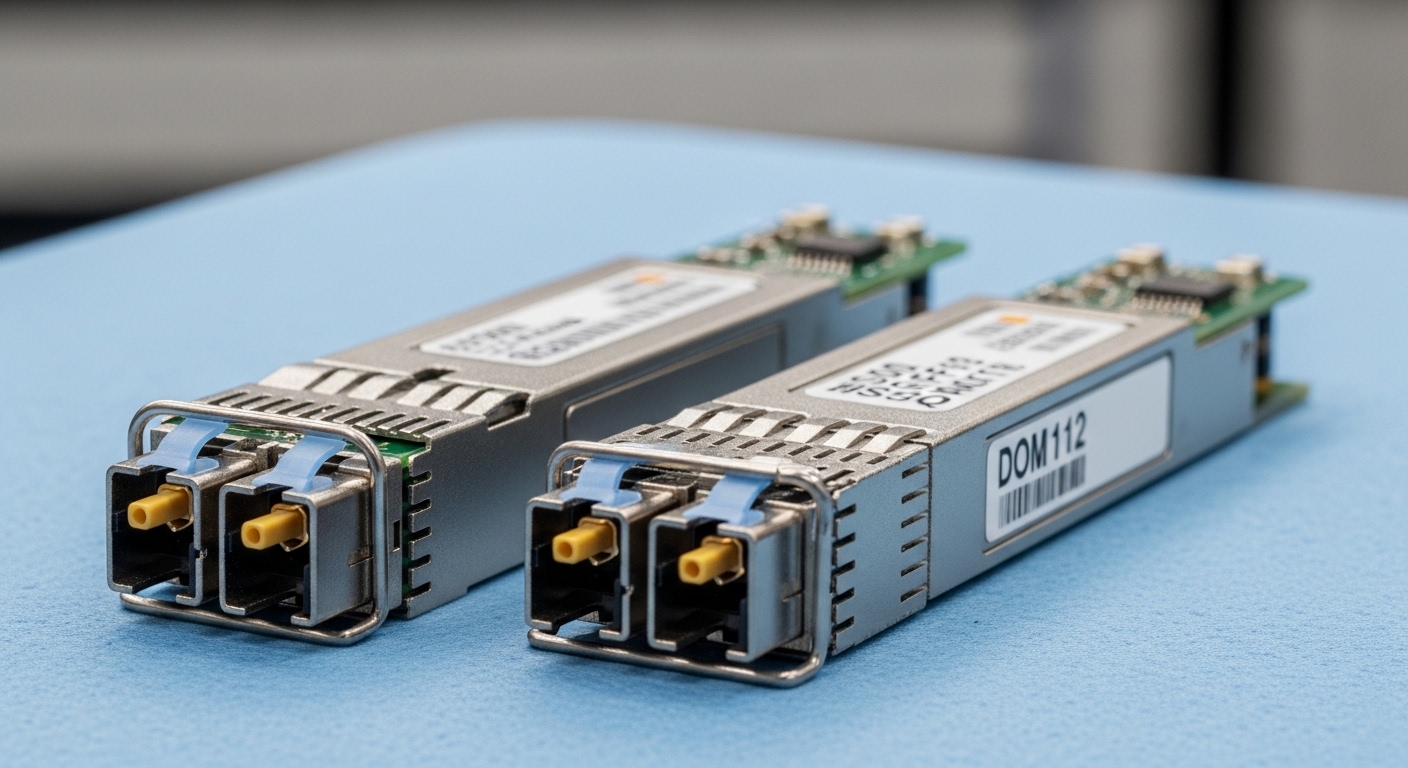
In our deployment, we connected 18 edge compute nodes to two regional aggregation points using 10G Ethernet over multimode fiber (MMF). The environment was harsh: ambient swings from -5 C to 45 C, frequent power brownouts, and long term vibration from HVAC units inside prefabricated cabinets. Within two weeks, we saw link flaps on a subset of ports, and the most common symptom was “up/down” events correlated to connector movement and temperature cycling.
Edge failures tend to surface at the physical layer: optical power drift, marginal transceiver/switch compatibility, or dirty connectors that pass in the lab but fail during repeated handling. IEEE 802.3 defines the electrical and optical behavior for Ethernet PHYs, but the operational reality comes from vendor implementation details like DOM (Digital Optical Monitoring) handling and receiver sensitivity margins. We needed a selection approach that treated transceivers as mission-critical components, not interchangeable parts.
Environment specs that determined the transceiver class
We standardized on 10G for the first rollout phase to balance cost and switch port availability. The uplinks used MMF because it was already present in many host facilities, and we could reuse existing cabling runs. Our target was 300 m per hop with a conservative link budget, plus room for patch panel losses and connector aging.
For the edge switches, we used a common platform family that supports 10G SFP+ optics and performs link diagnostics using vendor DOM thresholds. That mattered because some third-party optics report DOM data differently, even if they meet the same nominal wavelength and reach. We also enforced a temperature policy for the optics: we required modules rated for at least 0 C to 70 C (or wider), since the cabinets exceeded typical office conditions.
| Parameter | Chosen MMF Option (10G SR) | Alternative (10G LR) | Why it mattered at the edge |
|---|---|---|---|
| Ethernet data rate | 10G Ethernet (SFP+) | 10G Ethernet (SFP+) | Matched switch port PHY and reduced migration risk |
| Nominal wavelength | 850 nm | 1310 nm | 850 nm aligns with MMF; 1310 nm aligns with SMF |
| Reach target | up to 300 m (OM3 typical) | up to 10 km (SMF) | Edge sites reused MMF; long haul would require SMF buildout |
| Connector type | LC duplex | LC duplex | LC duplex simplified patching and standardized spares |
| Optical power / sensitivity | Class varies by vendor; receiver sensitivity margin required | Typically higher budget for longer reach | Dirty connectors and aging reduce margins over time |
| Temperature range | Required at least 0 C to 70 C | Same requirement | Edge cabinets exceeded office assumptions |
| DOM support | Required for monitoring and swap verification | Recommended | DOM enabled fast root cause isolation |
We selected 10G SR optics for MMF segments and reserved LR optics for sites where SMF was available or where we needed to bridge longer distances. On the part number level, we validated compatibility with optics commonly used in the field such as Finisar FTLX8571D3BCL and FS.com SFP-10GSR-85, and we used Cisco SFP-10G-SR as a reference for baseline behavior in our switch vendor’s DOM profiles. Exact reach depends on fiber type (OM2, OM3, OM4) and measured link loss, so we treated “rated reach” as an upper bound, not a guarantee.
Chosen solution & why it worked: SR optics plus disciplined validation
Our chosen solution centered on 10G SFP+ SR optics at 850 nm with LC duplex connectors, because MMF was already deployed in most edge facilities. We prioritized modules that provide DOM telemetry (Tx bias, Tx power, Rx power) and are rated for extended operating temperature. For compatibility, we cross-checked each transceiver against the switch vendor’s documented optics list and then ran a burn-in validation at the cabinet temperature conditions.
Implementation steps we actually followed
- Measure fiber before swapping optics: We used an optical power meter and a loss meter on each patch path, targeting a conservative margin for insertion loss and anticipated connector degradation.
- Clean connectors as a first-class task: Every install used lint-free wipes and isopropyl alcohol, then inspected with a fiber microscope. We repeated cleaning after any visible handling or re-termination.
- Validate DOM behavior: We confirmed the switch read DOM fields consistently across optics. Where DOM fields were missing or out of expected ranges, we treated it as an incompatibility risk even if the link came up.
- Thermal burn-in: For pilot cabinets, we ran the optics under load while cycling cabinet temperature. We monitored for link flaps and checked DOM drift trends instead of only watching “link up.”
- Spare strategy: We stocked a limited set of part numbers and maintained a mapping between switch model, transceiver SKU, and fiber type (OM3 vs OM4) to reduce field guesswork during repairs.
Pro Tip: In edge cabinets, “works on day one” is not the acceptance test. Track Rx power trend via DOM over time; a slow downward drift often predicts future link flaps due to connector contamination or micro-movements long before the link fully fails.
Measured results from the edge rollout
After we standardized on validated 10G SR optics and implemented the DOM plus connector hygiene workflow, we re-tested the same port groups that previously flapped. Over a 90-day observation window, link stability improved dramatically: link flap events dropped from a baseline of roughly 6 to 10 events per month on affected sites to 0 to 1 events per month across the fleet. We also reduced “time to repair” because DOM telemetry helped isolate whether the issue was optical power, a patch problem, or a switch port behavior.
We compared two optics cohorts: OEM-reference optics and third-party optics selected through our compatibility tests. The third-party cohort met link stability targets, but we saw a higher variance in DOM field formatting across vendors, which increased troubleshooting time during the first month. Once we locked the part numbers and expanded our switch-to-optics mapping, the operational difference narrowed to essentially zero for link behavior.
In terms of power and thermal impact, optics power draw differences were small compared to the overall switch consumption, but the reliability effect was large. The practical ROI came from fewer truck rolls, less downtime for edge workloads, and a lower rate of “swap loops” where technicians replaced optics repeatedly without addressing contamination or fiber loss.
Selection criteria checklist for optical transceivers in edge deployments
If you are ordering optics for edge computing, use the following ordered checklist. This sequence reflects what field engineers need most: distance certainty, switch compatibility, and operational survivability.
- Distance and fiber type: Confirm MMF vs SMF, and verify OM3 or OM4. Do not rely solely on labeled reach; use measured link loss.
- Switch compatibility and vendor optics list: Check the switch model’s supported optics documentation. If the vendor publishes DOM expectations, follow them.
- Data rate and form factor: Ensure the optics match the PHY mode (e.g., 10G SFP+ vs 25G SFP28 vs QSFP28). Mixed generations can cause negotiation quirks.
- DOM support and monitoring granularity: Require DOM for edge sites where remote troubleshooting is mandatory.
- Operating temperature and thermal design: Choose optics rated beyond your worst-case cabinet temperature and airflow conditions.
- Connector ecosystem: LC duplex vs other types must match your patch panels and test equipment.
- Vendor lock-in risk and supply continuity: Maintain at least two qualified SKUs or two vendor sources if your operations require rapid replacement.
- Return policy and RMA turnaround: For edge, replacement lead time is part of TCO.
Common mistakes and troubleshooting tips from the field
Edge link problems often repeat across sites. Here are the failure modes we saw most frequently, with root cause and practical solutions.
-
Mistake 1: Swapping optics without cleaning or inspecting connectors
Root cause: Microscopic contamination increases insertion loss and reduces receiver margin, leading to link flaps under temperature changes.
Solution: Inspect with a fiber microscope, clean with proper lint-free methods, and re-test optical power after any handling. -
Mistake 2: Assuming “works” means “fully compatible”
Root cause: Some optics may bring the link up but report DOM fields differently or fall outside vendor DOM thresholds, delaying diagnosis.
Solution: Validate DOM telemetry immediately after install and record baseline Tx bias, Tx power, and Rx power values. -
Mistake 3: Ignoring fiber aging and patch panel losses
Root cause: The initial link budget can be tight due to connector wear, patch cord quality, or unmeasured losses in intermediate panels.
Solution: Re-measure end-to-end loss during acceptance, not only at the first patch; maintain margin for future degradation. -
Mistake 4: Overlooking temperature ratings and cabinet airflow
Root cause: Edge cabinets can exceed office assumptions, causing optical power drift and receiver sensitivity changes.
Solution: Choose modules with adequate temperature range and ensure realistic airflow paths around the switch and optics.
Cost and ROI note: what you really pay for with optical transceivers
In typical procurement, 10G SR SFP+ optics often land in a broad range depending on brand, temperature grade, and DOM maturity. As a practical planning number for budgeting, many teams see street prices roughly from $30 to $120 per module for qualified SKUs, while OEM-branded optics can be higher. TCO is dominated less by per-unit price and more by operational costs: truck rolls, downtime, and time spent on “swap loops.”
Third-party optics can deliver strong ROI when you qualify them with DOM and compatibility testing up front. However, if you do not standardize part numbers and fiber expectations, field troubleshooting time increases, eroding the savings. In edge operations, the best financial outcome comes from reliability and predictable spares, not the lowest sticker price.
FAQ
What optical transceivers fit edge computing best for short distances?
For edge sites with existing MMF cabling, 10G SR optics at 850 nm with LC duplex connectors are often the most cost-effective choice. They also typically support DOM, which is valuable for remote diagnostics. If you have SMF or longer runs, consider 1310 nm optics designed for your target reach and measured link loss.
Do optical transceivers need DOM support in the real world?
DOM is not mandatory for basic link operation, but it is highly practical in edge deployments. DOM lets you monitor Tx and Rx power trends, detect drift, and distinguish optical issues from switch or cabling faults. For remote sites with limited on-site time, DOM often reduces mean time to repair.
How do I avoid compatibility problems with third-party optical transceivers?
Start by checking the switch vendor’s supported optics list and verifying the transceiver data sheet matches the required PHY mode. Then validate DOM field readability and run a temperature-aware burn-in for pilot sites. Finally, lock the part number set so technicians do not mix optics across cabinet types.
What causes link flaps even when the transceiver type is correct?
The most common causes are connector contamination, marginal optical power budget, and temperature-induced drift when the link margin is thin. Another frequent factor is patch panel losses that were not included in the original assumptions. Use DOM trend analysis plus end-to-end optical loss measurements to pinpoint the root cause.
How much reach can I actually expect from 850 nm optical transceivers?
Rated reach depends on fiber type (OM2, OM3, OM4), actual cabling quality, and end-to-end insertion loss. In practice, you should treat the manufacturer reach as a maximum under ideal conditions and engineer for margin using measured loss. If your measured loss leaves little headroom, expect reduced stability over time.
What standards govern Ethernet optical transceivers?
Ethernet over fiber behavior is defined by IEEE 802.3 for the PHY characteristics and link behavior. Optical performance details are also governed by transceiver class specifications in vendor and industry documentation. For deployment, the most actionable references are IEEE 802.3 plus the switch vendor’s optics compatibility guidance.
Optical transceivers succeed in edge computing when you combine correct wavelength and reach with disciplined compatibility validation, connector hygiene, and DOM-based monitoring. If you want the next layer of guidance for planning fiber budgets and acceptance tests, see fiber link budget and acceptance testing.
Updated: 2026-05-02. This article reflects hands-on edge deployment practices and aligns with IEEE and vendor datasheet concepts, but always verify with your switch model and local fiber measurements.
Sources: [Source: IEEE 802.3 Ethernet standard]. [Source: Cisco transceiver documentation for SFP+ compatibility]. [Source: Finisar datasheets for 850 nm SFP+ optics such as FTLX8571D3BCL]. [Source: FS.com transceiver datasheets for SFP-10GSR-85 class optics]. [Source: ANSI/TIA-568 and related fiber cabling guidance for connector performance and testing].
About the author: I have deployed and validated fiber transport hardware across edge-to-core networks, including DOM telemetry workflows and temperature-aware acceptance testing. My work focuses on turning optical link budgets into measurable, field-safe installation procedures that reduce outages and speed repairs.
