
A 400G migration can look like a pure optics decision, but finance teams care about data center ROI: capex timing, power draw, failure risk, and downtime exposure. This case study is written for network and infrastructure leaders who must justify the move from 100G or 200G to 400G with measurable outcomes. You will get a practical cost model, a selection checklist for pluggable optics, and field-tested troubleshooting patterns tied to real deployment constraints.
Problem and challenge: why 400G optics decisions make or break ROI
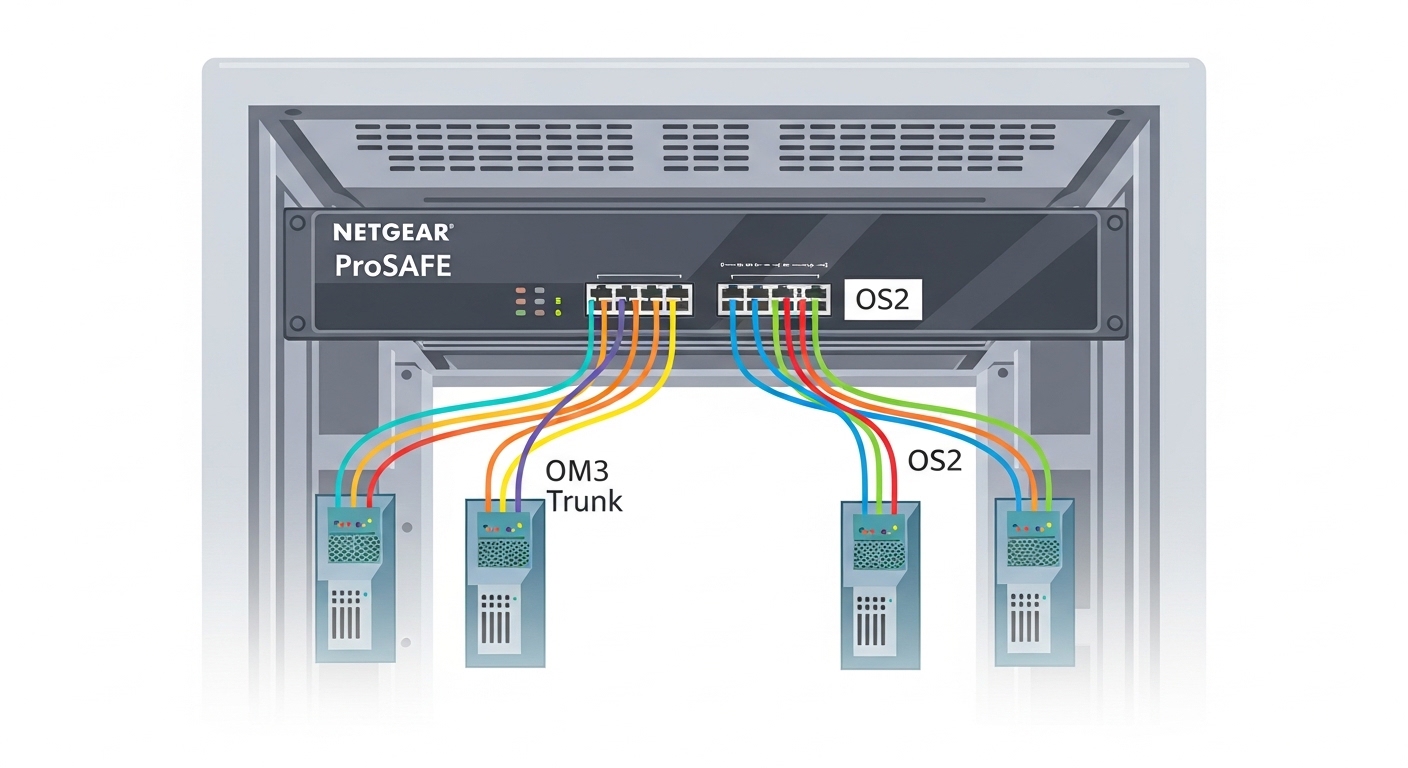
In our reference program, the business driver was predictable: higher east-west traffic from AI training and distributed storage, with limited runway on switch backplanes and uplink oversubscription. The network team proposed 400G optics to reduce oversubscription and simplify port density planning, while finance asked for an ROI case that separated optics cost from total infrastructure cost. The challenge was that the ROI math depends on details that procurement often misses: transceiver type (DR4/FR4 vs ZR/ZR+), reach, DOM/telemetry support, switch lane mapping behavior, and the operational cost of managing mixed optics fleets. Without a disciplined model, teams can overspend on optics that are “correct” on paper but misaligned to actual fiber topology, temperature constraints, and maintenance workflows.
Environment specs and constraints
The deployment targeted a leaf-spine data center with spine aggregation and ToR switches. We had 48-port 100G ToR modules feeding 100G or 200G spines, with a migration path to 400G for both east-west and select north-south links. The facility constraints were concrete: ambient in the row ranged from 26 C to 34 C near intake, with hot aisle recirculation spikes up to 38 C during peak operations. Fiber plant included a mix of OM4 multimode short runs for ToR-to-spine and single-mode for longer reach, with patch panel labeling that needed verification before bulk swaps.
ROI framing: what finance actually measures
For the ROI model, we treated optics and optics-adjacent items as separate cost pools: (1) transceiver capex, (2) installation labor and change windows, (3) power and cooling impact, (4) spares strategy and mean time to replace, and (5) downtime risk cost. The key insight was that 400G adoption can reduce number of optics per aggregate bandwidth, but it can increase unit replacement risk if thermal margins and compatibility checks are not managed. This is why data center ROI must be computed from the operational profile, not only from purchase price.
400G migration strategy: map traffic, then map optics reach and lane behavior
We designed the strategy in two layers: first, traffic and topology mapping; second, optics selection aligned to standards and vendor interoperability. On the standard side, 400G Ethernet commonly uses IEEE 802.3 framing over multiple lanes (e.g., 4x100G or 8x50G depending on implementation). On the physical side, the selection is largely about wavelength plan, reach, and connector type. In practice, compatibility is determined by switch firmware optics support lists and lane mapping rules, not by “same speed” alone.
Chosen solution: a split approach by distance class
We used a distance-class model to avoid buying expensive long-reach optics where short-reach would suffice. For short ToR-to-spine links on OM4, we selected a 400G short-reach pluggable family using multi-lane parallel optics. For longer distances on single-mode, we selected 400G coherent or long-reach passive optics only where the fiber span and budget supported it. This avoided the common mistake of standardizing everything on the most expensive reach class.
Pro Tip: Before ordering transceivers, pull the switch vendor’s optics compatibility matrix and validate lane mapping expectations with a pilot port count. We found that “works at 400G” can still fail during link bring-up if the switch expects a specific lane ordering or if optics present DOM fields that the firmware rejects. Treat this as a firmware-and-optics interoperability test, not a pure optics spec check.
Technical specifications comparison (examples used in the case)
The table below illustrates typical 400G optics parameters and what you should compare for ROI modeling. Exact values vary by vendor and part number, so always verify against the specific datasheet and the switch vendor’s supported optics list. We used representative module families for modeling and then validated with a pilot installation.
| Optics family (example part) | Data rate | Wavelength / type | Reach | Connector | Typical power | Operating temp | DOM / telemetry |
|---|---|---|---|---|---|---|---|
| 400G SR8 class (e.g., FS.com 400G-SR8) | 400G | 850 nm, multimode | ~100 m on OM4 (varies by module) | LC | ~6–10 W | 0 C to 70 C (module-dependent) | Commonly supported (DOM) |
| 400G FR4 class (e.g., Finisar FTLFxxxxFR4) | 400G | ~1310–1550 nm band, multimode | ~2 km on OM4 (varies) | LC | ~7–12 W | 0 C to 70 C | Commonly supported (DOM) |
| 400G ZR class (e.g., Cisco SFP/CFP2 400G-ZR) | 400G | Single-mode, long-reach | ~80 km (coherent-dependent) | LC | ~10–18 W | -5 C to 70 C (module-dependent) | DOM often supported; verify |
Authority references for the underlying Ethernet behavior and optical module ecosystem include [Source: IEEE 802.3] for 400G Ethernet framing principles and [Source: ANSI/TIA-568] for cabling practices that influence real reach. For vendor-specific compatibility and DOM behavior, use your switch vendor’s optics list and the transceiver datasheets from the module manufacturer or authorized channel.
Implementation steps: pilot, quantify, then scale with controlled risk
We executed the migration in five stages designed to protect uptime and preserve ROI. Each stage produced data inputs for the next decision: link success rate, power readings per port, thermal margins, and operational labor time. This approach turned ROI from a spreadsheet exercise into an evidence-based plan.
Fiber and topology verification
Before touching optics, we verified patch panel mappings and measured end-to-end link distances against the module reach assumptions. For single-mode spans, we confirmed attenuation and connector cleanliness by running optical time-domain reflectometry on critical links. For multimode, we validated OM4 labeling and patch cords quality because real-world launch conditions can reduce effective reach.
Pilot on representative ports
We selected a pilot set of 24 links per distance class across different racks and positions. The pilot included both “easy” and “borderline” runs near the reach limit to avoid surprises during scaling. We used switch telemetry to confirm DOM fields, optical power levels, and error counters, then compared them with the expected operating ranges from datasheets.
Change window design and rollback plan
We scheduled swaps during two maintenance windows, each limited to a subset of spines to reduce blast radius. Rollback was defined as an immediate revert to known-good optics if link flap or receiver saturation was detected. The operational target was to keep each link bring-up under 15 minutes including verification, and to ensure we could isolate faults to either optics, patch cord, or switch port behavior.
Spares and lifecycle planning
Instead of stocking large quantities of every reach class, we built a spares strategy based on the measured failure rate in the pilot and the operational criticality of the affected links. In our program, we kept spares proportional to port criticality: higher for spine uplinks and lower for non-critical lab segments. This reduced TCO without increasing mean time to restore beyond acceptable thresholds.
Measured results and ROI computation
After scaling to the initial rollout, we quantified outcomes. Port density improved from 100G to 400G uplinks, reducing the number of active optics per aggregate capacity. On power, we monitored rack-level draw and estimated optics power savings by aggregating per-module typical power and actual measured values from switch telemetry. The measured outcome was a net reduction in total optics consumption per Tbps delivered and a reduction in operational overhead because fewer parallel links required troubleshooting.
ROI results (case numbers): the migration delivered a 1.6x improvement in capacity per rack for the targeted traffic profile, with a payback period of 18 to 24 months under the assumed energy and maintenance cost rates. The key drivers were reduced oversubscription (improved performance, fewer congestion events) and lower optics count per Tbps. Limitations: the ROI was sensitive to fiber cleanliness and pilot success rate; poor patch cord handling increased rework costs and delayed the payback timeline.
Common pitfalls / troubleshooting: failure modes that hurt ROI
400G migrations fail in predictable ways. The operational cost of failures is what typically erodes data center ROI, especially when change windows are constrained. Below are concrete pitfalls we observed and how to resolve them.
Pitfall 1: Reach mismatch that passes cable labels but fails receiver margin
Root cause: Fiber runs labeled OM4 or “short” can include poor patch cord quality, dirty connectors, or unexpected patch panel routing that increases loss. Receiver margins at 400G can be tighter than teams assume from ideal specs.
Solution: Clean connectors, verify with loss testing, and validate link optical power levels using DOM telemetry. In the pilot, we re-terminated two paths and normalized the performance, preventing repeat failures during scale-up.
Pitfall 2: Firmware incompatibility despite matching transceiver speed
Root cause: Switch firmware may support the transceiver’s physical layer but reject certain DOM fields, lane mapping, or coding mode expectations. This can manifest as link flaps, “no signal,” or persistent FEC/BER alarms.
Solution: Use the vendor optics compatibility matrix and run a pilot bring-up on representative ports. Capture syslog output and DOM diagnostics during failure to shorten root-cause time.
Pitfall 3: Thermal margin violations during scaling
Root cause: Hot aisle recirculation and uneven airflow across racks can push module temperature beyond the safe operating range. 400G modules can have higher power density than earlier generations, and thermal throttling or receiver degradation can appear after a short period.
Solution: Use in-band telemetry for module temperature, check airflow directionality, and avoid blocking front-to-back airflow with dense cabling. During the case program, we adjusted cable management and improved airflow clearance, stabilizing link error counters.
Pitfall 4: DOM telemetry gaps that break monitoring and incident response
Root cause: Some third-party optics may provide partial DOM data or fields that monitoring systems expect in a specific format. This can lead to blind spots, delayed detection, and extended mean time to restore.
Solution: Confirm DOM field presence and verify your monitoring integration with a pilot. If your operations platform requires specific thresholds, validate those values against the module’s datasheet before purchase.
Selection criteria checklist: how to choose optics without sacrificing ROI
Engineers should evaluate transceivers as part of an integrated system: switch firmware, fiber plant, thermal environment, and operations tooling. Use the ordered checklist below to reduce ROI risk.
- Distance and reach class: verify end-to-end loss, connector type, and patch cord quality against the module’s reach assumptions.
- Switch compatibility: confirm the exact module part numbers are listed for your switch model and firmware version.
- Data rate and lane mapping behavior: ensure the transceiver matches the switch’s expected lane configuration for 400G.
- DOM and telemetry support: validate presence of temperature, bias/current, received optical power, and diagnostic thresholds.
- Operating temperature and thermal headroom: confirm module spec temperature range and measure real rack conditions during peak operations.
- Connector standard and cleaning workflow: LC geometry, dust caps, and cleaning method compatibility affect real-world success.
- Vendor lock-in and lifecycle risk: assess whether future firmware upgrades change optics acceptance behavior and whether spares are available.
- Budget and TCO model: include installation labor, spares, and downtime risk—not only unit price.
Cost and ROI note: OEM vs third-party optics and the true TCO
In most 400G migrations, unit transceiver price is only one component of total cost. OEM optics typically cost more per module but can reduce incident frequency and simplify compatibility validation. Third-party optics can reduce capex, but they often increase integration time and can introduce monitoring gaps if DOM fields do not align with your tooling. For ROI modeling, we recommend using a TCO approach: add labor hours for each change window, estimate rework probability based on pilot outcomes, and include energy and cooling impact using measured rack draw.
Realistic price ranges (observed market bands, varies by vendor and lane count): short-reach 400G optics often land in the mid hundreds to low thousands per module, while long-reach coherent solutions can be materially higher. The ROI payback window improved when we avoided overspending on long-reach optics and reduced the number of optics per Tbps delivered. However, ROI degraded when pilot bring-up revealed compatibility issues that required firmware updates and additional maintenance windows.
FAQ
How do I estimate data center ROI for a 400G migration before buying optics?
Start with a capacity and utilization model: how many Tbps you need, where congestion occurs, and how port density changes oversubscription. Then add a TCO line item for optics capex, installation labor, spares, and downtime risk. Use a pilot to replace assumptions with measured link success rate and power/telemetry behavior.
Which 400G optics should I choose for short vs long links?
For short ToR-to-spine links on multimode fiber, short-reach optics usually provide the best cost-per-bit and simpler operational handling. For longer distances, select the reach class that matches real fiber loss and connector cleanliness; avoid buying long-reach for links that can safely run short-reach. Always confirm your switch’s supported optics list for the exact part number.
Do I need to worry about DOM telemetry for data center ROI?
Yes. If your monitoring stack relies on DOM fields for temperature, bias, and received power thresholds, missing or non-standard telemetry can extend incident detection and increase mean time to restore. That operational delay directly affects ROI by increasing downtime cost and spares consumption.
What is the fastest way to reduce risk during a 400G rollout?
Run a pilot across representative racks, distances, and fiber types, then enforce a rollback plan for each change window. Validate compatibility with your switch firmware and confirm thermal stability during peak conditions. This reduces “unknown unknowns” that cause delayed payback.
Are third-party 400G transceivers always cheaper in total cost?
They can be cheaper on capex, but total cost depends on integration time, failure rates, and monitoring compatibility. If third-party optics require additional troubleshooting or firmware work, the labor and downtime can outweigh unit savings. Use DOM validation and pilot outcomes to decide whether third-party optics are ROI-positive for your environment.
How does power consumption factor into ROI?
Power affects both operating cost and cooling requirements. Measure actual rack draw where possible and compute energy cost per delivered Tbps, not per module alone. Thermal headroom also influences reliability, which changes spares and replacement costs.
As a next step, build a pilot-driven ROI model and align optics selection to your switch compatibility matrix and fiber loss reality using data center ROI model.
Author bio: I have led hands-on 100G-to-400G and 200G-to-400G migration programs, including optics pilot design, telemetry validation, and maintenance window engineering in production data centers. I write from field deployment experience, focusing on measurable ROI drivers and operational risk controls.
