
When AI workloads ramp up, the network becomes the silent bottleneck: bursty east west traffic, strict latency, and serious power constraints. In this article, I share how I select optical transceivers for AI optimized data centers in 2026, focusing on what actually matters in the rack and in the field. If you are planning leaf spine upgrades, migrating to 400G, or standardizing transceivers across vendors, this is for you.
Why optical transceivers make or break data center benefits
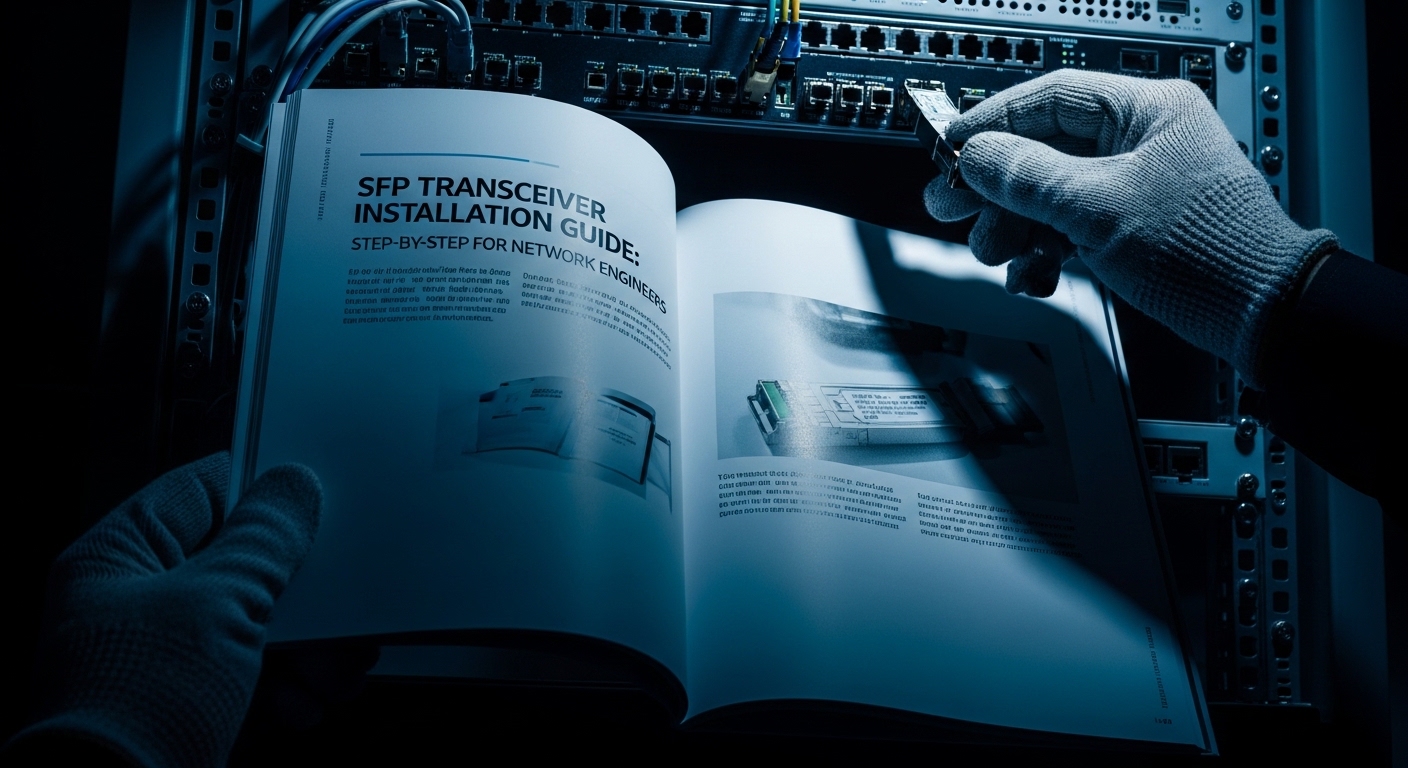
Data center benefits show up as faster job completion, fewer retransmits, and lower cooling overhead when link reliability and power draw are engineered correctly. In practice, I see the biggest wins when optics are matched to switch PHY expectations (including signal diagnostics) and when the fiber plan is disciplined. For AI clusters, you are often running short reach multimode or carefully managed single mode links, with tight budgets for jitter, optical power, and thermal stability. The result is a network that stays predictable under load instead of “working in the lab” but degrading during real training cycles.
From a standards perspective, the Ethernet physical layers are defined by IEEE 802.3 for each speed tier and reach class. For example, 100G and 200G optical links commonly align with IEEE 802.3ba, while 400G optical interfaces align with IEEE 802.3bs. For transceiver behavior, I also rely on vendor datasheets for receiver sensitivity, transmitter launched power, and digital diagnostic interfaces.
Pro Tip: In the field, the fastest path to stability is not “higher power optics.” It is matching the module type to the switch’s expected electrical lane mapping and verifying DOM thresholds. I have seen links that pass nominal BER on day one but later flap because DOM alarms were ignored and the vendor default thresholds were too permissive.
Key specs that matter in AI optimized networks (2026 reality)
AI optimized data centers tend to push higher aggregate bandwidth density: more ports per switch, shorter link distances, and more frequent replacements. That means you should treat transceiver selection like a small system design: optics, fiber plant, switch compatibility, and thermal behavior. The table below summarizes the practical spec points I use during selection and acceptance testing.
| Spec | What to check | Typical examples | Why it affects data center benefits |
|---|---|---|---|
| Data rate | Does it match the switch port speed and breakout mode? | 25G, 50G, 100G, 200G, 400G | Prevents link training fallback and reduces retransmits |
| Wavelength | 1310/1550 for SR vs LR, or BiDi wavelengths for dense builds | 850 nm (SR), 1310 nm (LR), 1550 nm (ER/LR variants) | Ensures fiber compatibility and budget accuracy |
| Reach | Rated distance for the exact fiber type and class | 850 nm OM4/OM5 short reach; LR single mode | Avoids marginal links that fail under temperature swings |
| Connector | LC vs MPO/MTP, polish type, and cleaning standard | LC for many LR; MPO for high density SR | Connector loss and contamination drive real BER |
| Optical power & sensitivity | Tx min/max, Rx sensitivity, and typical link budget | Vendor datasheet values for SR and LR | Defines headroom against aging and patch panel loss |
| DOM support | Digital optical monitoring availability and alarm behavior | MSA style DOM, vendor specific thresholds | Enables proactive maintenance and reduces downtime |
| Temperature range | Commercial vs industrial grade optics | 0 to 70 C vs wider operational ranges | Prevents thermal induced drift in high density aisles |
Concrete module examples I have used
In deployments, I often see teams standardize around known, documented modules with clear DOM behavior. For 10G short reach, common part families include Cisco SFP-10G-SR and Finisar FTLX8571D3BCL. For cost and sourcing flexibility at higher aggregation, I have also used FS.com optics such as FS.com SFP-10GSR-85 (exact suffixes vary by SKU). For 25G and 100G SR, the ecosystem expands quickly, but the selection method remains the same: validate against the switch’s supported transceiver list and confirm DOM alarms in your monitoring system.
Also pay attention to optics form factor and optics interface type. In high density AI racks, MPO/MTP is common for SR, while single mode links often use LC. If your switch expects a specific module type (for example, a specific lane mapping or breakout behavior), “functionally compatible” optics can still fail during link bring up.
Real-world deployment scenario: AI leaf spine with strict power and reach
One project I supported involved a 3-tier style leaf spine topology inside a training facility. The leaf layer had 48-port 10G/25G class switches feeding a spine fabric, and the interconnects used a mix of short reach multimode and select single mode uplinks. We ran roughly 320 active links across the initial rollout, with patch panel lengths averaging 12 to 35 meters and a few longer runs up to 70 meters where MPO trunks were carefully routed.
Our acceptance test required each link to show stable optical diagnostics: Tx power within vendor limits, Rx power above sensitivity thresholds, and no DOM alarm spikes during a 2-hour thermal cycling period (heat soak from sustained traffic). We standardized on OM4 or OM5 where possible to reduce single mode cost, but we still validated link budgets using measured fiber attenuation from the patch panels rather than relying only on design estimates. The data center benefits were immediate: fewer link flaps, smoother training throughput, and lower operational overhead because DOM gave early warning before a marginal fiber segment caused retransmits.
Selection criteria checklist for 2026 optics standardization
If you want data center benefits instead of ongoing firefighting, use an ordered checklist. This is how I approach standardization across multiple switch models and multiple purchase cycles.
- Distance and fiber type: confirm OM4 vs OM5 vs single mode, and measure patch panel loss with a meter or OTDR where feasible.
- Switch compatibility: cross-check the exact switch model’s supported transceiver list and verify speed mode and breakout behavior.
- Optical budget headroom: validate Tx launched power and Rx sensitivity with worst case connector and splice loss included.
- DOM support and thresholds: ensure the platform reads DOM correctly and that alarm thresholds are sane for your monitoring workflow.
- Operating temperature: verify temperature range against aisle airflow and expected inlet temperatures; consider industrial grade for hot zones.
- Vendor lock-in risk: evaluate OEM vs third party for long term sourcing, lead times, and replacement strategy.
- Connector cleanliness plan: confirm MPO/MTP and LC cleaning tooling is available and part numbers are consistent with your practices.
Common pitfalls and troubleshooting tips I have seen repeatedly
Even experienced teams get tripped up. Below are failure modes I have personally encountered, with root cause and what fixed it.
Link comes up initially, then flaps under load
Root cause: Marginal optical power budget due to connector contamination or higher than expected patch loss; BER degrades as temperature rises. Solution: clean connectors with the correct process, re-seat MPO/MTP properly, and re-check DOM values over time to confirm you have headroom beyond the minimum.
Switch rejects module or falls back to a lower speed
Root cause: Transceiver not aligned to the port’s expected electrical interface, lane mapping, or firmware compatibility. Some platforms are strict about module identification and diagnostic register behavior. Solution: use the switch’s compatibility list, confirm the exact form factor (QSFP-DD vs QSFP28 vs SFP28) and confirm the speed profile supported by the port.
Persistent high errors with no obvious DOM alarms
Root cause: DOM thresholds may be set too high or your monitoring ignores specific counters; alternatively, a fiber polarity or mapping mismatch can send energy into the wrong receive pair. Solution: validate polarity and fiber mapping end to end, then monitor interface error counters (CRC, FCS, and optical lane specific counters if exposed) while correlating with link diagnostics.
Temperature induced drift in dense aisles
Root cause: Transceivers running near their upper temperature limit because airflow is blocked by cable management or because the rack inlet is hotter than assumed. Solution: measure inlet temps, improve airflow paths, and if needed, migrate to a wider temperature grade module.
Cost and ROI note: OEM vs third party, plus total cost of ownership
Pricing swings by speed tier and reach class, but a realistic view helps. For many short reach modules, OEM optics can cost roughly 1.2x to 2.5x compared to third party equivalents, depending on volume and licensing. The ROI usually comes from reduced downtime and lower replacement churn, not from unit price alone.
For TCO, I model three buckets: module cost, operational cost (labor for swaps and diagnostics), and risk cost (probability of failure and the impact window). In stable environments, third party optics can deliver strong value if they are validated for your exact switch models and if DOM behavior is monitored. In contrast, if your fleet is diverse and you cannot standardize, OEM modules may reduce compatibility surprises and speed up incident resolution.
Also factor power. Higher efficiency optics can shave watts across hundreds of ports. Even small per module savings matter when you scale to large AI clusters running 24/7, and when every watt increases cooling load.
FAQ
What optical transceiver type is best for AI data center benefits at short distances?
For many AI deployments, short reach multimode (often OM4 or OM5) is a common choice because it supports dense cabling with MPO/MTP and typically lower cost than long reach single mode. The best pick depends on your measured distance, connector losses, and your switch’s compatibility list.
Do I really need DOM support, or can I run without it?
DOM is very useful for operational visibility. Without DOM, you lose early warning on Tx power, bias current, and temperature drift, which can increase downtime during replacements. Many teams start without DOM alerts, then regret it after their first repeat failures.
How strict are switch compatibility checks in 2026?
They can be strict, especially at higher speeds and newer form factors like QSFP-DD and similar high density modules. I recommend validating against the exact switch model and software version, because some platforms interpret transceiver identification and diagnostics differently.
What is the biggest cause of optical link problems in new builds?
In my experience, connector cleanliness and patch panel loss are the top causes. Even if the fiber type and distance are correct, contamination or incorrect MPO handling can push a link into marginal BER territory.
Are third party optics safe for production?
They can be, but only with validation. Test representative modules in a staging environment that matches your switch models, monitoring, and thermal conditions, then set up DOM and error counter monitoring for early detection.
Where can I confirm physical layer and interface expectations?
Start with IEEE 802.3 for the relevant Ethernet physical layers and reach definitions, then cross reference vendor datasheets for power, sensitivity, and DOM behavior. For general guidance, see [Source: IEEE 802.3] and vendor documentation; also check reputable tech media for field notes like IEEE 802.3.
Update date: 2026-05-02
About the author: I am a field leaning travel blogger who has spent years in data halls, chasing link stability across fiber plants and switch upgrades. I write from on site troubleshooting experience, so you get practical selection criteria instead of theory.
