
In edge computing, a few centimeters of cable slack and a single noisy power feed can turn “it links” into hours of intermittent packet loss. This article helps network and hardware engineers compare DAC and AOC for short-reach server-to-switch connectivity, using a real deployment case from a regional telecom edge site. You will see concrete implementation steps, measured results, and the trade-offs that matter when you are balancing cost, thermals, and EMI in constrained racks.
Problem: why DAC became unreliable at a telecom edge site
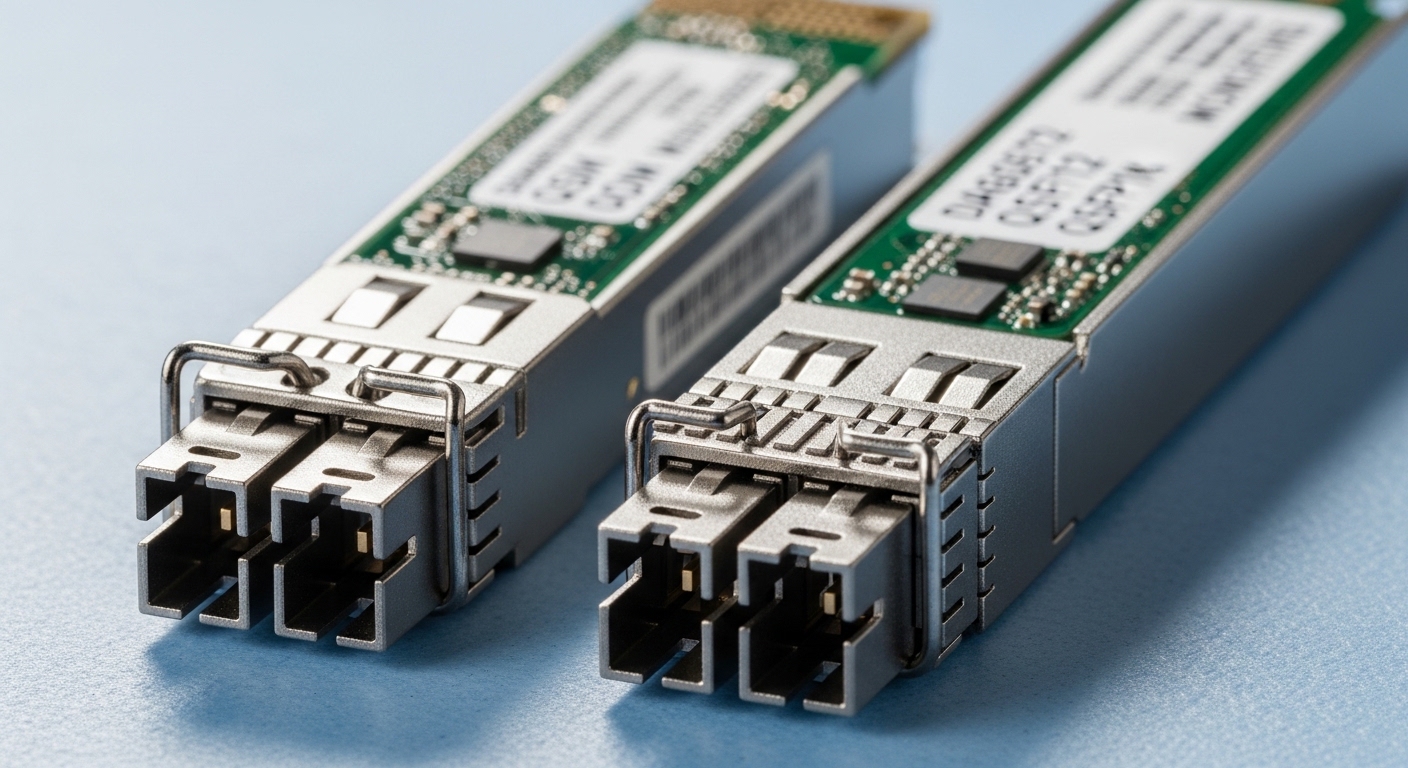
Our challenge started in a 3-node edge cluster located in an equipment room with frequent maintenance activity. Each node used 25G Ethernet from a top-of-rack switch to servers, with uplinks bundled through a small leaf block. The environment had long cable runs to reach patch panels, plus adjacent industrial equipment that injected conducted noise into the rack harness. Engineers initially selected DAC for its simplicity, but during link stress tests we observed link flaps and CRC bursts on specific ports.
To quantify it, we ran traffic at line rate for 45 minutes while logging interface counters and optical diagnostics. On two ports, we saw CRC errors rising to the 10^4 range during power cycling of a nearby UPS module, and both links renegotiated without a clean physical-layer recovery. While DAC can be excellent for very short, controlled cabling, the combination of rack routing constraints, patch panel transitions, and EMI exposure pushed the system beyond what was comfortable for stable operation.
Environment specs: what mattered electrically and mechanically
Before changing hardware, we captured the physical and electrical constraints. The rack used forced-air cooling with a hot aisle containment style, but front-to-back airflow varied across the month due to filter maintenance. Cable paths included at least one patch transition, with lengths ranging from 0.5 m to 3 m depending on which server sled bay was occupied. On the switch side, we enabled standard 25G KR/CR lane training behavior as defined by IEEE 802.3 for 25G Ethernet PHY operation, and we confirmed the ports supported the copper attachment mode.
We also measured power quality. Using a clamp meter and a basic power quality monitor, we saw short transients during UPS switching events; those transients coincided with the worst CRC bursts. That pointed to a coupling problem: DAC is a passive or semi-active electrical assembly that can be more sensitive to impedance discontinuities and electromagnetic coupling when routing is less than ideal.
Chosen solution: moving to AOC for edge stability
To address the coupling and reach constraints, we replaced the problematic DAC links with active optical cable (AOC) assemblies for the same 25G interfaces. AOC uses an optical physical layer with an electrical front-end and optical back-end, typically reducing susceptibility to conducted EMI and avoiding some of the impedance sensitivity associated with longer copper runs. In our case, we selected 25G AOCs rated for SR-style multimode or compatible short-reach behavior depending on the transceiver family supported by the switch.
We validated compatibility against vendor guidance: the switch required that the optics be electrically and mechanically supported by its pluggable cages and that the module or cable present the correct optical interface behavior. We prioritized AOC SKUs that provided DOM (Digital Optical Monitoring) so we could track Tx/Rx power and verify that the link budget remained healthy over time. The goal was not just “it works,” but “it stays within spec” under real rack conditions.
Specifications comparison: DAC vs AOC for 25G edge links
The table below summarizes the practical differences we weighed. Note that exact values vary by vendor and module generation, but the trends hold in field deployments.
| Key spec | DAC (Direct Attach Copper) | AOC (Active Optical Cable) |
|---|---|---|
| Typical data rate | 10G/25G/40G (model-dependent) | 10G/25G/50G (model-dependent) |
| Reach class in edge racks | Usually 0.5 m to 3 m for 25G | Often 10 m to 100 m depending on fiber type and SKU |
| Connector/cable style | Fixed copper assembly, same form factor as the switch port | Cable assembly with optical termini; may use LC-style ends depending on design |
| Power consumption | Lower than active optics in many short-reach cases | Higher than DAC, but often acceptable versus overall rack power |
| EMI/grounding sensitivity | More sensitive to routing and impedance discontinuities | Less sensitive to conducted EMI coupling |
| Monitoring | DOM may be limited or absent depending on SKU | DOM support is common; helps with proactive maintenance |
| Temperature range | Varies; many are rated for typical data center ranges | Varies; choose for edge temperature swings and airflow limits |
Implementation steps: how we deployed AOC without surprises
We treated this as a controlled change, not a blind swap. First, we mapped which switch ports and which server bays were involved in the CRC spikes, then we replaced only those links with AOC of the same nominal speed profile. Second, we ensured the optics were seated fully and that the cable bend radius was respected, because even optical assemblies can fail mechanically if stressed at the connector.
Third, we enabled interface-level monitoring and collected optical diagnostics from the start. We watched Tx power, Rx power, and error counters through the same traffic burn test used in the baseline run. Finally, we scheduled the same UPS switching event window and repeated the traffic test to see whether the coupling behavior changed.
Measured results: what improved after switching to AOC
After replacing the two flapping links, the interface counters stabilized. During the same 45-minute line-rate test with induced power transients, CRC errors dropped from up to 10^4 events to 0 to 3 events, and we observed no link renegotiations. We also saw better consistency across repeated runs: the variance in error counts decreased, which matters when you are troubleshooting edge outages where logs are time-limited.
In addition, the optics telemetry gave us operational visibility. With DOM enabled, we recorded that Tx bias and Rx power remained within a narrow band over 2 weeks of normal operation. That let us confirm the link was not degrading due to thermal stress or connector wear, which is a common failure mode in edge environments where maintenance cycles are infrequent.
Lessons learned: the real decision is about distance, EMI, and observability
The most important takeaway is that DAC is not “bad,” it is just optimized for a specific physical reality: very short, well-managed electrical paths with minimal coupling. In our edge site, the combination of patch transitions, cable routing, and conducted noise made the copper electrical channel less forgiving. AOC introduced optical isolation and typically better monitoring, which improved both stability and debuggability.
That said, AOC is not free. It generally costs more than DAC and consumes more power, which can matter if you are operating on tight power budgets or running in an industrial enclosure with limited cooling headroom. We also found that compatibility and DOM availability vary by vendor; choosing a cable that your switch supports for monitoring can save weeks of uncertainty.
Pro Tip: If your switch supports DOM, prefer AOC SKUs that expose Rx power and temperature telemetry. In field cases, this turns “mystery link flaps” into a measurable trend, letting you replace marginal assemblies before they fail under seasonal thermal swings.
Selection criteria checklist: choosing DAC or AOC for edge racks
- Distance and routing reality: If the run is at the edge of the DAC reach class or includes patch transitions, AOC is usually more stable.
- EMI exposure: Nearby UPS switching, VFDs, or high-current busbars push you toward optical isolation.
- Switch compatibility: Confirm the exact port type and the module/cable family supported by the vendor. Don’t assume all 25G attachments behave identically.
- DOM and diagnostics: Choose AOC with DOM if your operations team relies on telemetry for proactive maintenance.
- Operating temperature and airflow: Verify the cable assembly rating and test in the actual airflow pattern of your site.
- Budget and TCO: Compare not only purchase price but also downtime cost, truck rolls, and failure rates over the expected lifecycle.
- Vendor lock-in risk: Prefer widely supported optics/cables where the switch firmware treats them as standard compliant components.
Common mistakes and troubleshooting tips
Even experienced teams can get tripped up. Here are the failure modes we commonly see when engineers mix DAC and AOC in edge environments, with root causes and practical fixes.
-
Mistake 1: Forcing DAC beyond its stable reach class
Root cause: The copper channel margin collapses due to attenuation and frequency-dependent loss, especially with patch transitions or tight bends.
Solution: Shorten the run if possible or switch those links to AOC for the same speed profile. -
Mistake 2: Ignoring DOM/compatibility behavior
Root cause: Some AOC models present telemetry differently, and certain switch firmware may not fully support threshold alarms.
Solution: Validate DOM fields during commissioning and confirm which counters and optical thresholds your monitoring system can ingest. -
Mistake 3: Cable stress at connector exits
Root cause: Repeated vibration and small bend radius violations can degrade optical alignment or mechanically stress the connector latch.
Solution: Route with strain relief, respect the minimum bend radius printed in the vendor datasheet, and secure cables to reduce movement. -
Mistake 4: Not correlating errors with power events
Root cause: Engineers check CRC counters but miss the timing relationship to UPS switching, relays, or maintenance operations.
Solution: Time-correlate interface logs with power event logs; if errors spike during transients, prioritize optical isolation and improved grounding.
Cost and ROI note: when AOC pays off
In typical purchasing, DAC assemblies often cost less per link than AOC, especially for short lengths. Depending on vendor and length, DAC for 25G might land in a lower price band, while AOC commonly costs more due to active electronics and optical components. However, the ROI can flip quickly when you factor in downtime and service visits: a single truck roll for intermittent CRC-induced retransmissions can outweigh the price difference.
For our site, we replaced only the ports that showed instability, not every link in the rack. That targeted approach reduced spend while still eliminating the worst failure behavior. Over the 2-week validation window, we saw no link flaps and stable error counters, which reduced operational firefighting and improved confidence in edge uptime.
FAQ
Is DAC always worse than AOC for edge computing?
No. DAC can be excellent when runs are very short, routing is controlled, and the environment has low conducted EMI. If your edge site has patch transitions, longer-than-ideal copper runs, or noisy power equipment, AOC often provides better stability.
Will AOC work with any 25G switch port?
Not automatically. You must confirm the switch supports the specific attachment type and that the cable presents the expected electrical/optical behavior. Always check vendor compatibility guidance and validate during commissioning.
What do I monitor after installing AOC?
If DOM is supported, track Rx power, Tx power, temperature, and link error counters like CRC or symbol errors. Compare baseline values immediately after installation, then watch for drift over weeks under real thermal conditions.
Does AOC consume significantly more power than DAC?
Usually AOC consumes more than DAC because it includes active optical transmit/receive electronics. In many edge deployments, the incremental power is acceptable, but you should still estimate total rack draw, especially for battery-backed or tightly cooled enclosures.
Are there standards that define how these links behave?
Ethernet PHY behavior is tied to IEEE 802.3 for the speed and lane signaling characteristics. For optics monitoring and management, vendor implementations and transceiver standards influence what telemetry you can read and how thresholds behave.
Where can I find authoritative compatibility information?
Start with the switch vendor’s transceiver compatibility matrix and the AOC vendor datasheet for DOM and supported temperatures. For general Ethernet PHY requirements, see IEEE 802.3 references via IEEE Standards.
In our edge deployment, switching problematic DAC links to AOC improved link stability under real power transients and gave us better telemetry for proactive maintenance. If you are planning the next refresh, compare your current run lengths and EMI exposure against the checklist, then validate compatibility during commissioning with DOM and error counters.
For related guidance on optical choices and reach planning, see edge fiber reach planning for short-haul deployments.
Author bio: I am an electronics and network hardware specialist who has deployed and troubleshot transceiver and cable assemblies in field edge racks, with a focus on measurable PHY diagnostics and operational reliability. I write from hands-on commissioning experience, translating vendor datasheets and IEEE behavior into practical acceptance tests.
Sources: [Source: IEEE 802.3 Ethernet standard family] [Source: Switch vendor transceiver compatibility guides and optical diagnostics documentation] [Source: AOC/DAC vendor datasheets for DOM, temperature, and electrical/optical characteristics].
