
Small and mid-sized operators deploying edge computing often face the same rack-level question: should you run copper DAC cables or fiber-based AOC active optical cables between switches and servers? This article helps network and infrastructure teams evaluate both options using practical constraints like port density, temperature, power budgets, and vendor interoperability. You will also get a troubleshooting checklist drawn from common field failures and a decision matrix you can use during purchasing.
DAC vs AOC: what changes electrically and optically in edge deployments
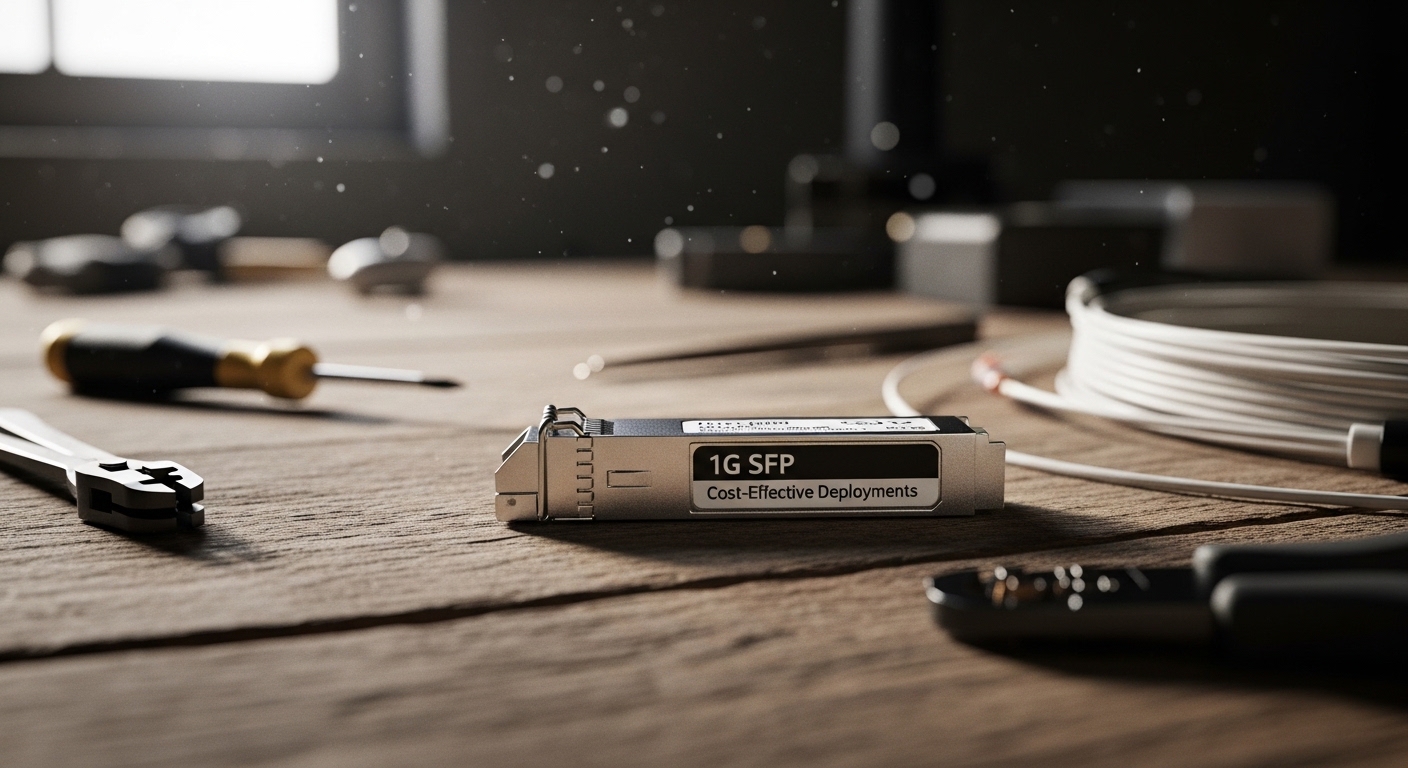
DAC (Direct Attach Copper) and AOC (Active Optical Cable) both move high-speed data between nearby devices, but they do so using different physical layers. DAC typically uses copper traces inside a twinax assembly; signal integrity depends on equalization and the transceiver’s reach rating. AOC converts electrical signals to optical inside the cable, then back to electrical at the far end, which reduces electromagnetic interference and can improve link robustness in noisy environments.
In edge computing sites—factory floors, retail back rooms, remote telecom huts, or municipal traffic rooms—rack conditions can be harsh: power cycling, vibration, and dust can punish marginal links. That is where the “hidden” differences matter: AOC generally offers better immunity to EMI and crosstalk, while DAC is usually simpler, cheaper upfront, and easier to swap during maintenance.
From a standards perspective, these are still Ethernet optics/electrical links at the PHY layer, commonly aligned with IEEE Ethernet transceiver behavior and vendor-specific implementations. For Ethernet PHY and link requirements, use IEEE 802.3 references when validating expected link training and error behavior. IEEE 802.3 Overview
Pro Tip: In edge computing racks, the most frequent “mystery” outages are not bandwidth issues; they are link instability caused by marginal connector seating and temperature-driven drift. If you must choose DAC, treat connector inspection and bend radius management as part of your preventive maintenance plan.
Performance and reach: how to map link budgets to real SMB topology
Both DAC and AOC can support common edge speeds such as 10G and 25G over short distances, but their “reach” is rarely about physics alone. DAC reach is typically limited by copper loss and the transceiver’s equalization capability; AOC reach is constrained by optical power budget, receiver sensitivity, and thermal behavior of the laser/LED inside the cable. As a rule, if your edge site has frequent re-patching or uncertain cable lengths, AOC often gives you more tolerance to small installation mistakes.
Below is a practical comparison using representative, widely deployed module families. Exact specifications vary by vendor, but the ranges are representative for planning. Always confirm with the specific datasheet for the exact SKU you intend to buy.
| Spec | DAC (Twinax, e.g., SFP+/SFP28) | AOC (Active Optical Cable, e.g., SFP+/SFP28) |
|---|---|---|
| Typical data rates | 10G, 25G (model-dependent) | 10G, 25G (model-dependent) |
| Typical reach class | 1 m to 7 m (common) | 10 m to 100 m (common) |
| Connector type | SFP+ or SFP28 style (direct attach) | SFP+ or SFP28 style (active optical) |
| Wavelength | N/A (copper) | Common: 850 nm multimode for short-reach |
| Power profile | Often lower than optical modules; varies by vendor | Often higher than DAC but may reduce system power via fewer re-transmits |
| Operating temperature | Often commercial ranges; verify SKU | Verify whether the cable is rated for industrial temps |
| EMI sensitivity | Higher susceptibility in dense cable runs | Lower susceptibility due to optical propagation |
For concrete product examples, operators frequently encounter DAC and AOC options such as Cisco-branded or compatible transceivers. If you want a reference point for optics behavior at 10G SR class, see vendor optics documentation for expected wavelength and reach constraints. Cisco 10G SR Optics Datasheet
Cost and ROI: where SMB budgets usually win or lose
DAC is typically cheaper per link than AOC, especially when you only need 1 m to 3 m patching inside a single rack. In edge computing deployments, that upfront cost difference can be meaningful when you are installing dozens of uplinks from top-of-rack switches to compute nodes. However, AOC can reduce total cost when it prevents avoidable truck-rolls due to intermittent link errors in high-EMI areas.
For SMB ROI calculations, include three line items: (1) purchase price per port, (2) downtime cost during maintenance windows, and (3) expected failure and rework rate. In practice, if your edge location has frequent rack access, AOC’s improved EMI robustness and often longer effective reach can reduce “re-cabling” time. Conversely, in a clean, controlled server room, DAC’s simplicity and low cost frequently dominate.
Realistic price bands (varies by brand, volume, and region): DAC for common SFP+ lengths often lands in the low tens of dollars per cable; AOC frequently costs more, sometimes roughly 1.5x to 3x depending on reach class and qualification. Total cost of ownership (TCO) can flip if AOC avoids even one failed link that forces a site visit—especially when labor and logistics dominate the budget.
Compatibility and vendor lock-in: how to avoid dead-on-arrival links
Compatibility is the biggest operational risk for SMBs. Many switches implement vendor-specific transceiver qualification, and while optics standards exist, the transceiver’s electrical interface and DOM (Digital Optical Monitoring) behavior can still differ. Before you buy, verify that your exact switch models accept the transceiver type and speed, and confirm whether third-party optics are supported without diagnostics limitations.
In edge computing, this matters because your environment may be remote and you need predictable field replacement. If your procurement only stocks one vendor’s optics, you can get “locked” into that ecosystem, which increases both cost and lead time. The safest approach is to test in a staging rack with the same switch model and firmware version you will deploy.
If you are using QSFP28 vs SFP28 vs SFP+ families, ensure you select matching port types and optics speed. For example, SFP28 typically targets 25G and uses different signaling and reach characteristics than 10G SFP+ modules. Vendor datasheets and switch transceiver matrices are the authoritative source for compatibility. IEEE 802.3 Working Group
Selection checklist for edge computing: DAC or AOC, step by step
- Distance and routing reality: measure the actual end-to-end path including slack. If your required length is near a DAC limit, AOC is safer.
- EMI environment: if cables run near motors, VFDs, large power supplies, or long copper bundles, prefer AOC for robustness.
- Switch compatibility: confirm the switch supports that exact transceiver type and speed; validate with your current firmware.
- DOM and monitoring needs: if you rely on optical power and alarms for operations, ensure DOM fields are available and correctly interpreted.
- Operating temperature: verify industrial ratings if the edge site exceeds typical commercial ranges; thermal derating can reduce link margin.
- Maintenance and replacement logistics: if spares are shipped infrequently, choose a part number you can reliably source quickly.
- Vendor lock-in risk: decide whether you can standardize on one vendor or maintain a qualified third-party list.
Common mistakes and troubleshooting in edge computing links
Mistake 1: Over-length DAC routing. Root cause: copper loss exceeds what the transceiver equalization can handle, especially after temperature changes. Solution: reduce cable length, swap to the next shorter DAC SKU, or use AOC for the same endpoint.
Mistake 2: Poor connector seating and bend radius violations. Root cause: micro-disconnects and intermittent contact cause CRC errors and link flaps. Solution: inspect latch engagement, manage cable bend radius, and avoid tight turns within the first few centimeters from the connector.
Mistake 3: Assuming all “compatible” optics behave identically with DOM. Root cause: third-party implementations may expose DOM fields differently, leading to monitoring blind spots or false alarms. Solution: validate DOM readings in staging; confirm threshold behavior and alarm mapping in your monitoring stack.
Mistake 4: Ignoring thermal derating in sealed edge cabinets. Root cause: higher ambient temperature reduces optical output and receiver margin for AOC; DAC may also degrade due to thermal effects on copper loss. Solution: confirm cable temperature ratings, improve airflow, and measure cabinet temperatures under load.
Decision matrix: DAC vs AOC for different edge computing buyers
| Criteria | DAC | AOC |
|---|---|---|
| Shortest in-rack links (clean environment) | Strong fit | Good but often unnecessary cost |
| EMI-heavy industrial sites | Riskier | Preferred |
| Need longer reach within cable path constraints | May fail near limit | More margin |
| Budget sensitivity | Lower upfront cost | Higher upfront, possible TCO win |
| Monitoring and alarm fidelity | Often limited; depends on platform | Typically better optical telemetry if supported |
| Field replacement simplicity | Common SKUs, easy swaps | Also easy, but stock management matters |
Which option should you choose?
If you run edge computing in a controlled environment—short, predictable runs inside a rack—and you can guarantee cable lengths well within DAC ratings, choose DAC to minimize upfront spend and simplify inventory. If your edge sites are EMI-prone, thermally stressed, or you cannot reliably control cable routing lengths, choose AOC to improve operational stability and reduce intermittent link troubleshooting.
For SMBs planning a mixed fleet, a pragmatic approach is to standardize DAC for “in-rack clean” links and AOC for “industrial or uncertain routing” links. Next, evaluate your monitoring requirements with edge computing network monitoring to ensure your telemetry and alerting match the optics type you deploy.
FAQ
Is edge computing compatible with DAC and AOC on the same switch?
Yes, typically you can mix DAC and AOC as long as they are the correct port type and speed for your switch model. Validate in staging because vendor qualification and DOM behavior can vary.
What is the main reason AOC works better in harsh edge cabinets?
AOC uses optics for the signal path, reducing susceptibility to EMI and copper crosstalk. This often improves link stability when power wiring and industrial loads share pathways.
Do I need multimode fiber for AOC?
No, AOC is an integrated cable with optical conversion at both ends; you do not need external fiber. However, many AOC cables are specified for 850 nm class behavior internally, so verify the SKU.
