
In modern 400G leaf-spine and spine-to-core designs, engineers routinely face a painful question: DAC vs AOC. If you are troubleshooting link flaps, budgeting power for hundreds of ports, or trying to meet a deterministic latency target, this comparison helps you select the right interconnect type. You will get practical specifications, field-tested selection criteria, and common failure modes tied to real deployment patterns.
DAC vs AOC at 400G: what changes electrically and optically
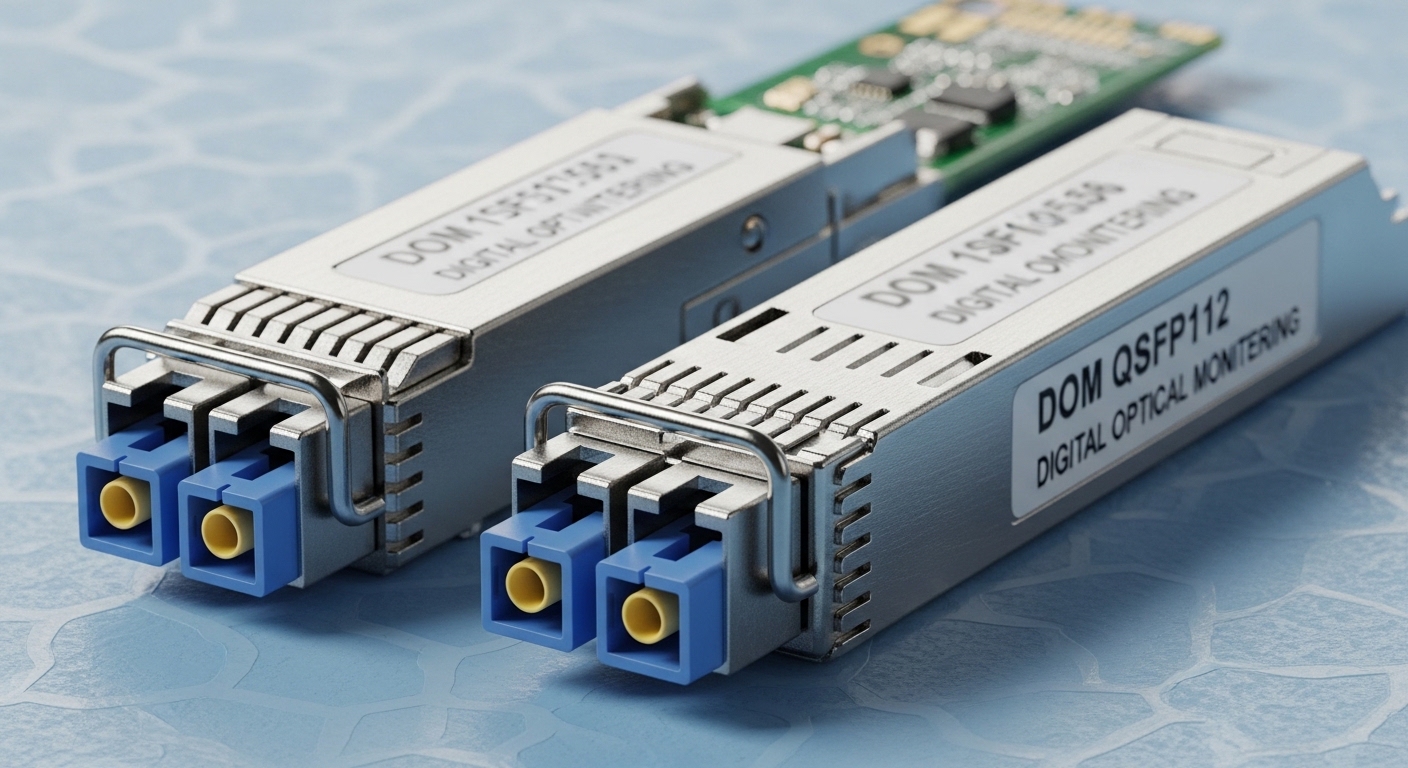
At 400G, Direct Attach Copper (DAC) uses high-speed electrical signaling over twinax cables with integrated connectors, typically for short reaches inside a rack or end-of-row. Active Optical Cable (AOC) converts electrical signals to optical at each end, then uses fiber for transport, usually over duplex MPO or LC depending on the transceiver form factor. The key difference is where the signal conditioning happens: DAC relies on copper equalization and careful cable loss budgeting, while AOC offloads the link to optical components with different impairment profiles.
In practice, DAC is constrained by copper attenuation and return-loss tolerance; AOC is constrained by optical power budgets and thermal stability of the laser and receiver. IEEE 802.3 and vendor datasheets define the signaling and receiver sensitivity requirements, but the operating reality is governed by how your switch applies transmitter pre-emphasis and receiver CTLE/DFE settings. For reference, IEEE 802.3 defines high-speed Ethernet PHY behavior across 200G/400G classes, while module vendors publish link performance and compliance details in their datasheets. anchor-text: IEEE 802.3 standard home
400G specs that matter: reach, connectors, wavelength, and power
Below is a field-relevant comparison of common 400G interconnect options you will see in data centers. Note that exact values vary by vendor, cable construction, and whether the AOC uses QSFP-DD or OSFP form factors.
| Parameter | 400G DAC (Twinax) | 400G AOC (Active Optical Cable) |
|---|---|---|
| Typical use distance | 1m to 5m (rack to top-of-rack, very short row) | 10m to 100m+ (depends on OM3/OM4 and vendor budget) |
| Optical wavelength | None (electrical copper link) | 850 nm typical for multimode AOC |
| Connector style | Integrated SFP-DD or QSFP-DD style edge connector (vendor-specific) | MPO/MTP on cable ends, typically duplex via breakout inside module |
| Data rate | 400G (commonly 2x200G or 4x100G signaling internally) | 400G (same PHY class, optics transport) |
| Power behavior | Usually lower optics overhead; still active retimers may increase draw | Optical engines consume power; expect higher per-link draw than DAC |
| Operating temperature | Commonly 0C to 70C for enterprise-rated modules | Commonly 0C to 70C for standard rated AOC; some support extended ranges |
| DOM / telemetry | Often supports digital monitoring via I2C/SFF-8431 class interfaces | Often supports DOM-style telemetry (laser bias, power, temperature) |
If you are standardizing hardware, confirm the exact module family and compatibility matrix for your switch vendor. For example, a Cisco 400G QSFP-DD DAC may be validated differently than an FS.com or Finisar third-party AOC even if both claim 400G over the same physical interface. Use vendor datasheets and your switch optics interoperability list as the source of truth. anchor-text: FS.com optics and datasheet hub [Source: Cisco transceiver compatibility guidance and vendor datasheets; Source: SFF specifications referenced by module vendors]
Cost and ROI at scale: why DAC is often cheaper, but not always
In many 400G deployments, DAC wins on sticker price for short distances because it has no laser/receiver optics and typically uses simpler electronics. Field pricing varies by vendor and length, but a realistic planning range is roughly $60 to $250 per 400G DAC depending on length and brand, while 400G AOC often ranges from $200 to $600+ per link depending on reach and optical budget. Always request quotes with the exact part number and ensure the vendor provides a warranty aligned to your service window.
ROI is not just purchase cost. AOC may increase per-port power draw, which matters when you multiply by hundreds of links. Conversely, AOC can reduce operational risk by tolerating longer runs, avoiding marginal copper equalization issues, and reducing field failures caused by bent twinax or excessive cable tension. A practical approach is to estimate TCO using your expected replacement rate and labor cost for swaps, not only module price.
Pro Tip: When you compare DAC vs AOC for 400G, do not judge only by “reach.” In the field, marginal DAC links often fail after a small mechanical change (cable reseat, airflow shift, or panel vibration) because copper equalization headroom is tight. If your rack layout is not stable, AOC can be cheaper than repeated troubleshooting even if it costs more upfront.
Compatibility and integration: how switches treat DAC vs AOC
Switch compatibility is where projects succeed or slip. Many platforms implement a strict “supported optics” policy and may require specific firmware handling for different module types, even when both present the same physical connector. DAC modules may be identified as copper, while AOC modules present optical characteristics and may trigger different link training profiles.
Before procurement, verify three items: the platform’s compatibility list, the module’s electrical standard compliance, and whether the module supports DOM or vendor telemetry your NMS expects. For instance, some management systems rely on specific DOM register mappings to alert on laser bias drift. If you are deploying a 400G OSFP-to-MPO AOC, check whether your switch expects an MPO polarity convention and whether it supports polarity enforcement.
Also plan for environmental constraints. In hot aisles, you may see higher module temperature, which can reduce optical power margins for AOC or increase jitter for DAC. Confirm module operating temperature in the datasheet, and validate your airflow model so that transceivers remain within the rated 0C to 70C class unless you have extended-range parts.
Selection checklist: decide DAC vs AOC using the same engineering steps
Use this ordered checklist the way field engineers do during design freeze and acceptance testing.
- Distance and channel budget: Estimate worst-case path length including slack. For DAC, keep within the validated twinax reach. For AOC, confirm optical budget for your fiber type (OM3 vs OM4) and patch panel losses.
- Switch compatibility: Match exact vendor/platform support. If your switch firmware rejects modules, you will waste time at staging.
- Power and thermal envelope: Compare per-link power draw and ensure your line card and chassis thermal design margin can absorb AOC overhead.
- DOM and monitoring requirements: Confirm telemetry availability and whether it integrates with your NMS. Telemetry gaps complicate root-cause analysis during incidents.
- Operating temperature range: Validate both module rating and real rack inlet temperatures. Hot aisles can erase optical margin quickly.
- Vendor lock-in risk: Evaluate OEM-only policies versus third-party validated options. If you must use OEM parts, factor lead times and price volatility.
- Mechanical realities: In dense patching, DAC can suffer from tight bends and cable stress. AOC can be more forgiving if routed correctly, especially with MPO strain relief.
Common mistakes and troubleshooting: DAC vs AOC failure modes at 400G
Even well-designed links can fail. Here are frequent problems engineers see, along with root causes and fixes.
- DAC link flaps after reseat: Root cause is insufficient equalization margin due to marginal cable quality or length close to the limit. Solution: swap to a shorter validated length, confirm port mapping, and check switch logs for training failures and CRC bursts.
- AOC shows low optical power warnings: Root cause is dirty MPO/MTP endfaces or polarity mismatch. Solution: clean connectors using approved fiber cleaning tools, verify polarity/bend radius, then re-test. If the warning persists, replace the AOC and inspect patch panels.
- Intermittent errors only at high temperature: Root cause is thermal derating reducing laser output (AOC) or increasing jitter and attenuation effects (DAC). Solution: improve airflow, check module temperature telemetry, and ensure the rack inlet is within module-rated conditions.
- Works on one switch but not another: Root cause is platform-specific optics compatibility rules and differing link training parameters. Solution: validate against the exact switch model’s compatibility list and update switch firmware if the vendor notes optics handling fixes.
- Wrong fiber type assumption: Root cause is treating OM3 and OM4 as interchangeable without recalculating patch loss and modal dispersion budget. Solution: confirm fiber plant type, measure end-to-end loss with an OTDR or insertion loss tester, and select an AOC rated for that budget.
Which option should you choose? DAC vs AOC recommendations by reader type
If you are building a short-reach 400G leaf-spine or ToR design (for example, 1m to 3m runs inside a row), choose DAC for lower cost and simpler installation. If you are connecting across aisles, to mid-row, or spanning patch panels (for example, 20m to 80m with OM4 and multiple connectors), choose AOC to protect you from copper equalization limits and to simplify channel loss budgeting.
For network operations teams, the decision can be operationally driven: DAC is attractive when you have stable rack layouts and strong acceptance testing, while AOC is attractive when you expect frequent moves, adds, and changes or when cable management constraints make twinax stress likely. If you are standardizing across multiple switch models, prioritize compatibility validation and DOM/telemetry consistency over nominal price.
FAQ
Q: Is DAC vs AOC about performance only, or also about reliability?
A: It is both. DAC can be reliable at short distances, but its margin is sensitive to cable handling and reseating. AOC tends to be more tolerant of longer runs, but you must manage fiber cleanliness and polarity.
Q: What is the typical 400G reach for DAC?
A: Many 400G DAC designs are validated roughly in the 1m to 5m range, depending on the exact twinax construction and switch platform. Always rely on the vendor’s validated length list for your switch model.
Q: When should I choose AOC instead of DAC for 400G?
A: Choose AOC when you exceed validated DAC lengths, when patching and mechanical constraints make twinax stress likely, or when you need cleaner end-to-end loss budgeting across patch panels. Confirm optical budget for your fiber type and connector losses.
Q: Will third-party DAC vs AOC modules work in enterprise switches?
A: Sometimes, but not always. Many switches require specific compatibility and may restrict unsupported part numbers. Validate with the platform’s optics policy and test in staging before rolling out broadly.
Q: How do I troubleshoot a 400G link that stays down?
A: First check switch logs for link training and error counters. For DAC, verify correct port mapping and try a known-good shorter cable. For AOC, clean MPO connectors, verify polarity, and check DOM telemetry for laser power and temperature.
Q: Which affects power and cooling more at scale, DAC vs AOC?
A: Typically AOC consumes more power due to active optical engines, which can matter with hundreds of ports. DAC can be lower power, but if it drives repeated troubleshooting or replacements, TCO can worsen.
Choosing DAC vs AOC for 400G is ultimately a trade between distance constraints, compatibility rigor, and operational risk. Next, compare specific transceiver form factors and budgeting methods using 400G optical module types and fiber planning.
Author bio: I have deployed and validated high-density 10G to 400G interconnects in data centers, focusing on acceptance testing, DOM telemetry, and fault isolation. I write from hands-on work with switch optics compatibility, fiber loss measurement, and rack-level thermal validation.
