
Upgrading from 400G to 800G can look straightforward on a spreadsheet, but field teams often discover hidden costs: optics swaps, cooling impact, optics qualification delays, and late-port remediations. This article helps network engineers and data center operators plan an 800G migration with cost efficiency front and center—so you can estimate ROI using operational numbers, not vibes. You will get a step-by-step implementation guide, a decision checklist, and troubleshooting for the top failure modes we see during live cutovers.
Prerequisites: what you must measure before touching the 800G gear
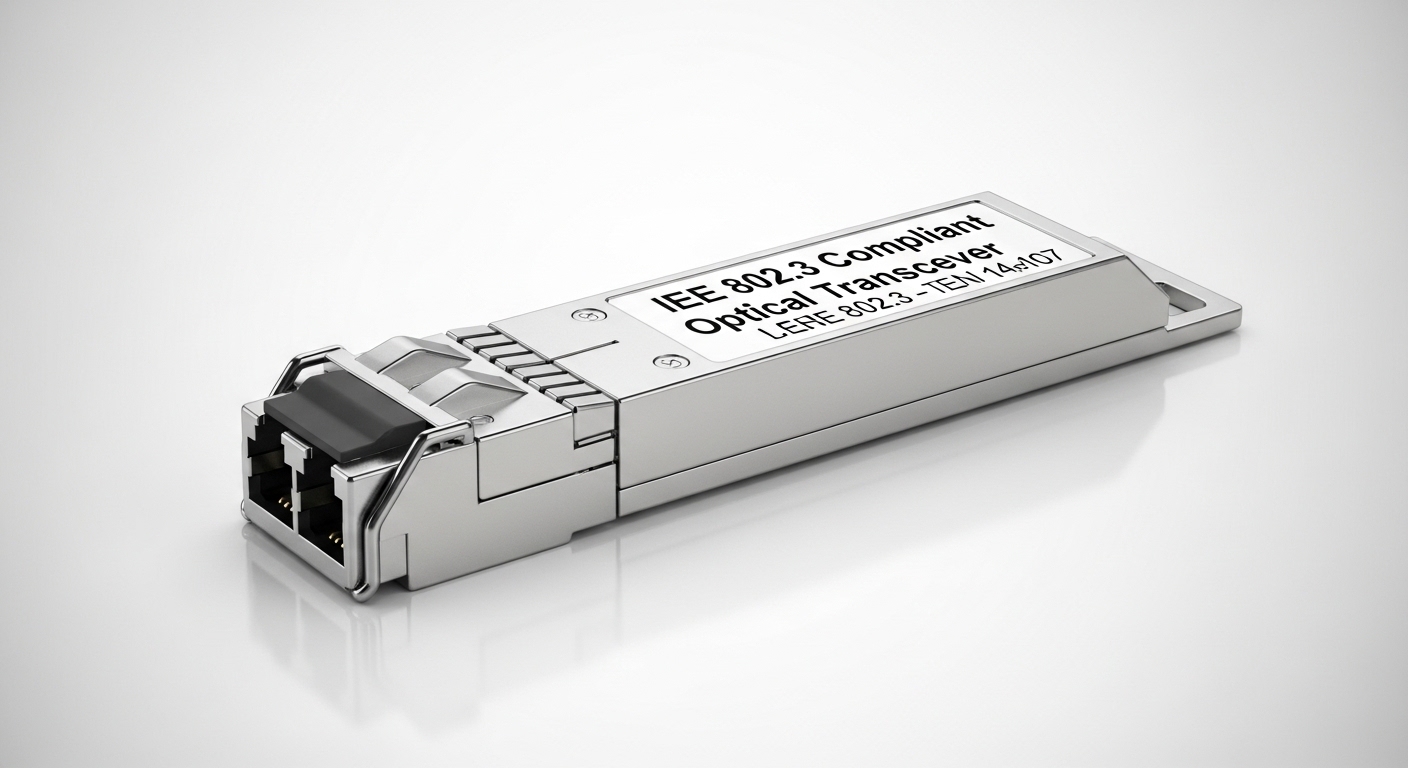
Before selecting optics or ordering transceivers, capture baseline data for power, link distances, and current BER targets. In my deployments, the most expensive mistakes came from assuming “same fiber, same optics,” then learning that patch panel loss, connector cleanliness, or reach margins were already tight at 400G. Start by inventorying every active link: switch port model, line card type, optics type, and measured optical power levels if you have them. If you do not have telemetry yet, plan for a short pre-check window using vendor diagnostics.
Lock your topology, link budget, and distance reality
Write down the actual physical path for each link: cable type, patch panel layout, and measured fiber length. For 800G, you will commonly see OS2 single-mode for long-reach designs and OM4/OM5 multimode for shorter runs depending on the optics family. Treat “distance” as the sum of trunk plus patch plus slack. Then confirm whether your target optics are specified for that reach and fiber type per vendor datasheets.
Expected outcome: a spreadsheet mapping each link to a required reach class (example: 100m, 300m, 2km, 10km, 80km) and a candidate optic family.
Measure power and cooling headroom using real telemetry
For cost efficiency, power is often the largest controllable operating expense during transition. Collect switch telemetry: inlet temperatures, fan RPM curves, and per-port or per-module power if supported. In one leaf-spine rollout, we found that replacing 400G SR optics with higher-power 800G optics increased chassis power by about 6% at peak load, which pushed a row-level PUE penalty for a few weeks until cooling tuning completed.
Expected outcome: a baseline power budget and a “max safe” load estimate for the target period.
Verify switch optics compatibility and DOM expectations
800G optics are picky about platform support: DOM support, vendor-specific EEPROM fields, and optics vendor certification. Confirm that your switch models support the optics form factor you plan to use (for example, QSFP-DD or OSFP variants depending on the vendor) and that the optics meet the platform’s transceiver requirements. Also check whether you need vendor “qualified” optics to avoid port flaps or alarms.
Expected outcome: a compatibility matrix that prevents ordering incompatible optics at scale.
- Prereq data sources: switch CLI diagnostics, optics DOM readouts, fiber plant records, and vendor datasheets.
- Authority references: IEEE Ethernet PHY and PCS behavior is described in [Source: IEEE 802.3]. Vendor optics specs should be treated as the final word for reach, wavelength, and power.
Build the ROI model: how cost efficiency changes at 800G scale
ROI for 800G is not just “optics price minus optics price.” You should model three cost buckets: upfront capex, ongoing opex (power and cooling), and risk/transition cost (downtime, rework, and qualification delays). In practice, the transition window often costs more than expected because teams must schedule patching, verify link stability, and sometimes re-stage line cards. Treat migration as a mini-project with measurable labor hours and a measurable outage risk budget.
Estimate capex tradeoffs between OEM and third-party optics
OEM optics are usually higher priced, but they reduce compatibility friction. Third-party optics can improve cost efficiency, yet you must budget validation time and the risk of partial incompatibility. For example, third-party 800G optics may be cheaper per unit, but if your platform rejects a subset, you can lose savings quickly through extra shipping, returns, and maintenance windows.
Expected outcome: a per-link capex estimate with a “validation labor” line item and a conservative failure/replacement factor.
Convert power and cooling into dollars per year
To quantify opex, use the delta power between the current and target configuration. If your switch telemetry provides per-chassis power, calculate annual energy: kW delta × hours per year × electricity rate. Then estimate cooling cost using your facility’s PUE. In one deployment, the electricity rate was $0.10 per kWh and PUE was 1.6; a 50 kW delta over a year translated to roughly $7300 per year in energy plus cooling overhead, before considering any incremental maintenance.
Expected outcome: an annual opex delta used in the ROI formula and compared across optic options.
Include downtime and rework cost as a probability-weighted term
Risk is real: optics qualification delays, DOM mismatch alarms, or unexpected BER degradation after patching. Model this as a probability-weighted expected cost: probability of a rollback times the labor + outage cost + expedited shipping. Even a small probability can dominate ROI when the number of links is large and maintenance windows are scarce.
Expected outcome: an ROI range (best/base/worst case) rather than a single optimistic number.
Pro Tip: In many 800G cutovers, the “optics cost” is the visible part, but the operational savings comes from reducing the number of distinct optic SKUs you must stock. Standardizing on one vendor and one reach class for each tier (leaf-to-spine vs spine-to-core) can cut validation time and lower the probability of late-stage port bring-up failures.
800G optics selection: reach, wavelength, power, connector, and environment
Selection for cost efficiency starts with matching the optics to your fiber plant and then ensuring the platform will actually bring up links reliably. For 800G, you will typically choose among several families depending on reach: short-reach multimode for data center distances, and single-mode for longer metro or campus spans. The key is to validate reach margins with your measured link loss rather than relying on nominal fiber attenuation.
Compare candidate optics families using a spec table
Use a comparison table to align wavelength, reach, connector type, and power consumption. While exact numbers vary by vendor and exact part number, the table below shows the typical parameters engineers verify during selection. Always confirm against the specific datasheet for the transceiver model and the switch vendor’s compatibility notes.
| Parameter | Example 800G SR (Multimode) | Example 800G LR (Single-mode) | Example 800G ER (Long-haul) |
|---|---|---|---|
| Typical fiber | OM4/OM5 | OS2 | OS2 |
| Wavelength | Short-reach optical bands (vendor-specific) | ~1310 nm class (vendor-specific) | ~1550 nm class (vendor-specific) |
| Typical reach | ~70 m to 300 m class | ~2 km to 10 km class | ~40 km to 80 km class |
| Connector | LC duplex (common) | LC duplex (common) | LC duplex (common) |
| Power consumption | Often higher than legacy due to 800G lanes | Similar order; verify per datasheet | Similar order; verify per datasheet |
| DOM | Usually supported; verify EEPROM fields | Usually supported; verify EEPROM fields | Usually supported; verify EEPROM fields |
| Operating temperature | 0 C to 70 C class (varies) | 0 C to 70 C class (varies) | -5 C to 70 C class (varies) |
Expected outcome: a short list of optic families that match reach and environment, with clear spec-based constraints.
Use real part numbers to reduce ambiguity
When possible, validate with specific models. For 10G and 100G, examples like Cisco SFP-10G-SR, Finisar FTLX8571D3BCL, and FS.com SFP-10GSR-85 illustrate how vendors publish reach and DOM behavior in datasheets, even though they are not 800G parts. For 800G, you must select the exact 800G transceiver family supported by your switch (for instance, QSFP-DD or OSFP variants) and confirm vendor compatibility. Treat “generic 800G” as a myth; compatibility is the real constraint.
Expected outcome: a procurement list with exact SKU numbers and datasheet links.
Decision checklist: ordered factors engineers use for cost efficiency
When teams choose optics under time pressure, they often optimize the wrong variable. The following ordered checklist reflects what matters most for cost efficiency during an 800G transition, from technical fit to operational risk.
- Distance and fiber type: match reach class to measured path loss and confirm OM4/OM5 vs OS2 usage.
- Switch compatibility: confirm exact transceiver form factor and that the platform supports the optic’s DOM and electrical interface.
- Link budget margin: include patch panel loss, connector inspection/cleaning results, and any expected aging.
- Operating temperature: ensure the transceiver temperature range matches your enclosure airflow profile.
- DOM support and telemetry: confirm that your monitoring stack can read alarms and thresholds without false positives.
- Vendor lock-in risk: evaluate whether you can mix optics vendors safely or if you will be forced into OEM-only purchases.
- Validation effort: estimate how many spare optics and how many hours of engineering testing you need before mass deployment.
- Spare strategy: plan a minimal but sufficient spare kit per tier to avoid extended downtime if one batch is problematic.
Expected outcome: a defensible choice list you can justify to finance and operations, not just to engineering.
Common mistakes and troubleshooting during 800G bring-up
Even with a solid plan, field bring-up can fail. Below are three common failure modes I have observed during high-speed transitions, with root causes and fixes that reduce repeat outages and improve cost efficiency by preventing rework.
Troubleshooting failure point 1: Ports flap or stay down after optics insertion
Root cause: DOM/EEPROM mismatch, unsupported optic revision, or platform not recognizing the transceiver’s capabilities. Sometimes the optics are physically compatible but electrically/firmware incompatible.
Solution: verify platform transceiver qualification lists and read DOM via switch CLI. If the switch provides detailed diagnostics, capture the transceiver status and alarm codes. Swap with an OEM “known good” optic to isolate whether the issue is optic batch vs platform support.
Troubleshooting failure point 2: Links come up but BER is elevated or errors climb
Root cause: marginal optical power due to patch loss, dirty connectors, or fiber type mismatch (OM4 vs OM5 vs OS2) that still “sort of” works at short distances. At 800G line rates, small penalties become large.
Solution: clean connectors using proper procedures, inspect with a microscope, and re-test. Re-check optical power readings and compare them to vendor recommended thresholds. If you have an OTDR tool, validate that the fiber plant matches records and that there are no unexpected microbends or connector damage.
Troubleshooting failure point 3: Cutover triggers thermal throttling or performance degradation
Root cause: optics power delta plus airflow changes caused by higher density or different transceiver power draw, leading to higher inlet temperatures and fan curve changes.
Solution: confirm thermal telemetry before and after insertion. If the chassis supports it, adjust fan policies temporarily during bring-up and schedule incremental port activation to avoid simultaneous load spikes. Use your cooling team to validate that inlet temperatures remain within the vendor’s specified operating range for both the switch and optics.
Cost and ROI note: realistic ranges, TCO, and what to watch
In most mid-to-large data centers, the biggest cost efficiency gains come from reducing validation time and avoiding rework, not only from choosing cheaper optics. Typical 800G optics pricing varies widely by reach and vendor, but as a practical budgeting approach, teams often see third-party optics priced meaningfully below OEM while still requiring additional engineering hours for validation. Over a 3-year horizon, total cost of ownership (TCO) should include: optics purchase price, validation labor, spare inventory, failure/replacement likelihood, and energy cost driven by power deltas.
Also consider that downtime has a direct cost: either lost revenue, SLA penalties, or operational disruption. When you model worst-case ROI, include a probability of rollback due to compatibility or quality variance. This is where OEM optics can sometimes win economically despite higher unit price—because they reduce risk and speed up cutover windows.
Step-by-step implementation plan for a safe 800G transition
To make this actionable, here is a numbered implementation guide you can use for a staged 800G transition with measurable checkpoints. Each step includes an expected outcome so you can stop early if assumptions do not hold.
Create a link-level migration plan with reach grouping
Group links by reach class and tier (leaf-to-spine, spine-to-core). For each group, assign a single optic family where possible to reduce SKU complexity. Confirm that every link’s physical path matches the reach class with margin.
Expected outcome: a migration plan that minimizes optic variety and reduces validation time.
Validate optics in a lab or pre-production staging area
Bring up a small set of ports with the exact optics you plan to deploy. Verify link stability, error counters, DOM alarms, and thermal behavior. If you use a third-party optic, test enough units to cover batch variation.
Expected outcome: a “go/no-go” decision based on error rate stability and monitoring correctness.
Perform fiber cleaning and connector inspection before cutover
For every patch panel involved, clean and inspect connectors. Replace damaged jumpers and verify that fiber type is correct for the optics family. This step is often the cheapest insurance against high-speed link failures.
Expected outcome: reduced error counters and fewer late-stage rework cycles.
Execute a staged cutover with controlled load ramps
Cut over a small number of links first, then ramp traffic gradually. Keep an eye on switch telemetry, including inlet temperature and any optics-related alarms. If your network uses ECMP or traffic engineering, ensure the traffic distribution does not overload newly converted paths.
Expected outcome: stable links under real traffic patterns without thermal or error spikes.
Post-migration verification and documentation
After the cutover, document optics SKU, DOM status, measured error counters, and any deviations from plan. Update the inventory database and your monitoring thresholds. This is critical for future cost efficiency because it shortens the next migration cycle.
Expected outcome: an auditable migration record and quicker troubleshooting for future incidents.
FAQ
How does cost efficiency change when moving from 400G to 800G?
Unit optics cost matters, but total cost efficiency is driven by validation time, power delta, and risk of rework. At 800G, small optical margin problems can cause bigger reliability issues, which can erase savings from cheaper optics.
Do I need OEM optics to avoid compatibility issues?
Not always, but you must verify exact platform support and DOM behavior for your switch model. Many failures come from unsupported optic revisions or monitoring mismatches rather than the optics failing electrically.
What reach should I choose for leaf-to-spine links?
For typical data center distances, multimode SR variants are often used, while longer spans use single-mode LR or ER depending on vendor support. The correct choice depends on measured link loss through patch panels and your available optical power budget.
How can I estimate ROI before ordering optics?
Build an ROI model using three buckets: capex, annual opex from power and cooling, and probability-weighted transition risk. Include labor hours for validation and a conservative assumption for batch variability.
What are the first checks when an 800G link is down?
First check platform transceiver compatibility and DOM status, then confirm fiber polarity and connector cleanliness. If DOM reads correctly but the link stays down, try a known-good optic to isolate whether the problem is optics vs platform support.
Where can I verify technical requirements for Ethernet at these speeds?
Start with IEEE Ethernet standards for PHY and link behavior, then rely on your switch and optics vendor datasheets for the exact reach and electrical/optical parameters. For general Ethernet behavior, see [Source: IEEE 802.3] at [[EXT:https://standards.ieee.org/standard/802_3]].
For authoritative background on Ethernet PHY and link behavior, consult IEEE 802.3 and the specific switch and transceiver datasheets referenced by your hardware vendor. [Source: IEEE 802.3] and vendor documentation are essential for confirming reach, power budgets, and DOM behavior. If you want the next step after this ROI planning, review 800G migration risk checklist to structure your cutover and reduce outage probability.
Author bio: I have deployed high-speed transceivers in real data centers, using switch telemetry, DOM alarms, and measured optical power to validate bring-up under production constraints. I write migration playbooks focused on cost efficiency, reliability, and operational safety for field teams.
