
If your long-distance design is constrained by fiber attenuation, dispersion, or tight power budgets, the optics choice can make or break the project. This article helps network and field engineers compare coherent versus traditional optics transceivers for metro, regional, and backbone links. You will get practical decision criteria, real-world deployment examples, and troubleshooting patterns you can apply on-site.
How long-distance links push optics beyond “just signal loss”
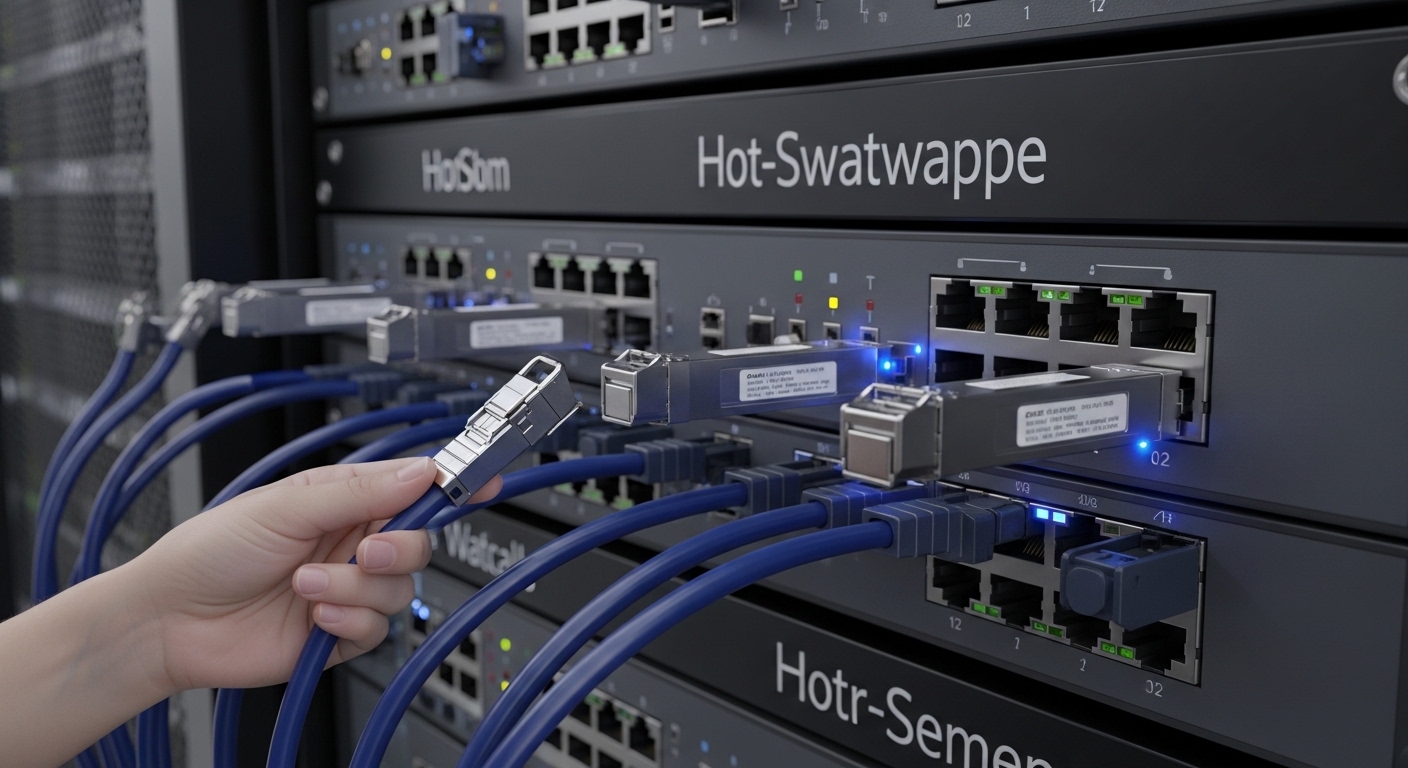
Engineers often start with reach and receiver sensitivity, but long-distance performance is limited by more than attenuation. Chromatic dispersion, polarization mode dispersion, nonlinear effects at higher launch powers, and filter bandwidth all interact with the modulation format. Traditional optics typically rely on direct detection with simpler receiver DSP, while coherent transceivers include carrier recovery and more advanced DSP for better tolerance to impairments.
IEEE 802.3 defines electrical and optical interfaces for many Ethernet rates, but the “how” of the optical layer is still deeply vendor-specific. For example, 100G and 200G coherent systems may use different line rates and modulation schemes (DP-QPSK, DP-16QAM, or vendor variants) even when the Ethernet client side is standardized. For traditional optics, the industry commonly aligns with IEEE 802.3 physical layer objectives, but the optical impairments largely depend on the transceiver design and the fiber plant.
What “traditional optics” usually means in the field
In day-to-day operations, “traditional optics” usually refers to direct-detection transceivers such as SFP/SFP+/SFP28, QSFP+/QSFP28, and CFP2/CFP4 for single-mode fiber. Typical examples include 10GBASE-SR (multimode), 10GBASE-LR (single-mode), and higher-rate long-reach variants such as 40GBASE-LR4, 100GBASE-LR4, and many vendor-defined “ER” offerings. When the link budget is tight but dispersion is manageable, these optics can be cost-effective and operationally simple.
What coherent optics add for impairment resilience
Coherent optics transmit and receive with local oscillator mixing, enabling digital compensation of frequency offset and phase noise. This is critical when links span long distances, use older fiber with higher dispersion variability, or carry higher symbol rates. In practice, coherent systems can provide better performance under dispersion and can support flexible bandwidth and modulation tradeoffs, but they add complexity and typically cost more up front.
Pro Tip: In field testing, don’t judge coherent versus traditional optics only by “reach” in a datasheet. Verify the vendor’s receiver operating range includes your fiber type and span count, then confirm the transceiver’s support for your specific dispersion and OSNR expectations. A system that “works” at one site can degrade at another due to different fiber DMD/PMD behavior and splitter loss history.
Coherent vs traditional optics: practical comparison for long-distance Ethernet
The right choice depends on whether your limiting factor is primarily power budget or primarily impairment tolerance. Traditional optics are often limited by receiver sensitivity, chromatic dispersion penalties at high baud rates, and the need for strict wavelength plan and channel spacing. Coherent optics are designed to maintain performance with higher-order modulation and more aggressive symbol rates, at the expense of higher cost, more complex optics, and sometimes additional licensing or vendor-specific management.
| Spec / Factor | Traditional optics (direct-detect typical) | Coherent optics (DP coherent typical) |
|---|---|---|
| Detection method | Direct detection with simpler DSP | Coherent detection with local oscillator mixing |
| Common modulation | NRZ or PAM variants (vendor dependent) | DP-QPSK, DP-16QAM, and vendor variants |
| Typical Ethernet client rates | 10G/25G/40G/100G (varies by standard) | 100G/200G/400G typically on long spans |
| Wavelength bands | Often C-band or specific CWDM plans for long reach | Often C-band with flexible channelization |
| Reach (rule of thumb) | Often tens to a few hundred km depending on format and budget | Often several hundred km to longer depending on OSNR and DSP settings |
| Impairment tolerance | More sensitive to dispersion and some filtering limits | Better tolerance to dispersion, phase noise, and frequency offsets |
| Connector / interface | Common pluggables: SFP+/QSFP28/CFP4 (varies) | Coherent pluggables or integrated line cards (varies) |
| Power and thermal load | Usually lower power draw | Often higher power draw and more thermal management |
| Management and telemetry | DOM via SFP/QSFP interface; limited optical DSP telemetry | More advanced telemetry; may include DSP and OSNR-related indicators |
| Operating temperature | Typically commercial or industrial grades based on SKU | Also grade-dependent, but ensure your site thermal profile matches datasheet |
Real examples you can anchor to
For traditional optics, engineers often deploy parts like Cisco SFP-10G-SR (multimode), or for long single-mode reach, optics from multiple vendors such as FS.com SFP-10GSR-85 for short reach multimode. For 100G direct-detect long reach, LR4-style optics from vendors such as Finisar (now part of Oclaro/Finisar lineage) have long been used in metro designs where dispersion is manageable. While exact reach depends on the fiber plant and link budget, these modules are operationally straightforward and integrate cleanly with standard optics management.
For coherent optics, many deployments use specific coherent transceivers paired with compatible chassis line cards. Even when the Ethernet side is standardized, coherent transceivers are tightly coupled to the host’s DSP and channel plan. That coupling is why coherent optics projects often include a compatibility matrix review before procurement.
Selection criteria: a field checklist that avoids expensive surprises
When you evaluate traditional optics versus coherent, don’t start with brand preference. Start with the link impairment profile and the host compatibility constraints. Below is the ordered checklist engineers typically use during design review and pre-install validation.
- Distance and fiber type: Identify span length, fiber attenuation coefficient, and whether the plant is standard single-mode (G.652) or another grade. If you have historical OTDR traces, use them to estimate span loss variability.
- Dispersion and PMD risk: If the link budget is tight and the fiber has high dispersion variability, coherent often provides more margin. For direct-detect, confirm the vendor’s stated dispersion tolerance matches your worst-case fiber.
- Modulation and baud rate constraints: Higher symbol rates increase sensitivity to filtering and chromatic dispersion. Traditional optics may require lower-order formats or careful channel planning to remain stable.
- OSNR and impairment margin: For coherent, request OSNR/Q-margin expectations from the vendor for your exact span profile. For traditional optics, request dispersion and power penalty curves, not just “reach.”
- Switch and line-card compatibility: Traditional pluggables are often simpler, but coherent optics are frequently host-specific. Confirm the exact supported transceiver SKUs for your switch models and firmware versions.
- DOM support and telemetry depth: If your operations team relies on threshold alarms, verify DOM parameters for traditional optics and confirm coherent telemetry includes the indicators you need (and that your NMS can read them).
- Operating temperature and airflow: Check the module temperature range and ensure your chassis airflow meets the datasheet. Coherent modules can be more thermally demanding.
- Vendor lock-in risk: Assess procurement flexibility, replacement lead times, and whether the transceiver can be sourced from multiple vendors with the same host support level.
- Installation and test plan: Plan to run optical power checks, link BER verification, and—if available—dispersion/OSNR validation. Coherent may require additional configuration steps in some ecosystems.
Decision shortcut: when each approach tends to win
If your link is predominantly limited by optical power with manageable dispersion, traditional optics often deliver the best balance of cost and operational simplicity. If your design must tolerate significant dispersion, phase noise, or longer reach with higher modulation flexibility, coherent optics typically provide more margin. However, in many real networks, the “best” solution is a hybrid: traditional optics for shorter segments and coherent for the most impairment-heavy spans.
Deployment scenario: leaf-spine metro with one long impairment-heavy span
Consider a metro network with a 3-tier topology: 48-port 10G ToR switches at the access layer, aggregation switches in the middle, and core routers at the top. The design uses 100G uplinks between aggregation and core, with two 40 km spans for most routes and one “problem” route that spans 120 km of older installed fiber with higher dispersion variability. The core chassis supports both direct-detect 100G and coherent 100G/200G pluggables, but only specific coherent SKUs are validated with the current firmware.
In the standard routes (two 40 km spans, modern fiber), the team selected traditional optics to reduce BOM cost and keep thermal load low. For the 120 km route, they switched to coherent to gain performance margin under worst-case dispersion and to reduce the frequency of field truck rolls during seasonal temperature swings. Operationally, the coherent links required a tighter configuration process and more careful alarm thresholding, but the BER stayed within target after maintenance events that changed patch panel loss.
Common pitfalls and troubleshooting tips from real installs
Even experienced teams run into predictable failure modes when switching between traditional optics and coherent optics. The good news: most issues have identifiable root causes and repeatable fixes.
“It lights up, so it must be fine” optical power misinterpretation
Root cause: A link can come up with acceptable signal presence while still failing BER or margin due to dispersion penalties, connector contamination, or inaccurate power calibration. Traditional optics can be especially sensitive when the transmitter power and receiver sensitivity are near the edge.
Solution: Use approved test procedures: clean connectors with care, measure receive power at the demarcation point, and confirm BER/forward error correction status during commissioning. If coherent, validate OSNR/Q margin indicators and ensure the host is reading the correct transceiver diagnostics.
Host compatibility mismatch after firmware updates
Root cause: Coherent transceivers are often tightly coupled to the host DSP profile and firmware. After upgrades, some optics may negotiate differently or be blocked by compatibility checks, leading to link flaps or degraded performance.
Solution: Before upgrading, review vendor release notes and validate transceiver compatibility in a lab or with a staged rollout. Keep a record of the exact transceiver SKU part numbers and host firmware versions that were proven in the field.
Ignoring thermal design and airflow requirements
Root cause: Higher-power coherent modules can run hotter, and some chassis bays have uneven airflow. Thermal stress can elevate error rates over time even if initial link bring-up succeeds.
Solution: Measure bay inlet and module temperatures during operation. Ensure fan trays and baffles are installed correctly and that the installation matches the vendor’s thermal airflow guidance.
Connector cleanliness and fiber management errors
Root cause: Contamination causes insertion loss and back reflections, which can be more noticeable at higher rates and tighter margins. Patch panel reuse and rushed re-cabling are common triggers.
Solution: Use fiber inspection scopes, clean with validated methods, and document patch cords and splice locations. After any re-cabling, repeat optical power and link quality checks rather than assuming “it was fine yesterday.”
Cost and ROI: what you actually pay over the project lifecycle
Cost is not just the module price. Traditional optics typically have lower per-port costs and simpler procurement. Coherent optics usually cost more upfront and may require a compatible host line card, additional power, and more intensive commissioning time. Over a 3 to 5 year lifecycle, the deciding factor is often whether the extra cost prevents recurring truck rolls and performance degradations.
In many metro projects, traditional direct-detect optics can be materially cheaper per working port, while coherent optics reduce risk on the impairment-heavy segments. A realistic TCO comparison should include: expected failure rates, lead times for replacements, spares strategy, power and cooling overhead, and the labor cost of configuration and verification. If your network has frequent reconfiguration or patching, coherent’s margin can reduce operational churn, but only if your team has a stable process for monitoring and alarm tuning.
For procurement planning, request pricing ranges from at least two qualified sources and confirm that both offer equivalent host compatibility guarantees. Also verify whether OEM optics have better firmware support and faster RMA turnaround, since third-party optics can be cheaper but may have higher integration effort depending on your platform.
FAQ
When should I choose traditional optics over coherent?
Choose traditional optics when your span lengths are within the direct-detect impairment tolerance and your link budget has comfortable margin. If dispersion variability, longer reach, or tighter OSNR requirements dominate, coherent optics usually deliver more stability.
Do coherent optics require different switch configurations?
Often yes. Coherent transceivers may require host DSP profiles, channel plans, and sometimes specific firmware support before they will operate at the intended modulation and line rate.
How do I verify compatibility before purchase?
Start with the exact switch or router model and firmware version, then request the vendor’s supported transceiver SKU list. In field practice, staging one working link in a lab or in a low-risk bay prevents surprises during cutover.
What are the most common reasons coherent links degrade over time?
Thermal drift, connector contamination after maintenance, and incorrect alarm thresholds are frequent causes. Also watch for changes in fiber patching that alter insertion loss and back-reflection characteristics.
Is DOM telemetry enough for monitoring, or do I need deeper diagnostics?
For traditional optics, DOM is often sufficient for power and temperature monitoring. For coherent optics, deeper telemetry related to OSNR/Q margin and DSP state can be essential to catch degradation before BER rises.
How should I plan spares for these two approaches?
Traditional optics spares are often easier to keep as drop-in replacements, but still match wavelength and rate requirements. Coherent spares should be matched by validated SKU and firmware compatibility, and you should store records of proven configurations so replacements can be brought online quickly.
If you want a reliable long-distance plan, map your link impairment profile first, then choose traditional optics for power-limited segments and coherent where dispersion and OSNR margin are the real constraints. Next, review fiber link budget planning for Ethernet to turn that choice into a measurable, testable design.
Author bio: I have deployed and troubleshot optical links across metro and enterprise backbones, including bring-up, BER validation, and DOM-driven monitoring. I write practical workflows that reflect what works during cutovers, not just what looks good in a datasheet.
