
If your team is planning upgrades for long-haul applications across metro-to-core fiber routes, coherent optics can be a game changer. This article helps network engineers, system integrators, and procurement leads understand how coherent transceivers work, how to select them safely, and what to watch in real deployments. You will also get practical troubleshooting patterns, compatibility cautions, and a cost/ROI view grounded in field realities.
How coherent optics make long-haul links work
Coherent optical systems transmit data using a modulated carrier whose amplitude and phase are controlled at the transmitter, then recovered with a local oscillator at the receiver. In practice, coherent receivers perform digital signal processing for chromatic dispersion and polarization effects, which is why they can support longer reach than simpler intensity-modulation direct-detection designs. For vendors, this is typically implemented as a pluggable coherent module (often CFP2-DCO, CFP2-ACO, or QSFP-DD form factors in various ecosystems) paired with specific line-side configurations.
At the standards level, system behavior depends on both the optical layer and the electrical interface. Many coherent deployments align with IEEE 802.3 Ethernet framing and FEC expectations, while the physical layer characteristics are governed by vendor datasheets and the transceiver’s optical compliance. For optical performance baselines, use vendor documentation and the relevant ITU-T recommendations when available; for general Ethernet interfaces, reference IEEE 802.3 official page“>IEEE 802.3 and vendor FEC guidance.
Key specifications that actually drive reach and stability
When engineers evaluate coherent optics for long-haul applications, the “headline” rate (like 100G/200G/400G) is only part of the story. The reach depends on optical budget, dispersion management, polarization mode dispersion (PMD), and the receiver’s sensitivity under the chosen modulation format. Also, power consumption and thermal limits matter when you’re packing modules into constrained chassis.
Below is a practical comparison of representative coherent module classes and commonly paired optics. Actual performance varies by vendor firmware, FEC mode, and line conditions, so treat these as selection anchors rather than guarantees.
| Module class (examples) | Typical data rate | Wavelength band | Connector | Reach (typical) | Optical power / sensitivity (selection driver) | Operating temp |
|---|---|---|---|---|---|---|
| Coherent pluggable (vendor-specific) | 100G–400G | C-band (often 1530–1565 nm) | LC or MPO (varies) | 80–200 km typical depending on DSP/FEC | Optical budget + FEC mode must match design | 0–70 C common (check datasheet) |
| Older coherent variants using different packaging | 10G–100G | C-band or extended bands | LC | 40–120 km typical | Sensitivity highly configuration-dependent | Often commercial temp only |
| Community reference: 10G SR optics (for contrast) | 10G | 850 nm | LC | Up to 300 m (MMF) | Not coherent; different budget model | 0–70 C common |
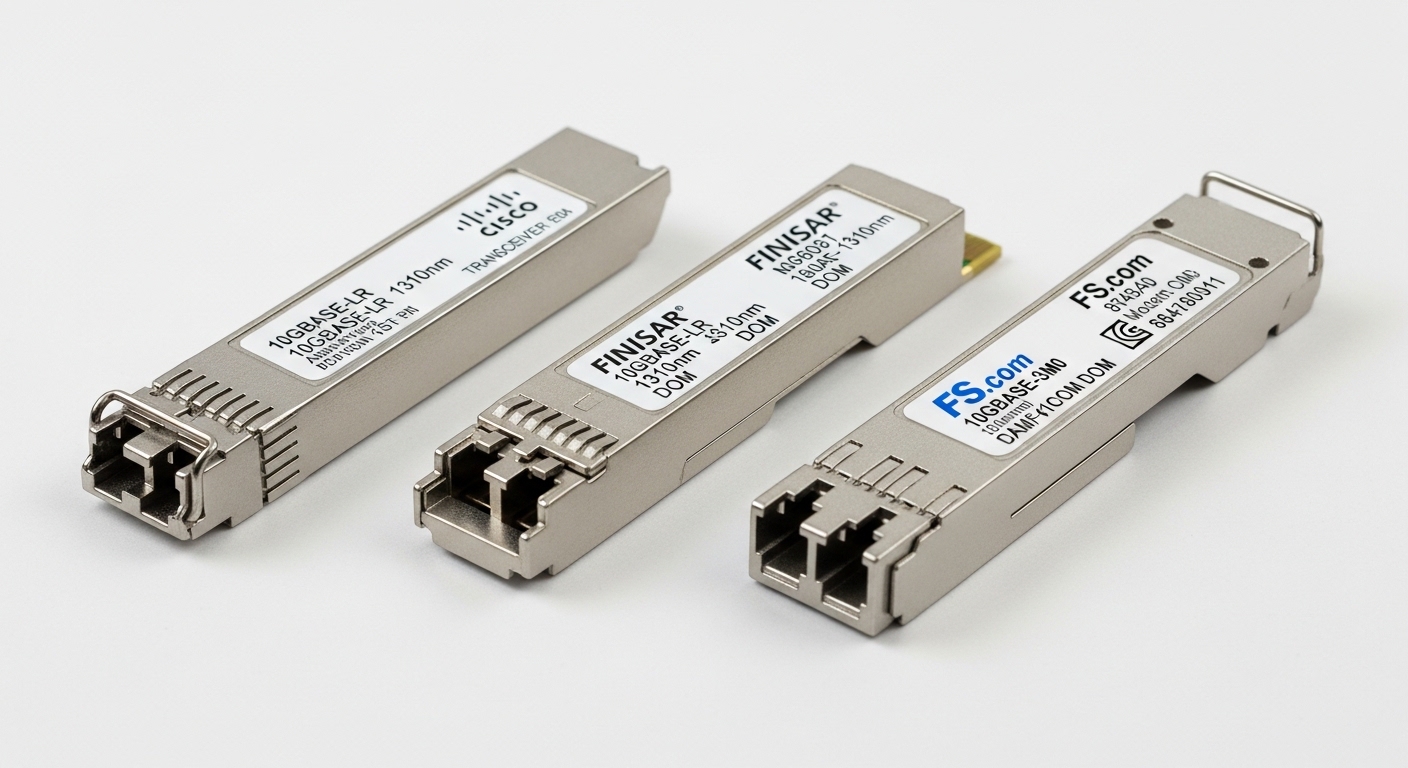
For reference models in the optical transceiver ecosystem, you can cross-check examples like Finisar coherent offerings and other vendor datasheets, but always validate against your specific modulation/FEC configuration. For a concrete non-coherent benchmark that highlights the reach gap, compare with common short-reach optics such as Cisco SFP-10G-SR or FS.com SFP-10GSR-85 (these are not coherent, but they help explain why coherent is chosen for long-haul).
Deployment scenario: what changes in a real network
Consider a 3-tier network where a regional core aggregates traffic from multiple metro sites. In one deployment pattern, a carrier-grade router in the core uses coherent pluggable transceivers to connect to a metro edge over 120 km of installed fiber. The design uses a C-band plan with channel spacing and FEC chosen to tolerate impairments from fiber aging and temperature cycling. On the electrical side, the transceivers are integrated with a line card that supports the same host interface expectations, including management via I2C and diagnostic hooks.
Operationally, the team budgets optical loss plus margin for repairs and connector re-mating. They also verify that the module’s digital diagnostics (DOM) expose thresholds for received power, link quality, and error counters so NOC staff can act before a hard failure. In this scenario, coherent optics reduce the need for intermediate regeneration, but they increase the importance of correct provisioning and configuration alignment across ends.
Selection criteria checklist for long-haul applications
Use this ordered checklist to reduce surprises during acceptance testing:
- Distance and fiber plant: confirm span length, measured attenuation, splice losses, and fiber type (SMF, dispersion characteristics).
- Modulation format and FEC mode: ensure the transmitter and receiver are provisioned consistently; align with your line system strategy.
- Switch and chassis compatibility: confirm host interface support, power budget, and lane mapping expectations (vendor interoperability notes matter).
- DOM and management: verify which diagnostics are exposed (temperature, bias current, received power, error counters) and how alerts are surfaced.
- Operating temperature and airflow: check datasheet limits and validate thermal performance under your actual airflow constraints.
- Vendor lock-in risk: plan for firmware/config coupling; define an acceptance test that proves interoperability across planned vendors.
- Optical connector and patching: ensure LC/MPO type matches your patch panels and that polarity conventions are followed.
- Optical safety and compliance: confirm laser class requirements and operational procedures for handling and cleaning.
Pro Tip: In the field, the fastest “mystery outage” root cause is often not the transceiver itself, but a mismatch between the provisioned FEC/modulation profile and the far-end line-side configuration. Treat configuration alignment as part of the optical budget, not an afterthought, and capture the exact settings during commissioning for repeatability.
Common pitfalls and troubleshooting patterns
Here are frequent failure modes teams see when deploying coherent optics for long-haul applications, with root causes and corrective actions.
- Symptom: Link flaps during temperature changes
Root cause: marginal thermal margin or airflow blockage causing receiver DSP instability.
Solution: check module temperature readings via DOM, improve airflow, and verify the chassis meets the module’s operating range. - Symptom: No optical lock, low or unstable received power
Root cause: fiber cleaning/polishing issues, wrong patch cord, or connector type mismatch causing high insertion loss.
Solution: re-clean connectors, verify end-to-end continuity with a light meter, and confirm correct port mapping. - Symptom: High error counters despite “connected” status
Root cause: inconsistent FEC mode, wrong channel plan, or mismatch in provisioning parameters between ends.
Solution: compare configuration snapshots from both ends, align modulation/FEC, and validate with link performance counters before and after changes. - Symptom: DOM alarms but traffic is intermittent
Root cause: threshold settings too tight for your environment or inaccurate baseline calibration after transceiver replacement.
Solution: update alert thresholds using commissioning data, and ensure NOC monitoring maps the correct DOM fields.
Cost, ROI, and practical TCO considerations
Coherent optics typically cost more upfront than short-reach direct-detection optics, but the ROI comes from reduced regeneration and fewer intermediate sites. In many real programs, teams see total cost of ownership improvements when coherent links remove one or more regeneration points, especially where power, rack space, and maintenance labor are expensive. Price ranges vary widely by rate, reach class, and vendor, but budget planning often treats coherent modules as a premium line item with meaningful spares strategy.
For TCO, include: module purchase price, expected failure rate based on vendor history, optics labor for cleaning and patching, and the engineering time for provisioning and verification. OEM modules can reduce interoperability risk but may increase vendor lock-in; third-party modules can lower CAPEX but require deeper acceptance testing to confirm DOM behavior and firmware compatibility. For authoritative guidance on Ethernet physical layer expectations, keep IEEE 802.3“>IEEE 802.3 and vendor datasheets in your procurement package.
FAQ about coherent optics for long-haul applications
Q1: What makes coherent optics better for long-haul applications than direct detection?
Coherent receivers recover both amplitude and phase using a local oscillator, and DSP compensates impairments like dispersion and polarization effects. That capability generally enables longer reach and higher spectral efficiency, but it requires careful provisioning and compatible configuration.
Q2: How do I choose between different coherent module vendors?
Start with switch and chassis compatibility, then verify DOM field names and alarm thresholds, and finally validate with a controlled acceptance test over your actual fiber span. If interoperability is critical, define a multi-vendor test plan before scaling.
Q3: Do I need to match FEC and modulation format exactly?
Yes. Many coherent systems fail to lock or show high error rates when far-end provisioning does not align. Capture both sides
