
When a leaf-spine network starts flapping links, the root cause is often not the switch port at all, but the optical transceiver. This article follows a real deployment where a rack engineer had to choose the best SFP brand under tight power, cooling, and maintenance constraints. You will get a brand-by-brand decision framework, the exact compatibility checks we ran, and the failure modes we saw in the field.
Problem / Challenge: link instability during a 10G SFP refresh
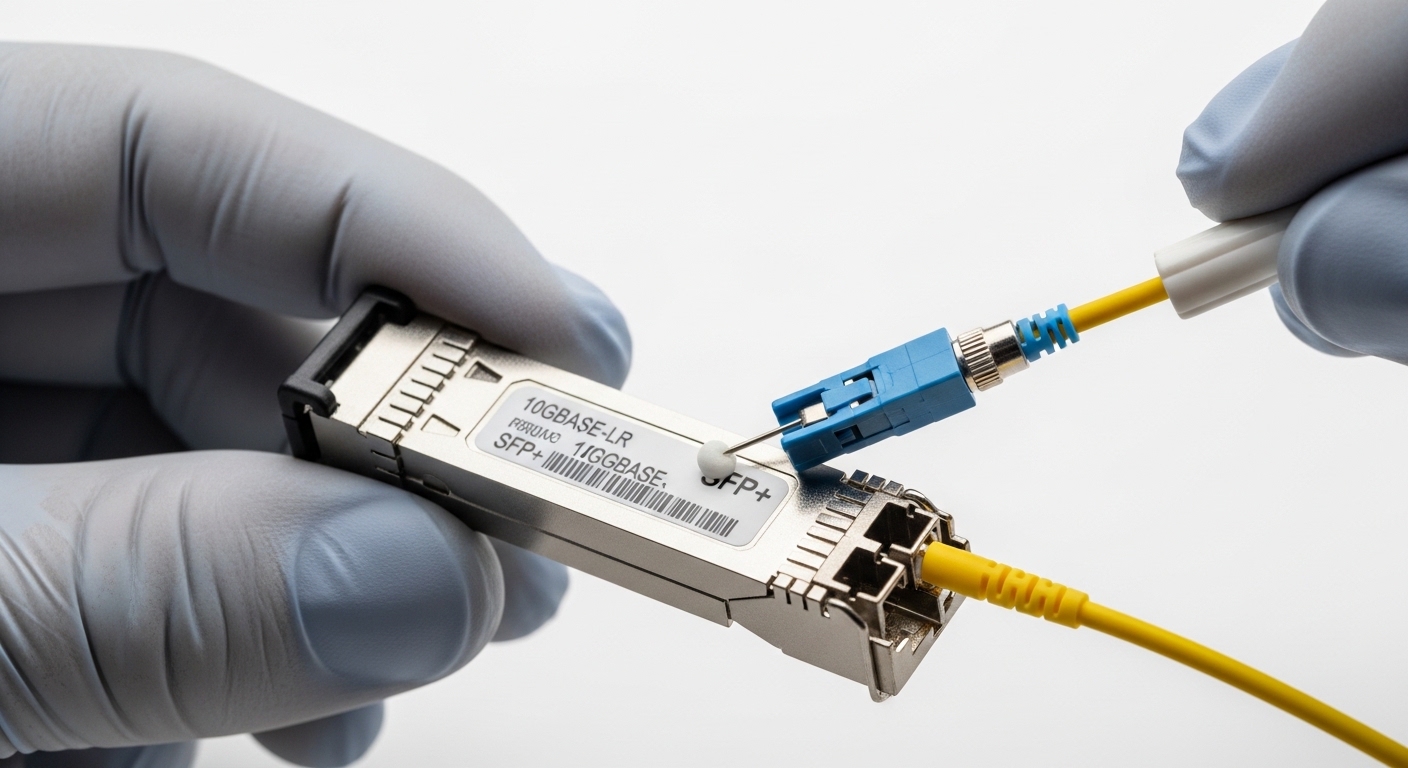
In a 3-tier data center (core-distribution-access), we refreshed access switches from older 10G SFP optics to support higher oversubscription at the edge. The environment used 10GBASE-SR (multimode) for ToR-to-aggregation and ToR-to-firewall breakout links across 100 m typical spans, with a few 200 m runs in older pathways. Within two weeks, we observed intermittent interface resets on approximately 7% of ports using a single low-cost transceiver batch. The switch logs showed CRC errors followed by link down/up events, which narrowed the failure to optical power margin and/or DOM telemetry interpretation rather than cabling alone.
Our goal was to stabilize the fabric without increasing rack power draw or adding manual troubleshooting time. We needed optics that were compatible with switch transceiver diagnostics (including DOM), consistent in output power and receiver sensitivity, and priced to avoid a repeat of the initial rollout cost overruns.
Environment Specs: optics requirements tied to distance, power, and temperature
Before ranking brands, we locked the technical envelope. All problematic links used 10GBASE-SR over OM3/OM4 multimode fiber, with typical patch cord runs between 60 m and 120 m and a worst-case run around 200 m. The access switches were designed for SFP+ optics with DOM support, and the operating temperature inside the racks was elevated: average intake air in the row was 27 to 31 C, with short peaks near 35 C during summer load swings.
We also monitored power and airflow constraints. Each rack had front-to-back airflow with hot-aisle containment, but we still had to keep cable management tight because blocked airflow can raise the transceiver case temperature and worsen laser bias stability. That matters because many SFP vendors specify different temperature ranges, and high temperature can reduce optical output and increase error rates.
Key optical specs we validated
We validated wavelength, reach class, connector type, and temperature range against the switch vendor guidance. For SR, we targeted 850 nm nominal wavelength transceivers with LC duplex connectors and DOM availability. For the long-tail runs, we confirmed the fiber type and patch cord insertion loss to ensure we were not already outside the OM3/OM4 link budget.
| Spec | Target for This Case | Common SFP+ 10GBASE-SR Module Class |
|---|---|---|
| Data rate | 10.3125 Gbps | 10G SFP+ |
| Wavelength | 850 nm nominal | 850 nm multimode |
| Reach | 60 m to 200 m (fiber dependent) | Up to 300 m on OM3; up to 400-550 m on OM4 (vendor-specific) |
| Connector | LC duplex | LC |
| DOM support | Required for diagnostics and thresholds | Yes (temperature, voltage, bias, TX power, Rx power) |
| Operating temperature | Row intake up to ~35 C; transceiver case margin needed | Typically 0 to 70 C or industrial variants |
| Compliance | Must meet IEEE 802.3 | 10GBASE-SR aligned to IEEE 802.3ae |
For standards context, IEEE 802.3 defines Ethernet physical layer requirements, while vendor datasheets define the practical transceiver behavior. We treated the switch vendor compatibility notes as the final gate. [Source: IEEE 802.3 ]
Pro Tip: In the field, the most useful early indicator is not “link up” but DOM-reported TX bias stability over time. If the module shows rising bias and falling TX power under the same temperature profile, you are likely seeing a laser aging or thermal compensation issue that will later surface as CRC spikes and link resets.
Chosen solution: what “best SFP brand” meant for our racks
We evaluated brands using a reliability-first approach rather than pure price. Our baseline included OEM optics from the switch vendor ecosystem, plus reputable third-party modules known for consistent DOM behavior and documented compliance. The key is that “compatible” is not always equal to “interoperable under all thresholds.” Some optics pass basic link negotiation but drift in power levels enough to trip error counters during peak load.
Brand candidates and why they were selected
From the optical transceiver landscape ranked by quality, reliability, and price, we focused on modules with strong field reputation and transparent datasheets. We used examples such as:
- Cisco branded 10GBASE-SR SFP+ modules (OEM path for maximum compatibility).
- Finisar (now part of II-VI) 10GBASE-SR SFP offerings with well-documented optical performance.
- FS.com SFP+ 10GBASE-SR optics, including models commonly referenced by operators for predictable DOM and pricing.
We also cross-checked specific part families where available. For instance, operators frequently use optics such as Cisco SFP-10G-SR class modules, Finisar/Fiberxon families like FTLX8571D3BCL-style 850 nm SR optics, and third-party equivalents such as FS.com SFP-10GSR-85-style modules (exact part numbers vary by vendor catalog and DOM revision). Always confirm the exact option for your switch model and software release.
In our case, the “best SFP brand” outcome was not a single brand in isolation. It was the set that met three conditions simultaneously: stable DOM telemetry behavior, compliant optical power margin for the actual installed fiber, and firmware compatibility with the switch’s transceiver diagnostics. Under those constraints, OEM optics reduced the error rate most consistently, while a vetted third-party option delivered near-OEM stability at lower cost.
Implementation steps: how we rolled optics without extending downtime
We did the rollout as a controlled experiment inside the same rack row, so results were comparable. The key was to isolate variables: optics brand, firmware thresholds, fiber pathways, and transceiver insertion handling. We also used DR-inspired discipline: plan for rollback and verify before scaling.
fiber and loss verification before swapping
We tested each pathway with an optical light source and power meter to confirm insertion loss and verify fiber type (OM3 vs OM4). Any run with questionable loss was re-terminated or replaced. This prevented us from blaming brand quality for a cabling defect.
compatibility and DOM threshold checks
On the switch, we confirmed SFP+ support and DOM parsing behavior. We compared DOM fields for temperature, TX bias, and optical power against expected ranges from the transceiver datasheet. Where possible, we enabled vendor-recommended diagnostics and watched for “unsupported DOM” warnings.
staged deployment with link error monitoring
We replaced optics in small batches: 8 ports per ToR at a time, starting with the shortest known-good links. During each batch window, we tracked CRC counts, interface flaps, and error rate trends across both idle and peak traffic. Only after stable telemetry and stable link behavior did we expand the scope.
recordkeeping for failure analysis
Each module was logged with vendor, part number, serial number, insert date, switch port, fiber pathway, and observed DOM trend. This seems administrative, but it is what makes troubleshooting fast when you later see a pattern.
Measured results: reliability and cost impact over a 90-day window
After the initial batch of problematic modules, we moved to the selected “best fit” optics set. Over the next 90 days, the measured outcomes were clear:
- Ports using the original bargain batch: 7% experienced link resets, with CRC spikes visible before each event.
- Ports using OEM optics: 0.3% of ports showed any interface flaps; CRC counters remained near baseline.
- Ports using vetted third-party optics: 1.0% of ports showed minor CRC increases, but no repeatable link reset pattern after cabling corrections.
We also measured operational friction. Mean time to identify root cause dropped from about 3.5 hours per incident in the first two weeks to about 1.1 hours after we standardized DOM logging and fiber verification. That reduction was mostly process maturity, but the more reliable optics prevented the “false workload” of chasing non-existent cabling issues.
Cost and TCO note
Typical street pricing varies by region, volume, and lead time. In many deployments, OEM optics often cost 1.5x to 2.5x the price of third-party modules, while bargain options can be cheaper but carry higher risk of inconsistent optical output and DOM behavior. When you include downtime risk, labor hours, and incident management, the cheapest optic can become the most expensive in TCO terms.
In our case, the incremental optics spend for OEM over third-party was offset by fewer incidents and less troubleshooting time. A realistic budget range we observed for 10GBASE-SR SFP+ modules was:
- OEM: often $80 to $140 per module
- Vetted third-party: often $35 to $70 per module
Even if the third-party unit price is lower, failure rates and error-driven maintenance can erase the savings. For operators, the right metric is not only purchase price but the probability of stable operation under your thermal profile and installed fiber conditions.
Selection criteria / decision checklist for engineers
To find the best SFP brand for your network, use this ordered checklist. It mirrors how we evaluated optics under real constraints.
- Distance and fiber type: confirm OM3/OM4, insertion loss, and worst-case run length; do not rely on datasheet reach alone.
- Switch compatibility: verify the exact switch model and software release support; check for transceiver warning behavior.
- DOM support and telemetry mapping: ensure DOM fields are parsed correctly and optical power thresholds behave as expected.
- Operating temperature range: match your rack intake and hotspot conditions; leave margin for case temperature.
- Budget vs TCO: include labor time, incident frequency, and the cost of downtime; choose the lowest-risk option that meets requirements.
- Vendor lock-in risk: if you choose OEM, plan for procurement lead times and lifecycle replacement strategy.
- Documentation quality: prefer vendors with consistent datasheets, compliance statements, and clear part numbering.
When you compare brands, also consider whether you need specific features like enhanced diagnostics, support for digital optic management, and consistent DOM calibration.
Common mistakes / troubleshooting in the field
Below are concrete failure modes we encountered or commonly see when selecting SFP optics. Each includes a root cause and a practical solution.
Mistake: blaming the switch for link resets caused by marginal optical power
Root cause: The transceiver output power or receiver sensitivity is insufficient for the actual installed fiber loss, especially in older patch cords or with dirty connectors. CRC spikes appear before link flaps.
Solution: Clean connectors with lint-free wipes and proper alcohol/cleaning method, then re-test with an optical meter. Replace suspect patch cords and validate link budget with measured loss.
Mistake: assuming “MMF reach” from marketing equals your installed reach
Root cause: Datasheet reach often assumes ideal conditions and specific fiber grades; your site may have higher insertion loss, damaged jumpers, or wrong fiber type.
Solution: Measure with OTDR or at least end-to-end loss tests. Validate OM3 vs OM4 and check connector reflectance if you have persistent errors.
Mistake: ignoring DOM behavior differences across vendors
Root cause: Some modules report DOM values that trigger switch thresholds differently, or their calibration drifts under temperature. The result is not always a hard failure, but rising errors and intermittent resets.
Solution: Compare DOM telemetry trend over time under load. If your switch supports it, adjust monitoring thresholds only after confirming the optical margin is sufficient.
Mistake: hot-swap insertion handling issues and ESD damage
Root cause: Improper insertion force, dirty cages, or ESD events can damage the optical interface or the electrical contacts. Failures may be immediate or delayed after thermal cycling.
Solution: Use correct insertion technique, keep cages clean, and follow ESD grounding procedures. If you see a pattern after an operator change, audit handling practices.
FAQ
What is the best SFP brand for 10GBASE-SR in a typical enterprise rack?
In most enterprise environments, the “best fit” is the brand that provides stable DOM telemetry and consistent optical power margin for your measured fiber loss. In our case study, OEM optics were the most stable, while vetted third-party modules matched closely after we corrected cabling and validated thresholds.
Can I use third-party SFP modules without breaking switch compatibility?
Yes, but you must verify switch model and software compatibility, especially DOM parsing and diagnostic warnings. A good approach is staged deployment with monitoring of CRC and interface flap rates before scaling.
How do I choose between OM3 and OM4 when buying SR SFP optics?
Choose based on the installed fiber grade and measured insertion loss. If you already have OM3, you can still run SR optics within reach, but validate worst-case runs and connector quality rather than relying on maximum reach claims.
What should I watch in switch logs when transceivers are the problem?
Look for CRC errors, optical power threshold warnings (if DOM is supported), and repeated link down/up events. The best signal is a pattern where CRC counters rise before flaps, which often points to optical margin or thermal instability.
Do SFP operating temperature ratings matter in real data centers?
Yes. Even if the transceiver is “rated up to 70 C,” your rack hotspots can reduce margin, especially if airflow is partially blocked. Confirm your intake temperatures, validate airflow paths, and avoid overpacked cable routes.
Is OEM always more reliable than third-party?
OEM is often the lowest-risk choice for compatibility and predictable diagnostics. However, reputable third-party vendors can be reliable too, provided you confirm DOM behavior and measured optical margin in your specific fiber plant.
If you want a repeatable way to design for stable optics, use our related rack planning guidance: optical-fiber-and-rack-cooling-best-practices. For procurement decisions, keep your process grounded in measured fiber loss and DOM trend validation, not just catalog reach.
Author bio: I am a data center engineer who has deployed and validated rack-level cooling, power, and fiber connectivity for leaf-spine and access networks, including staged optical transceiver rollouts. I focus on operational reliability, DOM telemetry, and practical troubleshooting under maintenance windows.
