
Open RAN can reduce vendor lock-in and accelerate feature delivery, but telecom teams often stumble on integration, timing, fronthaul, and operational controls. This guide helps network planners, architects, and field engineers apply best practices that survive real audits and live traffic. You will get an implementation sequence, a practical spec comparison, a decision checklist, and a troubleshooting playbook grounded in how deployments actually fail.
Prerequisites and operating assumptions before you touch equipment
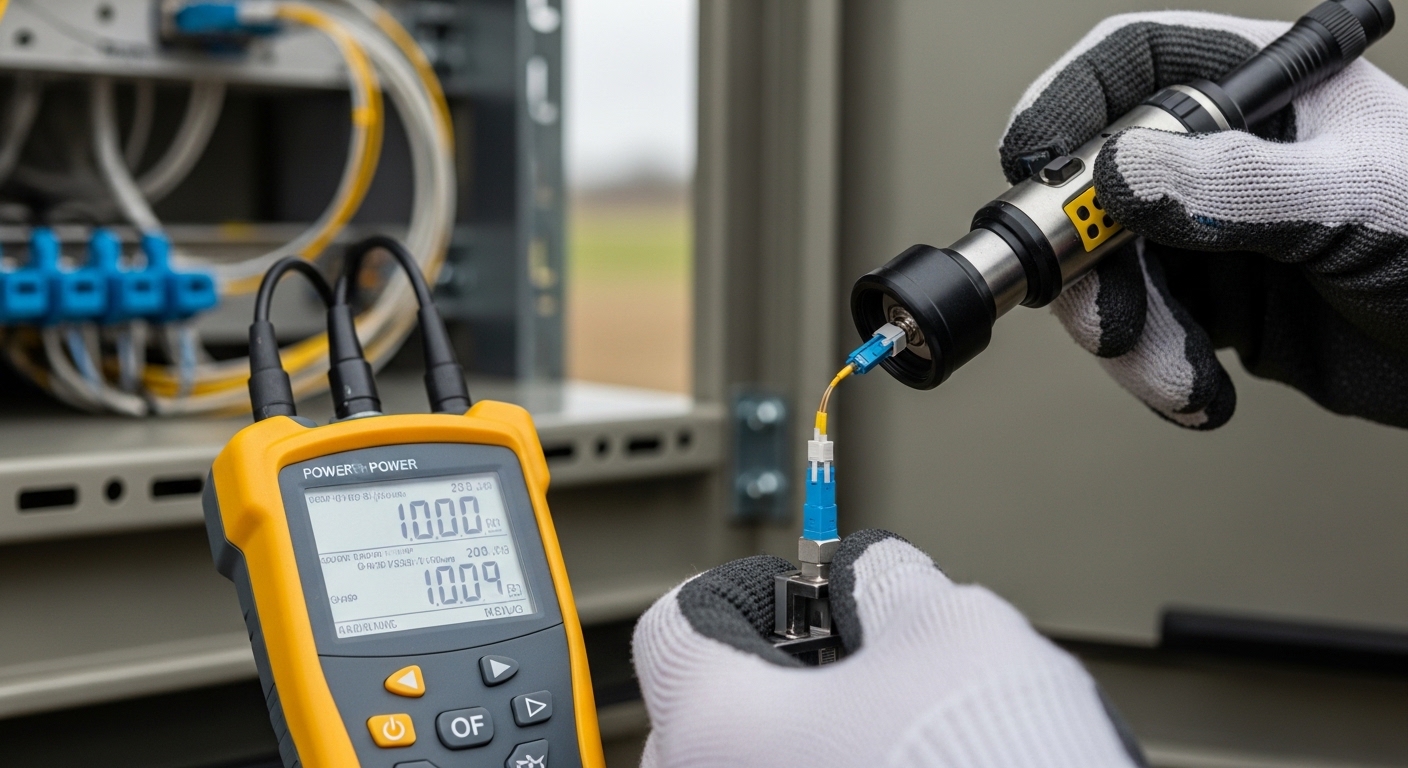
Before installation, align on scope, performance targets, and the operational model you will run in. Open RAN deployments typically involve a disaggregated stack (RU, DU, CU, and near-RT RIC via interfaces), plus transport and orchestration components. Treat the plan like a commissioning project: define acceptance tests, define failure budgets, and confirm you have RF and timing prerequisites.
Confirm architecture boundaries and interfaces
Document which interfaces you will use and how responsibilities split across vendors. At minimum, plan for O-RAN interfaces between RU and DU, and CU/DU split (often via standardized reference points), plus transport network design for latency and jitter constraints. If you plan to use a near-RT RIC, confirm the policy/control plane integration method and the data model you will validate during system tests.
Expected outcome: a signed architecture sheet with named components, interface types, and test ownership per vendor.
Validate timing and synchronization
Open RAN is sensitive to timing because fronthaul and baseband processing depend on deterministic behavior. Confirm your timing sources (commonly GNSS, IEEE 1588 Precision Time Protocol, or a national timing reference) and validate that boundary clocks and transparent clocks are correctly configured. On the transport side, verify that you can achieve the required latency and jitter performance under load.
Expected outcome: a timing acceptance report with measured sync stability and packet-delay variance during traffic bursts.
Establish a transport baseline for fronthaul and midhaul
Define whether you are using Ethernet-based fronthaul and what line rates you will provision. For fronthaul, many deployments use high-speed optical links with deterministic behavior; for midhaul, you may use standard aggregation with QoS. Validate that your switches support required features such as QoS classification, VLAN handling, and lossless or near-lossless behavior where needed.
Expected outcome: an L2/L3 transport bill of materials and a verified QoS profile with queue behavior under congestion.
Step-by-step Open RAN rollout that reduces integration risk
Use an implementation sequence that forces early validation of the hardest constraints: timing, transport, interoperability, and operational automation. The goal is to move from lab to controlled field trials to phased production while keeping rollback options. The best practices below are structured as a numbered engineering plan.
Build an interoperability test matrix, not just a vendor PoC
Many PoCs fail later because they do not cover the full combination space: different RU models, DU firmware versions, transport switch models, and timing configurations. Create a matrix that includes at least three firmware baselines per major component and test each against the same traffic profiles. Include failure injection (packet loss, jitter spikes, link flap) to understand resilience and alarms.
Expected outcome: a test matrix with pass/fail criteria tied to KPI thresholds (availability, attach success rate, throughput, and mobility success).
Commission transport QoS, link budget, and optical reach before radio bring-up
Before you power on baseband components, ensure the transport can sustain the expected load. For optical links, validate the wavelength, reach, and link budget, including connector losses and any patch panel attenuation. Use vendor datasheets and verify that your optics support the required temperature range for your site type.
Expected outcome: optics and transport validated end-to-end with measured receive power and error-free link operation.
Implement RU-DU fronthaul parameters with deterministic configuration
Fronthaul settings must match across components: line coding, framing behavior, and any required synchronization parameters. Avoid ad-hoc changes during bring-up; instead, version-control configuration and record every delta. Use a change-management workflow so you can reproduce the exact state that passed acceptance.
Expected outcome: repeatable RU-DU configuration with captured logs and a rollback bundle.
Bring up the network in layers and gate each stage with acceptance tests
Bring up the stack in a controlled order. Start with transport and timing, then RU-DU link verification, then DU-CU integration, then service provisioning (RAN configuration, policy, and scheduling). Gate each step on acceptance tests that include alarm clearance behavior, performance under load, and mobility scenarios relevant to your target footprint.
Expected outcome: a staged deployment record where each layer clears before the next is enabled.
Operationalize monitoring, tracing, and closed-loop controls
Do not rely on vendor dashboards alone. Implement end-to-end observability: alarms from RU/DU/CU, transport metrics (loss, delay, jitter), and application-level KPIs (throughput, PRB utilization, attach and handover success). If using a near-RT RIC, validate that policy updates do not destabilize scheduling and that rollback paths exist.
Expected outcome: an operations runbook with alert thresholds, escalation paths, and a documented rollback procedure.
Run a controlled pilot with live traffic and measured KPIs
Start with a pilot footprint that matches your real traffic patterns but limits blast radius. Instrument everything and run a pre-defined test calendar: peak load, mobility-heavy hours, and controlled fault scenarios. Capture baseline performance for at least several days so you can distinguish configuration issues from normal variance.
Expected outcome: a KPI report versus targets, plus a production readiness decision backed by evidence.
Key technical specifications to verify during Open RAN fronthaul planning
Even though Open RAN is primarily about software-defined disaggregation, the physical layer still determines whether you can meet latency, availability, and temperature constraints. Teams often underestimate optics and transport behavior, leading to intermittent errors or thermal failures. The table below compares common 10G optics used in fronthaul or supporting aggregation paths; you should map the optics to your specific line-rate and interface requirements.
| Optics type | Example model | Wavelength | Reach (typical) | Connector | Data rate | Tx/Rx power concept | Operating temperature |
|---|---|---|---|---|---|---|---|
| 10G SR (MMF) | Cisco SFP-10G-SR | 850 nm | ~300 m (OM3) | LC | 10.3125 Gbps | Short-reach multimode budget | Commercial/industrial variants |
| 10G SR (MMF, third-party) | Finisar FTLX8571D3BCL | 850 nm | ~300 m (OM3) | LC | 10 Gbps class | OEM-aligned power levels | Vendor-specified range |
| 10G SR (MMF, third-party) | FS.com SFP-10GSR-85 | 850 nm | ~300 m (OM3), varies by spec | LC | 10 Gbps class | Budget depends on OM and patch loss | Vendor-specified range |
How to use this table: treat it as a template for verifying your exact wavelength, reach versus your fiber grade (OM3 vs OM4), connector cleanliness, and thermal limits. For Open RAN, the optics are only one variable; you still must validate switch behavior, QoS, and synchronization end-to-end.
Source: IEEE 802.3 (Ethernet PHY and optical interface references), vendor SFP datasheets for specific power and temperature ranges. IEEE 802.3 standard
Pro Tip: Field teams often chase “radio” bugs while the root cause is transport-level error bursts. During pilot commissioning, capture optical diagnostics (Tx bias, receive power, and error counters) at the same timestamps as DU alarms; you will usually find correlation between micro-bursts on the link and higher-layer instability.
Selection criteria checklist engineers should apply for best practices
Use a structured decision checklist so procurement and engineering do not diverge later. This list is intentionally operational: it reflects what must be true for stable, supportable Open RAN deployments.
- Distance and fiber grade: confirm OM3/OM4 and connector/pigtail losses; verify reach margin at temperature extremes.
- Budget and power levels: compare vendor optical budgets and validate receive power with a meter after patching.
- Switch and transceiver compatibility: verify transceiver type support, DOM parsing, and any vendor-specific quirks.
- DOM support and telemetry: require diagnostic monitoring and ensure your NMS can ingest thresholds and alarms.
- Operating temperature and airflow: outdoor cabinets often exceed assumptions; confirm industrial grade optics where needed.
- Latency and jitter constraints: validate QoS queueing and scheduling under peak loads; test with traffic generators.
- Upgrade and lock-in risk: assess firmware coupling between RU/DU/CU and your orchestration tooling; plan for staged upgrades.
- Support model and spares strategy: define RMA turnaround expectations and stock levels for critical optics and cards.
Common mistakes and troubleshooting actions that prevent outages
Even disciplined teams make predictable mistakes. Below are the top failure modes seen during Open RAN pilots and early production phases, with root cause and a concrete fix.
Troubleshooting failure point 1: DU-CU instability after “successful” transport bring-up
Root cause: timing drift or inconsistent synchronization path across nodes leads to intermittent baseband errors that do not show up as immediate link failures. Another variant is misconfigured boundary clocks or PTP profiles.
Solution: re-validate PTP state on all relevant nodes and ensure transparent clock behavior is consistent. Correlate DU/CU logs with PTP offset and jitter; only proceed after stability holds during load and mobility tests.
Troubleshooting failure point 2: Intermittent fronthaul errors under traffic peaks
Root cause: optical receive power is marginal due to dirty connectors, higher-than-modeled patch loss, or optics temperature derating. A second cause is QoS misclassification causing queue drops during bursts.
Solution: clean connectors, re-measure receive power, and confirm error counter trends. Then validate QoS mappings on all transit switches and test again with traffic shaped to your real peak profile.
Troubleshooting failure point 3: Alarm storms and slow recovery after link flap
Root cause: inconsistent alarm thresholds, missing suppression logic, or orchestration restart loops. Some teams also forget to align operational timers between transport and RAN control plane.
Solution: tune alarm thresholds with evidence from pilot data, implement suppression windows for known transient events, and verify orchestration restart policies. Document the expected recovery timeline and ensure it meets your operational SLO.
Cost and ROI considerations for Open RAN deployments
Open RAN can lower long-term costs, but only if you manage integration and lifecycle operations effectively. Pricing varies widely by region and contract model; as a practical planning range, optics and transport components often represent a small portion of the total RAN program, while integration labor and system testing can dominate early costs. OEM optics are commonly priced higher than third-party options, but third-party can reduce CapEx if compatibility and DOM telemetry are validated in your environment.
Realistic budget note: for a pilot, teams typically spend meaningful effort on system integration, test automation, and transport commissioning; this is where ROI is won or lost. If your rollout reduces mean time to repair via better telemetry and automation, you can improve availability and reduce truck rolls. Conversely, if interoperability issues force repeated firmware cycles, the TCO can rise.
When comparing OEM versus third-party optics, factor in failure rate history, RMA turnaround, and whether your support contract requires OEM parts. Also account for power and cooling: stable optics operation at temperature can reduce thermal-induced faults, which otherwise create hidden downtime and maintenance cost.
FAQ
How do best practices change when Open RAN is deployed outdoors?
Outdoor deployments increase the importance of temperature range validation, airflow assumptions, and connector hygiene. Use industrial-grade components where required and verify optical diagnostics after thermal cycling. Also test recovery behavior under realistic environmental stressors like link flap events.
What is the fastest path to reduce integration risk in an Open RAN pilot?
Start with a comprehensive interoperability test matrix that includes transport switches, firmware baselines, and timing configurations. Then gate each layer with acceptance tests and capture logs for correlation. This approach prevents “it works in the lab” surprises during live traffic.
Should we standardize on OEM optics to follow best practices?
OEM optics can reduce compatibility uncertainty, especially in environments with strict DOM and threshold monitoring. However, third-party optics can be viable if you validate reach, power levels, temperature behavior, and telemetry ingestion in your exact switch ecosystem. The best practice is evidence-based compatibility testing, not brand preference.
How can we prove that fronthaul meets latency and jitter needs?
Use traffic generators and measure delay and jitter across the transport path under load. Then correlate these measurements with RAN KPIs like attach success and handover success. This turns abstract constraints into measurable, auditable engineering evidence.
What are the most common symptoms of timing issues in Open RAN?
Symptoms include intermittent instability after configuration changes, inconsistent mobility performance, and alarms that appear only under certain load patterns. The root cause is often PTP offset or drift, or inconsistent boundary clock configuration. Validate synchronization state and stability over time, not just at initial lock.
How should we handle upgrades without breaking service?
Use staged rollouts with clear rollback triggers and version-controlled configurations. Validate upgrades in a controlled environment using the same traffic profiles as the pilot. Ensure orchestration policies and restart timers are aligned to avoid recovery loops.
By applying these best practices—timing validation, transport QoS discipline, interoperability testing, and evidence-based operations—you can reduce integration risk and improve long-term maintainability. Next, review open ran operations runbook for monitoring, alerting, and recovery patterns you can implement during your pilot.
Author bio: I have led hands-on Open RAN integration work across transport, timing, and RAN service commissioning, including measured acceptance testing and field troubleshooting. I write with an engineer’s focus on deterministic behavior, interoperability evidence, and operational runbooks that teams can actually execute.
