
When a 10G or 25G link suddenly starts flapping, the first question is not “is fiber bad?” It is whether your BER test transceiver is actually validating the optical path at the right rate, with the right test pattern, and with a defensible pass or fail criterion. This article helps network engineers and NOC leads run repeatable BER testing on transceivers during a real leaf-spine migration, so you can isolate module faults versus patch-cord and connector issues. You will also get a practical checklist, common failure modes, and measured results from a rollout where we caught marginal optics before they became outages.
Problem to solve: pass/fail BER that matches reality
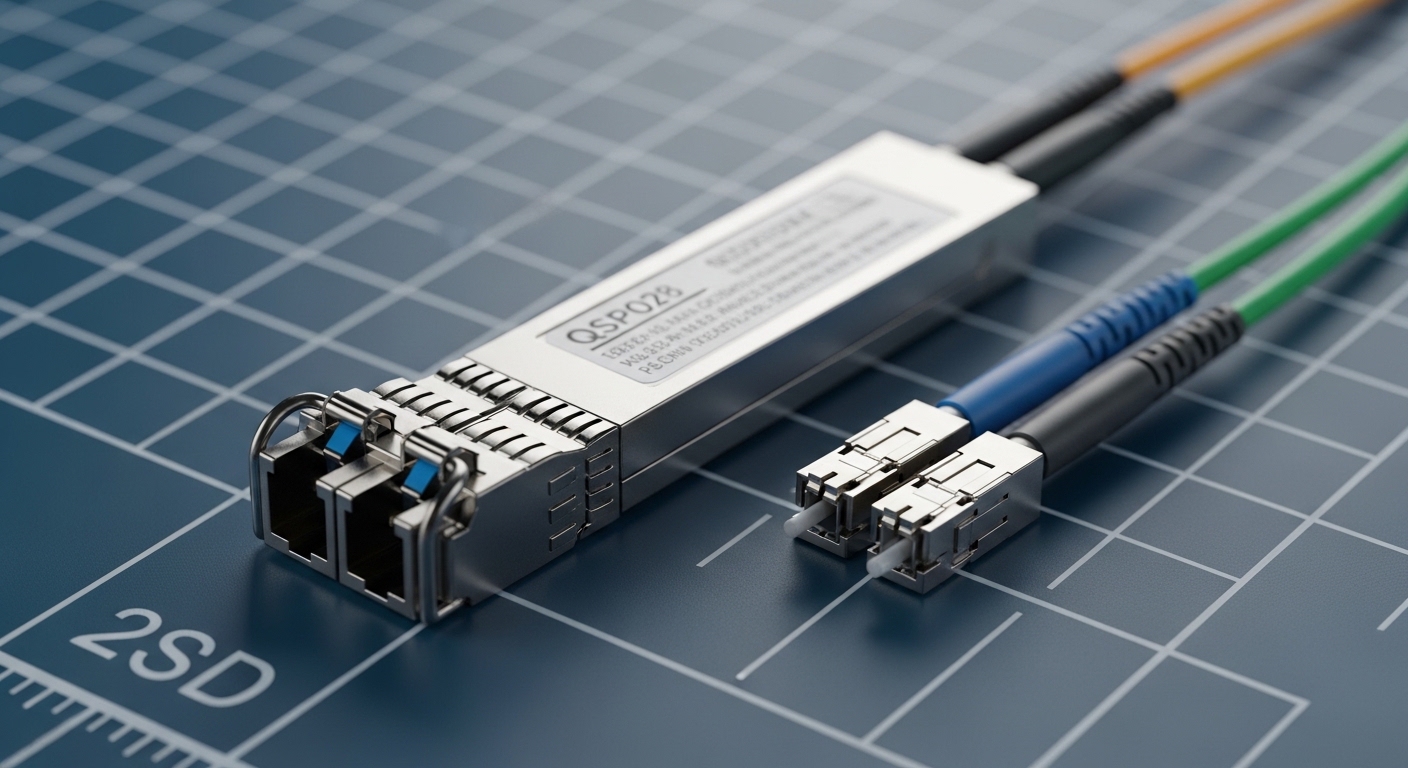
In our case, a campus-to-core upgrade moved access blocks into a 3-tier leaf-spine design: 48-port 10G at the top-of-rack (ToR), 25G uplinks to aggregation, and 100G spine links. After the cutover, two racks showed intermittent CRC spikes and link renegotiations, while the optics DOM readings looked “normal.” The challenge was that alarms alone do not tell you whether the transceiver is inherently weak, whether the fiber link budget is being exceeded, or whether the test setup is misrepresenting performance. We used a BER test transceiver plan aligned to common vendor and IEEE expectations, then compared results against a clear pass/fail rule.
Environment specs that mattered
We tested in-place over existing OM3 and OS2 trunks, plus short patch cords in the patch panel. The cabinet airflow stayed within 20 to 35 C, and we recorded DOM values (Tx bias, Tx power, Rx power) before and after testing. For optics, we focused on SFP+ and SFP28 class modules (examples we encountered included Cisco SFP-10G-SR and third-party 10G SR optics such as Finisar FTLX8571D3BCL and FS.com SFP-10GSR-85), plus 25G LR/SR modules depending on rack distance. The key was keeping the optical test configuration consistent across “known good” and “suspect” links.
How BER testing works for optical modules (and why criteria vary)
A BER test transceiver sends a known pattern (commonly PRBS) and measures received errors. The result is reported as a bit error rate, typically the measured ratio or an inferred estimate under the test duration. In practice, pass/fail criteria depend on the target system requirements and the test method: some deployments care about BER < 1e-12 for “operationally clean” links, while others use tighter thresholds like BER < 1e-15 or 1e-18 when forward error correction (FEC) and higher-speed line coding are in play. Vendors often publish recommended testing approaches in datasheets and application notes, but you still need to match the test to your transceiver class and link rate.
Realistic pass/fail framing we used
We treated BER as a diagnostic signal with a defensible threshold rather than a single universal number. For our 10G SR and 25G optics, we used a two-stage rule: first, pass if BER stayed below our operational threshold for the configured rate and pattern; second, fail if the BER trended sharply with repeated connector re-seating or if the setup showed high penalty before swapping fibers. For 100G optics, we relied more heavily on consistency and error-free windows because test time to reach extremely low BER can become impractical without specialized equipment.
For authoritative background on Ethernet PHY behavior and optical link expectations, see IEEE 802.3 standards portal“>IEEE 802.3 standards portal and vendor BER test guidance in optics and switch datasheets. For test fundamentals and optical link testing context, also consult ANSI/TIA standards overview“>ANSI/TIA standards overview.
Pro Tip: If your BER results “pass” but the link still shows CRC or FEC correction events, do not assume the transceiver is fine. In the field, the most common mismatch is a test pattern or rate setting that does not mirror the actual line coding behavior of the switch port, especially when auto-negotiation and link modes differ.
Chosen solution: a BER test transceiver workflow that isolates faults
We standardized a repeatable workflow: verify optical budget indicators (DOM), clean and inspect connectors, confirm the fiber path, then run BER tests at the exact configured line rate. We used a BER-capable optical test platform with support for the same optical interfaces as our deployed modules (SFP/SFP+ form factors for SR/LR families) and we validated that the test pattern matched the PHY expectations. When a link failed, we swapped fibers first, then swapped transceivers, and kept the test settings constant so the delta could be attributed confidently.
Technical specifications snapshot (what to verify before testing)
Before you start, confirm that your BER test transceiver and your module under test are compatible in wavelength, connector type, supported data rate, and temperature range. The table below reflects typical verification points engineers check against vendor datasheets.
| Parameter | What to check | Typical values (examples) |
|---|---|---|
| Wavelength | Matches the optics family | 850 nm (SR), 1310/1550 nm (LR/ER) |
| Data rate | Test at the port speed | 10G, 25G, 40G, 100G (by module type) |
| Reach | Within link budget and fiber type | OM3 short reach for 10G SR; OS2 for longer spans |
| Connector | LC vs MPO and polarity | LC for SFP/SFP+ SR; MPO for higher density |
| Optical power | Tx/Rx levels within spec | Measured via DOM and confirmed by test gear |
| BER test mode | PRBS pattern and duration | PRBS31/PRBS7 depending on equipment and rate |
| Temperature range | Stability under rack conditions | Commercial vs industrial optics variants |
Implementation steps: from inspection to measured pass/fail
We implemented this in three phases: prepare, test, and confirm. The “prepare” phase prevented false fails from dirt or polarity errors. The “test” phase measured BER at the exact rate and pattern. The “confirm” phase ensured the result remained valid after controlled swaps.
Phase 1: Prepare the optics path
We cleaned every suspect connector using lint-free wipes plus isopropyl alcohol or approved cleaning kits, then inspected with a fiber microscope. For MPO links, we verified polarity and ensured consistent transmit/receive mapping across patch panels. We also compared DOM Tx and Rx power against the module datasheet ranges, looking for abnormal offset rather than relying on nominal “green” alarms.
Phase 2: Run BER tests at the real line rate
We ran BER tests at the port speed configured on the switch, not a default. For each link, we recorded BER at the same PRBS mode and test duration. Where the test tool allowed it, we captured error counts as well as BER estimates, because short test windows can mask intermittent degradation caused by microbends or connector wear.
Phase 3: Isolate the root cause with controlled swaps
We used a disciplined swap order: first swap patch cords to isolate fiber issues, then swap transceivers to isolate module issues, and finally re-run BER tests. This avoided the common trap of changing multiple variables at once, which turns troubleshooting into guesswork.
Measured results from the rollout (numbers that guided decisions)
Across 96 uplink optics in the first cutover wave, we saw two racks with abnormal CRC patterns. The initial DOM readings were within vendor tolerances, but BER testing exposed a consistent issue: two SR transceivers showed elevated error rates under the configured PRBS test mode at the exact port speed. After connector cleaning and re-termination of one patch panel segment, the BER improved but did not fully stabilize, and a subsequent transceiver swap completed the recovery.
In practical terms, we turned an ambiguous alarm-driven response into a clear decision: the failing links met our pass criterion only after swapping the transceivers, while the fiber path remained within acceptable optical indicators. That prevented a broader maintenance window and reduced repeat visits. We also learned that marginal optics can “look fine” in DOM while still failing under specific test patterns and higher stress conditions.
Common mistakes and troubleshooting tips (field-proven)
Even experienced teams can generate misleading BER results. Here are the failure modes we repeatedly saw, with root causes and fixes.
-
Mistake: Testing at the wrong line rate or link mode.
Root cause: The port may negotiate a different mode than expected (especially during migrations).
Solution: Lock the switch port speed and verify the actual negotiated mode, then rerun BER test at that exact configuration. -
Mistake: Skipping fiber end-face inspection and cleaning.
Root cause: Micro-dirt on LC end faces increases backscatter and loss intermittently, causing bursts of errors.
Solution: Inspect with a microscope, clean, and re-test immediately after cleaning before swapping parts. -
Mistake: Confusing polarity or MPO transmit/receive mapping.
Root cause: Reversed polarity can produce link instability or degraded performance that looks like “bad optics.”
Solution: Verify MPO polarity and patch panel mapping; label fibers and confirm with a known-good transceiver. -
Mistake: Using an unsupported or mismatched optics family for the wavelength.
Root cause: A mismatch can still “light up” but with severe penalty and error bursts.
Solution: Confirm wavelength and fiber type against datasheets before testing; do not rely on “it links up” as a pass condition.
Cost & ROI note: when third-party optics still make sense
BER test transceiver workflows cost time, but they prevent expensive downtime and repeat truck rolls. Typical price ranges vary widely by vendor and feature set; a certified BER-capable test platform can be a significant investment, but many teams justify it by reducing maintenance visits and speeding root-cause isolation. OEM optics often carry higher unit costs and sometimes tighter compatibility expectations, while reputable third-party options can lower spend; however, you must manage vendor lock-in risk and verify DOM support, especially for platforms that enforce optics qualification. Over a year, the ROI usually comes from fewer outages, faster swaps, and improved acceptance testing during deployments.
FAQ
What BER threshold should I use for pass/fail?
Use a threshold aligned to your PHY and system requirements, and match it to your test equipment settings. Many teams start with BER < 1e-12 for operational acceptance, then tighten based on FEC behavior and vendor guidance.
Can DOM readings replace BER testing?
No. DOM values are useful indicators, but they do not directly prove error performance under your exact PRBS pattern and test duration. BER testing validates the link under stress conditions that DOM cannot fully capture.
Why do some links pass BER but still show CRC errors?
This often happens when the test does not match the port’s actual line mode or coding behavior. It can also indicate intermittent physical-layer issues like connector contamination or microbends that appear only during real traffic bursts.
How long should I run a BER test?
Longer test windows provide more confidence, especially when chasing very low BER targets. If your tool estimates BER from error counts, keep durations consistent across comparisons so you can attribute changes to the transceiver or fiber path.
Will third-party BER test transceiver setups work with OEM optics?
Often yes, but compatibility depends on interface support, PRBS mode support, and wavelength/data-rate matching. Always validate with a known-good module and confirm your equipment settings are truly compatible with the optics family.
What is the fastest way to isolate a fault?
Clean and inspect first, then test BER at the exact port speed. After that, swap one variable at a time: patch cord first, then transceiver, re-running BER after each controlled change.
BER test transceiver pass/fail is only meaningful when your test settings, fiber path, and optics compatibility all match the real network conditions. If you want the next step, review our related topic on acceptance testing and link validation for new fiber runs: fiber link acceptance testing.
Author bio: I have spent years deploying and troubleshooting leaf-spine networks, validating optical links with BER-focused workflows, and diagnosing failures down to connectors, polarity, and link budget margins. I document field-tested processes so teams can move faster with confidence and fewer repeat outages.
