
ML infrastructure is hungry for bandwidth, but the real bottleneck often hides in the optics: reach limits, power budgets, optics age, and compatibility quirks between switches and transceivers. This article helps network and field engineers select AI-driven optical networking transceivers for high-density training and inference clusters, with practical deployment scenarios and measured operating details. You will get a decision checklist, a pitfalls section, and a tuned set of specs comparisons so you can ship links that stay up during peak load.
Why AI-driven optical networking changes how ML links are engineered
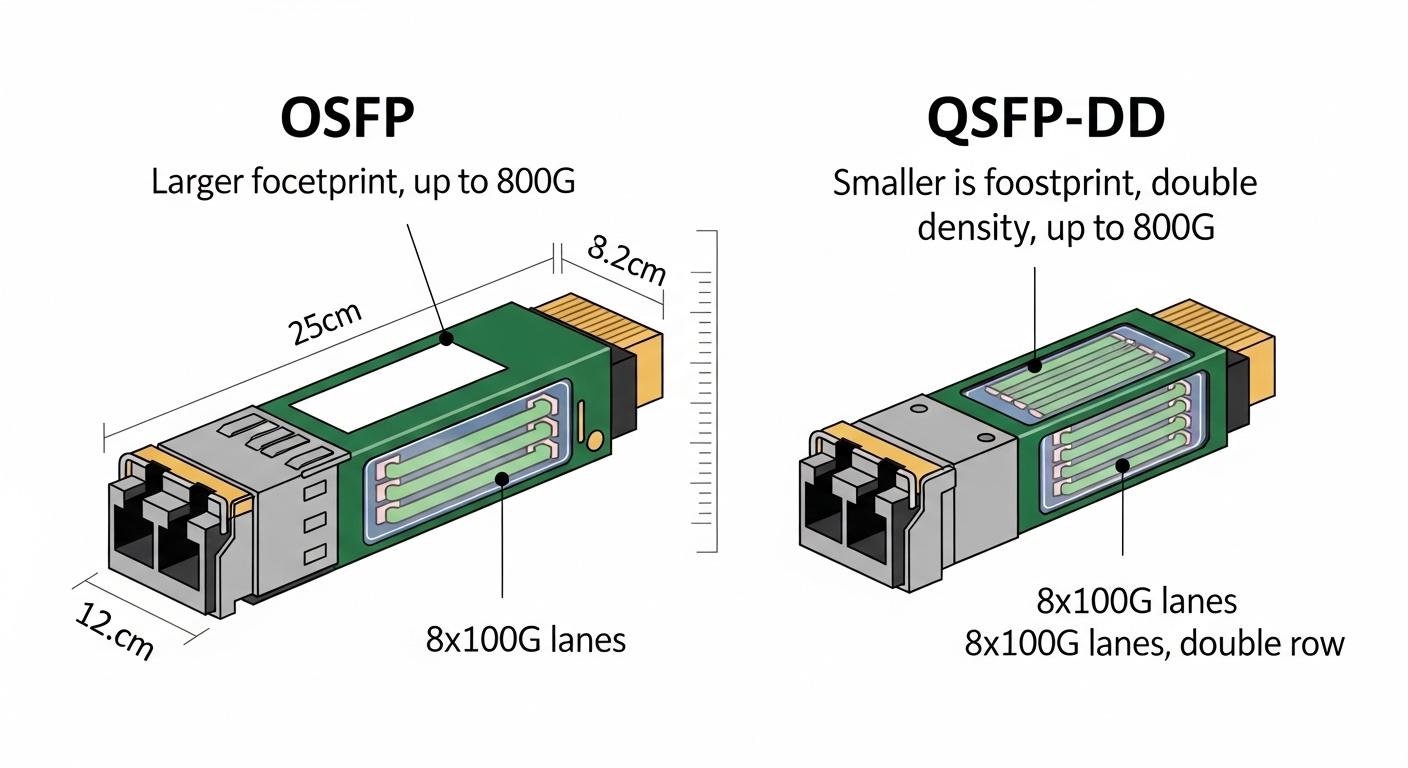
In optical networking for ML, the goal is not just “connect fiber to a port.” It is to keep latency stable and throughput high while managing optical power, signal integrity, and thermal behavior across thousands of lanes. Modern AI-driven transceiver designs lean on tighter control loops and smarter diagnostics, so the system can predict when a link margin is shrinking before it fails. In practice, this reduces downtime during long training runs and accelerates troubleshooting when a leaf-spine fabric starts showing microbursts.
At the physical layer, ML fabrics commonly move from 25G/50G to 100G, 200G, 400G, and beyond, using coherent or advanced modulation depending on reach. For direct-attach and short-reach optics, you will often see PAM4-based electrical-to-optical conversion with DSP in the transceiver or host. For longer spans, coherent optics use a different receiver architecture and require careful configuration of baud rate and frequency plans. The IEEE 802.3 family defines the Ethernet physical layer behavior, while vendor datasheets define the module operating limits and electrical/optical interfaces. For standards context, see IEEE 802.3.
What “AI-driven” typically means in transceivers
In the field, “AI-driven” is usually not a neural network running inside the module. It is a combination of enhanced telemetry, adaptive operating behavior, and host-side analytics that treat optics as a sensor. Common capabilities include real-time monitoring of laser bias current, temperature, received optical power, and error-rate proxies, often via Digital Diagnostic Monitoring (DDM) in a standard management interface. Many deployments correlate these values with historical failures to forecast risk and trigger proactive replacement. The result is improved link reliability under ML load, where traffic patterns and thermal conditions can be more aggressive than typical enterprise browsing.
Pro Tip: Many “mysterious” ML fabric flaps are not sudden failures; they are gradual margin erosion caused by connector contamination, aging lasers, or marginal fiber. If you log DDM values (especially temperature and received optical power) at a short interval and correlate them with FEC or lane error counters, you can catch the drift days before the link drops.
Key optical networking specs that matter for ML throughput
For ML clusters, engineers typically optimize for sustained throughput under congestion plus fast recovery when a link degrades. That means you must match the transceiver to the target Ethernet PHY mode and the fiber plant. You also need to stay inside the transceiver’s optical power budget, connector type constraints, and temperature operating range, because ML racks often run warmer during training. The most common mistake is selecting a module by “reach” alone and ignoring actual transmitter power, receiver sensitivity, and allowable path loss.
| Module family (examples) | Target data rate | Common wavelength | Typical reach class | Connector | Operating temp (typ.) | Key ML optics note |
|---|---|---|---|---|---|---|
| Cisco SFP-10G-SR, Finisar FTLX8571D3BCL, FS.com SFP-10GSR-85 | 10G | 850 nm | Up to ~300 m (OM3/OM4 class) | LC | 0 to 70 C (often) | Short-reach cost-effective for smaller fabrics |
| QSFP28 SR4 style (vendor-specific) | 25G x4 (100G) | 850 nm | Up to ~100 m (OM4 class typical) | LC | 0 to 70 C (often) | PAM4-era DSP helps, but budget still dominates |
| QSFP-DD SR8 style (vendor-specific) | 50G x8 (400G) | 850 nm | ~100 m typical (OM4/OM5 dependent) | LC | 0 to 70 C (often) | High lane count increases sensitivity to bad terminations |
| Coherent 100G/200G/400G LR/ER variants (vendor-specific) | 100G+ (coherent) | 1310/1550 nm bands (varies) | 10 km to 80 km class (varies) | LC/UPC or SC depending on plant | -5 to 70 C or -40 to 85 C (varies) | Configuration and optical budget planning are critical |
When you compare modules, do not rely on a single headline number. Instead, verify the transmitter launch power range, receiver sensitivity, maximum optical loss, and whether the module is validated for your switch vendor and optics management mode. Many modern “smart” modules expose DDM fields that let you estimate optical margin in real time, but you still must ensure the physical layer mode matches the host configuration. For standards and electrical behavior, IEEE 802.3 clauses and annexes are the baseline references, while vendor datasheets define what is actually supported by that specific transceiver SKU. For management interface details, consult the relevant vendor documentation for their DDM/MDIO or I2C implementation. IEEE 802.3 is a good starting point.
Operational limits engineers check before racking
ML deployments commonly run in high-density rows where airflow and inlet temperatures vary by zone. You should confirm the module’s rated temperature range and any derating guidance. Also confirm whether the module expects a specific host electrical interface type and whether it supports the same FEC mode used by the switch. If your fabric uses Forward Error Correction for higher-rate links, the effective sensitivity improves, but only if the FEC is compatible end-to-end. Finally, verify that the connector polish standard and fiber type match the module expectations, especially for 850 nm systems.
Deployment scenario: 400G AI training fabric with optics telemetry
Consider a 3-tier data center leaf-spine topology with 48-port 400G ToR switches at the leaf layer, each serving 16 server racks. The fabric uses 400G SR8 optics for server-to-leaf and leaf-to-spine within the same row, with short runs on OM4 fiber. Total active ports per leaf are 48, and peak training traffic pushes sustained utilization around 80% for hours. Engineers deploy a transceiver model that supports DDM telemetry and exposes per-lane received optical power and temperature so the controller can flag weak links.
During burn-in, field teams record DDM values every 60 seconds and correlate them with link error counters reported by the switch. They set alert thresholds based on margin drift: for example, a sustained drop in received power combined with rising error indicators triggers a “maintenance required” flag. In one rollout, a single rack showed a slow received power decline over 10 days, traced to a partially seated LC connector; after reseating and cleaning, the link recovered without a full outage. This is the practical win of AI-driven optical networking: the system behaves like a health monitor, not a blind link.
Selection criteria checklist for ML-ready optical networking
Use this ordered checklist during procurement and during pre-rack validation. It is designed to prevent the classic “it should work” mismatch that becomes an outage during training windows.
- Distance and fiber type: verify OM3/OM4/OM5 or single-mode specs, plus actual measured link loss (not just cable length).
- Data rate and Ethernet PHY mode: confirm the exact module mapping (for example, 25G x4, 50G x8) and ensure your switch supports that transceiver family.
- Optical power budget: compare transmitter launch power range and receiver sensitivity; ensure margin for aging and cleaning variability.
- Switch compatibility and vendor validation: check the switch vendor’s optics support list and confirm the module is validated for the specific switch model and software version.
- DOM/DDM support and telemetry fields: confirm the host can read the module diagnostics and that the fields you need are exposed.
- Operating temperature and airflow: confirm module temperature ratings and plan airflow so inlet temps remain within spec.
- FEC and error handling compatibility: ensure end-to-end FEC mode settings match (especially for higher-rate links).
- DOM calibration and vendor lock-in risk: consider whether third-party modules report correctly and whether management software expects specific vendor behavior.
Compatibility caveat that saves hours
Even if a module “fits” physically, the host can reject it if it does not match expected electrical characteristics or if the module is not in the switch’s supported optics database. This is common when switching between OEM and third-party. Always validate in a staging rack with representative firmware, and record whether the switch reports the module type correctly and whether telemetry is usable.
Common mistakes and troubleshooting tips for optical networking in ML
ML fabrics fail in predictable patterns. Below are real-world failure modes that field engineers see, with root causes and fixes you can apply quickly.
Link flaps caused by connector contamination or poor seating
Root cause: 850 nm links are extremely sensitive to dust and connector geometry; a barely seated LC can create intermittent reflections that degrade signal integrity under temperature swings. Solution: clean connectors with proper fiber cleaning tools, inspect with an inspection scope, then reseat using consistent torque/clip engagement. Re-test with a known-good patch cord to isolate the plant.
“It negotiated but errors are climbing” due to wrong fiber class or unexpected loss
Root cause: selecting a module based on “rated reach” while the installed OM4 link has higher-than-expected insertion loss, often due to bad splices or patch panel damage. Solution: measure end-to-end loss with an OTDR or qualified test set, verify splice quality, and confirm that the module’s optical power budget includes enough margin for aging and cleaning cycles.
Compatibility mismatch between switch firmware and transceiver
Root cause: a module may be electrically compatible but not fully supported by the switch firmware optics profile, leading to reduced performance modes or telemetry gaps. Solution: check the switch software release notes, update firmware in a controlled test window, and verify the module is on the vendor support list for that switch model. If using third-party optics, validate DOM/DDM fields and confirm that the switch does not disable FEC or apply a fallback mode.
Temperature-related margin loss during training bursts
Root cause: high-density racks can exceed module thermal assumptions, especially when airflow is blocked by cable bundles. This can shift laser bias and reduce receiver margin. Solution: monitor inlet and module temperatures, re-balance airflow, and consider higher-grade temperature-rated optics if the site frequently exceeds expected thermal conditions.
Cost and ROI reality for AI-driven optical networking optics
Pricing depends on data rate, reach, and whether you buy OEM or third-party. As a rough market expectation, short-reach 10G SR modules can be relatively inexpensive, while 100G and 400G SR optics cost significantly more per port. Field teams usually evaluate total cost of ownership (TCO) by combining module price, failure rates, downtime cost, and labor for troubleshooting and replacement. The ROI improves when AI-driven telemetry reduces mean time to repair and prevents full training interruptions.
In many environments, a third-party module can cut purchase price, but engineers must weigh the risk of incomplete diagnostics, occasional incompatibility, or reduced support responsiveness. OEM modules may cost more, yet they can reduce integration risk and speed escalation paths. A pragmatic approach is to pilot both OEM and third-party in a staging pod, measure link stability over a few weeks, and compare the operational metrics: number of link reinitializations, average error-rate trends, and time spent in maintenance. For power and cooling, note that higher-rate modules can add thermal load, so the “cheaper module” may cost more in cooling or airflow engineering if temperatures run hot.
FAQ: AI-driven optical networking transceivers for ML infrastructure
What does “AI-driven” mean for optical networking transceivers?
Most “AI-driven” deployments use advanced telemetry and analytics rather than on-module machine learning. The transceiver reports health data like temperature and received optical power, and the controller uses trends to predict risk and trigger maintenance. Always confirm the exact telemetry fields and how your switch exposes them.
Are 850 nm SR optics enough for most ML cluster links?
For many leaf-spine and intra-row connections, 850 nm short-reach optics are common because they are cost-effective and support high port density. However, you must validate against your installed fiber type (OM3/OM4/OM5), measured loss, and patch panel quality. If you need longer reach, consider single-mode or coherent options.
How do I verify compatibility between a transceiver and an ML switch?
Start with the switch vendor’s optics support list for your exact switch model and software version. Then run a staging test: confirm link comes up at the intended data rate, confirm FEC mode compatibility, and confirm DOM/DDM telemetry is readable. Do not assume physical fit equals full support.
What diagnostics should I monitor to prevent ML training outages?
Monitor temperature and received optical power trends, plus any link error counters or FEC-related indicators available on your switch. Export telemetry on a schedule (for example, every minute during burn-in) and correlate it with events like connector maintenance, patch changes, and airflow adjustments. Predictive alerts are most useful when you have a baseline.
Should I choose OEM optics or third-party for optical networking?
OEM optics often provide smoother validation and predictable telemetry behavior, which can reduce integration risk. Third-party optics can reduce purchase cost, but you should pilot them and verify full management and performance behavior. The best decision depends on your tolerance for integration risk and your support escalation process.
What is the fastest troubleshooting path when a link drops?
First, check whether the switch reports a module presence event, a temperature alarm, or a power/DOM threshold violation. Then inspect and clean connectors, reseat the module, and test with a known-good patch cord to isolate plant vs module. Finally, review telemetry history to see whether the link degraded gradually before dropping.
If you want reliable optical networking for ML infrastructure, treat transceivers as sensors: validate optical budgets, confirm switch compatibility, and use telemetry to catch margin erosion early. Next, explore optical networking cabling and fiber plant validation to strengthen your fiber measurements, patch panel hygiene, and OTDR workflow.
Author bio: I have deployed multi-thousand port optical networking fabrics in AI training environments, tuning power budgets, FEC settings, and telemetry alarms to reduce downtime. I write from field experience working with switch optics compatibility, DOM/DDM troubleshooting, and fiber plant validation using OTDR and connector inspection.
