
Edge computing deployments succeed or fail on the details: fiber reach, optics compatibility, power budget, and operational visibility. This article helps network and infrastructure leaders select fiber transceivers with adaptability across changing distances, vendor ecosystems, and lifecycle timelines. You will get an engineer-grade decision checklist, a troubleshooting playbook, and a cost and ROI lens tailored to edge and small data center rollouts.
Why adaptability matters when edge transceiver requirements change
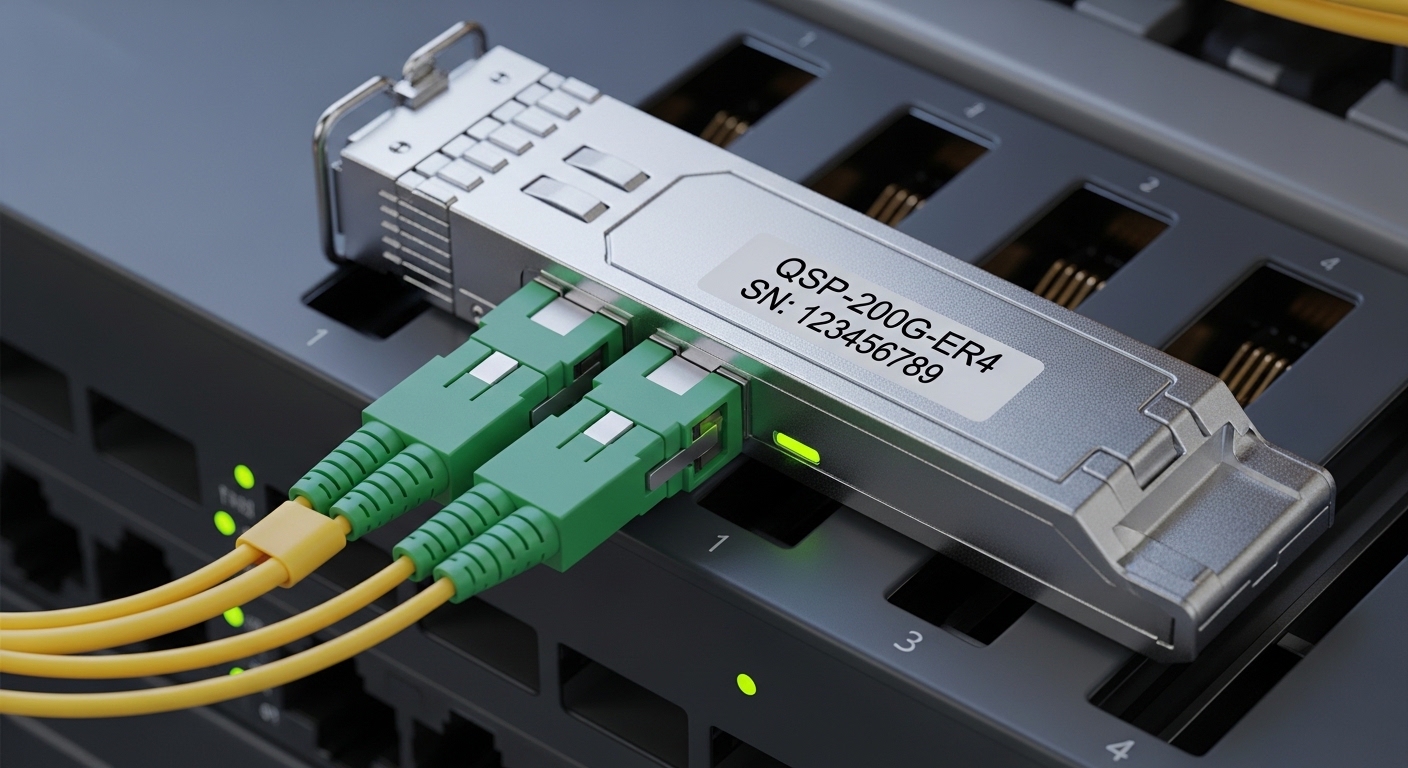
In edge environments, you rarely get a perfectly stable design. A site may start with short-reach uplinks, then expand to longer runs after a new aggregation block arrives. That is where adaptability becomes measurable: the ability to swap media types or optics variants without reworking switch line cards, cabling, or monitoring workflows.
From an architecture perspective, adaptability is governed by three constraints: physical optics compatibility, electrical interface compliance, and operational manageability (DOM telemetry, alarms, and diagnostics). IEEE 802.3 defines the Ethernet PHY behavior for 10GBASE-SR, 10GBASE-LR, and 25G/40G/100G variants, while SFF and MSA documents define the module form factor and electrical interface. If those align, you can scale edge capacity with fewer truck rolls and faster change windows.
Edge realities that stress adaptability
- Distance drift: initial 300 m fiber sections later become 1.5 km due to consolidation changes.
- Vendor mix: procurement alternates between OEM and third-party optics during budget cycles.
- Temperature swings: outdoor cabinets and unconditioned rooms can exceed 75 C ambient.
- Monitoring expectations: operations teams increasingly require DOM visibility for proactive maintenance.
Pro Tip: If you want practical adaptability, standardize on modules that expose DOM over the exact management path your NOC already uses. Many “compatible” optics change the interpretation of thresholds, which can silently break alerting even when the link comes up.
Optics selection fundamentals that preserve adaptability
Adaptability begins with choosing optics families aligned to the Ethernet PHY and the switch’s supported transceiver profile. For edge networks, the most common choices are SFP+ and SFP28 for 10G/25G, QSFP+ for 40G, and QSFP28/QSFP56 for 100G-class. The key is not just reach; it is wavelength, modulation type, receiver sensitivity, and how the switch validates the module.
Standards and compatibility boundaries
- IEEE 802.3: defines optical interfaces such as 10GBASE-SR (850 nm multimode), 10GBASE-LR (1310 nm single-mode), and their higher-speed counterparts.
- MSA and SFF: define form factors (SFP, SFP+, SFP28, QSFP28) and electrical pinouts.
- Vendor transceiver compatibility: switches may enforce firmware checks (EEPROM data, vendor OUI allowlists, and DDM/DOM behavior).
When these boundaries are respected, you can swap transceivers across sites with consistent operational outcomes. When they are not, you may see link flaps, missing DOM telemetry, or outright refusal to initialize.
Transceiver comparison for edge use: reach, power, and DOM
Use the table below to compare representative modules that cover typical edge scenarios. Prices vary by OEM and market conditions, but the spec patterns and operational limits are stable. Note that actual supported distances depend on fiber type, modal bandwidth (for multimode), fiber plant attenuation, and patching losses.
| Module type | Example part numbers | Wavelength | Reach (typical) | Connector | Data rate | Power class (typ.) | Operating temperature | DOM |
|---|---|---|---|---|---|---|---|---|
| SFP+ SR (10G) | Cisco SFP-10G-SR, Finisar FTLX8571D3BCL, FS.com SFP-10GSR-85 | 850 nm | Up to 300 m on OM3; up to 400 m on OM4 (implementation dependent) | LC | 10GBASE-SR | ~1.0 W to 1.5 W | 0 C to 70 C (commercial) or wider options from some vendors | DDM/DOM via standard digital interface |
| SFP+ LR (10G) | Common 10GBASE-LR variants (OEM and third-party) | 1310 nm | Up to 10 km on single-mode fiber (SMF), budget dependent | LC | 10GBASE-LR | ~1.5 W to 2.0 W | -5 C to 70 C (varies by vendor grade) | DDM/DOM |
| SFP28 SR (25G) | 25GBASE-SR SFP28 modules from major vendors | 850 nm | Up to 100 m on OM3; up to 150 m on OM4 (varies by optics and plant) | LC | 25GBASE-SR | ~1.5 W to 2.5 W | 0 C to 70 C or extended options | DOM |
| QSFP28 100G SR4 | 100GBASE-SR4 QSFP28 modules (OEM and third-party) | 850 nm (multi-lane) | Up to ~100 m on OM4 (implementation dependent) | LC (4-lane) or MPO depending on design | 100GBASE-SR4 | ~3.5 W to 5 W | 0 C to 70 C or extended options | DOM |
For adaptability, you typically want two “families” in your spares pool: one multimode SR set for short edge runs inside controlled cabinets, and one single-mode LR set for longer uplinks and future expansion. That strategy reduces the odds that you will strand a site with optics that physically match the switch but fail due to distance changes.
Decision checklist: how engineers buy for adaptability without surprises
When procurement and architecture collide, you need a repeatable process. This checklist is designed for edge computing rollouts where distances, vendor sourcing, and lifecycle timing change. Score each candidate optic against these factors and require evidence (datasheets, switch compatibility lists, and test results).
- Distance and fiber plant fit: confirm measured attenuation and patch loss; verify SR reach with OM3/OM4 modal bandwidth and patch cord specs.
- Data rate and PHY match: ensure the module supports the exact Ethernet PHY mode your switch port is configured for (for example, 10GBASE-SR vs auto-negotiated fallback behavior).
- Switch compatibility profile: validate against the switch model’s transceiver support matrix, including any allowlists or firmware gating.
- DOM/DDM support and telemetry mapping: confirm the switch reads digital diagnostics; test that alarms integrate into your monitoring system.
- Operating temperature and thermal design: choose extended temperature optics for cabinets exposed to high ambient; ensure the switch airflow supports the module.
- Connector and cabling standardization: standardize on LC vs MPO per speed class; avoid mixing patch cord types across sites unless you control inventory rigorously.
- Vendor lock-in risk: reduce single-vendor dependency by qualifying at least one alternate vendor module family with the same DOM behavior and reach class.
- Power and thermal headroom: check module power class against switch PSU and thermal budget for high-density edge racks.
- Lifecycle and spares strategy: qualify spares that are “drop-in” compatible and maintain consistent calibration ranges for optics diagnostics.
Governance approach that keeps adaptability real
- Qualification gates: run a short test: link bring-up, BER under load, and DOM telemetry sanity checks.
- Documentation standards: store module EEPROM-reported parameters and switch port results in a controlled change record.
- Inventory segmentation: keep SR and LR optics in separate bins with clearly labeled reach and fiber type to prevent operational mistakes.
In a well-governed program, adaptability is not a slogan; it is a controlled capability that survives audits, change windows, and future upgrades.
Real-world edge deployment scenario: measurable adaptability in practice
Consider a regional edge rollout across 12 sites using a 3-tier architecture: 48-port 10G ToR aggregation switches at each edge, uplinked to a central aggregation layer. At day one, each site used 10GBASE-SR over OM4 with a measured plant budget that supports 300 m class links for short runs inside controlled rack spaces. After six months, two sites expanded their compute footprints, moving the uplink termination from the original cabinet to a new aggregation room located 2.2 km away on SMF.
Because the edge design already reserved port and cabling capacity for LR optics, the team swapped the uplink modules to 10GBASE-LR (1310 nm) without changing line cards or switch firmware profiles. The operational visibility stayed consistent because the replacement optics provided DOM telemetry that the monitoring stack already parsed for thresholds and alarm states. Result: no downtime beyond the maintenance window, fewer truck rolls, and faster capacity scaling with predictable risk.
Common mistakes and troubleshooting tips for adaptable transceivers
Even when optics are “compatible,” edge conditions make failures more likely. Below are frequent mistakes that break adaptability, along with root causes and solutions. Use these checks during acceptance testing and during incident response.
Link comes up, but monitoring shows missing or incorrect DOM alarms
Root cause: DOM telemetry mapping differs between module vendors or the switch expects specific EEPROM fields; sometimes the optics provides DDM but the switch driver does not populate thresholds correctly. Solution: validate DOM readout with a controlled test and confirm that your monitoring system ingests the correct sensor names and units; keep a qualified optics list per switch model.
Intermittent link flaps after patching or connector changes
Root cause: fiber dust, poor polish, or excessive insertion loss at LC connectors; SR links are especially sensitive in high-density patch fields. Solution: clean and inspect with a fiber scope, replace suspect patch cords, and measure link power levels using the transceiver diagnostics (receive power and alarm thresholds).
“Wrong reach” selection: SR chosen for a run that later exceeds budget
Root cause: assumptions about modal bandwidth and attenuation ignore patch cords, splitters, or additional connectors added during expansion. Solution: require measured OTDR or at least end-to-end attenuation documentation, and pre-plan LR capacity where distance drift is likely.
Temperature-induced failures in cabinets without adequate airflow
Root cause: commercial temperature optics installed in extended-ambient environments; optical power and receiver sensitivity degrade with heat, causing CRC errors and eventual link loss. Solution: use extended temperature modules for outdoor or semi-outdoor enclosures, verify switch fan curves, and add airflow management or thermal monitoring.
Switch rejects optics during initialization
Root cause: firmware gating on EEPROM identifiers, vendor OUI allowlists, or unsupported transceiver type. Solution: consult the switch transceiver compatibility matrix, run a qualification test, and avoid ad hoc procurement without documented compatibility.
Cost and ROI note: balancing OEM certainty with adaptable spares
Pricing varies widely by speed class and market timing, but a realistic edge optics approach considers both direct cost and operational cost. OEM optics often carry a premium, commonly 20% to 60% higher than qualified third-party alternatives for common SR/LR classes, though exact deltas depend on vendor and region. The ROI comes from reducing downtime, avoiding truck rolls, and maintaining consistent telemetry for proactive maintenance.
TCO should include: spares stocking strategy, failure rate under your ambient conditions, time spent in troubleshooting, and the administrative overhead of managing incompatible optics families. In practice, teams often reduce TCO by qualifying one or two non-OEM options that match reach and DOM behavior, while reserving OEM for high-risk roles or hard-to-replace critical links.
FAQ
How does adaptability differ from simply buying the “right” reach?
Reach correctness is necessary but not sufficient. Adaptability also covers switch compatibility behavior, DOM telemetry consistency, thermal tolerance, and the ability to swap optics when distance or topology changes.
Can I mix third-party optics across sites without breaking governance?
Yes, if you qualify them per switch model and validate DOM telemetry and alarm thresholds. Create a controlled approved list and require test evidence before expanding procurement.
What fiber standards should edge teams prioritize for SR optics?
For 850 nm SR optics, confirm whether your plant is OM3 or OM4 and document end-to-end loss including patch cords and connectors. SR reach claims are not universal; they depend on modal bandwidth and implementation.
Why do some optics “link up” but still cause errors under load?
That usually indicates marginal optical power, connector loss, or inadequate thermal conditions. Use DOM receive power metrics and run a controlled traffic test to detect elevated BER before declaring success.
What is the most common cause of transceiver swap failures during change windows?
Operational mix-ups: inserting an optics family intended for a different port type, connector style, or reach class, often combined with insufficient fiber cleaning. Use labeled inventory bins and enforce a pre-change checklist.
Which references should I use for standards and compatibility due diligence?
Rely on IEEE 802.3 for PHY behavior, vendor datasheets for module specifications, and the switch vendor transceiver compatibility documentation for gating behavior. For form factors and electrical interface expectations, reference SFF and MSA documentation as applicable.
Adaptability-first transceiver selection turns edge optics into a controlled, scalable capability rather than a fragile procurement gamble. If you want the next step, align your module choices with your inventory governance and monitoring architecture using transceiver lifecycle governance
Author bio: I have led fiber and optics qualification programs for edge rollouts, including DOM telemetry validation and switch compatibility testing across multi-vendor environments. I focus on measurable ROI via reduced downtime, predictable thermal performance, and governed spares strategies.
Editorial note: Article updated on 2026-05-02. [Source: IEEE 802.3], [Source: IEEE 802.3 Ethernet PHY specifications], [Source: Vendor transceiver datasheets and switch transceiver compatibility guides]
