
SMBs feel the pressure to “keep up,” but an 800G upgrade can turn into a budget surprise when you factor in optics, switch port availability, optics compatibility, and fiber rework. This article helps IT leaders and network engineers run a practical cost model and validate 800G upgrade readiness without betting the quarter on assumptions. You will get a decision checklist, a specs comparison table, deployment math, and field-tested troubleshooting pitfalls.
Why an 800G upgrade costs more than optics (and when it still pays off)
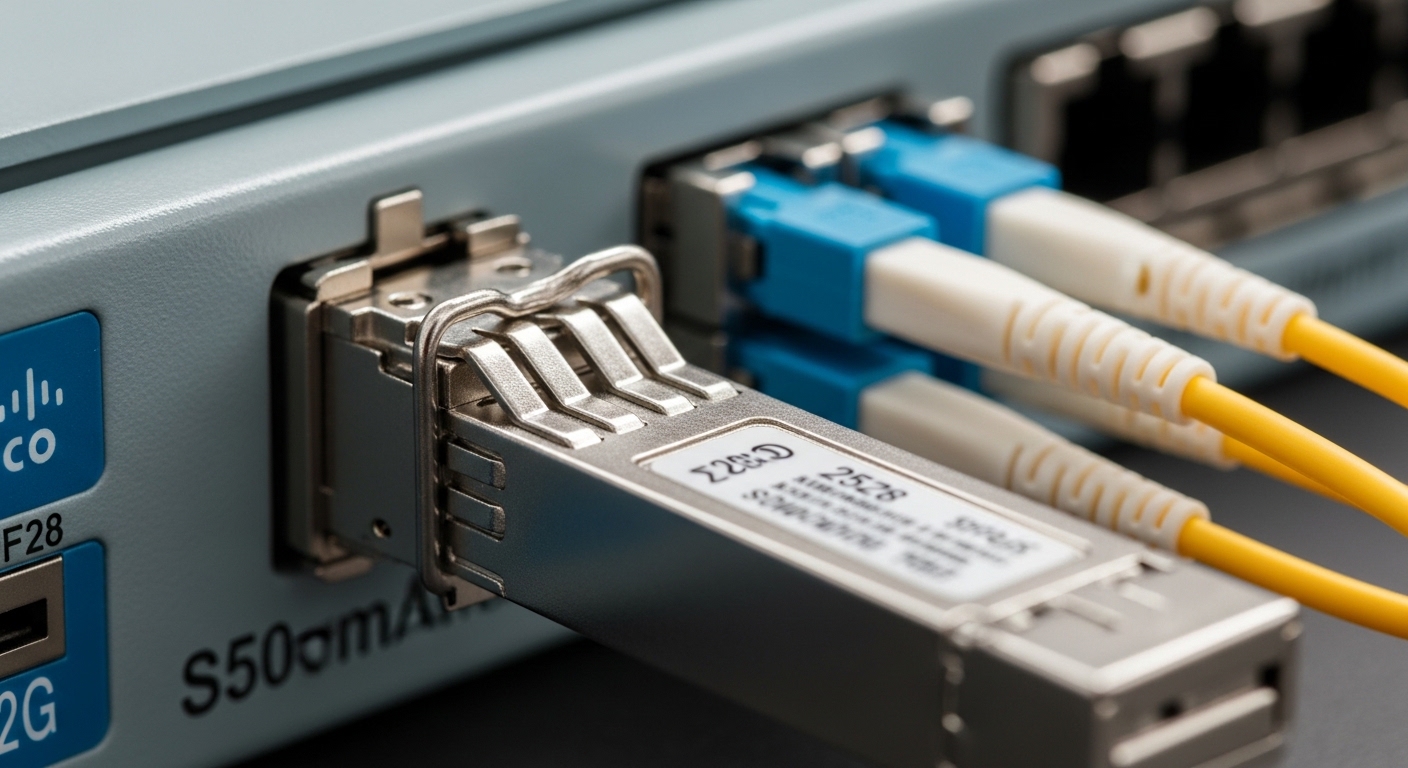
In most SMB environments, the biggest cost isn’t the transceiver line item; it is the “system” work required to make 800G ports usable. Typical hidden drivers include: switch model constraints (port breakout and oversubscription behavior), QSFP-DD or OSFP slot availability, optics vendor compatibility, and whether your existing MPO/MTP fiber plant supports the needed lane mapping and insertion loss budget. IEEE 802.3 defines 800G Ethernet physical layers, but actual deployments succeed or fail based on vendor-specific implementation details and the optical link budget you can prove in your racks. [Source: IEEE 802.3](https://standards.ieee.org/standard/802_3)
What SMBs usually underestimate
1) Switch port economics. If you buy a new chassis or add line cards just to unlock a handful of 800G ports, your effective cost per usable port can be 2 to 5x the optics-only estimate. 2) Optics mix complexity. Many networks need a blend: SR for leaf-spine top-of-rack and LR/FR for aggregation. 3) DOM and supportability. If your switch only supports certain DOM formats, third-party optics may work electrically but fail in monitoring, which increases operational risk.
When it is worth it
An 800G upgrade is often justified when you must reduce latency and cabling footprint, consolidate uplinks, or avoid buying multiple smaller port expansions. For SMBs, the “worth it” pattern is usually: you already plan capacity refresh, you have measurable traffic growth, and you can reuse most of the fiber plant (correct connectors, acceptable insertion loss, and consistent polarity). If you cannot validate those assumptions, treat 800G as a pilot project, not a broad rollout.
800G upgrade options: SR vs DR vs LR, and what your fiber can realistically support
For SMBs, the most common 800G upgrade paths are short-reach and mid/long-reach optics depending on topology. 800G Ethernet commonly uses PAM4 signaling with parallel optics and defined lane counts; the real constraint becomes optical power, receiver sensitivity, and the end-to-end link budget after connectors, splices, and patch cords. Vendor datasheets provide typical launch power and receiver requirements, but your engineered link budget depends on your actual fiber type (OM4 vs OM5), patch cord grade, and number of mated connectors. [Source: Cisco Optics and Cabling Guides](https://www.cisco.com/c/en/us/support/index.html)
Example 800G optics targets you will see in the field
- 800G SR (MMF): typically intended for data center distances using OM4/OM5 fiber and MPO/MTP cabling.
- 800G DR/LR (SMF): intended for longer reach using single-mode fiber and LC duplex or similar interfaces depending on optic format.
- 800G “migration optics”: sometimes offered in specific switch ecosystems where lane mapping and diagnostics are tuned for that platform.
How to read reach claims
Reach marketing numbers often assume a reference channel with a particular number of mated connectors and splices. For decision-making, replace marketing reach with your own engineered budget: insertion loss of patch cords, mated connector loss, and splice loss, plus any aging margin. Use your fiber test results (OTDR or insertion loss measurements) and keep a conservative margin for future changes.
Quick cost model for an 800G upgrade: optics, ports, and cabling
To estimate cost, start from the number of active 800G ports you need, then add a realistic line item for optics, installation labor, and potential fiber rework. For SMBs, a pilot often uses 4 to 12 ports to validate performance and monitoring, then scales only if operational metrics look stable. Field experience shows that a “small” pilot can still trigger cabling changes if your current patching uses mixed polarity practices or connector types. The table below compares representative optics options so you can model unit costs and constraints.
| Optics type (examples) | Wavelength / media | Nominal reach | Connector / form factor | Typical power range | Operating temperature | Notes for SMB planning |
|---|---|---|---|---|---|---|
| 800G SR (MMF) examples: FS.com SFP-10GSR-85 style is not 800G; look for 800G SR optics for your switch | Multi-mode (OM4/OM5) | Data center short reach (distance depends on optic class and fiber) | MPO/MTP (parallel optics) | Varies by vendor; budget for transceiver cooling headroom | Commonly 0 to 70 C (confirm per datasheet) | Often cheapest per port if fiber is already MPO/MTP ready |
| 800G DR (SMF) examples: vendor-specific 800G DR optics | Single-mode (SMF) | Mid reach (vendor-defined) | LC or MPO depending on optic | Varies | Commonly 0 to 70 C (confirm) | May require different patching practice than MMF |
| 800G LR (SMF) examples: vendor-specific 800G LR optics | Single-mode (SMF) | Long reach (vendor-defined) | LC or MPO depending on optic | Varies | Commonly 0 to 70 C (confirm) | Higher unit cost; helps when fiber plant is already SMF |
Important: 800G optics are vendor- and switch-platform-specific in form factor and lane mapping. Always confirm compatibility in the switch optics matrix and validate DOM behavior before purchasing in volume. [Source: Vendor transceiver compatibility matrices (e.g., Cisco, Juniper, Arista, NVIDIA OEM)]
A practical budgeting worksheet (what to plug in)
- Count ports: Determine how many 800G ports must be active after any spares and redundancy. Example: 8 ports for leaf uplinks plus 2 spare = 10 optics.
- Optics unit cost: Use current quotes for your exact switch model and optic type. Expect major variance by reach (SR usually lowest, LR highest).
- Switch cost allocation: If you need a line card, allocate the incremental cost per enabled 800G port, not the full chassis price.
- Fiber rework allowance: Add a contingency for patch panel changes, MPO polarity correction, and possibly new fiber runs if insertion loss fails.
- Labor and downtime: Budget rack time, testing, labeling, and a rollback plan.
Real-world deployment scenario: 3-tier topology with measurable constraints
In a 3-tier data center leaf-spine topology with 48-port 10G ToR switches and 2 aggregation tiers, an SMB may plan to refresh only the uplinks where congestion is measurable. One real pattern: you replace two ToR uplink modules with new 800G-capable line cards and connect to the spine using 800G SR optics over existing OM4 trunks terminated in MPO/MTP. Suppose you need 8 active 800G links (16 endpoints) and your fiber test shows insertion loss is within spec for the SR reach class with at least 1.5 to 2.0 dB margin after connector mating. If you can reuse the MPO trunks and avoid new runs, optics plus installation can be a manageable pilot; if the polarity is inconsistent across patch panels, the “rework day” can double labor time.
Operational validation steps you should do before scaling
- Verify link comes up at the expected speed and lane mapping using switch diagnostics.
- Check DOM readings (temperature, bias current, received power) and confirm alarms trigger correctly.
- Run a controlled traffic test (iperf-style load or vendor traffic generator) and watch for CRC errors and link flaps over a 24 to 72 hour window.
- Record baseline metrics for later comparison after any cabling changes.
Selection criteria for an 800G upgrade: an engineer-first checklist
If you want a fast go/no-go for an 800G upgrade, use this ordered checklist. It is designed for SMB teams who have limited time to validate optics and limited tolerance for operational surprises.
- Distance and reach match: Confirm your measured insertion loss and connector/splice count supports the reach class, not the marketing number.
- Budget impact per enabled port: Include switch incremental cost, not just optics pricing.
- Switch compatibility matrix: Verify the exact optic part number is listed for your switch model and software version.
- DOM and observability: Confirm monitoring works (temperature, power, alarm thresholds) and that telemetry does not show “unsupported” fields.
- Operating temperature and airflow: Check transceiver rated temperature range against your rack inlet temps and switch thermal design.
- Vendor lock-in risk: Assess whether third-party optics are supported with full diagnostics, or if only OEM optics are plug-and-play.
- Migration plan: Decide whether you will run mixed speeds temporarily (e.g., 400G to 800G) and how that affects routing and oversubscription.
Pro Tip: In the field, the most expensive “800G upgrade” failures are often not link bring-up failures; they are silent telemetry gaps. If DOM alarms do not populate in your monitoring stack, you may only discover marginal optics after a few weeks of elevated error rates. Treat observability validation as a first-class requirement, not an afterthought.
Common mistakes and troubleshooting tips during an 800G upgrade
Even with correct optics, SMBs run into predictable failure modes. Below are at least three common pitfalls with root causes and fix paths.
Link flaps due to polarity or lane mapping mismatch
Root cause: MPO/MTP polarity inconsistencies or wrong patch cord orientation can cause receiver saturation or intermittent lane alignment failures. Parallel optics can appear “mostly working” until thermal drift or connector stress changes coupling.
Solution: Re-verify MPO polarity using your site’s standard (often a polarity scheme like “A to A” with proper labeling). Reseat connectors, inspect for dust, and re-run link diagnostics after each change.
“Link up” but performance collapses (CRC errors rising)
Root cause: Exceeded optical budget from excessive patch cords, extra mated connectors, or aging fiber. Another contributor is using optics that are electrically compatible but not fully tuned for the switch’s lane mapping expectations.
Solution: Pull OTDR/insertion loss evidence and compare to the optic vendor link budget assumptions. Swap patch cords to a known-good grade and retest. If errors persist, confirm the optic is on the compatibility list for your exact switch OS version.
Monitoring shows “unsupported DOM” or alarms never trigger
Root cause: Third-party optics may provide partial DOM data or use a DOM implementation that your switch software does not fully interpret. This can lead to missing telemetry fields and unreliable thresholding.
Solution: Validate DOM fields immediately after install and integrate a test alarm (e.g., simulate threshold crossing if your platform supports it). If telemetry is incomplete, revert to OEM optics or a vendor-approved alternative.
Thermal throttling and intermittent receiver issues
Root cause: Rack inlet temperatures exceed optic operating recommendations, especially in side-to-side airflow constraints or with partially blocked front-to-back paths.
Solution: Measure rack inlet and transceiver zone temperatures during traffic load. Improve airflow, confirm fan tray health, and ensure the switch’s thermal margins are within spec for your transceiver class.
Cost and ROI note: realistic pricing, TCO, and risk controls
For SMBs, 800G upgrade ROI is strongest when you reduce the number of parallel uplinks and simplify cabling while meeting growth. In practice, you should expect optics to be a meaningful portion of the bill, but the switch incremental enablement and installation labor often dominate total cost. Unit prices vary widely by reach and OEM vs third-party sourcing; a conservative approach is to model optics at the higher end of your quote range and include a cabling contingency.
TCO levers to include: (1) failure rates and warranty terms, (2) spare inventory holding cost, (3) downtime during swaps, and (4) monitoring maturity. OEM optics can reduce compatibility risk, but third-party optics can work well if they are validated on your switch model with full DOM support. The best ROI pattern is a staged rollout: pilot first, measure error rates and telemetry quality, then scale only after operational confidence.
FAQ
How do I estimate the cost of an 800G upgrade for only a few ports?
Calculate incremental switch cost per enabled 800G port, then add optics for each endpoint plus one spare per reach type. Add a realistic labor and fiber rework contingency because polarity and patching issues are common. If the switch refresh is the real constraint, the optics-only estimate will understate TCO.
Is 800G SR usually cheaper than DR or LR for SMBs?
Often yes, because SR uses multi-mode fiber and short-reach optics that are typically lower cost per unit. But the decision depends on your existing fiber plant: if you already have clean SMF infrastructure and MPO is messy, DR/LR can become the lower total cost option.
Can I use third-party optics for an 800G upgrade?
Sometimes, but success depends on your switch’s compatibility matrix and whether DOM telemetry works end-to-end. Validate with a pilot and confirm monitoring fields and alarms before scaling. Without that, you may face silent operational risk even if links come up.
What fiber measurements matter most before buying 800G optics?
Use measured insertion loss and confirm connector and splice counts. If you only know the fiber type but not the current loss profile, you can exceed the link budget after adding patch cords. For MPO/MTP, also verify polarity and cleanliness practices.
What is the fastest way to de-risk an 800G upgrade?
Run a staged pilot: bring up a small number of 800G links, verify link stability over 24 to 72 hours, and confirm DOM telemetry and alarm integration. Only then decide whether to expand or keep using lower-speed uplinks in parallel.
Will an 800G upgrade require downtime?
It often requires a maintenance window for optics swaps, patching, and switch configuration changes. With careful planning, you can minimize downtime by pre-staging optics, labeling patch panels, and validating in a test rack first.
If you treat an 800G upgrade as a controlled pilot with measurable fiber and telemetry validation, you can avoid the budget traps that hit SMB timelines. Next step: run your own readiness assessment using 800G upgrade readiness checklist and convert quotes into a per-port TCO model.
Author bio: I build and validate high-speed Ethernet designs in production environments, focusing on measurable PMF signals like link stability, telemetry completeness, and mean time to recover. I help teams move from “it should work” to “it did work” by running tight pilots, capturing error baselines, and iterating quickly.
