
If your enterprise is moving from 400G to 800G for AI training, dense virtualization, or high-throughput storage, the optics decision can make or break the rollout. This buying guide helps network, data center, and field teams select the right `800G optics` by mapping real switch requirements to fiber type, reach, power, and diagnostics. You will also get a step-by-step implementation plan, a troubleshooting section for the most common failure points, and practical ROI considerations.
Prerequisites: what you must confirm before ordering 800G optics
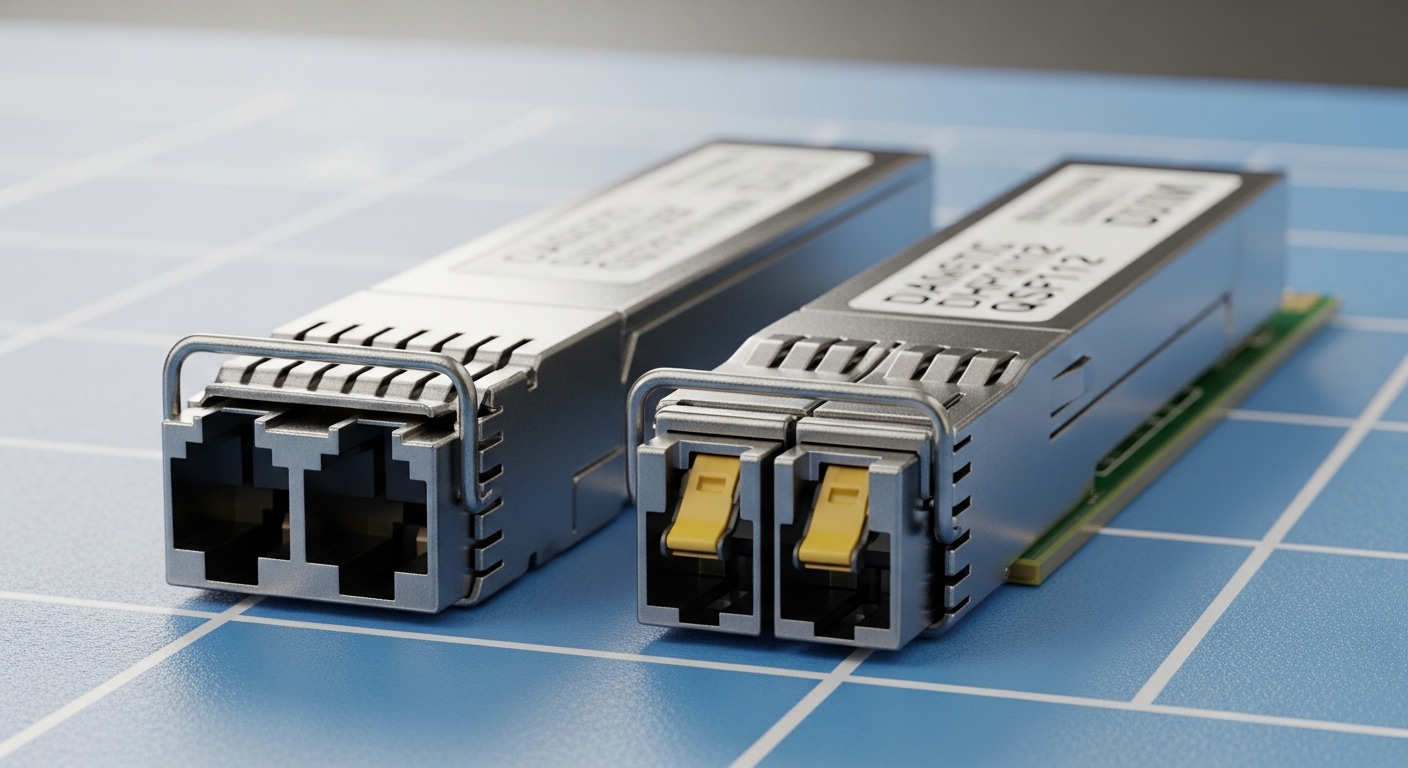
Before you buy, lock the requirements down like you would for an IEEE link bring-up. Start by identifying the exact switch line card model, optic cage type, and expected transceiver format (for example, coherent vs direct-detect, or QSFP-DD/OSFP-style form factors depending on vendor). Then verify the fiber plant (single-mode vs multi-mode), existing MPO/MTP polarity conventions, and whether you need active optical cables (AOCs) or pluggable modules.
Inventory hardware and optic cages
Collect the switch model, line card SKU, and the port speed mode that will be used for 800G. For example, if your vendor supports 800G over specific breakout or native modes, confirm the port profile you will deploy and whether the cage accepts a specific transceiver family. Field experience shows that optics are rarely “universal” across vendors: even when the data rate matches, cage firmware and EEPROM parsing can differ.
Expected outcome: A one-page sheet listing switch SKU, port count used for 800G, cage type, and supported optic part numbers or approved vendor list.
Validate fiber type and reach targets
Measure actual link distances in meters from patch panel to transceiver, not “as-built” estimates. For multi-mode, ensure you have OM4 or OM5 as required by the optics spec; for single-mode, confirm you can support the planned wavelength and reach budget. Remember that patch cords, splitters, and aging connectors reduce margin, so plan with a conservative link loss budget.
Expected outcome: For each site, a table mapping port group to fiber type, estimated reach, and whether you need additional loss budget headroom.
Confirm power and cooling constraints
800G optics can change thermal load on the switch and adjacent airflow paths. Check the optical module power draw from the vendor datasheet and compare it to your chassis thermal profile and front-to-back airflow design. If you are deploying in a hot aisle with high recirculation, you may need to adjust fan curves or ensure baffles are installed.
Expected outcome: A thermal feasibility check showing that your optics power and airflow requirements fit the rack and chassis plan.
800G optics types and what to buy for each distance and fiber plant
In practice, “800G optics” usually means a combination of direct-detect and short-reach module families, with variations by wavelength and interface. Your selection depends on whether you are targeting short reach within a data hall or longer reach across campuses, and on whether the plant is single-mode or multi-mode.
Short-reach vs long-reach decision
Short-reach solutions are typically used for leaf-spine fabrics, ToR-to-aggregation links, and intra-row server connectivity. Longer reach uses different optics technology and often requires single-mode fiber and stricter budget management. If you are building for AI clusters, you usually standardize on predictable reach classes to simplify spares and reduce deployment risk.
Technical specifications table (reference comparison)
The table below illustrates typical spec dimensions you should compare across 800G optics options. Always validate exact values against the specific vendor module datasheet and your switch’s compatibility matrix.
| Spec category | Example short-reach (multi-mode) | Example reach (single-mode) | What it affects |
|---|---|---|---|
| Nominal data rate | 800G | 800G | Port speed profile |
| Wavelength family | Commonly multi-lane around 850 nm | Commonly around 1310 nm | Fiber type compatibility |
| Reach class | Up to ~100 m on OM4 (varies by module) | Hundreds of meters (varies by module) | Distance planning and loss budget |
| Connector | Typically MPO/MTP | Typically LC or MPO depending on module | Patch panel and polarity workflow |
| Transceiver form factor | Often vendor-specific 800G pluggable | Often vendor-specific 800G pluggable | Switch cage fit |
| Operating temperature | Commonly 0 C to 70 C or extended options | Commonly 0 C to 70 C or extended options | Field reliability |
| Digital diagnostics | DOM support via I2C/MDIO (module-dependent) | Monitoring and alarms |
Compatibility matters more than raw specs
Even when two modules claim “800G,” they may differ in lane mapping, FEC requirements, and how the switch negotiates signal parameters. Most enterprises succeed by buying only modules explicitly approved for the switch model and firmware level. If you must use third-party optics, confirm that DOM works end-to-end, including thresholding and vendor-specific alarm interpretation.
Pro Tip: In field deployments, teams often treat optics selection as a pure “reach” problem. The real bring-up failures are frequently caused by DOM parsing differences and EEPROM configuration mismatches after switch firmware upgrades, not by optical budget. Build a pre-production validation step that includes DOM readout, link training stability tests, and a controlled firmware rollback plan.
Step-by-step implementation: validate, stage, and cut over 800G optics
Use a controlled rollout plan so you can isolate whether a failure is optics, fiber, switch configuration, or firmware. The goal is fast troubleshooting with minimal downtime.
Create a test harness with spare ports
Reserve one or two non-production pairs of 800G ports on the target switch. Use known-good patch cords and a short, validated fiber run (for example, a 10 m jumper) to confirm basic optics detection and DOM visibility. Then progressively test the intended reach class using an engineered fiber path that matches your real patch panel layout.
Expected outcome: You prove that the switch sees the module, DOM registers populate, and the link comes up reliably before you touch production traffic.
Apply switch configuration aligned to the optics
Enable the correct port profile and verify FEC and speed settings. Many platforms require explicit configuration for 800G breakout modes or specific media profiles. Also verify that the switch supports the module’s expected interface behavior and that your transceiver negotiation is not being forced into an incompatible mode.
Expected outcome: Links negotiate to 800G with stable training and no repeated link flaps during the first hour of monitoring.
Run measurement-driven acceptance tests
After link-up, monitor optical and link quality counters, including receive power, error counters, and any vendor-specific “link stability” telemetry. Acceptance should include a steady-state window (for example, 30 to 60 minutes) and a short traffic validation (like line-rate or near line-rate if your test tools allow). Record baseline values so that if a future optics replacement fails, you can quickly compare deviations.
Expected outcome: Documented acceptance results per port group, with baseline telemetry stored in your change management system.
Selection criteria checklist: how engineers choose the right 800G optics
- Distance and reach class: Match the planned meters to the optics’ validated reach, including patch cord and connector losses.
- Fiber plant type: OM4/OM5 for multi-mode or single-mode for longer reach; confirm connector system (MPO/MTP vs LC).
- Switch compatibility: Use the vendor compatibility matrix and ensure firmware level is supported.
- DOM support and monitoring: Verify that receive power, temperature, bias current, and alarm thresholds are visible in your NMS.
- Operating temperature: Confirm module rating for your rack environment; consider extended temperature options for hot aisles.
- Budget and TCO: Compare module price plus expected replacement rate and downtime cost; plan spares for fast swaps.
- Vendor lock-in risk: Evaluate whether third-party modules are reliable across firmware upgrades and whether DOM telemetry remains consistent.
Real-world deployment scenario
Consider a 3-tier data center leaf-spine topology where 48-port 10G ToR switches uplink into 100G/400G aggregation and then into an 800G spine. In one rollout, the team migrated 24 spine uplinks to 800G for AI storage replication, using single-mode links for 300 m runs between buildings and multi-mode for within-hall links under 70 m. They staged optics on two spare ports first, then cut over in batches of 8 ports per evening, with a 60-minute acceptance window and DOM telemetry baselines saved for each pair. This approach reduced mean time to repair because failures were quickly isolated to either fiber polarity issues or module DOM mismatch after a firmware change.
Common mistakes and troubleshooting: top failure modes in 800G optics installs
Most 800G bring-up issues are solvable, but you need to identify the root cause quickly. The following are the most common pitfalls seen during enterprise deployments, along with practical fixes.
Failure point 1: Link does not come up after insertion
Root cause: Switch port profile incompatible with the optics or unsupported firmware level. Some platforms require explicit configuration for media type or FEC behavior.
Solution: Confirm the switch supports that exact optic family and that the port is set to the correct speed profile. Re-seat the module and verify DOM readout; then compare switch logs around link training events. If needed, temporarily test with a known-approved module to isolate whether the issue is optics vs configuration.
Failure point 2: Optical power alarms or high error counters
Root cause: Fiber contamination, excessive insertion loss, or incorrect polarity in MPO/MTP links. Even a clean-looking connector can fail under tight optical margins.
Solution: Clean connectors with lint-free wipes and appropriate cleaning tools, then re-mate. Remeasure link loss with a calibrated meter where possible. For MPO/MTP, verify polarity mapping and confirm both ends follow the same polarity standard used by your patch panels.
Failure point 3: DOM telemetry missing or thresholds behave incorrectly
Root cause: Third-party optics with partial DOM implementation or EEPROM fields that the switch firmware does not parse as expected.
Solution: Validate that DOM registers populate immediately after insertion. If telemetry is incomplete, test another module from the same batch and confirm vendor compatibility. For critical monitoring, standardize on modules that the switch vendor explicitly supports for your firmware version.
Cost and ROI: what to budget for 800G optics
Pricing varies by reach class, form factor, and whether you buy OEM vs third-party. In many enterprise procurements, 800G optics can range from several hundred to over a thousand USD per module, depending on the specific wavelength and reach. TCO should include not only purchase price, but also labor time, downtime risk, and the cost of failed links during cutover.
OEM modules typically reduce compatibility risk and shorten troubleshooting cycles, which can matter more than unit price when you are deploying at scale. Third-party optics can lower upfront spend, but you should factor potential revalidation after switch firmware upgrades and the operational cost of maintaining multiple module families as spares.
For standards context, consult IEEE Ethernet specifications and vendor documentation for electrical and optical requirements; for example, refer to [Source: IEEE 802.3] and the switch and optics vendor datasheets for DOM and interface behavior. anchor text
FAQ: 800G optics questions enterprise teams ask before purchase
What fiber type do I need for 800G optics?
It depends on the reach class and optics family. Short-reach multi-lane options often target OM4 or OM5 multi-mode fiber, while longer reach typically requires single-mode fiber. Always match the module datasheet requirements to your installed patch panel and connector type.
Are 800G optics compatible across different switch vendors?
Not reliably. Even when the data rate matches, switch cage firmware, lane mapping, and DOM parsing can differ. Use your switch vendor’s compatibility list first, then validate in a staging environment if you consider third-party optics.
How do I verify DOM is working correctly?
After insertion and link-up, confirm the switch can read temperature, bias, laser power, and receive power telemetry. Compare values against expected ranges in the optics datasheet, and ensure your monitoring system alarms correctly. Missing or inconsistent telemetry is a red flag for operational readiness.
What is the most common cause of 800G link flaps?
Field experience points to fiber issues (contamination, excessive loss, incorrect polarity) and configuration mismatches (port profile or FEC settings). Start with connector cleaning and polarity verification, then review switch logs for repeated link training failures.
Should I buy OEM or third-party 800G optics?
OEM typically reduces risk and simplifies validation, which can improve uptime during cutover. Third-party can be cost-effective, but only after you run a staging test that includes DOM telemetry and sustained traffic. Decide based on your change management tolerance and the availability of spares.
How many spare modules should an enterprise keep?
Many teams keep at least a small pool per site or per optics type used in production. A practical approach is to stock spares proportional to the number of active ports, plus one extra per critical link group for faster swaps. Your exact count should reflect failure history, vendor reliability, and maintenance windows.
By validating switch compatibility, measuring real fiber distance, and staging acceptance tests, you can reduce downtime risk during the 800G transition. Next, review media converters and transceiver compatibility to tighten your broader optics strategy across the rest of the network.
Author bio: I have led enterprise data center optics rollouts, including switch firmware validation, DOM telemetry baselining, and fiber polarity workflows across multi-site migrations. I focus on measurable acceptance criteria and failure-mode driven planning to keep 800G links stable in production.
