
Enterprises are hitting a wall where 400G ports feel scarce, yet moving to 800G deployment too early can strand budget or break optics compatibility. This article helps network engineers, data center operators, and CTOs compare migration options from 400G to 800G with concrete checks they can run during validation. You will leave with a selection checklist, troubleshooting patterns we have seen in the field, and a practical cost and ROI view. Update date: 2026-05-02.
800G deployment vs staying on 400G: what actually changes
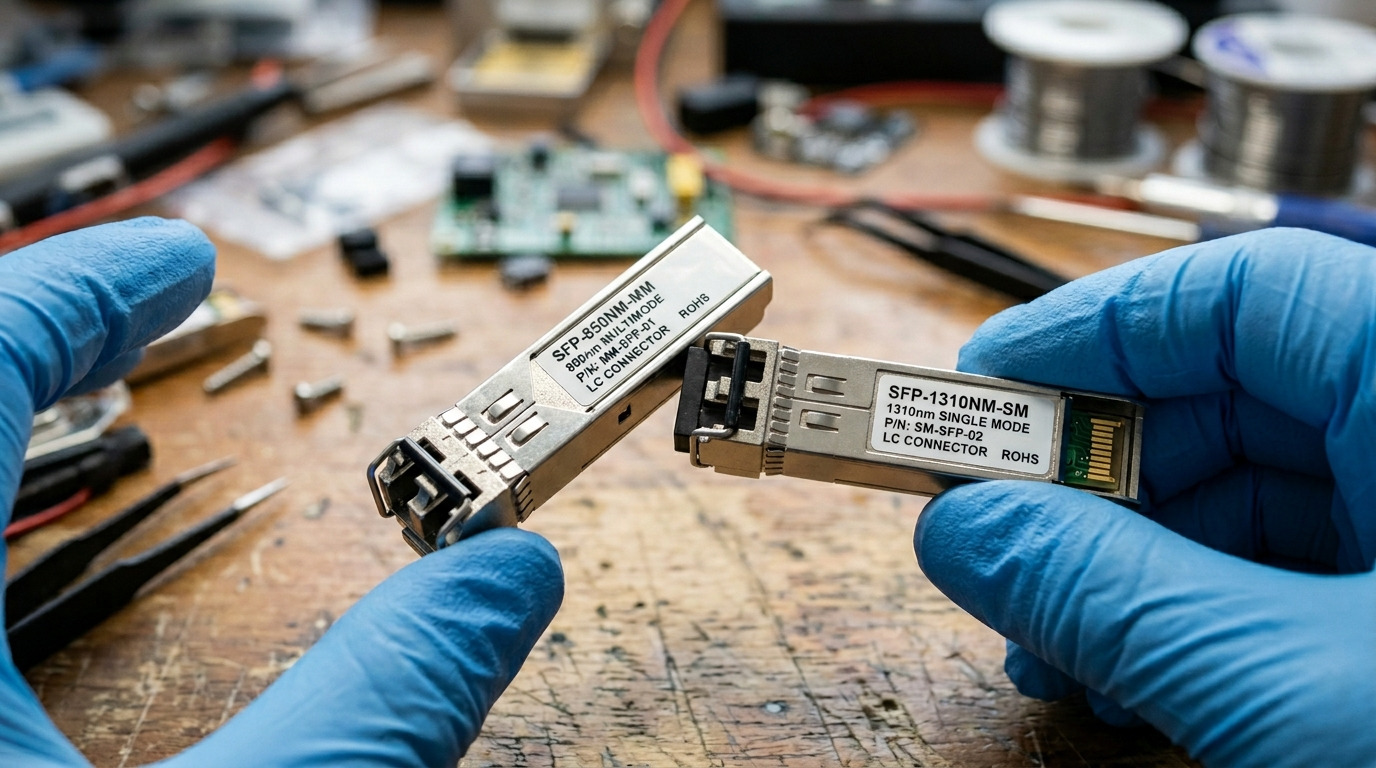
Moving from 400G to 800G deployment is not only about doubling line rate. In practice, it changes optics density, power draw per rack, switch fabric scheduling, and the failure blast radius when a single link module goes down. Many platforms treat 800G as a first-class mode but still require strict optics types (for example, QSFP-DD or OSFP depending on vendor) and firmware alignment. The IEEE 802.3 standard family for Ethernet PHYs provides the baseline for signaling behaviors, but vendor-specific lane mapping and thermal limits still dominate real outcomes. For standards context, see IEEE 802.3 Ethernet standards and vendor transceiver compliance notes.
Migration reality: link budget and optics form factor
At 800G, you typically choose between short-reach multimode options and longer-reach single-mode options. Most enterprise data centers use multimode for leaf-spine distances, then selectively use single-mode for aggregation or campus extensions. Form factor matters because you cannot assume a 400G optics type will fit or be supported at 800G. For example, many 800G short-reach designs use QSFP-DD pluggables (or OSFP in some platforms), while 400G often used QSFP-DD as well but at different lane counts and electrical interfaces.
Why validation must start with optics compatibility, not cabling
During early pilots, teams often focus on fiber cleaning and patching while assuming optics will negotiate cleanly. In reality, the switch may reject unsupported optics, or the module may train at a fallback speed that defeats your capacity plan. The fastest path to PMF-like certainty in infrastructure is to run a controlled lab validation: insert the exact vendor optics model, verify DOM telemetry, confirm link training behavior, and measure port-level power and thermals. This is exactly the kind of “small experiment, fast truth” loop that prevents expensive rollbacks later.
Optics head-to-head: multimode vs single-mode for 800G deployment
The optics choice is usually the biggest technical and budget lever in an 800G deployment plan. Multimode short-reach can be cheaper and easier for data center cabling, while single-mode can reduce the number of transceiver swaps across longer spans but may require different patching practices. You also need to consider the connector type (LC vs MPO/MTP), wavelength, and whether the platform expects a specific reach class. Below is a practical comparison using commonly deployed module families and their typical parameters from vendor datasheets.
| Option | Typical interface / form factor | Wavelength | Reach (typical) | Connector | Data rate | Operating temperature | Common module examples |
|---|---|---|---|---|---|---|---|
| 800G SR (multimode) | QSFP-DD | 850 nm (VCSEL class) | ~100 m over OM4, up to ~150 m class over OM5 (depends on vendor) | MPO-12 / MTP | 800G Ethernet | 0 to 70 C (typical pluggable ranges) | Finisar FTLX8571D3BCL (example family), FS.com SFP-10GSR-85 is 10G but illustrates SR optics sourcing patterns; validate exact 800G SR SKU with your switch vendor |
| 800G LR4 (single-mode) | QSFP-DD or OSFP (platform-dependent) | ~1310 nm (WDM) | ~500 m class (platform and vendor dependent) | LC duplex | 800G Ethernet | -5 to 70 C (varies by vendor) | Vendor-specific 800G LR4 QSFP-DD modules; confirm DOM and speed support in your switch compatibility matrix |
| 800G ER4 (single-mode) | QSFP-DD or OSFP (platform-dependent) | ~1550 nm (WDM) | ~2 km class (vendor dependent) | LC duplex | 800G Ethernet | 0 to 70 C (typical) | Vendor-specific 800G ER4 modules; confirm reach class vs your fiber plant attenuation |
Key point: the table shows common patterns, not a guarantee. Always cross-check the exact SKU, reach class, and switch support list for your platform model. Use vendor datasheets and your switch vendor’s transceiver interoperability guidance. For DOM and compliance behaviors, consult the transceiver manufacturer’s datasheet and standards references such as IEEE 802.3.
Pro Tip: In early 800G pilots, ask for a “DOM acceptance test” checklist from the optics supplier. Several interoperability failures are not link-layer issues; they are telemetry or vendor-specific DOM field mismatches that cause the switch to mark the port as administratively down or refuse diagnostics. This can look like a cabling problem even when the fiber is perfect.
Compatibility and negotiation: what to verify before you buy
Compatibility is where 400G-to-800G migrations succeed or fail. The most common assumption is “same switch, same optics, just higher speed,” but 800G often changes electrical lane groupings and training behavior. Your validation should start with the switch model’s transceiver support matrix, then confirm that the exact optics SKU is recognized and reaches the intended speed without fallback. If the switch supports multiple optics vendors, you still need to ensure the DOM implementation exposes the expected fields and that the module is within the platform’s power and thermal envelope. Field experience: a mismatch can show up as repeated link flaps every 30 to 90 seconds during temperature drift.
Switch-side checks
- Port mode support: confirm the platform supports 800G line rate on the specific port type and whether it uses QSFP-DD or OSFP.
- Firmware alignment: verify switch firmware version that supports the optics class and includes known bug fixes for 800G training.
- DOM telemetry mapping: confirm the platform can read key DOM values (temperature, bias current, received power) and that alarms are not triggered.
- Power budget: compare module typical and maximum power against the platform’s per-port or per-module limit.
Network-side checks
- Fiber plant validation: verify attenuation and polarity, and ensure MPO/MTP polarity is correct for the module type.
- Link budget: confirm that the reach class matches your measured loss at operating temperature.
- Forward error characteristics: watch for high BER or link resets; vendors publish thresholds, but you must validate in your environment.
- Traffic profile realism: run your actual traffic mix, not just a synthetic line-rate test.
For standards grounding, Ethernet PHY behavior is described across the IEEE 802.3 family. For practical interoperability, rely on your switch vendor’s transceiver matrix and the optics vendor’s datasheet for electrical and optical characteristics. For example, the module’s nominal wavelength, differential power specs, and DOM alarms are typically stated in the manufacturer documentation; treat those as your acceptance criteria. IEEE 802 overview can help orient you, but the actionable details come from vendor documentation.
Migration strategy: three head-to-head paths from 400G to 800G deployment
There are multiple ways to approach an 800G deployment when you are already running 400G. The best option depends on your topology, spare inventory, and how quickly you need capacity. Below are three common paths, compared by risk, operational complexity, and time-to-validation.
Option A: “Replace in place” on selected leaf-spine uplinks
You swap specific 400G uplinks with 800G uplinks on a small set of leaf switches. This keeps the rest of the network stable while giving you real traffic and failure exposure early. Risk is moderate because lane training and optics compatibility must be validated on your exact cabling runs. Operationally, you must schedule patch changes carefully and maintain a rollback plan with the original 400G optics.
Option B: “Parallel capacity” with new 800G links and gradual traffic shift
You add 800G links in parallel, then shift traffic gradually using routing and load balancing. This reduces downtime risk but increases temporary fiber and switch port usage. It is often the best path when you cannot tolerate a training or optics issue during peak hours. The tradeoff is higher short-term cost and complexity, but it accelerates learning because you can run both paths while monitoring performance.
Option C: “Topology-aware rebuild” during a scheduled refresh window
You plan an 800G deployment alongside switch refresh or fabric upgrades, minimizing mixed-mode operation. This is the cleanest technical path but requires strong project management discipline. If your rollout window slips, you may end up with stranded inventory or partial adoption that complicates operations. For many enterprises, this is the lowest long-term TCO approach once you can align procurement, maintenance windows, and cabling readiness.
Selection criteria checklist for 800G deployment success
Use this ordered checklist to make the decision fast and defensible during procurement and validation. It is designed to reduce “PMF risk” in infrastructure by turning unknowns into measurable acceptance criteria.
- Distance and reach class: measure actual fiber loss and confirm SR or LR class matches your path; do not rely on planned distances only.
- Switch compatibility matrix: confirm the exact optics SKU is supported for 800G on your switch model and port type.
- DOM and alarm behavior: verify that DOM fields are readable and that alarms do not trigger incorrectly.
- Operating temperature and airflow: compare module temperature range and your rack inlet conditions; confirm airflow direction and obstruction checks.
- Power and thermal envelope: validate per-port power and check for fan speed or PSU stress under load.
- Connector and polarity plan: ensure MPO/MTP polarity and patch panel labeling are consistent across the run.
- Budget and vendor lock-in risk: consider price, availability lead times, and how hard it is to switch vendors later.
- Failure domain planning: decide whether you can tolerate a single module failure without violating SLOs; stock spares accordingly.
Common mistakes and troubleshooting tips during 800G deployment
Below are field-tested failure modes we see during 400G-to-800G transitions. Each includes a root cause and a fix you can apply quickly.
Port stays down or flaps after insertion
Root cause: optics not recognized due to unsupported SKU, firmware mismatch, or DOM acceptance failure. Another common cause is that the port expects a specific form factor (QSFP-DD vs OSFP) or a specific speed mode profile.
Solution: check the switch event logs immediately after insertion, confirm firmware version, and verify optics SKU against the vendor compatibility matrix. If the module is “recognized but not trained,” try a known-good optics model from the approved list to isolate whether the issue is optics or fiber.
High error counters despite “link up” status
Root cause: link budget mismatch (too much loss), dirty connectors, or incorrect polarity on MPO/MTP. At 800G, small optical power penalties can push receivers toward sensitivity limits.
Solution: clean connectors with proper procedures, re-terminate if needed, and re-check polarity using a continuity test and MPO polarity mapping. Measure received optical power with DOM and compare to the module’s acceptance thresholds from the datasheet.
Works at room temperature but fails at peak rack load
Root cause: thermal stress causing laser bias drift or receiver sensitivity degradation. This happens when airflow is blocked or when the rack inlet temperature exceeds the module’s operating window.
Solution: validate inlet temperature and airflow paths, confirm fan profiles, and test under realistic load. If you see repeated training events correlated with temperature, throttle the rollout scope and fix cooling before broader expansion.
Breakout or cable mismatch on rollout day
Root cause: using the wrong patch cord type (wrong fiber count, wrong connector gender) or mixing MPO polarity conventions between teams. Even when reach is correct, physical wiring errors can prevent stable link training.
Solution: enforce a standardized labeling scheme on patch panels and require a pre-shift physical verification: connector type, polarity mapping, and port-to-panel documentation. Keep a checklist taped to the rack during the change window.
Cost and ROI note: realistic TCO for 800G deployment
Pricing varies by vendor, region, and volume, but a realistic enterprise planning range helps avoid surprises. As a rule of thumb, 800G optics are materially more expensive than 400G equivalents, and third-party optics may reduce upfront cost while increasing validation effort and warranty complexity. For TCO, include module cost, spares, labor for validation, and the operational risk cost of failure during migration.
Power can be a double-edged sword: 800G can improve throughput per rack resource if your platform handles it efficiently, but you may see higher per-port power and increased cooling demand. A practical ROI model often shows that the payback comes from (1) better utilization of switch capacity, (2) reduced number of uplink ports needed, and (3) deferred hardware refresh when you reach higher utilization sooner. If your traffic is bursty, you may also reduce the number of active links by scheduling, but validate that your congestion and routing behavior stays within SLOs.
Decision matrix: which path and optics fit your 800G deployment
Use the matrix below to choose between multimode SR and single-mode LR/ER, and between migration options. This is not a substitute for your vendor validation, but it helps narrow the decision quickly.
| Criteria | Best fit: Multimode SR + Replace in place | Best fit: Multimode SR + Parallel capacity | Best fit: Single-mode LR/ER + Topology-aware rebuild |
|---|---|---|---|
| Typical distances | Leaf-spine within short runs (tens to low hundreds of meters) | Short runs with strict downtime constraints | Longer spans, cross-row, or campus extensions |
| Downtime tolerance | Low to moderate | Very low | Scheduled refresh window |
| Validation speed | Fast if optics are on the compatibility list | Fast learning with lower risk | Slower initial cycle, clean long-term outcome |
| Fiber complexity | Lower if polarity and patching are consistent | Higher due to parallel runs | Varies; often best when consolidating cabling |
| Budget profile | Lower interim cost | Higher interim cost, easier rollback | Higher project cost, best long-term TCO |
Which option should you choose?
If you have short leaf-spine distances and your 800G deployment goal is to add capacity quickly, choose multimode SR with replace in place on a small subset first. If you cannot tolerate training surprises during peak hours, pick multimode SR with parallel capacity so you can shift traffic gradually. If you need longer reach or you are already planning a fabric refresh, choose single-mode LR/ER with topology-aware rebuild to avoid mixed-mode complexity.
Next step: run a two-week validation sprint with one switch model, one approved optics SKU, and one traffic profile. Then expand only after DOM telemetry and error counters are stable across temperature and load. For related planning guidance, see capacity planning for high-density ethernet and align your optics order with your measured fiber loss.
FAQ
What does “800G deployment” require beyond buying new optics?
You need switch support, firmware compatibility, and a validated link budget for your fiber plant. In practice, you should also confirm DOM telemetry behavior so the port does not refuse diagnostics or administratively block the link. Plan a staged rollout with acceptance criteria like stable link training and low error counters.
Can I reuse the same fiber cabling used for 400G?
Sometimes yes, especially if the fiber type and MPO/MTP polarity are already correct for the new optics. However, 800G SR often uses stricter power and reach margins, so you must re-measure loss and verify polarity mapping. If you are moving from single-mode to multimode or vice versa, you cannot assume reuse.
Which is safer for first-time 800G deployment: multimode SR or single-mode LR/ER?
For typical data center leaf-spine distances, multimode SR is often simpler and cheaper, but only if your measured loss supports the reach class. Single-mode LR/ER can be safer for longer spans, yet requires LC duplex handling and correct WDM channel expectations. Safety depends on your actual fiber measurements and your switch optics compatibility matrix.
Do third-party optics work for 800G deployment?
They can, but you must validate the exact SKU with your switch and firmware. Third-party optics may differ in DOM field values, alarm thresholds, or training behavior, which can create operational surprises. If you do use third-party modules, require vendor warranty terms that cover DOAs and repeated link failures.
How do I detect optics problems quickly during rollout?
Check switch logs immediately after insertion, then read DOM values for temperature, bias current, and received power. Monitor error counters and link flap frequency over a temperature and load cycle. If failures correlate with temperature, prioritize airflow and rack inlet temperature checks before recabling.
What is the biggest hidden cost in 800G deployment?
Often it is not the optics themselves; it is validation labor, downtime risk, and spare management during the migration window. A disciplined pilot with acceptance criteria reduces the probability of expensive rollback and repeated change windows. Include the cost of cleaning, re-termination, and test equipment time in your TCO model.
Author bio: I build and validate high-speed Ethernet infrastructure in real data centers, focusing on optics interoperability, telemetry acceptance, and migration runbooks. I write from the perspective of an operator who ships changes under tight schedules and measures success with stable link training and low error rates.
