
In many data centers, the first obstacle to 800G adoption is not the software roadmap, but the physical realities: optics reach, transceiver power, and switch compatibility. This article helps network engineers and field technicians plan migrations with concrete, operational details, so cabling and optics buying decisions do not become an outage risk. You will get a selection checklist, a comparison table, and troubleshooting guidance grounded in real deployment patterns.
What changes with 800G adoption in real networks?
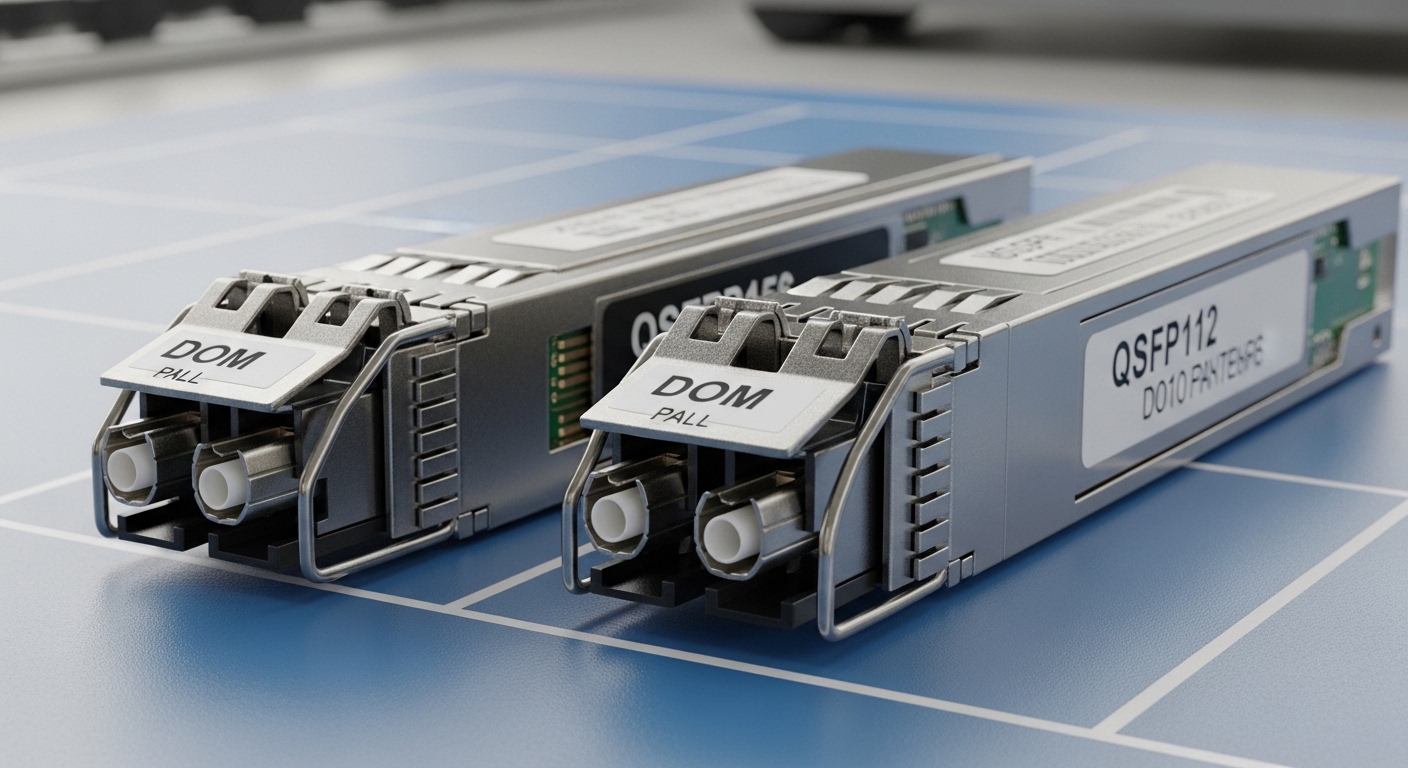
Think of a network upgrade like upgrading a stadium’s lighting system: the wiring still matters, but the electrical load, heat, and alignment requirements change. With 800G, you typically move from older multi-lane architectures to higher aggregate line rates, which increases sensitivity to optics specifications, transceiver temperature, and link budgets. Operationally, teams see more variance from vendor to vendor in DOM behavior, vendor-specific wake-up timing, and supported optical power ranges. Plan for optics qualification and staged rollout, not just “drop in and go.”
Optics and link budget: the practical specs engineers check
Most 800G deployments use coherent or advanced direct-detect optics depending on reach targets, with common short-reach options using parallel optics and fiber arrays. Engineers usually start with IEEE-defined physical layer constraints (where applicable) and vendor datasheets for exact parameters like center wavelength, receiver sensitivity, and transmitter launch power. For standards context, review relevant Ethernet PHY guidance such as IEEE 802.3 for optical interfaces and link behavior. For field accuracy, always align your plan to the switch vendor’s transceiver compatibility list and optics vendor datasheets.
| Parameter | Common Short-Reach 800G (Direct-Detect) | Example Long-Reach Option (Coherent) |
|---|---|---|
| Typical data rate | 800G aggregate | 800G coherent |
| Wavelength | Multi-lane, nominal around 850 nm (varies by vendor) | Typically ~1550 nm band |
| Reach | Often 70 m to 500 m over OM4/OM5 (depends on optics) | Often 2 km to 80 km (depends on configuration) |
| Connector | Varies: MPO/MTP fiber interface (12/16/24-fiber arrays typical) | Usually LC or similar single-fiber per channel |
| DOM support | Common: temperature, bias, Tx/Rx power, alarms (vendor-specific) | Common: detailed telemetry; alarm thresholds may differ |
| Operating temperature | Often 0 to 70 C for commercial; extended options exist | Often similar ranges; verify exact spec |
| Power draw | Often several watts per module; verify with switch power budget | Often higher than direct-detect; verify cooling impact |
For short-reach planning, the “link budget” is not just distance; it is also insertion loss from patch panels, fiber grade (OM4 vs OM5), and connector cleanliness. For long-reach coherent, you additionally consider dispersion and OSNR targets, which makes pre-qualification of fiber plant even more important. Field experience shows that link failures often trace to patching errors, not the transceiver itself.
Switch compatibility and optics qualification: the non-negotiables
Even when a module matches the physical form factor, it may not pass a switch’s electrical qualification profile. Vendors often publish transceiver compatibility matrices and require specific firmware behavior for DOM interpretation, power mode negotiation, and alarm mapping. In practice, you should treat 800G adoption like a hardware integration project: test in a lab with the exact switch model, firmware version, and patching method you will use in production. If you are using third-party optics, validate DOM fields and alarm thresholds so your NMS does not misread telemetry.
Pro Tip: Before scaling, run a “telemetry sanity check” by comparing DOM-reported Tx power and Rx power against the optical vendor’s recommended operating window. If you see consistent offsets (for example, Rx power hovering near the low end while the link stays up), plan preventive replacement before errors accumulate under seasonal temperature swings.
Real-world scenario: leaf-spine rollout with staged optics
Consider a 3-tier data center leaf-spine topology with 48-port 800G top-of-rack switches upgrading uplinks in phases. You have 8 leaves and 2 spines, and you target 200 m average reach through patch panels and cross-connects using OM4. Instead of buying optics for all ports at once, you stage: first validate 16 links end-to-end in a controlled patching zone, then expand to the remaining 64 links after verifying DOM telemetry stability for at least 72 hours across normal temperature cycles. During the same window, you verify that your transceiver inventory tooling correctly correlates module serial numbers to port IDs for rapid RMA routing.
Selection also depends on budget and TCO. OEM optics may cost more but typically reduce integration risk and speed up RMAs; third-party optics can be cheaper but require stronger qualification discipline and vendor-specific support. In many operations, the cost difference is outweighed by downtime avoidance, especially during peak traffic windows.
Selection criteria checklist for 800G adoption
Use this ordered checklist during procurement and pre-deployment testing:
- Distance and fiber type: confirm OM4 vs OM5, patch loss, and connector type; compute a conservative link budget.
- Switch compatibility: verify your exact switch model and firmware version support the module type and speed mode.
- Optical interface fit: confirm MPO/MTP lane count and polarity requirements; mismatches are a common failure mode.
- DOM and telemetry behavior: confirm supported fields, alarm thresholds, and whether your NMS ingests them correctly.
- Operating temperature and airflow: ensure the module’s temperature range matches your rack environment and cooling profile.
- Power and cooling budget: verify per-module power draw against switch PSU and thermal design limits.
- Vendor lock-in risk and lifecycle: evaluate RMA turnaround, warranty terms, and whether firmware changes affect compatibility.
Common mistakes and troubleshooting tips
1) MPO/MTP polarity or fiber mapping errors
Root cause: wrong polarity convention or incorrect fiber order through patch panels, causing high loss or intermittent links.
Solution: verify polarity labeling end-to-end, clean connectors, and test with known-good patch cords; use a fiber inspection scope before swapping optics.
2) Operating near receiver sensitivity due to budget underestimation
Root cause: vendors’ “maximum reach” assumes ideal conditions; real patch loss and aging reduce margin.
Solution: measure end-to-end optical power on a calibrated setup, then enforce a margin target (for example, keep Rx power comfortably above the minimum recommended threshold across temperature).
3) DOM telemetry mismatch causing false alarms or disabled ports
Root cause: third-party modules report fields differently, and the switch interprets alarms or thresholds in a way that triggers port flaps.
Solution: confirm DOM field mapping with your switch vendor documentation; run a controlled soak test and confirm NMS alarm logic matches the module’s telemetry behavior.
4) Firmware or mode negotiation issues during upgrades
Root cause: switch firmware changes can alter optics initialization timing or supported power modes.
Solution: validate with the exact firmware you will deploy; upgrade optics compatibility in a maintenance window and roll back if telemetry anomalies appear.
Cost and ROI note for 800G adoption
Pricing varies widely by reach and vendor, but a realistic planning range for optics often falls into the low-to-mid hundreds of USD per module for short-reach, and substantially higher for coherent long-reach. OEM modules can reduce integration risk and shorten RMA cycles, but third-party optics can lower upfront spend if you invest in qualification testing. TCO should include labor for qualification, spare-holding strategy, expected failure rates, and the cost of maintenance windows. In most environments, preventing a single extended outage can justify more rigorous pre-deployment validation.
FAQ
What does “compatibility” mean for 800G adoption?
It means the switch vendor supports the module type at the intended speed mode, firmware level, and DOM telemetry behavior. Always check the vendor compatibility list and test with the exact switch model and firmware you plan to run. [Source: Cisco SFP and transceiver documentation portals] Cisco Support
Are short-reach 800G optics enough for a leaf-spine design?
Often yes if your cabling plant is designed for low loss and your patch panels are well managed. For longer runs or where cross-connect loss is high, you may need coherent or alternative reach optics. Validate with measured loss, not
