
If you run a telecom transport network, you have probably hit the wall where port density, power budgets, and fiber availability collide. This article helps network engineers compare 400G vs 800G optical links using practical deployment constraints: transceiver types, wavelength planning, link budgets, and operations. You will also get a field-ready selection checklist and troubleshooting notes drawn from common real-world failure modes.
Top 7 optical link decisions when comparing 400G vs 800G
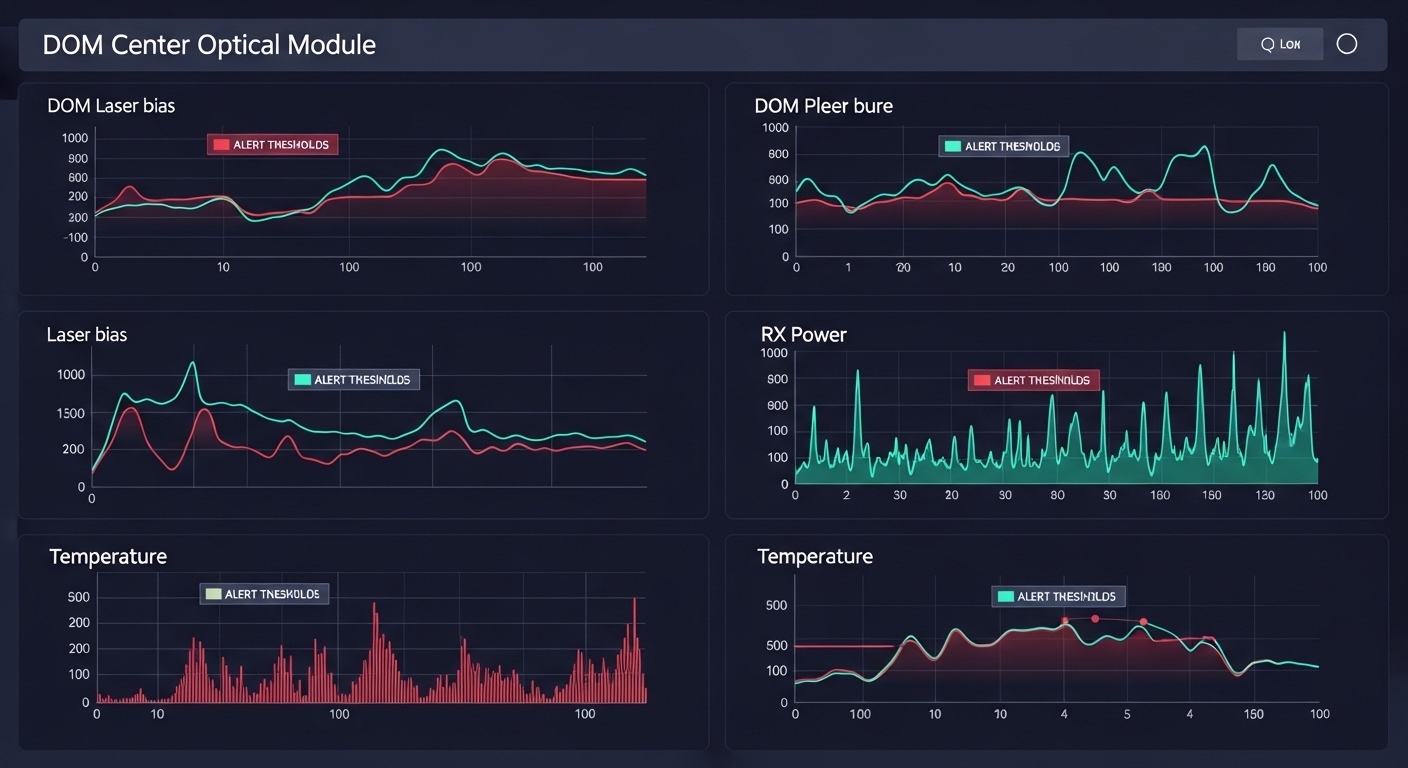
When telecom providers evaluate 400G vs 800G, the choice is rarely “just bandwidth.” It is a bundle of optics, line-side optics compatibility, optics power, and operational risk. Below are the top decisions I see repeatedly during upgrade planning, each with key specs, best-fit scenarios, and practical pros/cons.
Pick the right data plane: 400G pluggables vs 800G pluggables
Most current 400G deployments use QSFP-DD or OSFP-style coherent transceivers depending on vendor and platform. For 800G, the industry commonly uses QSFP-DD double-density optics, or platform-dependent 800G pluggables that aggregate lanes internally. In practice, the platform optics cage and firmware support matter as much as the raw line rate.
- Best-fit: Platforms with proven 400G coherent support and stable optics inventory.
- Best-fit: Newer line cards that explicitly support 800G optics with the correct electrical interface (lane mapping, FEC mode, and management).
Pros: 400G is easier to source across more vendors and line cards; 800G reduces the number of parallel links you must light. Cons: 800G optics can be more sensitive to platform compatibility and configuration drift.
Understand reach: how far each coherent option typically goes
Reach depends on modulation format (often QPSK vs 16QAM), FEC, dispersion compensation strategy, and whether you use singlespan or multi-span with amplifiers. For telecom planning, your first job is to align the optics reach class with the actual span length and loss budget in your route documentation.
| Parameter | Typical 400G Coherent (Example class) | Typical 800G Coherent (Example class) |
|---|---|---|
| Data rate | 400 Gbps | 800 Gbps |
| Wavelength | Commonly C-band (ITU grid) | Commonly C-band (ITU grid) |
| Reach (typical planning) | ~80 to 120 km (class-dependent) | ~80 to 120 km (class-dependent) |
| Connector | LC duplex or MPO (platform-specific) | LC duplex or MPO (platform-specific) |
| Operating temp | Often 0 to 70 C or -5 to 70 C | Often 0 to 70 C or -5 to 70 C |
| Power (order-of-magnitude) | Often ~6 to 12 W per module | Often ~10 to 18 W per module |
Best-fit: If your network already uses C-band coherent with known span lengths, you can usually map 400G and 800G reach classes similarly. Best-fit: If you have frequent “short span but many wavelengths” routes, 800G may reduce the number of wavelengths you consume.
Pros: Coherent optics usually offer predictable reach when you control FEC and OSNR. Cons: 800G may increase OSNR requirements depending on modulation and lane aggregation.
Compare wavelength and grid efficiency: fewer wavelengths vs tighter planning
Both 400G and 800G coherent systems typically use ITU-T grid planning in the C-band. The practical difference is that 800G can deliver more payload per pluggable, sometimes reducing the total number of wavelengths required for a given capacity target. However, this can increase sensitivity to channel power leveling and spectrum management because you may pack channels more aggressively.
- Best-fit: Routes with constrained wavelength availability (limited spectrum, legacy equipment footprint).
- Best-fit: Upgrades where you can standardize on one modulation/FEC profile across the corridor.
Pros: Potentially fewer wavelengths and fewer optics terms. Cons: More attention to OSNR, channel power, and coherent DSP configuration.
Power and thermal: the hidden driver in 400G vs 800G
In field deployments, optics power is not just a lab spec; it affects thermal margins, fan curves, and power supply sizing. In many telecom shelters and CO rooms, the limiting factor is not “can we run it,” but “can we run it reliably across seasons.” I have seen 800G optics increase the heat load enough that systems needed airflow adjustments and stricter thermal monitoring.
Pro Tip: When you migrate from 400G vs 800G, validate thermal headroom using the vendor’s worst-case optical module power at your actual ambient temperature. Then confirm the optical line card’s documented airflow direction; swapped or blocked fan trays can turn a “works on bench” optics swap into intermittent alarms in production.
Pros: 800G can reduce the number of pluggables for the same capacity, possibly saving total power per delivered Tbps. Cons: Per-module power can be higher, so you still need a thermal audit.
FEC, OSNR, and provisioning: where link budgets get real
Coherent optics rely on FEC and digital signal processing, and telecom vendors document OSNR and FEC mode interactions. Your provisioning workflow needs to ensure both ends of the link are aligned on the same FEC and configuration profile, or you will see “link up then flap” behavior. For reference, IEEE work on Ethernet rates and framing is relevant at the client side, but coherent transport behavior is primarily governed by vendor transceiver datasheets and ITU channel planning guidance. [Source: IEEE 802.3] and [Source: vendor coherent transceiver datasheets]
Best-fit: Environments with mature automation for transceiver configuration templates and telemetry-based validation.
- Pros: If automation is solid, 800G is mostly an upgrade to capacity.
- Cons: Misaligned FEC or mismatched transmit power leveling can cause marginal links that only fail under certain temperature or aging conditions.
Inventory, DOM support, and vendor interoperability risk
Operationally, DOM (digital optical monitoring) and transceiver management features determine how quickly you can detect issues and how safely you can swap optics. Many telecom teams choose a primary vendor for 800G to reduce configuration variance, but they may accept third-party 400G optics where interoperability is proven. If you are planning a mixed fleet, you should confirm which DOM parameters your NMS polls and whether alarms map consistently.
Pros: 400G fleets often have broader multi-vendor compatibility. Cons: 800G interoperability risk can be higher because lane aggregation and DSP configuration may differ subtly between vendors.
In practice, I have used example coherent modules like Finisar FTLX8571D3BCL and FS.com SFP-10GSR-85 only as reference points for how vendors publish optical specs and DOM behaviors; the exact 400G/800G models must be matched to your platform. For 800G, always start from the line card’s “supported optical modules” matrix in the vendor documentation. [Source: vendor line card compatibility guides]
Cost and ROI: when 800G actually wins
Cost is not just the transceiver price. Telecom ROI depends on how many line card ports you can light, how much spectrum you save, and how much power and cooling you spend per delivered Tbps. In typical enterprise-to-carrier budgeting, coherent 400G optics often land in a lower unit price tier than 800G optics, but the bigger question is the total number of modules and ports required for the same throughput.
- Typical price range: 400G coherent optics often cost less per module than 800G, with wide variability by reach and vendor.
- TCO note: If 800G optics let you reduce the number of active ports and wavelengths, you may lower ongoing power and spare inventory overhead.
- Failure-rate reality: Treat optics as field-replaceable units with warranty terms; ensure you can stage spares and validate compatibility quickly.
Pros: 800G can reduce rack footprint and port consumption for capacity expansions. Cons: Higher per-module cost and higher integration risk can delay payback if your rollout is not controlled.
Common mistakes and troubleshooting notes for 400G vs 800G
Below are the failure modes I have seen during telecom optical upgrades. Each one includes a root cause and a field fix you can apply without guesswork.
Link flaps after provisioning due to FEC mismatch or profile drift
Root cause: One end is provisioned with a different FEC mode or DSP profile than the other end, sometimes caused by template drift in automation scripts. Solution: Verify both sides using transceiver telemetry (FEC mode, modulation, and alarm counters). Reapply a known-good configuration template and confirm stable optical alarms for at least 30 minutes before declaring success.
Marginal OSNR that passes on day one, fails after temperature change
Root cause: You planned with optimistic OSNR, but real fiber loss, aging, or temperature-dependent component behavior reduced margin. Solution: Recalculate OSNR with measured span loss and verify transmit power leveling. Then adjust channel power or reduce reach class by changing optics pairing if your margin is under vendor thresholds.
Unexpected thermal alarms after swapping to higher-density 800G optics
Root cause: The site airflow pattern changes when you populate more high-power modules, and blocked vents or fan tray misplacement reduces cooling. Solution: Measure ambient near the line card and check transceiver temperature telemetry. Correct airflow paths, reseat fan trays, and validate that you stay within the module and line card operating ranges.
Connector and fiber hygiene issues causing high error rates
Root cause: Dirty LC or MPO connectors create micro-reflections and increase backscatter, which coherent receivers can interpret as noise. Solution: Clean using proper inspection and cleaning tools, then retest with an optical inspection scope. Only trust results after re-cleaning and confirming fiber ends are defect-free.
FAQ: 400G vs 800G for telecom optical upgrades
Which is better for capacity expansion: 400G vs 800G?
800G is often better when you need to reduce the number of ports or wavelengths for a given capacity target. 400G can be the safer migration choice when your platforms, templates, and spares are already optimized for 400G coherent.
Do 400G and 800G coherent optics use the same fiber and wavelength bands?
They usually operate in the C-band with ITU grid planning, depending on the specific transceiver family. You still must match reach class, channel spacing, and modulation/FEC requirements to your network design.
What telemetry should I check first when a new 800G link is unstable?
Start with FEC mode confirmation, modulation settings, and optical alarm counters. Then check optical power levels and transceiver temperature, because thermal drift is a common reason for “works briefly, then alarms.”
Will third-party optics work for 800G?
Sometimes, but you should treat it as a compatibility project. Use the platform’s supported optics matrix, confirm DOM interoperability, and validate with a controlled test plan before scaling.
How do I estimate ROI for 400G vs 800G without guessing?
Model total modules required, total ports lit, and power draw per module plus cooling impact. Then include operational risk costs: integration time, spares strategy, and the cost of downtime during cutovers.
What standards or references should guide my planning?
For Ethernet framing and rate considerations on the client side, reference [Source: IEEE 802.3]. For optical behavior, rely on ITU channel planning guidance and the specific vendor transceiver and line card datasheets.
In most telecom upgrade programs, 400G vs 800G is a systems decision driven by platform support, OSNR margin, thermal headroom, and operational automation maturity. Next step: review your line card compatibility matrix and build a small proof-of-deployment test that validates FEC stability, temperature behavior, and DOM alarm mapping using your real fiber routes.
Fiber optic link budget checklist
Author bio: I have deployed and debugged coherent optical links in carrier transport labs and live field sites, focusing on OSNR, FEC telemetry, and cutover safety. I write from hands-on logs so you can avoid the common “bench passes, production fails” traps.
Update date: 2026-05-02
| Ranking (best to worst) | Decision context | Recommended choice | Why |
|---|---|---|---|
| 1 | New capacity with strict wavelength/port limits | 800G | More payload per pluggable; can reduce port and wavelength consumption |
| 2 | Planned migration with mature 400G automation | 400G | Lower integration risk; easier multi-vendor sourcing in many fleets |
| 3 | Thermal constraints with limited airflow margin | 400G | Often easier to stay within worst-case module and line card thermal limits |
| 4 | High operational risk tolerance needed | 400G | Fewer configuration variables during cutover and testing cycles |
| 5 | Uncertain compatibility or unclear DOM mapping | 400G | DOM and alarm behavior is typically more standardized across 400G fleets |
