
When your racks outgrow 10G, you face the 400G vs 800G fork
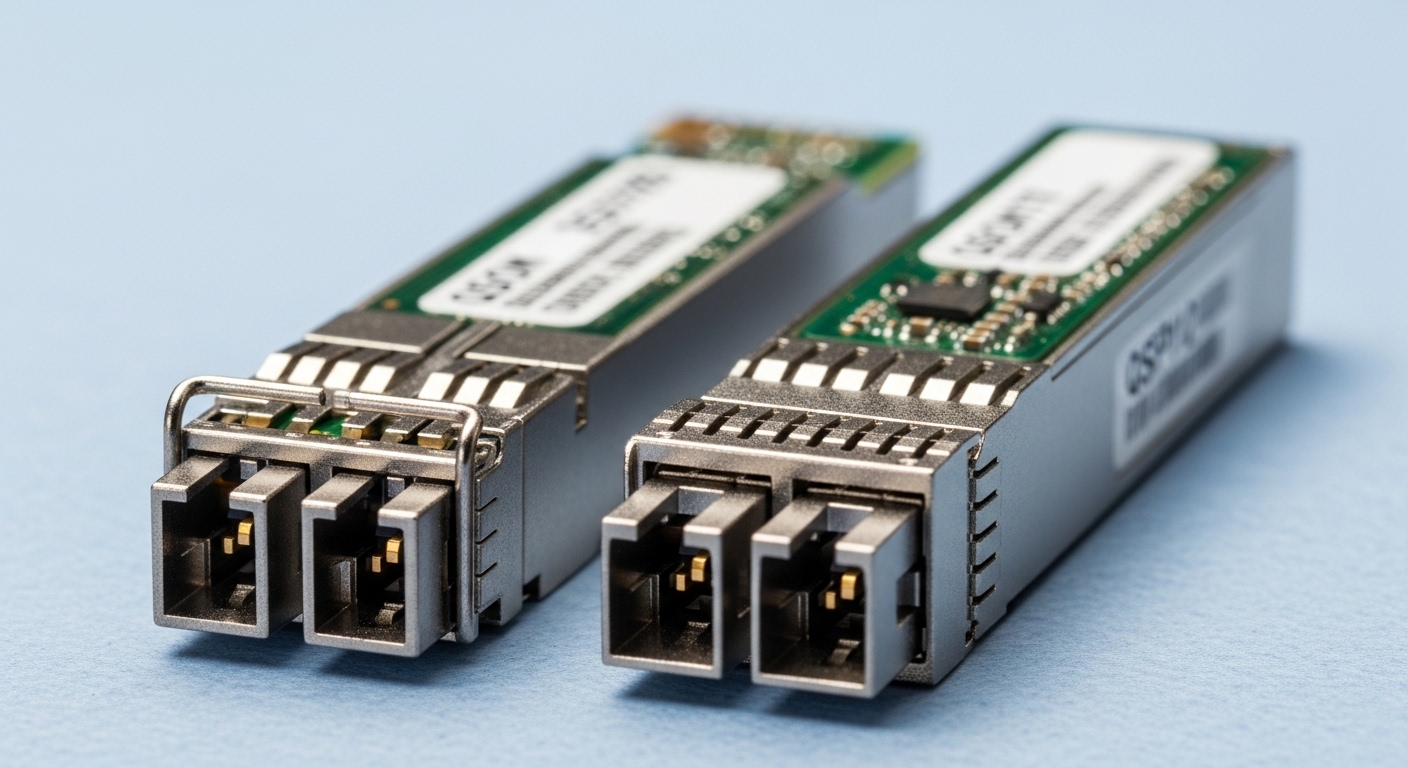
During data center migration, teams often discover that the real bottleneck is not just bandwidth demand, but the optics, optics management, and switch port economics. This article helps network leads and field engineers choose a migration path from 400G to 800G with concrete constraints: reach, power, transceiver compatibility, and operational temperature. You will also get a troubleshooting checklist for the classic “it lights, but it won’t talk” problems that show up during cutovers.
400G and 800G: what changes at the physical layer
At a high level, 400G and 800G differ in lane count and how the transceiver maps electrical lanes to optical lanes. In practice, that impacts optics type (QSFP-DD vs OSFP-like ecosystems), fiber count, transceiver power, and how your switch scheduler and PCS/FEC settings behave under load. IEEE Ethernet and vendor implementations generally converge on PAM4 signaling plus forward error correction, but the exact optics and lane mapping are not always drop-in compatible across switch families.
Typical optics and signaling assumptions used in migrations
Most modern 400G short-reach deployments use QSFP-DD-class optics with PAM4 and FEC, often targeting 2x 200G logical segments inside the module. For 800G, common implementations use 8x 100G lanes or equivalent internal partitioning, frequently packaged in higher-density optics like OSFP-class form factors (exact naming varies by vendor). Always verify compatibility with your specific switch model and its supported transceiver list, because DOM wiring and diagnostics expectations can differ.
Specs that actually matter: reach, wavelength, connector, and power
Engineers choose optics based on distance, budget, and operational stability, not just headline throughput. The table below compares representative short-reach options commonly used for leaf-spine and spine-up links during data center migration, focusing on nominal wavelength, reach, connector, and typical module power. Values vary by vendor and exact part number, so treat this as a planning baseline and then confirm with the vendor datasheets for your transceivers and switch vendor compatibility matrix.
| Transceiver class (example) | Data rate | Wavelength | Target reach | Connector | Typical module power | Operating temp |
|---|---|---|---|---|---|---|
| FS.com SFP-10GSR-85 (planning reference) | 10G | 850 nm | Up to ~300 m (varies) | LC | Low teens W (varies) | 0 to 70 C |
| Cisco 400G SR4 ecosystem (QSFP-DD class, example) | 400G | 850 nm | ~100 m typical in practice | LC/MPO (module-dependent) | ~8 to 20 W (varies) | 0 to 70 C class |
| Finisar/FS 800G SR8 ecosystem (OSFP class, example) | 800G | 850 nm | ~100 m typical in practice | MPO (module-dependent) | ~15 to 30 W (varies) | 0 to 70 C class |
For standards context, Ethernet physical layer behaviors are governed by IEEE 802.3 families and vendor-specific implementations, while transceiver behavior is defined in vendor datasheets and supported by management interfaces. For background on Ethernet PHY evolution and link behavior, see [Source: IEEE 802.3]. For module power and DOM behavior, see the specific vendor datasheets (for example, [Source: Cisco transceiver documentation], [Source: Finisar/II-VI datasheets]). anchor-text: IEEE 802.3 standards
Pro Tip: In data center migration cutovers, the fastest way to avoid link flaps is to stage transceivers in a “known-good” optical budget test rack first, then validate DOM alarms and FEC mode negotiation before you touch production cabling. Many “bad optics” incidents are actually mismatch in FEC/PCS settings or optics compatibility lists, not a dead module.
Migration path planning: choose 400G now or leap to 800G
Choosing between 400G and 800G is less about ideology and more about port density, power, and how soon you will need additional spine capacity. A 400G path often fits when you have existing cabling conventions, mixed generations of switches, and a near-term workload growth curve that can be satisfied with incremental headroom. An 800G path can reduce the number of optics and ports needed for the same aggregate throughput, but it can raise per-link power and may require a tighter compatibility alignment across the switch and optics ecosystem.
Real-world deployment scenario (numbers that show up in the real world)
In a 3-tier data center leaf-spine topology with 48-port 10G ToR switches migrating to higher speeds, a team might plan 24 leaf uplinks per ToR over time. In phase one, they upgrade to 12x 400G uplinks per leaf pair, each targeting about 80 to 100 m reach over OM4 with MPO cabling, and they keep spine upgrades scheduled for the next quarter. In phase two, once traffic demand hits a sustained 65% utilization on critical flows (measured via switch telemetry), they cut over selected spine links to 800G to reduce oversubscription and reclaim port count. This staged plan reduces downtime risk but requires careful coexistence of optic types and consistent FEC settings during the transition.
Selection checklist: what engineers weigh during data center migration
Use this ordered checklist during procurement and field validation. If you can answer each item confidently, the migration path becomes a math problem instead of a nightly fire drill.
- Distance vs reach margin: confirm link length, fiber type (OM3/OM4/OM5), and patch cord losses; target conservative optical budget margin.
- Switch compatibility matrix: verify exact transceiver part numbers supported by your switch model; don’t assume “QSFP-DD 400G SR” means “works on your switch.”
- FEC/PCS negotiation behavior: confirm whether the switch defaults match the optics’ expected operation; plan a test with representative traffic profiles.
- DOM and monitoring: validate that DOM thresholds and alarms integrate with your telemetry stack; mismatched DOM expectations can cause false positives or missing warnings.
- Operating temperature and airflow: check transceiver temperature ratings and ensure airflow paths are not blocked by cable trays during installs.
- Connector and fiber count practicality: MPO polarity handling, cassette constraints, and patch panel density can dominate the migration schedule.
- Vendor lock-in risk: compare OEM vs third-party optics pricing and replacement lead times; ensure you can source spares within your maintenance window.
Common mistakes and troubleshooting tips during the cutover
Here are failure modes you will actually see when moving from 400G to 800G (or just trying to stand up a first wave of 400G links) during data center migration.
“Link up” but traffic still fails: FEC mismatch or lane mapping surprise
Root cause: The switch and optics negotiate an unexpected FEC/PCS mode or lane mapping, leading to excessive errors or a stable but non-passing data path. Solution: Check switch logs for FEC mode indicators and verify that the transceiver is in the supported configuration for that switch model. Then run a controlled traffic test at line rate and inspect error counters.
MPO polarity chaos: swapped polarity strands or wrong cassette orientation
Root cause: MPO trunks or patch cords are inserted with incorrect polarity, especially when mixing vendors or when using different cassette hardware. Solution: Use polarity-safe labeling, verify polarity mapping at both ends, and test individual lanes with vendor diagnostics if available. Keep a “known-good polarity” reference jumper set for rapid isolation.
Temperature-related flakiness under load
Root cause: Transceiver temperature rises during sustained traffic, and marginal airflow or cable-tray blockage pushes the module near its operating limit. Solution: Measure inlet/outlet airflow at the switch face, confirm that front-to-back airflow is unobstructed, and validate module temperature telemetry. If needed, adjust fan profiles and re-route cabling to restore airflow.
DOM telemetry not matching your monitoring assumptions
Root cause: Some third-party optics expose DOM fields differently, causing your monitoring system to interpret thresholds incorrectly. Solution: Confirm DOM field mapping in your collector, calibrate alert thresholds per vendor, and validate alarm behavior in a lab before rolling to production.
Cost and ROI: how 400G vs 800G pencils out
Budgeting for data center migration is mostly about optics cost per port, switch port availability, power draw, and downtime risk. In many environments, 400G optics and ports are less expensive per initial deployment, while 800G can reduce the number of ports and optics required for equivalent aggregate bandwidth. However, 800G links can carry higher per-module power and may require more careful thermal and compatibility testing.
Realistic price ranges vary widely by reach, vendor, and OEM vs third-party sourcing. As a planning heuristic, optics for short-reach 400G SR-class often land in the “mid hundreds to low thousands per module,” while short-reach 800G SR-class can be meaningfully higher on a per-module basis, though the per-terabit cost may still improve due to reduced port count. TCO should include: optics replacement lead time, failure rates observed in your environment, labor hours for polarity and cassette management, and the cost of extended downtime during a rollback.
For authoritative module behavior and diagnostics expectations, rely on the vendor datasheets and switch compatibility guides (for example, [Source: vendor transceiver datasheets] and [Source: Cisco/Arista/NVIDIA switch transceiver compatibility documentation]). If you are considering third-party optics, validate DOM interoperability early and confirm that your support contract does not restrict troubleshooting to OEM optics only.
FAQ
Is 800G always better for data center migration?
No. 800G can be better when you need higher spine capacity quickly and you have compatible switch models and validated optics. If your cabling, thermal constraints, or compatibility matrix is messy, a 400G phased approach often delivers faster risk-adjusted progress.
What fiber reach should I plan for SR links?
For typical short-reach SR-class optics in modern migrations, teams often plan around ~100 m for OM4 in controlled conditions, then add margin for patch cords and aging. Confirm with your specific vendor optical budget calculator and measure your installed loss.
Can I mix 400G and 800G optics on the same switch?
Usually yes at the hardware level, but only if the switch supports both optics types and your transceiver part numbers are in the compatibility list. Mixing at runtime can also require consistent FEC/PCS behavior, so validate with telemetry and controlled traffic.
Why do links flap only during traffic bursts?
That pattern often points to thermal stress, power supply transients, or FEC retry behavior under load. Check module temperature telemetry, error counters, and switch power/thermal logs during the burst window.
Should I buy OEM or third-party optics?
OEM optics reduce compatibility uncertainty and simplify support escalation, but third-party optics can improve cost and availability. Either way, validate DOM monitoring and run a staged rollout with a lab test rack before touching production.
What is the fastest safe cutover strategy?
Stage optics in a known-good test environment, validate DOM and FEC negotiation, then migrate a small set of links with a rollback plan. During the cutover, monitor CRC/FEC error counters and module temperatures continuously.
Bottom line: pick 400G for smoother phased adoption, and choose 800G when your port density, power planning, and compatibility readiness are strong. Next step: map your current topology and optics inventory to a staged plan using related topic: data center fiber optics migration planning.
Author bio: I have deployed and troubleshot PAM4 Ethernet transceivers in live data centers, including DOM telemetry validation and MPO polarity recovery during cutovers. I now analyze migration economics and operational risk like a grumpy accountant with a fiber scope.
