
If you are planning a 400G upgrade but worried it will turn into a dead end, you are not alone. This article helps enterprise network engineers and architects choose optics, validate switch readiness, and avoid operational surprises when you later scale toward 800G. You will get a step-by-step implementation plan, a specs comparison table, and field-ready troubleshooting scenarios.
Prerequisites before you touch hardware
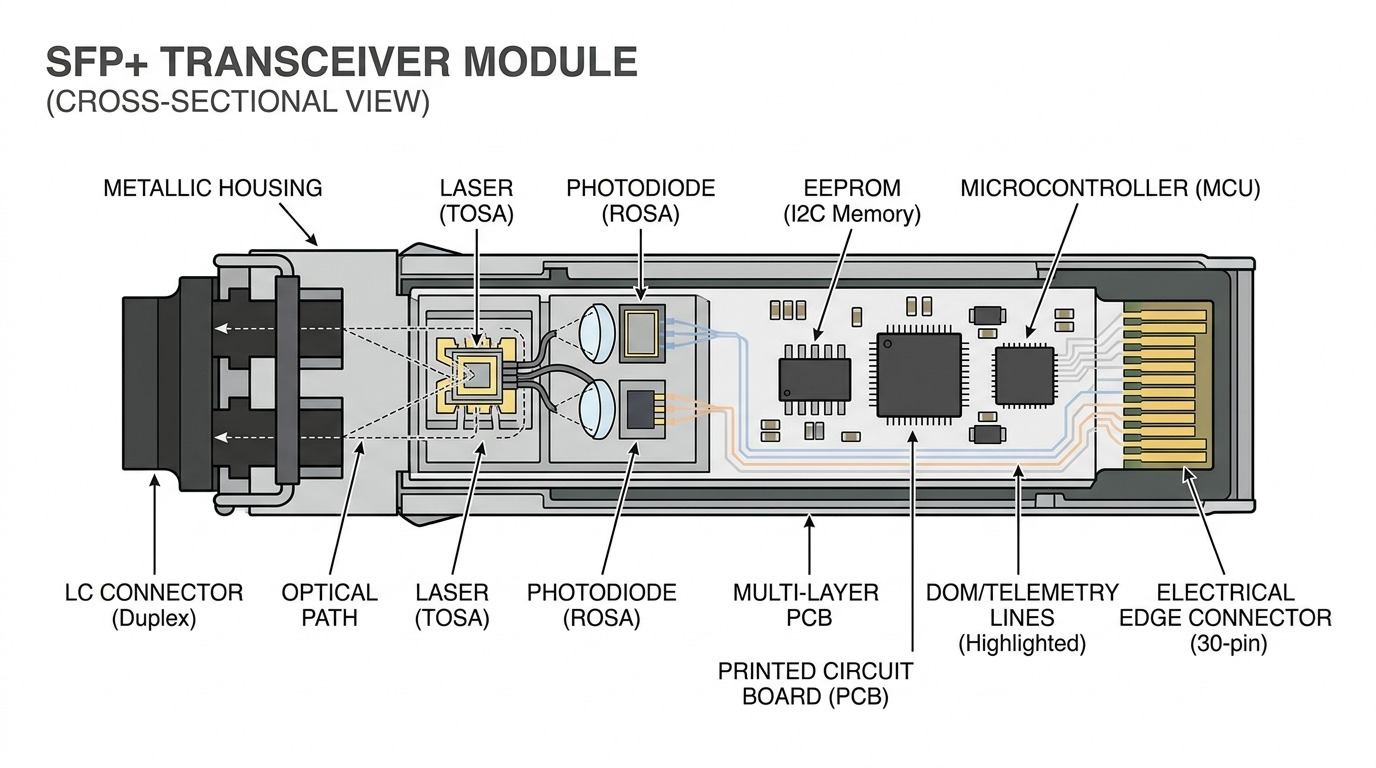
Before ordering optics or moving ports, align your plan with the exact line cards, optics cages, and fiber plant you have today. A common failure mode is assuming that a “400G-capable” switch means “any 400G optics will work,” when in reality the vendor’s Digital Optical Monitoring (DOM) and vendor-specific compatibility checks matter. Also confirm whether your eventual 800G target is using the same physical cage type and lane mapping.
What you should measure first
Start with a short audit using the switch CLI and your inventory database. Capture: interface identifiers, current breakout configuration, optics part numbers, and transceiver DOM readings. Then verify fiber plant parameters (core diameter, attenuation, patch panel losses, and MPO polarity handling).
For speed planning, note that many platforms map higher speeds into lanes (for example, 400G often maps to 8x50G lanes in certain optics families, while 800G commonly uses 8x100G or equivalent internal lane groupings depending on the chipset). Your goal is to ensure your chosen optics and switch firmware can support the lane mapping and coding the platform expects.
Inputs to collect (minimum set)
- Switch model and exact line card SKU (for example, Cisco Catalyst or Nexus chassis and the line card hardware revision).
- Firmware version and whether your vendor documents a “400G optics compatibility list.”
- Transceiver model numbers currently installed and their DOM vendor IDs.
- Fiber type: OM4 (typically 50/125) or OS2 (single-mode), plus measured link loss in dB at the relevant wavelength.
- Connector and polarity requirements: MPO-12/MPO-16 orientation, patch cord type, and cleaning method used.
Step-by-step implementation plan for a safe 400G upgrade
This numbered plan is designed to reduce downtime and to keep your 400G upgrade aligned with an 800G growth path. Follow it in order, and document every decision so you can reproduce results during future expansions.
Choose the target link type and distance class
Decide whether you are upgrading mostly for data center short reach (multimode) or for metro/long reach (single-mode). This determines whether you will use QSFP-DD or OSFP-style optics and whether you will target OM4/OM5 versus OS2.
For example, many enterprises start with 400G SR8 style optics for short reach inside data halls. If your later 800G target uses different wavelengths, reach classes, or connector types, you will still keep the fiber plant and patch panels consistent by planning with the same MPO topology.
Validate switch compatibility and lane mapping
On the switch, confirm that the intended interface supports the optics form factor and speed. Many platforms require enabling specific ports or setting a “module type” behavior, and some firmware versions block unsupported transceivers even if the physical connector fits.
In practice, you will check: supported breakout modes, whether 400G ports can be configured without disrupting adjacent ports, and whether the platform enforces a vendor-specific compatibility list. If you are unsure, do a lab test with one port using the exact transceiver SKU you plan to deploy.
Select optics models with realistic reach and power budgets
Pick optics based on measured link loss and the transceiver’s specified launch power and receiver sensitivity. Use vendor datasheets for the exact wavelength and reach class, but also validate with your field measurements.
Technical specifications table: common 400G optics for planning
Use this table to compare the core characteristics that typically drive engineering decisions. Actual availability and DOM behavior depend on the vendor and switch platform.
| Optics family | Example part number | Wavelength | Typical reach | Connector | Form factor | Operating temperature | Notes for 800G readiness |
|---|---|---|---|---|---|---|---|
| 400G SR8 (multimode) | Finisar FTLX8571D3BCL | 850 nm | Up to 100 m over OM4 (depends on system) | MPO-12 | QSFP-DD | Commercial/Industrial per datasheet | Good for keeping MPO cabling consistent; later 800G may still use MPO but different optics families. |
| 400G SR4 (where supported) | FS.com 400G SR4 QSFP-DD | 850 nm | Up to 150 m over OM4 (varies) | MPO-12 | QSFP-DD | 0 to 70 C typical for C-temp | May reduce lane count per fiber group; confirm switch support and lane mapping. |
| 400G LR8 (single-mode) | Cisco-compatible 400G LR8 QSFP-DD class | 1310 nm | Up to 10 km on OS2 (varies) | LC duplex | QSFP-DD | -5 to 70 C typical for many modules | Often aligns with future higher-speed single-mode optics; verify connector strategy for 800G. |
| 400G to 800G planning reference | Vendor platform-specific | Depends | Depends | Depends | Depends | Depends | Confirm whether 800G uses the same transceiver cage and whether optics must change form factor. |
Sources for standards and baseline behavior include IEEE Ethernet specifications and vendor transceiver documentation. For Ethernet physical layer expectations, consult [Source: IEEE 802.3]. For optics and DOM behavior, consult vendor datasheets and platform compatibility matrices. For practical guidance on fiber testing, refer to [Source: ANSI/TIA-568 and ANSI/TIA-526 series] as applicable.
Pre-stage fiber and patch panel polarity
Even when your optics are correct, polarity and cleaning can defeat the link. Ensure your MPO patch cords match the vendor’s polarity requirement (commonly “A-to-B” or “A-to-A” mapping depending on transceiver design). Then verify with an optical loss test set (OLTS) and confirm pass/fail thresholds for the relevant link budget class.
If you are using multimode, confirm that your cleaning method and dust control are consistent. A small contamination on an MPO end face can reduce received power enough to trigger link flaps or degraded FEC performance.
Deploy in a maintenance window with controlled rollback
Plan a staged rollout: upgrade one pod, one rack row, or one uplink group at a time. Capture baseline metrics before changes: interface errors, CRC counts, BER/FEC counters if available, and CPU utilization on the line card. Then apply the new configuration and verify link establishment, then verify traffic with a controlled load.
For rollback, keep old optics available and confirm you can revert to the previous port state quickly. If you are changing firmware as part of the 400G upgrade, separate that from the optics change when possible so you can isolate root causes.
Monitor DOM, FEC, and link stability after cutover
After the cutover, monitor transceiver DOM values (optical power, bias current where exposed, and temperature). Also watch for FEC-related counters and any “link training” events. A stable link should show consistent optical levels with no periodic resets.
If your platform supports it, enable logging for optics alarm thresholds. In field deployments, you often find that the “first week” issues are optical contamination, marginal fiber loss, or a mismatch between expected and actual patch cord type.
Pro Tip: When planning a 400G upgrade that you want to reuse for later 800G, treat fiber polarity and patch panel mapping as the long-lived asset. Optics models will change, but a carefully standardized MPO patching scheme and validated OLTS methodology usually saves weeks during the next upgrade cycle.
Selection criteria and decision checklist for engineers
Use this ordered checklist to avoid surprises. It reflects what teams commonly weigh during procurement, design reviews, and acceptance testing.
- Distance and reach class: Choose SR8/SR4 versus LR8 based on measured link loss and OM4/OS2 characteristics.
- Switch compatibility: Confirm the exact line card and firmware support for the optics form factor (QSFP-DD or other) and speed.
- DOM support and alarm behavior: Verify that DOM is readable and that alarm thresholds align with your monitoring tools.
- Operating temperature and airflow: Ensure module temperature rating matches your rack environment and that switch fan profiles are appropriate.
- Budget and vendor strategy: Compare OEM transceivers versus third-party options, but evaluate return policies and compatibility risk.
- Fiber connector and polarity plan: Standardize MPO polarity and cleaning workflow so you can swap optics later.
- Vendor lock-in risk: If your platform enforces strict compatibility, plan for the cost and lead time of future optics.
- 800G upgrade alignment: Confirm whether future 800G optics will require different cages, different connectors, or different fiber types.
Common mistakes and troubleshooting tips
Below are the top failure points seen in the field during a 400G upgrade. Each includes a root cause and a practical fix.
Link flaps or “no link” after optics insertion
Root cause: The transceiver is not compatible with the switch port’s expected optics profile, or firmware blocks unsupported optics. Sometimes the issue appears only after a cold boot or after a port reset.
Solution: Confirm the transceiver model matches the platform compatibility list, update switch firmware to a vendor-recommended version, and test one port in a lab or staging rack. If using third-party optics, verify DOM vendor ID and whether the switch expects a specific EEPROM layout.
High FEC corrections, rising CRC errors, or intermittent performance
Root cause: Marginal optical budget due to fiber loss, dirty MPO/LC connectors, or incorrect patch cord type. In multimode, small contamination has an outsized impact at 850 nm.
Solution: Reclean connectors using the correct lint-free method, then re-test with an OLTS at the correct wavelength. If the measured loss is near the threshold, replace patch cords and confirm polarity mapping matches the transceiver requirement.
Thermal alarms or premature transceiver shutdown
Root cause: Insufficient airflow, blocked intake vents, or a mismatch between module temperature rating and the actual rack thermal profile.
Solution: Validate airflow direction, clear obstructions, and compare measured airflow temperature at the module cage. Adjust switch fan profiles if permitted, and consider industrial-temperature optics if you operate near upper ambient limits.
Cost and ROI note for a pragmatic 400G upgrade
For many enterprises, the immediate cost is the optics purchase plus installation labor, but the total cost of ownership (TCO) is driven by compatibility risk and downtime. OEM QSFP-DD optics commonly cost more upfront than third-party modules, but OEM purchases often reduce “no link” incidents and speed up RMA turnaround. Third-party optics can be cost-effective, yet you should budget time for compatibility testing and plan for potential lead time variability.
In typical deployments, optics may range from roughly tens to low hundreds of dollars per module depending on reach class and OEM versus third-party sourcing, while labor and validation effort can add significant overhead. ROI improves when you standardize fiber polarity, use consistent patch cord types, and document DOM/OLTS results so the later 800G conversion is faster and less disruptive.
Keep in mind power and cooling: higher-speed optics can increase line card power draw and heat. Even if the module itself consumes only a few watts, the cumulative effect across many ports can influence rack cooling and fan energy.
FAQ
What does a 400G upgrade usually involve in an enterprise?
Most teams replace or add transceivers and update port configurations on existing switches that support 400G. In some cases, the line card must be upgraded too. The work often includes validating optics compatibility, checking fiber loss with OLTS, and monitoring DOM and FEC counters after cutover.
Can I plan for 800G during the 400G upgrade without changing fiber?
Often yes, especially if you standardize MPO patching and connector polarity. Optics will likely change form factor or lane mapping for 800G, but a consistent cabling topology reduces rework. Confirm the physical cage and connector constraints of your target 800G platform before you lock in patch panel changes.
How do I choose between multimode SR optics and single-mode LR optics?
Use measured distance and link loss, not just the nominal reach in a datasheet. For short intra-data-center runs, multimode SR is frequently cost-effective, while single-mode LR is better for metro and longer spans. Always validate with OLTS and ensure your fiber plant is the correct type and polarity.
Are third-party transceivers safe for a 400G upgrade?
They can be, but you must test for your specific switch model, firmware version, and monitoring stack. Some platforms have strict compatibility checks and may block optics or show incomplete DOM alarms. If you go third-party, buy a small batch first, run acceptance tests, and keep OEM as a fallback plan.
What should I monitor during the first 72 hours after cutover?
Monitor interface error counters, CRC counts, FEC correction trends, and DOM optical power and temperature. Also watch for link resets and optics alarm events. Many issues show up quickly due to cleaning problems, marginal loss, or airflow problems.
Which standards should I reference during design review?
Use IEEE Ethernet specifications for overall physical layer expectations, and use ANSI/TIA fiber cabling and test method standards for measurement methodology. For optics specifics, rely on vendor datasheets and your switch vendor’s compatibility list. This combination helps you justify design choices in change-control and procurement documentation.
If you execute the prerequisites, choose optics using measured budgets, and standardize MPO polarity, your 400G upgrade becomes a controlled stepping stone toward 800G. Next, review optics compatibility testing for enterprise switch ports to streamline acceptance testing and reduce cutover risk.
Author bio: I am an engineer who has deployed high-density Ethernet upgrades in real data centers, including optics staging, OLTS validation, and post-cutover telemetry tuning. I write with a field-first mindset, focusing on measurable checks and rollback-ready procedures.
