
Open RAN rollouts fail for reasons that look like “optics issues” but are actually configuration, timing, and compatibility gaps between radio units, aggregation, and transport. This article helps network and optical engineers choose 400G transceivers for fronthaul or midhaul paths in Open RAN deployments, with the operational checks you can run before you commit spares. It also covers what to validate in the switch, what fiber type and wavelength to select, and how to troubleshoot the most common bring-up failures.
Prerequisites: what you must confirm before buying 400G transceivers
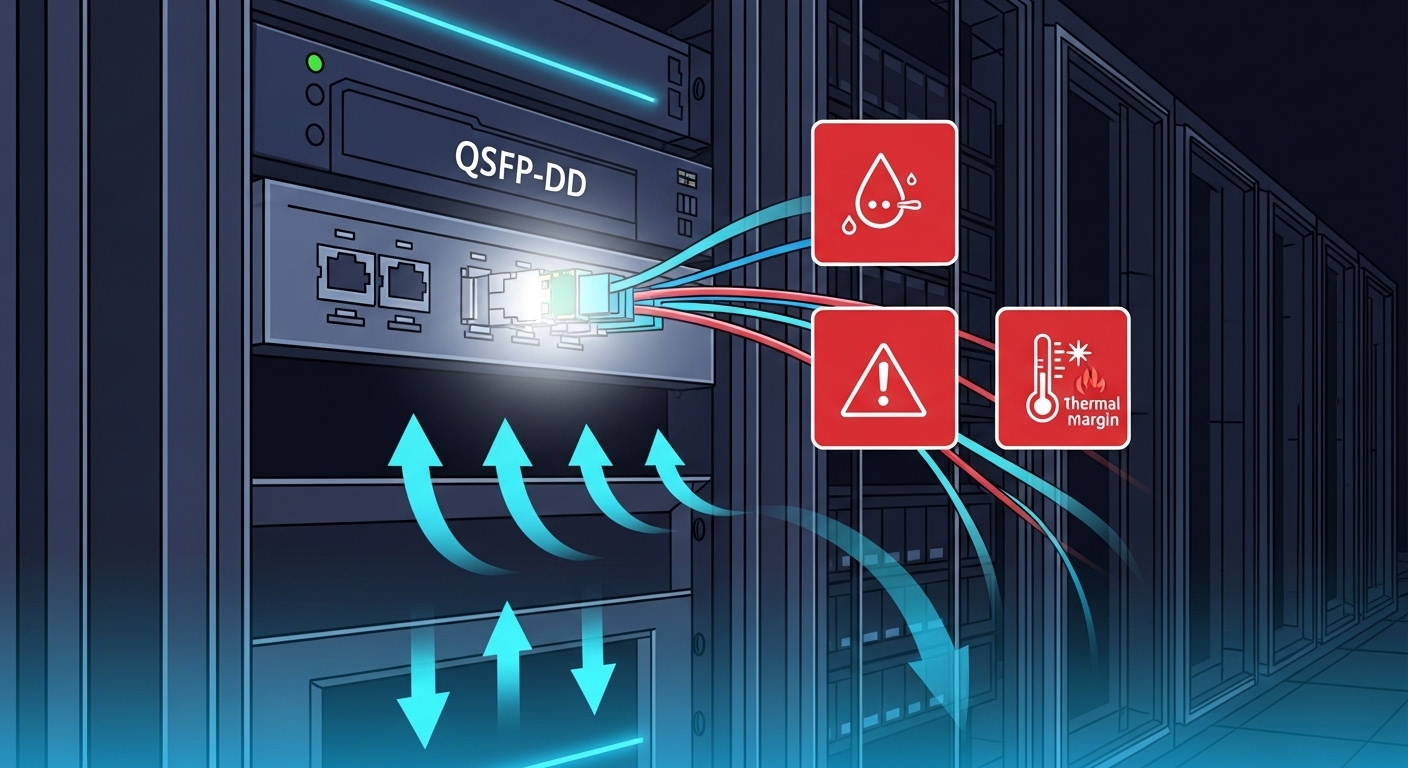
Before selecting models such as Cisco, Finisar, or FS.com 400G optics, gather the facts that drive link budget and compatibility. In Open RAN, “it negotiates” is not always the whole story: many deployments rely on strict optical reach targets, deterministic latency, and optics vendor behaviors that can affect link stability during power cycling.
Expected outcome: A one-page requirements sheet you can hand to procurement and the transport team, including distances, fiber plant, switch part numbers, and target interface profiles.
Map the exact Open RAN transport segment
Identify whether the link is fronthaul, midhaul, or a dedicated transport segment between DU, RU, CU, and O-CU/O-DU aggregation. For each hop, write down the interface type on the switch/router: for example, QSFP-DD at 400G line rate, or OSFP depending on your vendor. Open RAN integration often mixes vendors, so you must confirm the switch supports the specific optics form factor and signaling profile.
Expected outcome: A hop-by-hop table listing each device pair, required data rate, and physical interface type.
Measure fiber type, length, and connector cleanliness state
Use OTDR traces (or at minimum certified loss testing) and record: fiber type (OM4, OM5, OS2), total length per direction, and worst-case splice count. Field failures frequently trace back to too-aggressive polishing intervals or contaminated MPO connectors, not the transceiver itself. If you cannot get certification data, treat your link budget as pessimistic and plan for shorter margins than you would in a datacenter.
Expected outcome: A link budget worksheet with measured attenuation and estimated margin for aging.
Lock the wavelength and reach class to your plant
For short-reach deployments, you will typically use multi-lane parallel optics with nominal wavelengths around 850 nm. For longer reach, you may use coherent or high-reach pluggables depending on your architecture and vendor. This is where you avoid “it works in the lab” choices that break in the field when temperature and aging push the margin down.
Expected outcome: A shortlist of reach classes aligned to OM4/OM5 or OS2 fiber.
Technical deep-dive: common 400G transceiver types for Open RAN
Open RAN transport frequently uses 400G optics to reduce port counts while maintaining deterministic performance. The most important selection variables are reach (short vs long), fiber type, connector style (MPO-12/16 for parallel optics vs LC for single fiber), and power/thermal limits inside outdoor-rated aggregation cabinets.
Expected outcome: You can translate your Open RAN hop requirements into a specific optics category and reach class.
Choose the right form factor and lane architecture
In practice, 400G arrives in different form factors: QSFP-DD, OSFP, and sometimes vendor-specific high-density formats. Short-reach 400G is commonly implemented as 400G over parallel multimode with multiple lanes aggregated. Long-reach implementations can use different lane counts and coding schemes, so you must match the optics to the switch’s supported transceiver matrix.
Expected outcome: A form factor choice that is compatible with both the switch and your patching standard.
Validate electrical interface compatibility with the switch
Confirm the switch supports the optics’ electrical interface and forward error correction behavior. Many 400G pluggables expose vendor-specific digital diagnostics and compliance details, which you should validate via the switch CLI and DOM readings. If you use an open platform, check the optics compatibility list and ensure you do not exceed the switch’s allowed transmit power and receiver sensitivity thresholds.
Expected outcome: A confirmable compatibility path: switch model, transceiver part number, and expected DOM readings.
Use a spec comparison table to narrow the shortlist
Below is a practical comparison of typical 400G transceiver categories used in transport networks. Models vary by vendor, but the selection logic remains consistent.
| Spec | Short-reach 400G (Multimode, ~850 nm) | Long-reach 400G (OS2, coherent or high reach) | Operational impact for Open RAN |
|---|---|---|---|
| Common form factor | QSFP-DD or OSFP (vendor-specific) | QSFP-DD or OSFP (vendor-specific) | Determines cabinet fit, airflow, and spares strategy |
| Nominal wavelength | ~850 nm | Typically 1310 nm or coherent bands (varies) | Short links favor multimode; long links favor OS2 |
| Target data rate | 400G aggregate | 400G aggregate | Must match switch port capability and coding mode |
| Reach classes | Commonly 100 m to 300 m+ (OM4/OM5) | Commonly 2 km to 80 km+ (depends on type) | Drives fiber plant choice and splice/polish discipline |
| Connector style | MPO-12 or MPO-16 (parallel) | Often LC or similar (varies by product) | Connector style impacts field handling and cleaning tools |
| DOM support | Yes (digital diagnostics) | Yes (digital diagnostics) | Used for thresholds, alarms, and proactive maintenance |
| Operating temperature | Often 0 C to 70 C (commercial) or -5 C to 85 C (extended) | Often -5 C to 85 C or higher (varies) | Outdoor cabinets can exceed comfort margins during summer peaks |
When you compare specific products, look for details in vendor datasheets and compliance statements. For standards context, pluggable optics behavior is aligned with widely adopted Ethernet optical practices; for electrical and physical layer behavior, refer to IEEE Ethernet specifications and vendor documentation. [Source: IEEE 802.3] [Source: vendor transceiver datasheets]
Pro Tip: In Open RAN cabinets, the biggest “mystery link flaps” often correlate with connector contamination after maintenance visits. Add a workflow step to inspect and clean MPO ends with a microscope and verified cleaning cassette before blaming the optics; then compare DOM receive power trends across both lanes to isolate a single-lane degradation pattern.
Selection checklist: how engineers choose 400G transceivers for Open RAN
This section turns requirements into an ordered decision process you can apply to each link. The goal is to reduce late-stage surprises during staged commissioning, especially when you mix OEM and third-party optics.
Expected outcome: A documented selection that survives procurement, field install, and acceptance testing.
- Distance vs reach class: Use measured fiber loss and connector/splice penalties; do not rely on nominal reach alone.
- Fiber type and polarity standard: Confirm OM4 vs OM5 vs OS2; verify your patching scheme supports the connector type (MPO vs LC).
- Switch compatibility matrix: Check the switch model’s supported optics list for that exact part number and form factor.
- DOM and alarm thresholds: Validate that the switch can read vendor-specific DOM fields and that alarms map correctly in telemetry.
- Operating temperature and airflow: Ensure the transceiver temperature range fits your cabinet thermal profile; confirm airflow direction and fan curves.
- Power budget and thermal budget: Compare typical and maximum power draw; ensure the switch port module and chassis cooling can absorb it.
- Vendor lock-in risk: If you need multi-vendor spares, test at least one third-party candidate in a staging lab with the same switch firmware.
- Compliance and certifications: Prefer optics with clear IEEE/industry compliance statements and documented reliability test results in datasheets.
Step-by-step implementation guide for an Open RAN 400G optics rollout
This numbered path reflects how field teams typically deploy in phases: staging, pre-commission checks, live install, and acceptance. It also includes concrete verification actions you can run with common switch CLIs and optical diagnostics.
Expected outcome: A repeatable deployment runbook that reduces rollback risk.
Stage one optics model per link type with the exact switch firmware
In your staging rack, deploy the target switch models (or identical line cards) with the same firmware version expected in the field. Insert the proposed 400G transceiver part number and check that the link comes up at 400G without fallback to lower speeds. Record DOM readings: transmit bias, received optical power, and temperature at steady state (after at least 15 minutes).
Expected outcome: Baseline DOM values and a known-good link behavior with the same firmware.
Run a fiber diagnostic sweep before physical installation
Verify each fiber run with OTDR or certified test equipment and confirm end-to-end loss. For multimode MPO links, ensure you have correct MPO polarity and that the patch cords are consistent with your transceiver expectations. Store the test report IDs in the ticket so you can correlate future alarms to known plant metrics.
Expected outcome: A link-by-link test record tied to the exact jumpers used.
Install with cleaning verification and connector inspection
Use a microscope inspection step before mating MPO/LC connectors. Clean with the correct cassette and wipe sequence, then re-inspect. During install, avoid repeated connect/disconnect cycles; each cycle increases the chance of micro-scratches and contamination transfer.
Expected outcome: Reduced early-life failures and fewer ambiguous “link up then down” events.
Commission and verify DOM health plus error counters
After link-up, monitor interface counters and optics diagnostics for at least one maintenance window. Look for corrected and uncorrected errors, link flaps, and rising receive power drift. If your switch supports telemetry export (streaming or polling), capture the receive power trend and set alerts for thresholds defined by the vendor.
Expected outcome: A measured acceptance record, not just “link is up.”
Common pitfalls and troubleshooting tips during 400G transceiver bring-up
Even experienced teams hit repeatable failure modes. Below are the top pitfalls seen in transport bring-up, with root causes and practical solutions.
Expected outcome: Faster isolation and fewer rework cycles during acceptance.
Failure mode 1: Link does not come up at 400G
Root cause: Switch optics compatibility mismatch (unsupported transceiver part number, wrong form factor, or firmware incompatibility). Some platforms will fall back or refuse link training when DOM fields or transceiver signaling do not match expectations.
Solution: Verify the optics is on the switch’s supported list for your exact firmware. Re-seat the module, then check DOM presence and interface transceiver status. If available, update firmware to the version used during staging tests.
Failure mode 2: Link flaps after connector maintenance
Root cause: Contamination on MPO/LC end faces, micro-scratches, or polarity mismatch after manual patching. In parallel optics, a single degraded lane can cause intermittent training failures.
Solution: Inspect under a microscope, clean with the correct method, and verify polarity and patch cord mapping. Compare per-lane optical power (if the vendor exposes lane-level diagnostics) and replace the specific patch cord rather than the transceiver.
Failure mode 3: High error counters or rising BER despite link-up
Root cause: Link budget shortfall from excess loss (aging splices, poor connectors, underestimated patch cord loss) or thermal stress causing transmitter output drift.
Solution: Re-run certified loss tests or an OTDR confirmation on the suspect run. Validate cabinet airflow and check transceiver temperature with DOM; if temperature is out of spec, improve cooling or relocate the aggregation equipment.
Cost and ROI note for 400G transceivers in Open RAN
Pricing varies by reach and vendor, but field teams should expect meaningful differences between OEM and third-party optics. As a practical range, short-reach 400G optics often land roughly in the $600 to $1,500 per module bracket depending on brand and temperature grade, while long-reach coherent-style modules can be $2,000 to $8,000+ depending on reach and performance tier.
TCO considerations: Include spare stocking strategy, expected failure rates, and labor cost for cleaning and inspections. OEM optics may reduce compatibility friction, but third-party optics can lower purchase cost if you validate them on your switch firmware and run a staged acceptance test. Power and cooling impact is usually modest at the port level, but in dense aggregation cabinets, small power differences can influence fan speeds and thermal headroom.
For standards grounding, use vendor datasheets for operating power, temperature ranges, and safety/reliability testing. [Source: IEEE 802.3] [Source: transceiver manufacturer datasheets]
FAQ
What distance can 400G transceivers realistically support in Open RAN?
It depends on the fiber type and connector quality. For short-reach, multimode optics commonly target 100 m to 300 m+ on OM4/OM5 under specific testing conditions, while long-reach options can extend from 2 km to 80 km+ depending on the technology. Always base decisions on measured loss and a conservative margin, not only the datasheet headline reach.
Do I need QSFP-DD or OSFP for 400G?
Your switch dictates the form factor. Many Open RAN transport designs use QSFP-DD for dense aggregation, while some platforms prefer OSFP for specific port densities and thermal designs. Confirm the switch model’s optics support matrix before you buy, because form factor alone is not enough.
Can I mix OEM and third-party 400G transceivers?
Often yes, but only after validation. Compatibility depends on firmware, DOM behavior, and how the switch performs link training and FEC/BER monitoring. Run at least one staging test per transceiver model on the same firmware you will deploy.
What DOM readings should I watch during commissioning?
Track receive optical power, transmitter bias/current, module temperature, and any vendor-specific alarm flags. Then correlate those values with interface error counters over time. If you see receive power trending down rapidly or temperature near the upper threshold, address the plant or cooling before scaling the rollout.
How do I troubleshoot a parallel multimode MPO 400G link?
Start with microscope inspection and cleaning, then verify polarity and patch cord mapping. If the link flaps, compare per-lane power if available; otherwise, swap patch cords to isolate whether the issue is in the plant or the module. Finally, re-check certified loss and connector cleanliness after any maintenance event.
Which standards should guide my optics selection?
For Ethernet physical layer behavior, reference IEEE 802.3 and the specific optical interface profile supported by your switch platform. For field readiness, rely on vendor datasheets for optical parameters, DOM specification, and temperature/power limits. Use these sources together rather than relying on a single document.
Choosing 400G transceivers for Open RAN is less about chasing the highest reach and more about matching optics to switch compatibility, fiber plant reality, and field maintenance discipline. Next, review how to plan fiber and optical link budgets for high-speed networks to tighten your link budget and reduce commissioning churn.
Author bio: I have deployed and validated high-speed optical links in telecom aggregation racks, including staged firmware acceptance for pluggable optics. I write from field experience using DOM telemetry, OTDR traces, and switch error counter workflows to make optics decisions measurable and repeatable.
