
When a telecom team plans a capacity jump, the hardest part is not buying optics, it is making optical networking work end to end: switch optics, fiber plant, optics power budgets, and operational temperature behavior. This article helps network engineers and procurement leads compare common 400G transceiver options for telecom use cases. You will get practical selection criteria, a troubleshooting checklist, and a clear recommendation matrix for real deployment constraints.
400G optical networking options: coherent vs direct-detect reality
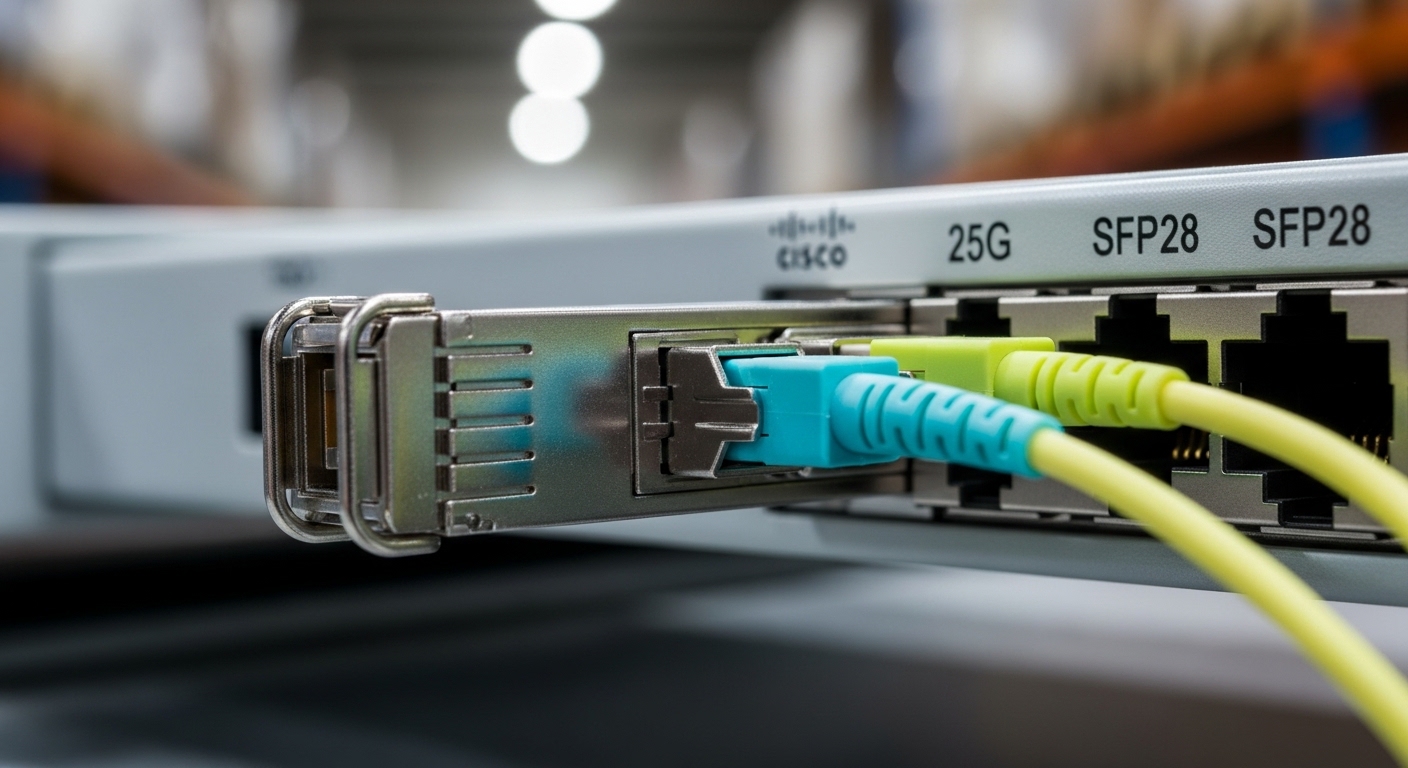
For 400G, optical networking choices generally split into direct-detect (often using short-reach optics) and coherent (used for longer reach and higher flexibility). In telecom transport, coherent 400G typically uses standardized pluggable coherent modules aligned to vendor ecosystems, while direct-detect often targets data center interconnect and metro short-haul. The key engineering difference is how each approach handles dispersion and optical signal-to-noise ratio, which directly impacts reach and margin.
Coherent 400G: where it earns its keep
Coherent transceivers use digital signal processing to compensate for chromatic dispersion and polarization effects, enabling longer spans over standard single-mode fiber. In practice, this reduces the number of intermediate regeneration sites, which matters when you are constrained by site power, fiber route availability, and permitting timelines. However, coherent systems are more sensitive to configuration consistency and require careful attention to firmware, baud rate, and channel spacing across the link.
Direct-detect 400G: when simplicity wins
Direct-detect 400G is often deployed for shorter reach where power budget and chromatic dispersion are manageable. It can reduce operational complexity, but your link budget is less forgiving: connector loss, splice quality, and fiber aging can push you into marginal performance. If you are building metro rings with predictable fiber plant quality and shorter spans, direct-detect can be a cost-effective optical networking path.
Key specifications that determine reach and compatibility
Telecom buyers frequently compare only wavelength and “reach,” but optical networking performance hinges on multiple parameters: link budget, transmitter power, receiver sensitivity, typical optical power, and supported interface standard on the host. Below is a practical comparison using representative module families that engineers encounter in the field.
| Spec | Direct-detect 400G (example family) | Coherent 400G (example family) |
|---|---|---|
| Typical data rate | 400G (varies by breakout) | 400G (coherent DP-QPSK class) |
| Wavelength | Commonly 850 nm (SR) or 1310/1550 nm depending on variant | Often C-band around 1550 nm |
| Reach (typical) | From tens of meters to a few kilometers depending on variant | 10s to 100s of km class depending on design |
| Connector | LC (typical) | LC (typical), depends on vendor |
| Optical power / sensitivity | Power budget is tighter; must verify dB margin | Requires correct coherent settings; performance depends on OSNR margin |
| Temperature range | Often industrial or telecom grade; verify exact module spec | Telecom grade typically expected; verify operating range |
| Host compatibility | QSFP-DD / OSFP / vendor-specific pluggable support may vary | Vendor ecosystem and firmware alignment are critical |
For standards context, IEEE 802.3 defines electrical and optical interface behavior for many Ethernet PHY generations, but the exact pluggable implementation and performance limits come from vendor datasheets and host transceiver acceptance testing. Use [Source: IEEE 802.3] for PHY baseline and [Source: vendor datasheets] for power, sensitivity, and DOM details. For telecom coherent transport, also reference deployment guidance from equipment vendors and accepted system engineering notes, as implementations can vary significantly.
anchor-text: Source: IEEE 802.3
anchor-text: Source: vendor datasheets and module documentation
Telecom deployment scenario: 400G growth on a metro transport ring
Consider a 3-tier telecom transport topology: aggregation routers feed a metro ring with four nodes, each node equipped with 400G-capable line cards. Suppose each span is 40 km of standard single-mode fiber with an estimated 6 dB total loss budget including splices and connectors, and you must add capacity without adding sites. In this scenario, coherent 400G often becomes the default because it tolerates dispersion and enables longer reach while maintaining OSNR margin, reducing the need for regeneration.
Operationally, engineers verify that the coherent transceivers match the host card’s supported wavelength plan and coherent DSP mode, then validate with OTDR and optical power measurements at acceptance. For direct-detect, you would instead confirm that the end-to-end dispersion tolerance and connector cleanliness meet the tighter budget. In both cases, DOM telemetry is used in the field to watch bias current, laser temperature, and optical power drift during the first 72 hours after cutover.
Decision checklist: how teams choose between optical networking options
When procurement and engineering disagree, it is usually because the checklist was incomplete. Use this ordered decision guide for 400G optical networking in telecom:
- Distance and span loss: compute fiber loss plus connector/splice losses; include a margin for aging.
- System impairments: dispersion, polarization effects, and OSNR for coherent designs; dispersion tolerance for direct-detect.
- Switch and line-card compatibility: confirm exact pluggable form factor and supported optical interface modes.
- DOM support and telemetry: verify alarms, thresholds, and readable parameters from the host (not just “it detects”).
- Operating temperature: match telecom grade expectations; confirm power and performance across the full ambient range.
- Firmware and vendor lock-in risk: check whether third-party modules are supported and whether DSP mode changes require approved images.
- Test and acceptance plan: define acceptance criteria (optical power, BER targets, and any required loopback tests).
Pro Tip: In telecom acceptance testing, teams often fixate on received power, but for coherent links the more predictive metric is OSNR margin under real traffic patterns; a link that “looks fine” at low utilization can degrade when Raman noise or crosstalk changes the spectral environment.
Common mistakes and troubleshooting tips
Mistake 1: Choosing optics solely by wavelength and “reach.” Root cause: ignoring full link budget components (connector type, splice loss distribution, and margin). Solution: run an end-to-end budget with worst-case losses and verify receiver sensitivity from the exact datasheet.
Mistake 2: Assuming DOM presence guarantees correct thresholds. Root cause: host may read DOM but not apply the expected alarms or calibration constants. Solution: compare DOM fields against host documentation and validate alarm behavior during a controlled test window.
Mistake 3: Mixing coherent transceiver firmware modes across a ring. Root cause: mismatch in DSP mode, channel plan, or supported baud rate, causing intermittent errors. Solution: standardize firmware versions per site and confirm configuration parity during commissioning.
Mistake 4: Poor fiber hygiene at cutover. Root cause: connector contamination raises insertion loss and increases error rates. Solution: enforce inspection and cleaning workflow, then confirm with optical power measurements before closing the patch panel.
Cost and ROI note: what the invoices do not show
Pricing varies heavily by form factor, vendor ecosystem, and whether you buy OEM or third-party. In typical telecom projects, direct-detect 400G optics can be less expensive upfront but may require more careful fiber plant management; coherent 400G optics often cost more per unit due to DSP complexity. Total cost of ownership should include spares strategy, failure rates, and the time spent in troubleshooting caused by compatibility gaps. If your spans are long or regeneration is expensive, coherent optics can deliver ROI by reducing site count and operational downtime.
Decision matrix: pick the option aligned to your constraints
| Reader type | Priority | Best-fit optical networking option | Why |
|---|---|---|---|
| Metro transport engineer | Long reach, minimal regeneration | Coherent 400G | Compensation for dispersion and better margin over longer spans |
| Regional operator with short spans | Lower complexity | Direct-detect 400G | Simpler operations when the fiber plant budget is predictable |
| Procurement lead controlling TCO | Risk-managed compatibility | OEM-first, third-party only after acceptance tests | Reduces firmware and host compatibility surprises |
| Field operations team | Faster troubleshooting | Modules with rich DOM and clear alarms | Telemetry reduces mean time to repair |
Which option should you choose?
If your telecom links are metro-length and you need to avoid regeneration, choose coherent 400G for optical networking: it is engineered for longer spans and more robust handling of impairments. If your spans are short, your fiber plant is well characterized, and you want lower operational complexity, direct-detect 400G can be the right economical move. For any choice, standardize acceptance testing and DOM telemetry validation so your first cutover is not a long troubleshooting marathon.
FAQ
Q1: Are 400G optical transceivers always compatible with any 400G line card?
No. Compatibility depends on exact pluggable form factor, supported optical interface modes, and sometimes firmware requirements. Always verify host documentation and perform acceptance tests with the specific module SKU.
Q2: How do I estimate whether direct-detect 400G will work on my span?
Start with an end-to-end link budget: transmitter power, receiver sensitivity, connector and splice losses, and a margin. Then check dispersion limits for your fiber type and span length; do not rely on reach alone.
<
