
Telecom teams rolling out 400G optical networking often discover that “it works in the lab” is not the same as “it survives field commissioning.” This quick reference helps network engineers and field technicians map real 400G transceiver choices to link budgets, optics compatibility, and operational constraints in live deployments. You will also get a troubleshooting checklist for the most common failure modes during activation and ongoing maintenance.
Why 400G optics change the commissioning workflow in telecom
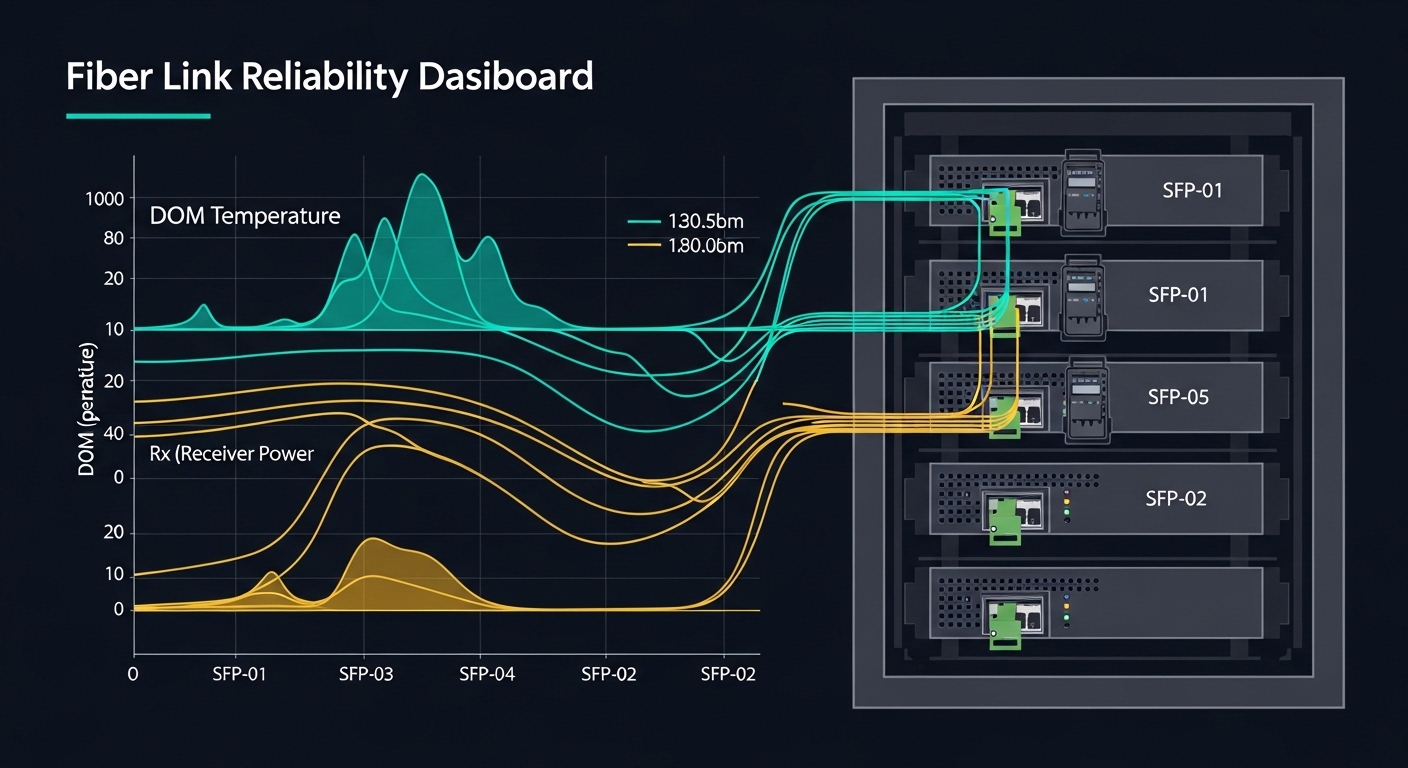
Moving from 100G or 200G to 400G increases aggregate capacity per wavelength and raises the importance of margin management. In real optical networking deployments, engineers must validate transceiver type, wavelength plan, and vendor-specific management behavior (for example, DOM/EEPROM fields) before turning up traffic. In practice, teams also see higher sensitivity to connector cleanliness, fiber end-face damage, and patch panel routing errors because the optical budgets are tight.
Telecom transport systems commonly use coherent optics for long-haul and metro, with standardized interfaces aligned to IEEE 802.3 coherent PHY expectations where applicable. For the 400G class, you will typically encounter coherent pluggables such as 400G ZR/400G FR4 variants, each with a distinct modulation and reach profile. Always confirm the exact part number and the supported temperature range, because some SKUs are optimized for central office (CO) environments while others target outside plant (OSP) cabinets.
400G transceiver choices: what to compare before you order
Selection starts by matching the transceiver to the transport distance and the deployed mux/demux and ROADM plan. In telecom, 400G ZR is often used when you want long reach over a single wavelength band, while 400G FR4 is common for shorter metro spans with multiple subcarriers. Your optical networking design must also align with the host platform’s optics requirements, including supported electrical interface type, lane mapping, and expected control-plane behavior.
Key spec comparison (400G coherent pluggables)
| Spec | 400G ZR (Coherent) | 400G FR4 (Coherent) | Notes for field teams |
|---|---|---|---|
| Typical wavelength | Single wavelength (C-band) | Multiple subcarriers (C-band) | Confirm ITU grid alignment and vendor wavelength labeling |
| Reach (typical) | ~80 km (varies by vendor) | ~2,000 km is not typical; commonly shorter (varies) | Use vendor datasheet reach with margin, not marketing max |
| Connector | LC duplex (common) | LC duplex (common) | Verify presence of polarization-dependent components |
| Data rate | ~400G coherent PHY | ~400G coherent PHY | Host must support the same coherent mode |
| Power (typical) | Higher than legacy optics; confirm per-module budget | Similar class; confirm per-module | Check switch PSU headroom and thermal design |
| Temperature range | Often 0 to 70 C (varies by SKU) | Often 0 to 70 C (varies by SKU) | CO vs OSP modules differ; validate before field rollout |
| DOM support | Common: transceiver diagnostics | Common: transceiver diagnostics | Confirm DOM alarms and thresholds match your monitoring stack |
Concrete example part numbers you will see in carrier environments include Cisco QSFP-DD coherent variants paired with optical front-ends, and third-party coherent optics such as Finisar/Viavi-family transceivers (for example, FTLX8571D3BCL class optics) and FS.com coherent 400G modules (for example, FS.com listings for 400G coherent ZR/FR4 families). Always verify the exact coding, modulation, and reach mode on the specific datasheet revision before deployment. [Source: IEEE 802.3 (coherent Ethernet PHY context); Source: vendor datasheets for Finisar/FS.com/Cisco coherent pluggables]
Real-world telecom scenario: 400G turn-up across metro rings
Consider a metro transport network with a 3-tier leaf-spine isn’t typical; instead, you may see ROADM-based rings feeding aggregation sites. In one common deployment pattern, a carrier upgrades two 400G coherent links per ring span for a set of 12 sites, targeting a mix of ~40 km and ~70 km spans. Each site is provisioned with 2 redundant paths, so you might stage 48 total transceivers for the first wave (24 per direction) and then expand.
During commissioning, field engineers measure optical power at the receiver, inspect connector end-faces, and confirm the host’s transceiver state via management telemetry. You will typically validate DOM temperature, laser bias current, and optical output power before you enable traffic. If you are using a vendor-specific control-plane integration, confirm that alarm thresholds (for example, receive power low, bias out of range) are mapped to your NMS so you do not miss early degradation signals.
Selection criteria checklist for optical networking field success
Use this ordered checklist during procurement and pre-activation. It is designed to reduce “late surprises” during cutover windows.
- Distance and margin: confirm span loss, connector loss, splice count, and expected OSNR/Q margin; do not rely on maximum reach alone.
- Transceiver family: choose coherent mode aligned to your network plan (for example, ZR vs FR4 class) and confirm ITU grid compatibility.
- Host platform compatibility: verify the switch/ROADM line card supports the exact interface and expects the same DOM feature set.
- DOM and monitoring behavior: ensure your NMS understands the diagnostic alarms and that thresholds are sane for your environment.
- Operating temperature and airflow: validate the module SKU temperature range against the cabinet thermal profile; confirm airflow direction and bypass risks.
- Connector and patch panel reality: plan for LC cleanliness procedures, confirm polarity conventions, and ensure patch cords match the expected fiber type.
- Vendor lock-in risk: evaluate whether your operations team can swap optics across vendors without host firmware constraints; test in a staging rack.
- Spare strategy and lead times: keep spares for both directions and both link types; coherent optics can have longer qualification cycles.
Pro Tip: In field turn-ups, the fastest path to a stable optical networking link is often not reconfiguring the host first, but verifying patch cord cleanliness and receiver power levels against the vendor’s recommended starting conditions. If your received power is even slightly off, the coherent DSP can enter a slower acquisition mode, which looks like “random instability” during early traffic tests.
Common pitfalls and troubleshooting tips during 400G optics activation
Below are frequent failure modes that telecom teams report during commissioning and early operations. Each item includes root cause and a practical solution.
-
Pitfall 1: “Link up, but traffic fails” after cutover
Root cause: OSNR/Q margin too low due to underestimated span loss, excessive patch cord length, or too many splices.
Solution: Re-measure end-to-end loss, check fiber type and connector/splice counts, and compare measured receive power to the vendor’s commissioning targets. If possible, reduce optical path loss by shortening patch cords or rerouting through lower-loss panels. -
Pitfall 2: Persistent DOM alarms (temperature or bias out of range)
Root cause: Airflow mismatch, blocked vents, or using an SKU with a CO-only temperature range in a hotter cabinet.
Solution: Confirm module temperature telemetry, verify cabinet airflow direction, check for blocked intake filters, and swap to a thermally qualified SKU for that site class. -
Pitfall 3: Receiver acquisition delays or intermittent drops
Root cause: Dirty connectors or subtle polarity/termination mismatches leading to unstable optical coupling.
Solution: Re-clean with approved lint-free procedures and inspect with a scope; replace patch cords if there is any doubt about end-face damage. Then repeat the activation with a consistent power and wavelength plan. -
Pitfall 4: Host refuses the module or shows “unsupported optics”
Root cause: DOM fields or electrical interface expectation mismatch between the host line card and the specific transceiver revision.
Solution: Confirm exact part number and revision, check host firmware release notes for coherent optics support, and validate in a staging bay before scheduling a live cutover.
Cost and ROI note for telecom optical networking rollouts
Typical market pricing for 400G coherent transceivers varies widely by reach and vendor qualification status. In many carrier purchasing cycles, you may see ballpark module costs ranging from roughly $4,000 to $12,000 each for coherent long-reach SKUs, with higher pricing for specialized variants or recent qualification waves. TCO is dominated by install labor, testing time, spares strategy, and the failure/return logistics rather than only the module purchase price.
OEM optics can reduce integration risk if the host vendor tightly validates DOM and DSP behavior, but third-party optics can be cost-effective if you run a staged interoperability test. A realistic ROI model should include mean time to repair, on-site spares coverage, and the probability of rework due to compatibility or thermal issues. [Source: vendor datasheets and telecom field practice reports in reputable tech media]
FAQ
What optical networking distance should I target for 400G ZR vs FR4 class?
Use the vendor datasheet reach only as a starting point and then subtract realistic connector and splice losses plus a margin for aging and variation. For metro spans around tens of kilometers, ZR-class is common; for shorter metro patterns, FR4-class may fit better depending on your ROADM and wavelength plan.
Do I need to worry about DOM support and alarm mapping?
Yes. Field teams often miss early warnings when NMS thresholds are not aligned with the module’s DOM behavior. Verify that your monitoring stack correctly interprets DOM fields for temperature, optical power, and laser bias alarms.
Can I mix transceivers from different vendors in the same host?
Sometimes, but compatibility is not guaranteed across revisions. Even if the physical form factor matches, coherent optics can differ in control-plane expectations and DSP acquisition behavior, so test interoperability in a staging rack first.
What is the fastest way to debug a “no traffic” issue during first turn-up?
Start with optics validation: measure receive/transmit power, confirm connector cleanliness with a scope, and check DOM telemetry for acquisition-related alarms. Only then adjust host configuration, because many coherent failures look like host issues when the underlying optical margin is off.
How should we plan spares for optical networking with 400G?
Keep spares per direction and per link type (ZR vs FR4 class) and consider stocking modules that match the same temperature SKU used at each site class. Include at least one spare for the most failure-prone patch panel or cabinet thermal profile.
Where can I learn about interoperability and monitoring requirements?
Check IEEE 802.3 references for coherent PHY context and read the specific host vendor’s coherent optics support documentation. For practical operations, validate DOM alarm thresholds and telemetry ingestion using your NMS test environment before the cutover window.
400G coherent optics can deliver major capacity gains for telecom optical networking, but the success path depends on margin discipline, DOM-aware monitoring, thermal fit, and disciplined fiber handling. Next, review optical transceiver compatibility testing to reduce interoperability surprises before your live cutover.
Author bio: I design and review optical networking field workflows with a focus on UI/UX for commissioning tools and monitoring dashboards used by engineers under time pressure. I also translate vendor datasheets into operational checklists that technicians can execute reliably in real CO and OSP environments.
