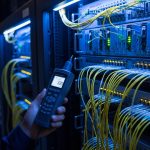
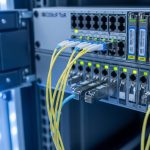
When an SFP link flaps or optical power drifts, engineers need more than “module present” LEDs. This article shows how to use an OpenConfig transceiver management approach with a YANG SFP model to pull actionable telemetry, validate it against switch behavior, and troubleshoot failures in the field. It is written for network operators integrating modern optics telemetry into automation workflows on leaf-spine and campus access networks.
OpenConfig transceiver management and where a YANG SFP model fits
OpenConfig defines vendor-neutral YANG models for telemetry and configuration of network components, including transceivers. In practice, a YANG SFP model is the structured schema your network operating system exposes for optics state such as DOM readings (temperature, laser bias current, TX/RX power) and operational status (presence, alarms, and link association). Engineers typically consume this via streaming telemetry (gNMI) or periodic polling (depending on the platform), then correlate with interface counters from IEEE 802.3.
What telemetry fields you should expect to map
Most transceiver telemetry implementations align the following concepts, even when field names differ by vendor. For a DDM/DOM-capable module, look for temperature and power readings that can be used for alerting thresholds. For alarms, look for laser bias and optical power warning and critical states, plus module temperature warnings. For operational state, confirm whether the model reports module presence and whether the optics is “ready” at the time the interface transitions to forwarding.
Pro Tip: Treat “module present” and “optics operational” as different reliability signals. In multiple production deployments, engineers found that module present can remain true through a partial failure (for example, a laser aging event), while DOM alarm or TX power valid flips first. Alerting on the earlier signal reduces mean time to repair.
Mapping model paths to operational reality
Your YANG SFP model integration is only as good as the mapping between schema paths and how the switch labels ports and optics instances. Before building dashboards, confirm the instance keys (port number, lane index, or transceiver slot) and verify that a single physical port maps to a single optics instance. If your platform supports breakout cables (for example, 40G to 4x10G), validate whether the model exposes separate lane-level instances or a grouped transceiver object.
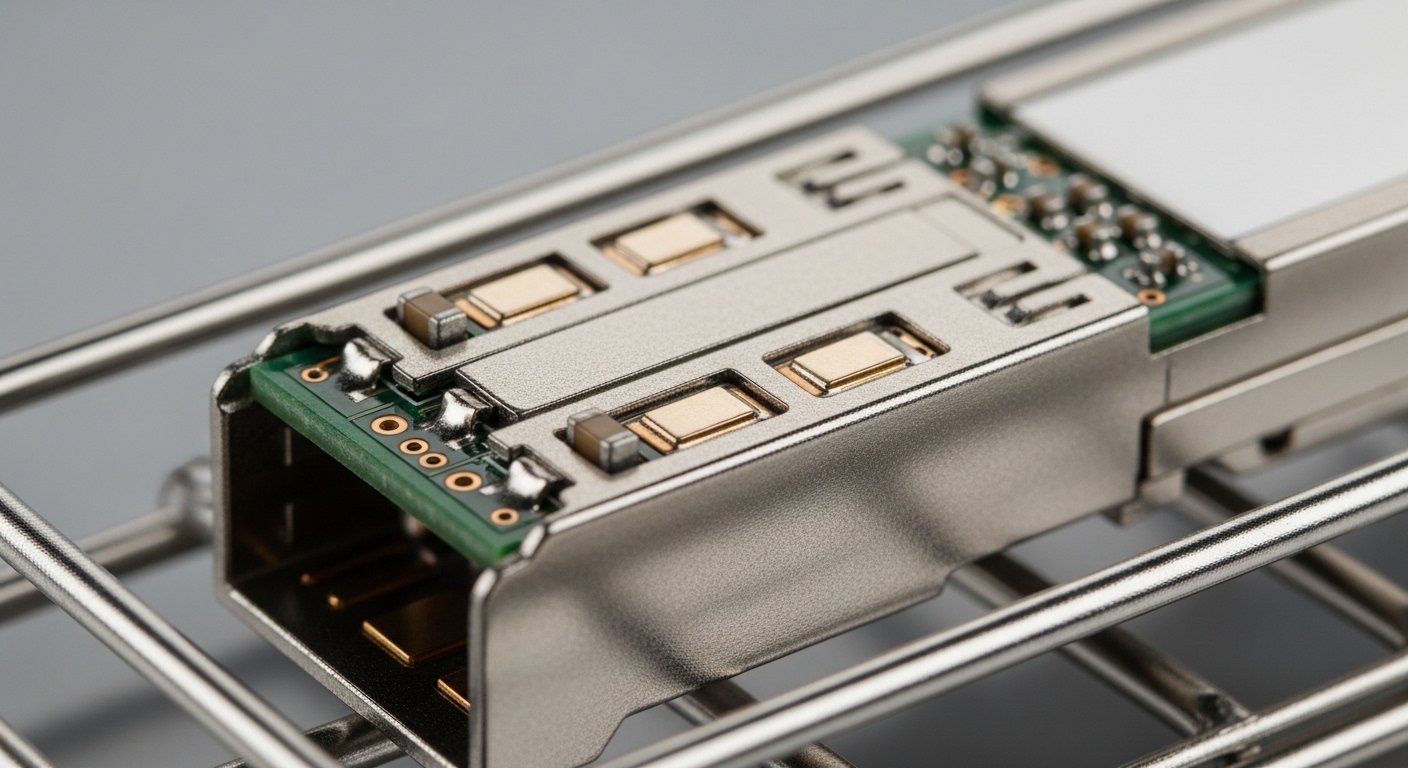
Validation workflow: from YANG SFP model to gNMI telemetry that matches link events
A reliable integration requires validation against real link-layer events. The workflow below is designed for day-2 operations: you confirm schema exposure, verify telemetry freshness, and check that values change when you intentionally induce controlled conditions (like lowering optical receive power within safe limits).
Step-by-step checklist
- Confirm module capability: verify the optics supports DOM (Digital Optical Monitoring) and the interface type is compatible with your transceiver (10GBASE-SR, 25GBASE-SR, 100GBASE-SR4, etc.).
- Verify YANG model exposure: check that the OpenConfig transceiver subtree is present and that the specific optics instance appears when the module is inserted.
- Validate instance keys: compare the telemetry instance identifier to the switch port naming convention used in interface counters.
- Check telemetry cadence: measure update interval; for streaming telemetry, ensure it is fast enough to catch transient alarms during link training or momentary power events.
- Correlate with link transitions: during a controlled link flap, confirm the order of events: interface state, optics operational state, DOM alarms, and RX power validity.
- Confirm unit scaling and sign: validate dBm scaling, temperature units, and whether “invalid” is represented by null, a sentinel value, or a boolean flag.
Example optics to test with (practical compatibility)
Engineers often start with widely supported short-reach optics to reduce variables. For 10GBASE-SR, common examples include Cisco SFP-10G-SR and Finisar FTLX8571D3BCL, and for general third-party compatibility, many networks deploy FS.com SFP-10GSR-85 class modules when the platform accepts them. The goal is not brand preference, but to select optics whose DOM behavior is well characterized and whose datasheets specify expected operating temperature and DOM availability.
Key specifications to compare before you trust telemetry
Telemetry is only meaningful if the underlying module is within spec. A YANG SFP model can expose temperature and power, but it cannot guarantee correct interpretation if you selected a module with mismatched wavelength, reach class, or DOM support. Use the table below as a quick filter for typical SFP and SFP+ short-reach deployments.
| Parameter | 10GBASE-SR SFP / SFP+ | 25GBASE-SR SFP28 | 100GBASE-SR4 QSFP28 |
|---|---|---|---|
| Nominal wavelength | 850 nm | 850 nm | 850 nm (lane-based) |
| Typical reach over OM3 | Up to ~300 m | Up to ~100 m (varies by spec) | Up to ~100 m (varies by spec) |
| Data rate | 10.3125 Gb/s | 25.78125 Gb/s | 4x 25.78125 Gb/s lanes |
| Connector | LC (duplex) | LC (duplex) | LC (12f on breakout; lane optics) |
| DOM / telemetry | Commonly available (temperature, TX/RX power, alarms) | Commonly available (DOM) | Commonly available (per-lane DOM) |
| Operating temperature | Often -5 to 70 C (check datasheet) | Often 0 to 70 C or -5 to 70 C (check datasheet) | Often 0 to 70 C or -5 to 70 C (check datasheet) |
| Compatibility caveats | Vendor lock and DOM threshold differences | Strict optics support on some platforms | Lane mapping and optics instance keys matter |
For standards alignment, confirm compliance with IEEE 802.3 for the relevant Ethernet PHY and interface type. For transceiver management, consult the vendor’s optics and platform documentation, plus any OpenConfig implementation notes exposed by your network OS vendor. External references for standards and OpenConfig concepts can be found at IEEE 802.3 working group and OpenConfig community.
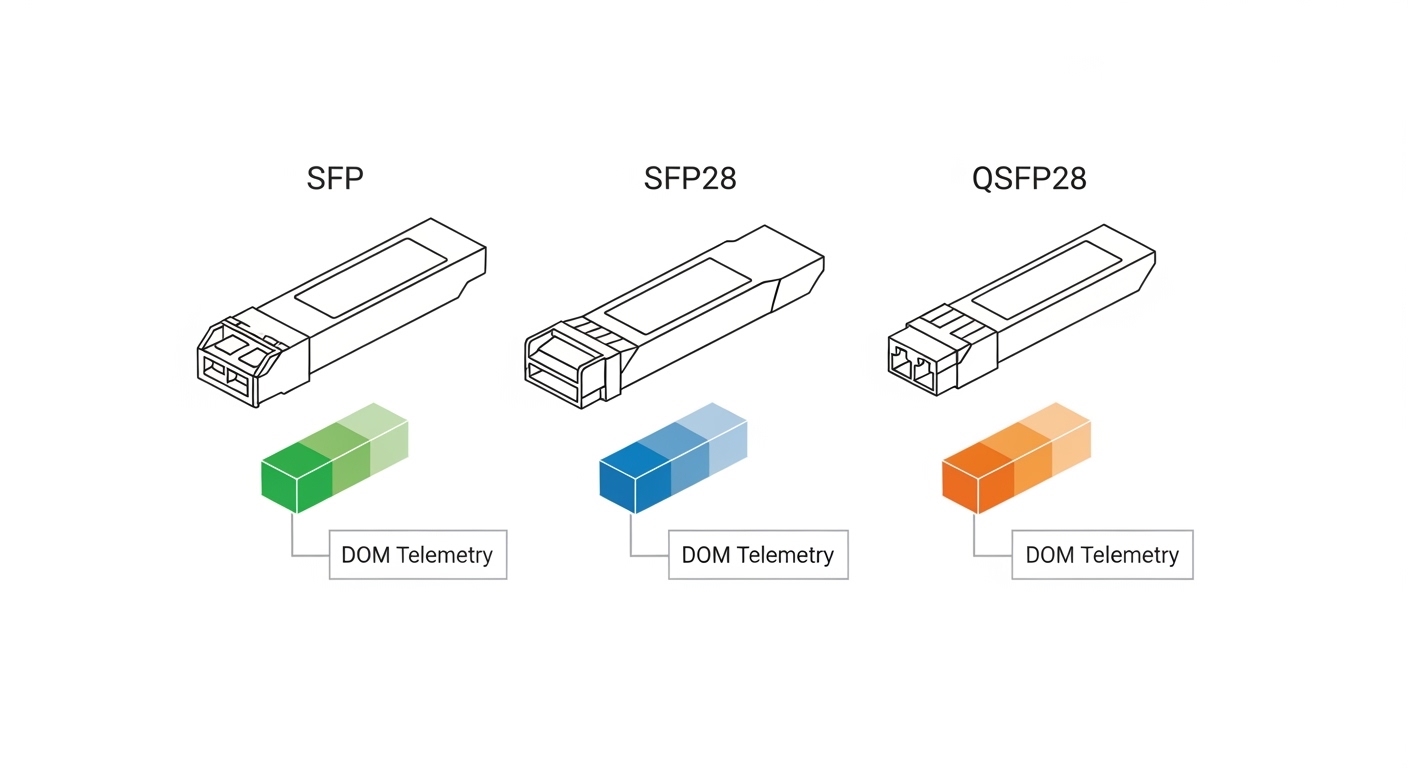
Selection criteria for a YANG SFP model integration that survives real operations
Before you standardize on a telemetry pipeline, engineers choose optics and platform configurations that minimize surprises. The following ordered checklist reflects what teams weigh after a few production incidents.
- Distance and fiber grade: verify OM3/OM4/OM5 compliance for the target reach; mismatched fiber grade can create chronic low RX power that triggers alarms.
- Budget vs optics class: know whether you are buying “enterprise” optics with stable DOM behavior or “cost-optimized” optics that may show different alarm thresholds.
- Switch compatibility: confirm the platform supports the transceiver type and DOM interface; some platforms reject certain third-party modules or only partially expose DOM.
- OpenConfig transceiver support: confirm your network OS exposes the OpenConfig transceiver subtree and that the YANG SFP model instance keys map correctly to ports.
- DOM alarm semantics: validate whether warning vs critical are separate, whether thresholds are vendor-calibrated, and how “invalid” values are represented.
- Operating temperature margin: verify module temperature range and the enclosure ambient; in real racks, airflow imbalance can push modules toward the upper operating limit.
- Vendor lock-in risk: evaluate whether you can replace optics while preserving telemetry continuity (same model fields, same instance behavior, same alarm logic).
- Telemetry performance: ensure the telemetry stream rate and encoding (for example, gNMI) meets your monitoring and alerting objectives without overwhelming collectors.
Decision shortcut used during rollouts
When time is tight, teams deploy one optics model per vendor class, then run a 48-hour validation window. They confirm that DOM values are stable, alarm thresholds behave consistently, and the telemetry schema remains intact across warm reboots and link flaps.
Common mistakes and troubleshooting for YANG SFP model telemetry
Most failures in optics telemetry integrations are not “model bugs”; they are mismatches between what you assume and what the platform actually reports. Below are common pitfalls with root causes and practical solutions.
“Telemetry is present, but values never change”
Root cause: the collector is polling the correct path, but the values are cached or updated only on certain events (for example, DOM refresh intervals). Another root cause is that you are reading the wrong instance key (port vs optics vs lane).
Solution: confirm update interval by sampling timestamps and verifying value transitions during a controlled link flap. Then cross-check the instance identifier by comparing with interface counters and optics operational state.
“RX power looks negative infinity or a sentinel value”
Root cause: DOM “invalid” is represented as null or a sentinel (platform-dependent). This frequently happens when the optics is present but not initialized, or when the fiber link has insufficient optical power.
Solution: treat invalid as a distinct state in alert logic. Correlate with interface state transitions and verify fiber polarity, connector cleanliness, and attenuation using an optical test approach consistent with your maintenance plan.
“DOM alarms fire, but link is stable”
Root cause: alarm thresholds may be vendor-calibrated and can be conservative. Additionally, the platform may map DOM alarm bits differently into the OpenConfig schema, causing warnings to appear earlier than expected.
Solution: compare alarm transitions against historical optics telemetry while the link is stable. Adjust alert thresholds or implement a two-stage alert policy (warning requires sustained condition; critical triggers immediate action).
“After breakout or lane changes, telemetry maps to the wrong port”
Root cause: breakout cabling changes lane mapping. If the YANG SFP model instance keys are lane-indexed, a naive port-to-instance mapping can drift after reconfiguration.
Solution: revalidate instance key mapping after any breakout or interface mode change. Automate mapping checks by comparing optics operational state with expected interface state.

Cost and ROI note: telemetry adds value when it reduces truck rolls
Third-party optics can be cost-effective, but telemetry reliability varies. In many enterprise environments, OEM optics often cost more per module (commonly a noticeable premium), while third-party optics reduce purchase price but may introduce variability in DOM thresholds and compatibility. From a TCO perspective, the ROI comes when fault detection time drops and maintenance actions become targeted: for example, detecting a failing optics trend (rising TX bias or dropping RX power) can prevent a larger outage.
Operationally, the biggest cost drivers are not only module prices but also collector and integration labor, and the time spent validating schema mappings across platforms. If your network OS fully supports OpenConfig transceiver telemetry and your YANG SFP model mappings are consistent, you typically reduce ongoing engineering effort. If support is partial, the integration cost rises due to per-vendor exceptions.
FAQ
What exactly does a YANG SFP model represent in OpenConfig?
It is the structured schema used to expose SFP or transceiver state, including presence, operational status, and DOM telemetry fields when supported by the platform. The practical meaning is that your automation and monitoring system reads predictable paths rather than scraping CLI output.
How do I verify my platform truly supports OpenConfig transceiver telemetry?
Insert a known DOM-capable module and confirm that the OpenConfig transceiver subtree appears and updates during events like link flaps. Then confirm the instance keys match the physical port identifiers used by interface counters.
Will third-party optics always work with a YANG SFP model integration?
No. Many platforms accept third-party optics electrically, but may differ in DOM alarm semantics, field availability, or strict compatibility checks. Validate with at least one optics model per vendor class before scaling deployment.
Which DOM fields should I alert on first?
Start with temperature and RX power validity, then add alarm bits for laser bias and optical power warnings/criticals. Implement sustained-condition logic for warnings to avoid alert storms during normal fluctuations.
What standards should I reference when validating link behavior?
Use IEEE 802.3 for Ethernet PHY and optical interface expectations, and consult your switch and optics vendor datasheets for DOM and operating temperature specifications. For OpenConfig-specific modeling expectations, refer to OpenConfig documentation and your network OS implementation notes.
How can I reduce false positives in telemetry-based alerts?
Correlate optics telemetry with interface error counters and link state transitions, and use two-stage thresholds (warning requires persistence; critical triggers immediately). Also ensure your collector handles invalid or sentinel values distinctly rather than treating them as real measurements.
As a next step, validate your telemetry pipeline end-to-end on one port and compare the YANG SFP model instance behavior against real link events; then scale using the checklist above via OpenConfig transceiver telemetry best practices.
Author bio: I have deployed transceiver telemetry pipelines using OpenConfig-style YANG models in production data centers and campus networks, focusing on DOM alarm correlation and operational alert tuning. I also review optics compatibility and instance-key mapping across switch platforms to reduce integration drift during upgrades.