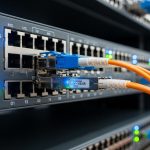
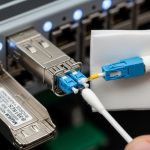
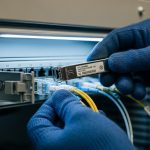
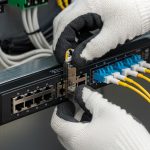
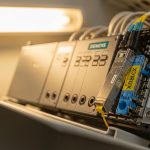
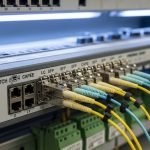
Road and tunnel monitoring systems live in the real world: vibration, condensation, temperature swings, and long cable runs that do not forgive “close enough.” This article helps network and field engineers choose the right tunnel fiber SFP for camera, radar, and environmental sensor backhaul. You will get practical spec comparisons, procurement and lead-time considerations, and troubleshooting patterns seen during deployments.
Why tunnel and road monitoring needs a different SFP mindset
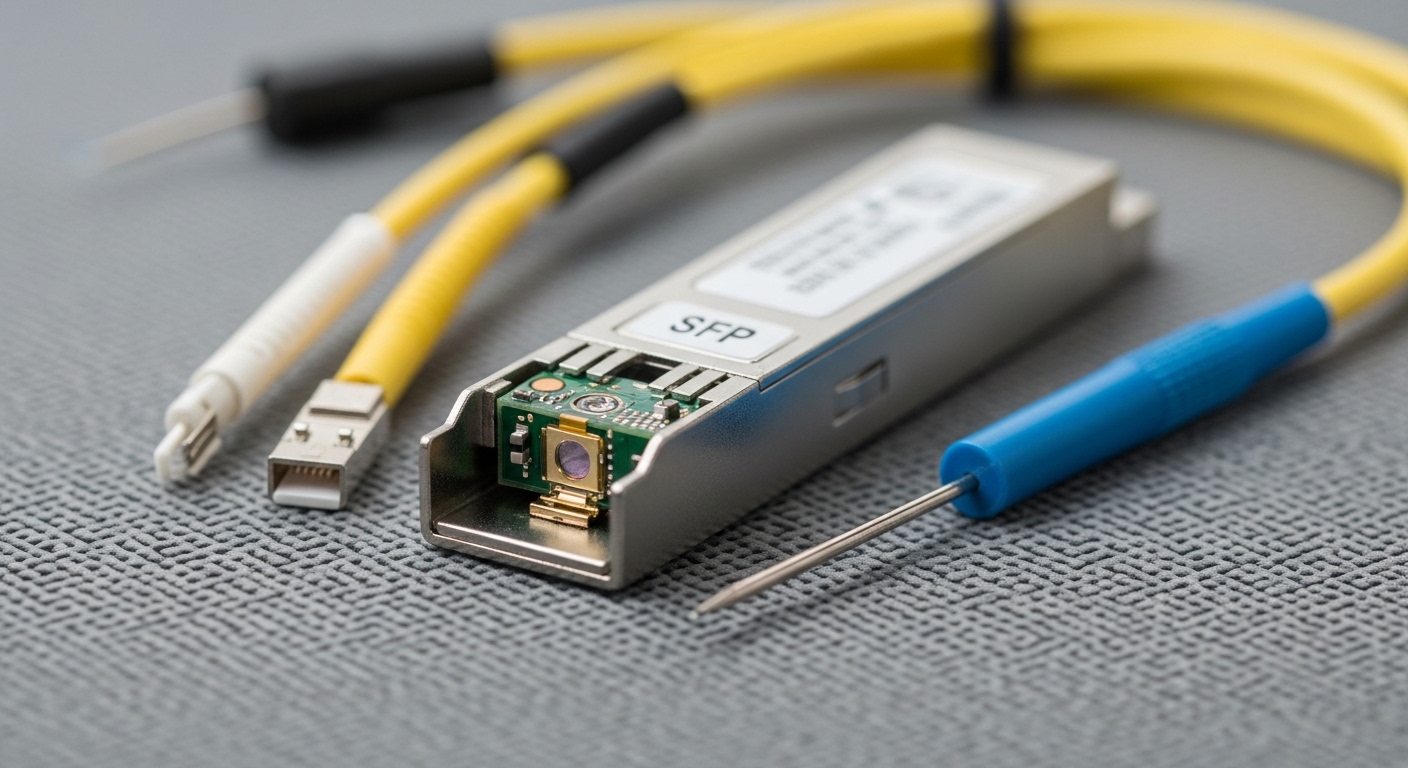
In a typical data center, an SFP just needs to talk and stay cool. In tunnels and along highways, the link must survive condensation cycles, temperature gradients, and EMI from power equipment. Many monitoring deployments also require predictable behavior during maintenance windows, meaning you care about link stability, DOM (Digital Optical Monitoring) accuracy, and alarm thresholds.
Most road monitoring architectures use an edge switch or ruggedized media converter in a cabinet, then fiber uplinks toward an aggregation site. The tunnel fiber SFP selection usually maps to IEEE 802.3 Ethernet PHY requirements (10/100/1G/2.5G/10G class depending on design) and the physical layer type: single-mode for longer spans, multimode for shorter runs. Procurement-wise, you also need to align with the vendor’s transceiver acceptance policy to avoid “it worked on bench, not in cabinet” disasters.
Key specifications that actually decide link success
When you are buying tunnel fiber SFPs, you are really buying a set of constraints: wavelength, reach, optical power budget, connector type, and operating temperature. Below is a practical comparison you can use when matching your cabling plan to the switch or media converter in the roadside cabinet.
| Spec | 10G SR (MMF) | 10G LR (SMF) | 1G BX / BiDi (SMF) |
|---|---|---|---|
| Typical data rate | 10G Ethernet (IEEE 802.3ae) | 10G Ethernet (IEEE 802.3ae) | 1G Ethernet (IEEE 802.3z) |
| Wavelength | 850 nm | 1310 nm (common) | Typically 1310/1550 nm pair |
| Reach (typical) | 300 m to 400 m on OM3/OM4 | 10 km (often up to spec limits) | Up to 10 km depending on model |
| Fiber type | Multimode (OM3/OM4) | Single-mode (OS2) | Single-mode (OS2) |
| Connector | LC duplex (most common) | LC duplex (most common) | LC simplex or duplex depending on module |
| Operating temperature | Often 0 to 70 C (check industrial grade) | Often -40 to 85 C for industrial options | Often -40 to 85 C for industrial options |
| Power budget / optical budget | Limited by MMF attenuation and launch conditions | More forgiving for longer spans | Depends on TX/RX power pair; watch safety margins |
| DOM support | Usually available; verify thresholds | Usually available; verify thresholds | Usually available; verify wavelength pairing |
For authority, the underlying Ethernet PHY behavior is standardized under IEEE 802.3, while transceiver management details are governed by SFP Multi-Source Agreement practices. For optical and electrical expectations, consult [Source: IEEE 802.3] and [Source: SFF-8431/SFF-8432 via SFP documentation practices].
Pro Tip: In tunnel cabinets, the “it links up” test is not enough. Require DOM telemetry validation (laser bias current, received power, and temperature) during the warmest and coldest times of day. Many marginal links look fine at room temperature but fail when condensation changes connector micro-loss.
anchor-text: IEEE 802.3 standard anchor-text: SFF-8431 DOM-related guidance
Procurement playbook: matching tunnel fiber SFP to your system
Before you request quotes, confirm your monitoring topology: edge switch model, uplink speed, expected reach, and whether you have spare fiber strands for redundancy. Tunnel and road projects often include planned redundancy like dual uplinks or ring topologies, which changes how you budget optics and spares.
Decision checklist engineers actually use
- Distance and fiber type: measure end-to-end fiber length and include patch cords, splitters, and splice loss.
- Switch compatibility: check the exact switch or media converter transceiver compatibility list. Some vendors are picky about SFP vendor IDs.
- DOM and alarm behavior: verify that DOM is readable and that your NMS thresholds match the expected received power range.
- Operating temperature: select industrial-grade optics rated for the cabinet environment (for many tunnel sites, aim for -40 to 85 C if the spec is truly needed).
- Optical power margin: confirm TX power and RX sensitivity meet your measured budget with a safety factor for aging.
- Connector and cleaning strategy: plan for LC cleanliness and include a cleaning workflow in the installation SOP.
- Vendor lock-in risk: evaluate OEM vs third-party based on your maintenance and replacement timeline. Keep at least one alternate-qualified vendor ready.
- Lead time and supply chain risk: tunnel projects schedule around lane closures; you cannot wait three months for a transceiver that could be stocked.
Example matching for a typical monitoring segment
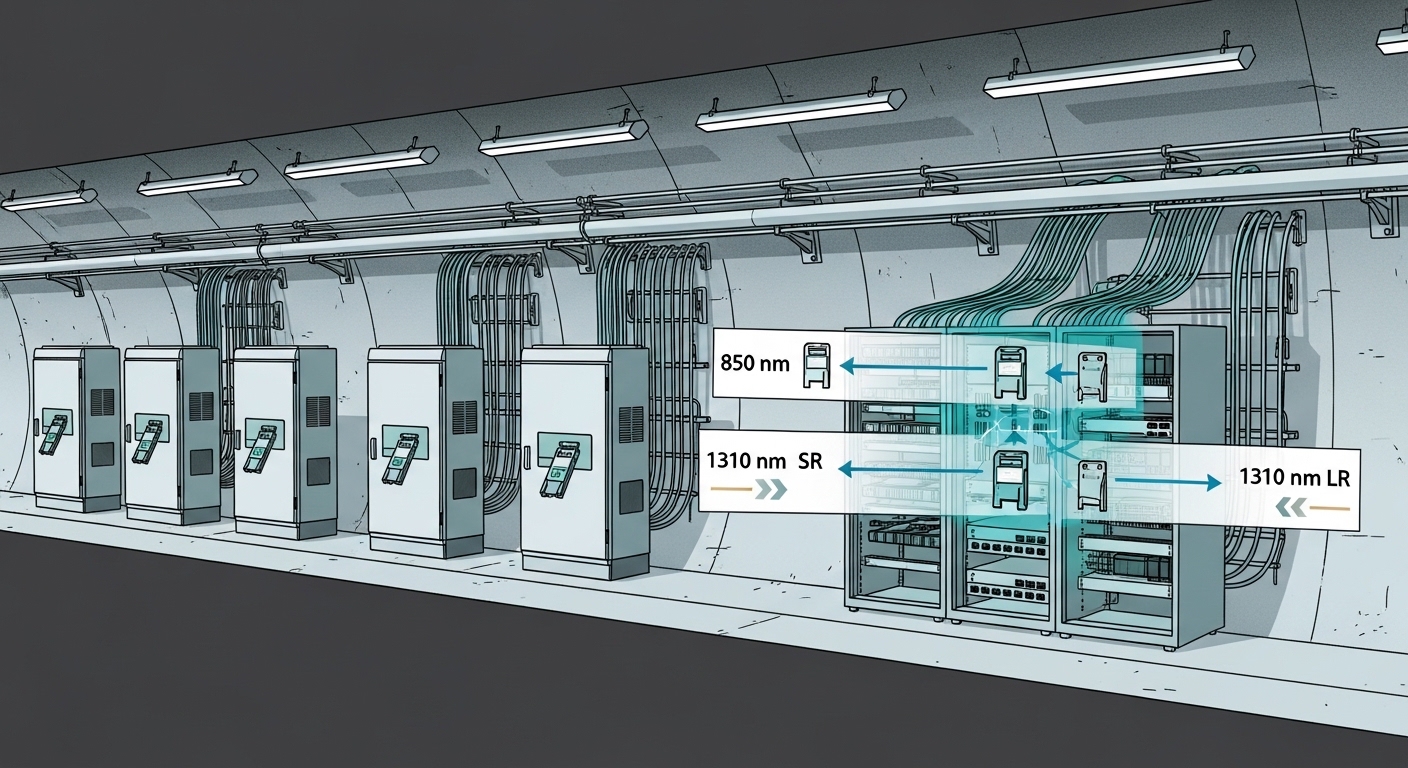
Suppose your road monitoring cabinet aggregates 8 cameras plus a speed/radar feed, using a rugged edge switch with 10G uplinks to the nearest fiber shelter. If the uplink distance is 2.5 km on OS2 single-mode, you typically choose a 10G LR style transceiver at 1310 nm. If you have only multimode and the run is under 300 to 400 m, 10G SR at 850 nm can be viable, but you must confirm OM3/OM4 quality and launch conditions.
Common pitfalls and troubleshooting in the field
Tunnel fiber SFP issues are rarely mysterious. They are usually repeatable failure modes with predictable root causes. Here are the ones that show up during commissioning and later during seasonal temperature swings.
Wrong fiber type or budget mismatch
Root cause: SR optics (850 nm) installed on a link that is effectively too long or has higher-than-expected MMF attenuation and patch loss. Sometimes OM3/OM4 labeling is optimistic, or connectors were re-terminated without measuring.
Solution: Recalculate the optical budget using measured splice/patch loss, then confirm that the received power stays within the module’s DOM-reported safe range across temperature. If you need margin, move to SMF LR optics.
DOM alarms due to threshold mismatch
Root cause: The transceiver reports DOM values, but the monitoring system uses thresholds tuned for OEM optics. Third-party modules can report slightly different scaling or calibration offsets, triggering “low RX power” alarms even when traffic is fine.
Solution: During acceptance testing, capture DOM readings at stable conditions and update thresholds in the NMS. Validate that alarms correlate with actual link errors (CRC, FEC counters where applicable).
Connector contamination and micro-loss
Root cause: Field handling in tunnel environments is messy. Fingerprints, dust, or micro-scratches on LC connectors can add loss that only shows up under certain alignment or temperature changes.
Solution: Enforce a cleaning workflow: inspect with a fiber scope, clean using approved lint-free methods, then re-seat and test. If the link still degrades, replace the patch cord and re-check.
SFP compatibility friction with specific switch models
Root cause: Some switches enforce vendor ID or require specific optical characteristics that not all “compatible” modules satisfy.
Solution: Use the vendor compatibility list as your procurement gate. If you must use third-party, buy from a distributor that provides batch traceability and run a short pilot before scaling.
Cost, lead time, and ROI: what procurement should ask
Typical tunnel fiber SFP pricing varies by data rate, reach, and temperature grade. For budget planning, 10G SR 850 nm modules often land in a mid-range per-unit cost, while 10G LR 1310 nm industrial-grade modules are usually higher. OEM modules from the original switch vendor can cost more but may reduce commissioning time due to compatibility certainty.
Realistic market ranges (ballpark) often look like: third-party 10G SR modules priced lower than OEM, and 10G LR modules priced higher due to single-mode optics and tighter optical requirements. ROI is not just unit price: it is also spares strategy, reduced downtime, and fewer truck rolls. A single failed link during a monitoring outage can cost far more than the transceiver premium, especially when access requires lane closure coordination.
Lead time matters because transceivers are frequently constrained by global supply chains for optical components. For tunnel fiber SFP procurement, request availability with a minimum shelf-life and batch traceability. If your program has multiple sites, consolidate orders to reduce per-line shipping delays and ensure consistent optical calibration across spares.

FAQ about tunnel fiber SFP for monitoring systems
What data rate should I standardize for road monitoring backhaul?
Many deployments standardize on 10G uplinks because camera counts and analytics traffic grow quickly. However, if your aggregation is smaller and distances are short, 1G or 2.5G can be adequate. The key is aligning with your edge switch PHY and your expected growth in sensor throughput.
Can I use a tunnel fiber SFP with any switch?
Not always. Even if the module is electrically compatible, some switches enforce transceiver acceptance rules or expect specific DOM behaviors. Always verify compatibility for the exact switch/media converter model before ordering.
Do I need DOM support for tunnel monitoring?
DOM is strongly recommended because it enables proactive maintenance. You can monitor received power and laser bias drift, then schedule cleaning or replacement before errors spike. Without DOM, troubleshooting becomes reactive and more time-consuming.
Is 850 nm (SR) ever appropriate for tunnels?
Yes, if your multimode fiber run length and budget are within spec and you control connector quality. For longer distances or uncertain fiber conditions, 1310 nm LR on single-mode is typically safer. The decision should be based on measured optical budget, not cable nameplate promises.
What is the fastest way to reduce commissioning failures?
Use a repeatable acceptance test: verify link up, then validate DOM readings, then run a traffic test long enough to observe stability. Also enforce a cleaning and inspection step before final patching. Most “mystery failures” become straightforward contamination or budget issues.
Should I buy OEM or third-party tunnel fiber SFP modules?
OEM modules can reduce compatibility friction and simplify documentation for audits. Third-party modules can be cost-effective, but you must manage risk through batch traceability, pilot testing, and clear warranty terms. Many teams use a hybrid approach: OEM for first deployment, third-party for scaled spares after validation.
If you want fewer surprises, treat tunnel fiber SFP selection like a mini project: confirm PHY needs, compute optical budget with margin, validate DOM, and stock spares before the site schedule locks. Next step: review fiber transceiver compatibility and DOM monitoring to tighten your procurement and commissioning workflow.
Author bio: I have deployed and troubleshot fiber transceiver links in roadside and tunnel monitoring cabinets, including DOM-based alarm tuning and optical budget validation under harsh temperature cycling. I write procurement-focused guidance for teams that need reliable lead times, measurable specs, and realistic supply chain risk controls.