Transport SDN fiber automation: optical transceivers that self-fit T-SDN
If your T-SDN transport network keeps getting stuck on “mismatched optics” or manual patch-checks, you are losing minutes every time you turn up a new circuit. This article shows a field-ready workflow to standardize transport SDN fiber optics so the system can automate provisioning safely. It is written for network engineers and field technicians rolling out 10G to 100G links with vendor transceivers, DOM data, and predictable link budgets.
Prerequisites: what you need before you automate transport SDN fiber
Before you touch transceivers, align your physical layer facts with what your T-SDN controller expects. In practice, most automation failures come from undocumented optics capabilities, inconsistent fiber types, or switch firmware that does not interpret DOM fields the way you think. Treat this as a checklist you complete once per site and per switch family.
Gather the baseline inventory
- List your switch models and transceiver cages per platform (for example: Cisco Nexus 9K, Arista 7280R, Juniper QFX, or vendor-specific line cards).
- Record transceiver part numbers currently in use, including vendor and speed class (example: Cisco SFP-10G-SR, Finisar FTLX8571D3BCL, or FS.com SFP-10GSR-85).
- Confirm the fiber plant: OM3 vs OM4, OS2 single-mode, connector type (LC is typical), and patch panel labeling conventions.
- Decide your control-plane mapping rules: how the controller identifies transceivers (DOM fields, vendor OUI, supported diagnostics).
Expected outcome: You can predict which optics should work on which ports and which DOM signals your automation logic will read.
Validate power, thermal, and optical safety constraints
Transceiver automation is not only about “it links up.” It is also about staying within the electrical and optical limits for your hardware and fiber. Check your switch datasheet for supported transceiver types, maximum optical power, and any restrictions on third-party optics. Also review vendor guidance for operating temperature range; a cold aisle can push optics into borderline thermal conditions.
Expected outcome: You avoid automation that repeatedly inserts optics that your platform will administratively reject or that will degrade early.
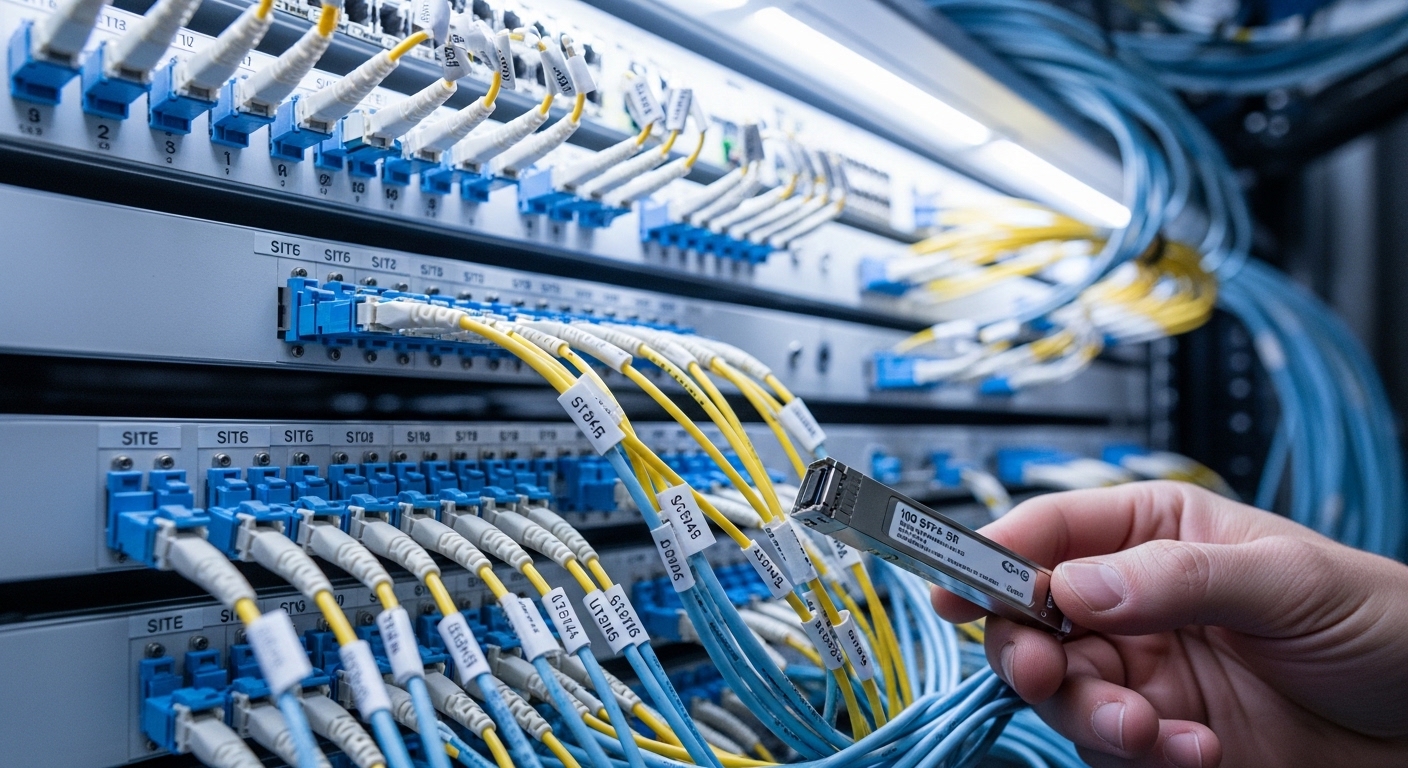
Step-by-step implementation: make transport SDN fiber optics self-fitting
This is the workflow I use when a transport SDN program starts treating optics as managed objects. The goal is simple: when a circuit is provisioned, the system selects and validates an optic profile that matches distance, wavelength, connector type, and DOM diagnostics. You will implement it in layers: policy, inventory, validation, and operational feedback.
Define an optics policy model for each link class
- Create link classes tied to distance and fiber type: for example, “10G-OM4-300m” and “100G-OS2-10km.”
- For each class, define required transceiver parameters: data rate, wavelength (850 nm vs 1310 nm vs 1550 nm), and connector (LC).
- Set acceptance criteria for DOM: presence of temperature, TX bias current, RX power, and alarm thresholds.
- Include a “compatibility gate” for switch platform constraints so automation never attempts an unsupported module.
Expected outcome: Your controller has deterministic rules to map a requested circuit to an optic profile without guesswork.
Standardize module families and document DOM expectations
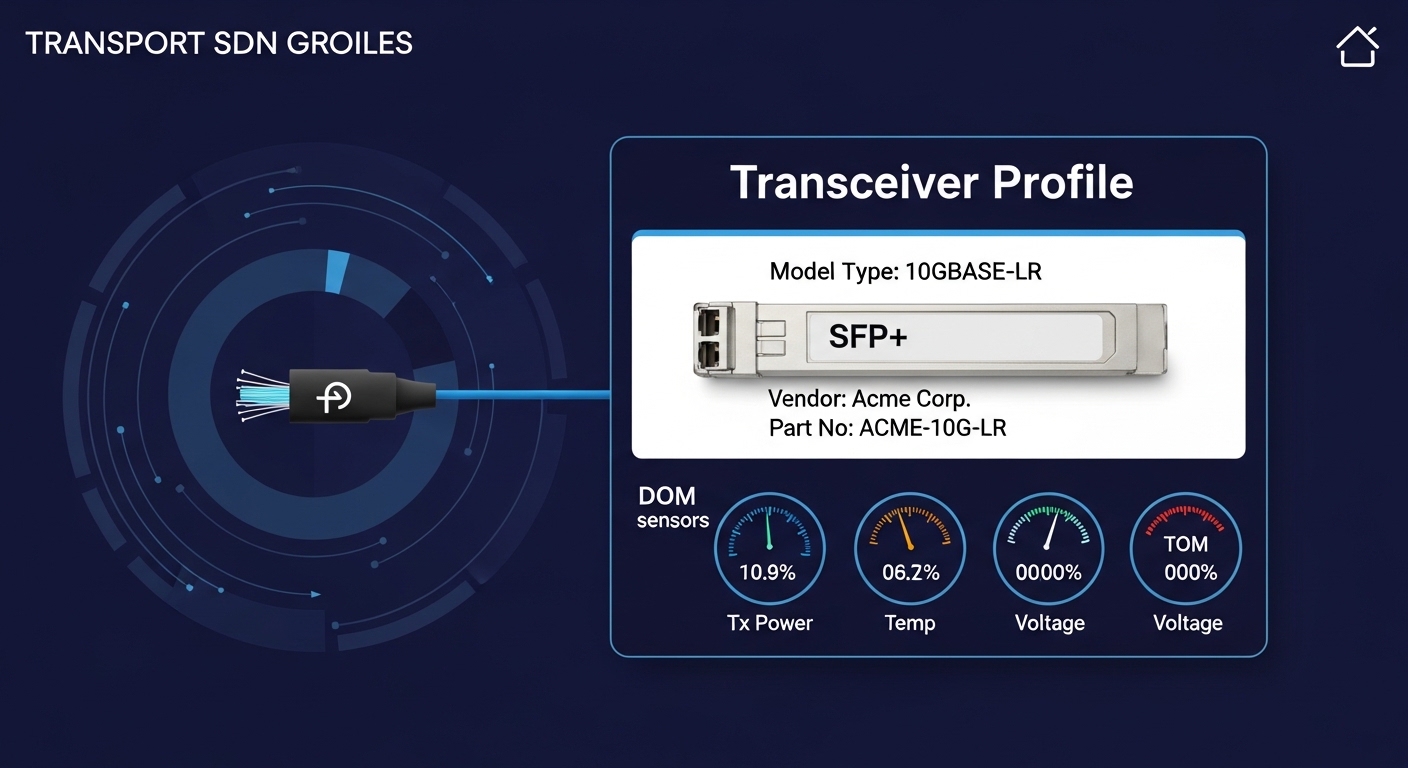
DOM is where automation becomes reliable or fragile. Different vendors can expose diagnostics with different scaling, calibration offsets, and alarm behavior. In a T-SDN environment, the controller should read DOM and compare it to your pre-defined thresholds, not just check “DOM present.”
Practical examples: for 10G SR optics at 850 nm, you will typically validate RX optical power in dBm and confirm the module reports temperature within expected range. For 100G LR4 or ER4 optics, you will also validate per-lane diagnostics if the platform supports lane-level readings.
Expected outcome: Automation can confirm that the inserted optics are the right class, not merely that the link comes up.
Implement a “preflight” validation stage before circuit activation
- When a request arrives, compute the link budget from distance and fiber type (include worst-case connector loss and patch panel attenuation).
- Select candidate transceiver SKUs for the target port type and speed (example optics: FS.com SFP-10GSR-85 for OM4 short reach; Finisar FTLX8571D3BCL for SR 10G).
- Require DOM fields to match your policy: presence, diagnostics availability, and supported threshold ranges.
- If DOM is missing or fields are inconsistent, block activation and raise an actionable ticket.
Expected outcome: The circuit fails fast with a clear reason instead of flapping in the field.
Tie provisioning to operational feedback and alarms
Once the circuit is up, you still need a feedback loop. In transport SDN deployments, I recommend capturing DOM snapshots at activation, then periodically polling for drift: temperature rise, RX power trending downward, and alarm bit changes. Feed those signals back into your controller so it can proactively schedule maintenance or swap optics before outages.
Pro Tip: In real deployments, the most valuable automation signal is not “link up,” it is the trend of RX power and temperature right after activation. A module that is marginal on day one often shows a fast RX power decline within 24 to 72 hours, long before it triggers a hard alarm.
Expected outcome: Your automation improves over time and reduces repeat incidents caused by marginal optics or dirty connectors.
Optics selection criteria for transport SDN fiber links
Choosing optics is where teams either gain reliability or inherit hidden risk. For transport SDN fiber, engineers usually weigh distance and budget first, then compatibility and operational limits. The decision checklist below is the one I use during cutovers when time is tight and fiber labels are imperfect.
Decision checklist (ordered)
- Distance and fiber type: OM3 vs OM4 vs OS2, plus worst-case patch loss. If you are planning 300 m over OM4, keep margin for dirty connectors and additional patch cords.
- Data rate and wavelength: 10G SR at 850 nm is not interchangeable with 10G LR at 1310 nm.
- Switch compatibility: confirm the exact platform supports the transceiver type and form factor (SFP+, SFP28, QSFP28, QSFP56).
- DOM support and threshold behavior: require temperature, TX bias current, and RX power readings; verify how alarms are encoded.
- Operating temperature range: ensure it covers your room and aisle conditions; check vendor specified range (often -5 C to 70 C for many modules, but verify).
- Vendor lock-in risk: decide whether you will accept third-party modules, and whether your controller logic can tolerate DOM differences.
- Maintenance workflow: confirm spares availability and whether you can swap modules without re-certifying circuits.
Expected outcome: You select optics that will pass both the controller policy gate and the physical-layer reality.
Reference specifications table (common transport SDN fiber profiles)
Use this as a quick starting point. Always verify exact reach and power budgets in the vendor datasheets for your chosen module and switch line card.
| Transceiver example | Data rate | Wavelength | Typical reach | Connector | Form factor | DOM diagnostics | Operating temperature |
|---|---|---|---|---|---|---|---|
| Cisco SFP-10G-SR | 10G | 850 nm | ~300 m on OM3/OM4 (varies by spec) | LC | SFP+ | Supported | Check datasheet for module spec |
| Finisar FTLX8571D3BCL | 10G | 850 nm | ~300 m on OM4 (varies by spec) | LC | SFP+ | Supported | Check datasheet for module spec |
| FS.com SFP-10GSR-85 | 10G | 850 nm | ~300 m on OM4 (varies by spec) | LC | SFP+ | Supported (verify) | Check datasheet for module spec |
Expected outcome: You match optics profiles to link classes and avoid mixing SR with LR or OM3 with OS2.
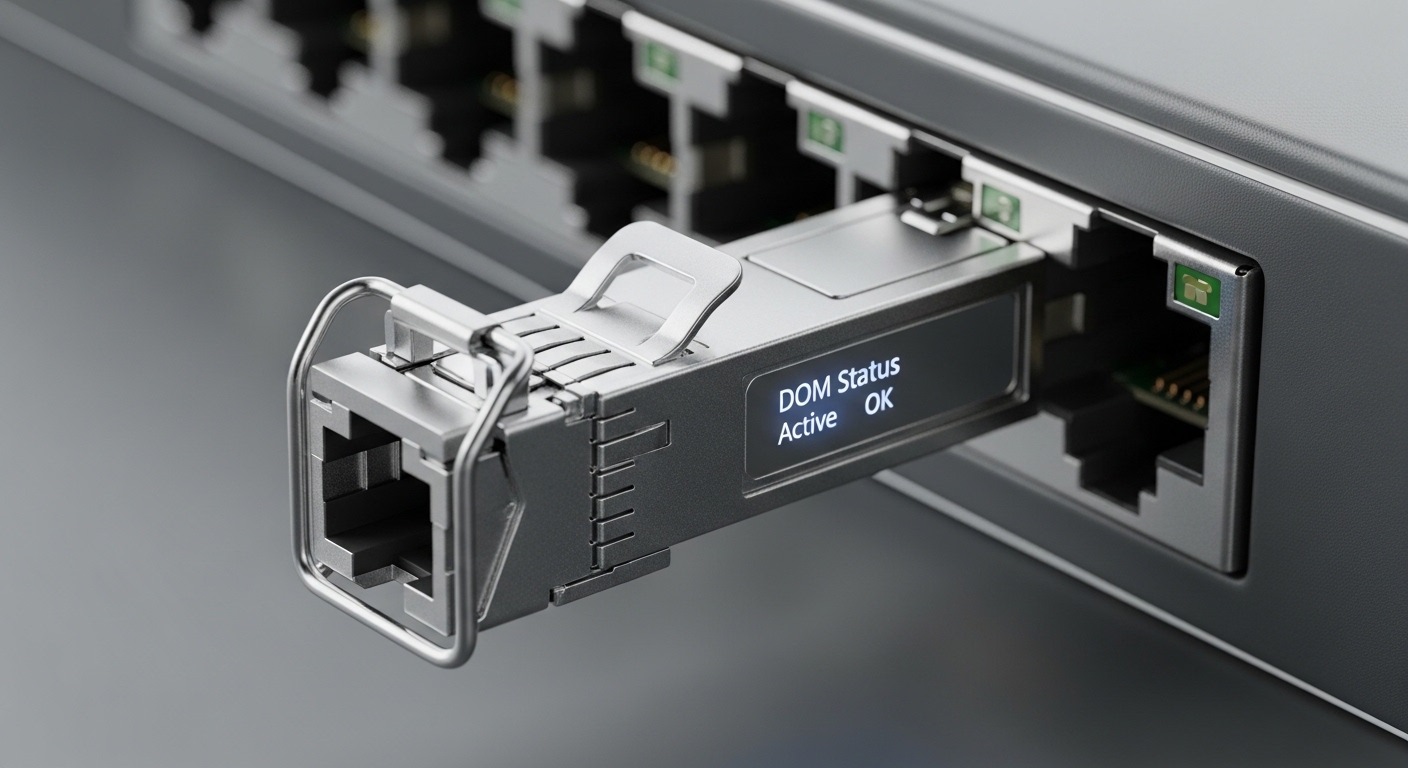
Real-world transport SDN fiber scenario: automating ToR-to-spine optics
In a 3-tier data center leaf-spine topology with 48-port 10G ToR switches and dual 10G uplinks to a spine, we automated provisioning for 10G SR links over OM4. The environment had 12 racks per row and patch panels organized by row code; each ToR uplink used LC duplex with an average patch loss of about 1.5 dB including connectors and patch cords. The T-SDN controller requested circuits in bulk during maintenance windows, and the automation selected optics based on distance class and switch model.
We reduced manual optics checks by enforcing a preflight stage: if DOM did not report RX power and temperature readings, the controller blocked activation and flagged the specific port. After go-live, we monitored DOM trends for the first week; the most common root cause of failures was not “wrong optics,” but dirty connector contamination that caused RX power to sag by several tenths of a dB within 24 hours. After adding a standardized cleaning step and adjusting acceptance thresholds, the circuit completion rate improved materially.
Expected outcome: Faster provisioning with fewer “link up but unstable” incidents and clearer fault isolation.
Common mistakes and troubleshooting for transport SDN fiber automation
Even with good policies, field reality introduces failure modes. Below are the top issues I see when teams connect T-SDN orchestration to real optics, along with root causes and fixes.
Link never comes up after automation inserts the module
Root cause: The switch platform does not support the specific optics SKU or it requires a supported revision of firmware for compatibility checks. Some platforms also enforce vendor or DOM behavior constraints.
Solution: Verify the exact transceiver part number is on the switch vendor compatibility list, then update switch firmware to the recommended release. If you use third-party optics, validate DOM fields and alarm encodings match what your controller expects.
Link flaps or comes up intermittently
Root cause: Dirty connectors, poor patch panel seating, or marginal optical power. Automation may have selected the right class but not the right fiber path or patch cord cleanliness.
Solution: Reseat the LC connectors, inspect with a fiber microscope, and clean using the correct method and consumables. Then compare DOM RX power at activation versus a known-good reference; if RX power is drifting quickly, treat it as a contamination or fiber damage issue.
Controller blocks activation due to missing or inconsistent DOM data
Root cause: DOM is present but your automation logic expects fields that are absent or scaled differently by a specific optics vendor. Some modules report diagnostics but omit certain threshold registers.
Solution: Update your DOM parsing rules for that module family, or restrict automation to optics families where DOM field mapping is verified. Confirm against vendor datasheets and test in a staging rack before deploying to production.
Unexpected temperature-related alarms during activation
Root cause: Modules operating outside the intended thermal profile due to airflow changes or blocked vents, especially in dense racks.
Solution: Verify airflow paths, ensure fan trays are matched to the thermal plan, and check module temperature readings right after activation. If temperature spikes persist, adjust rack airflow or relocate the transceiver to a more stable zone.
FAQ: transport SDN fiber automation with optical transceivers
Q1: What does transport SDN fiber automation actually control?
It typically controls which optic profile is allowed per port and time of activation, plus validation using DOM diagnostics. In a T-SDN design, the controller may also manage alarm thresholds and polling cadence to detect drift before outages. The safest automation includes a preflight validation stage before enabling the circuit.
Q2: Can I use third-party transceivers with T-SDN transport SDN?
Often yes, but compatibility is not guaranteed. You must verify switch support and test DOM field mapping because automation logic may rely on specific diagnostics and scaling. If vendor lock-in is a concern, run a staging pilot with the exact module families you plan to deploy.
Q3: How do I choose between SR and LR optics for a given span?
Use fiber type and measured distance first. For OM3/OM4 short-reach, 850 nm SR is common; for longer single-mode spans, 1310 nm LR or 1550 nm variants are typical depending on rate and budget. Always include connector and patch cord loss in your link budget, not just the fiber length.
Q4: What DOM signals matter most for troubleshooting?
RX optical power, module temperature, and TX bias current are the most actionable early indicators. For higher-speed optics, per-lane diagnostics may be essential if your platform exposes them. Capture baseline readings at activation so you can spot drift quickly.
Q5: Why does automation sometimes block even when the link shows “up”?
Because “link up” only confirms electrical layer negotiation. Your controller may be enforcing stricter policy based on DOM completeness, threshold registers, or expected module identity fields. Treat the block reason as a feature: it prevents silent misconfiguration from becoming an outage.
Q6: Where should I start if I am new to T-SDN optical automation?
Start with one link class, one switch model family, and optics you already know are compatible. Implement the policy model, preflight validation, and DOM trend monitoring in a staging environment before scaling out. Measure circuit completion rate and time-to-repair, then expand to additional module families.
Sources: IEEE 802.3 Ethernet physical layer concepts are foundational for optical transceiver behavior; vendor transceiver datasheets define reach, power, and DOM diagnostics. For practical switch and optics compatibility guidance, reference your switch vendor hardware documentation and transceiver datasheets. IEEE 802.3 standard NASA (general reference for optical safety awareness)|Optical safety background [Source: IEEE 802.3] [Source: Vendor transceiver datasheets]
Transport SDN fiber automation works best when you treat optics as managed, validated components rather than “plug and pray” hardware. If you want the next step, review your controller’s provisioning workflow and align it to fiber documentation and DOM parsing rules using transport SDN orchestration playbooks.
Author bio: I have spent years deploying and troubleshooting optical transceivers in high-density data centers, where automation succeeds only when DOM and link budgets are treated as first-class inputs. I write field workflows that translate vendor specs into repeatable cutovers and measurable reliability improvements.