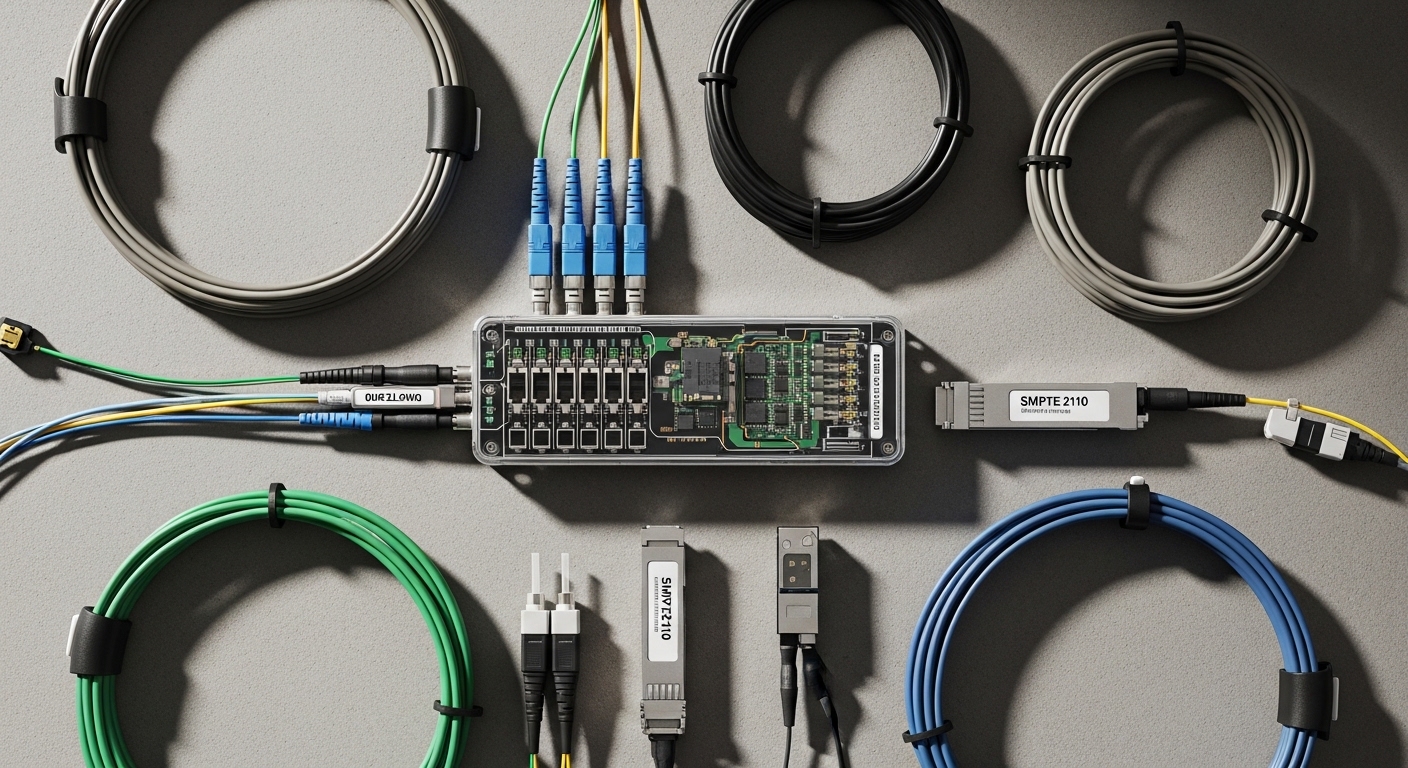
Live event production networks live or die on timing. When SMPTE 2110 video and audio flows over IP, your live event fiber module selection directly impacts link stability, switch compatibility, and real-time latency. This article helps broadcast engineers, IT directors, and field tech leads choose the right SFP fiber transceiver for SMPTE 2110 over optical Ethernet, with practical deployment details, measurable constraints, and governance-friendly selection criteria.
Why SMPTE 2110 makes fiber transceivers an IT governance issue
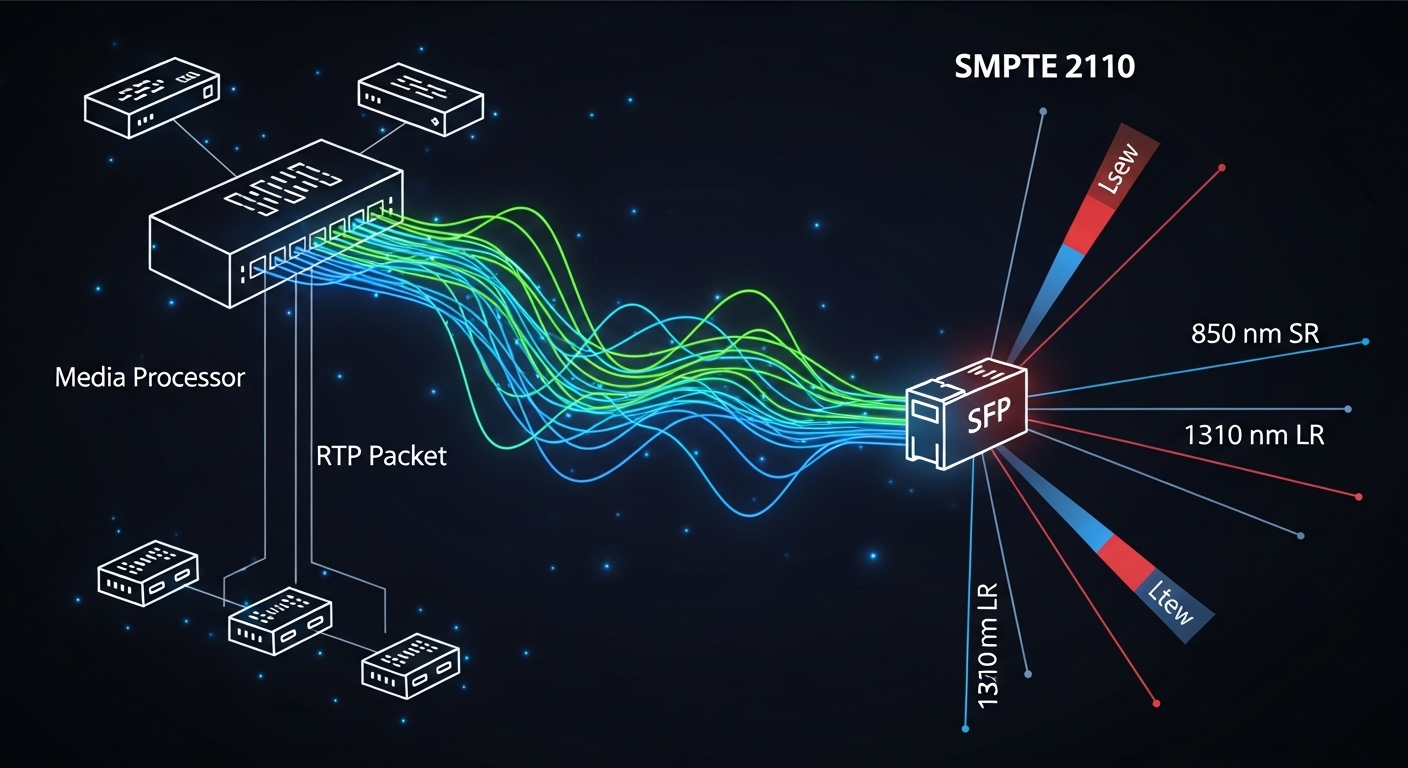
SMPTE 2110 carries media streams as RTP over IP, typically using 10GBASE-R or 25GBASE-R Ethernet depending on the design. Even when your switching fabric and PTP clocking are perfect, an underperforming optical link can cause retransmits, jitter, or packet loss that shows up as visible artifacts. From an enterprise architecture lens, transceivers are not “just optics”: they are tightly coupled to switch vendor optics policies, DOM monitoring, optics temperature class, and lab-approved firmware interoperability.
In real venues, we have seen teams lose a whole rehearsal window because a field replacement SFP lacked expected DOM behavior and triggered port flaps under a particular switch software release. Governance matters because it turns optics selection into a repeatable standard: approved part numbers, validated power budgets, and deterministic operational thresholds.
For authority on timing and Ethernet media transport behavior, reference SMPTE 2110 documents and IEEE Ethernet standards. For physical layer behavior of fiber links, IEEE 802.3 governs optical Ethernet PHY operation, including 10GBASE-SR/LR and related coding and electrical interfaces. [Source: IEEE 802.3] IEEE 802.3 standard portal
Core SFP fiber types for 2110: SR, LR, and the reach reality
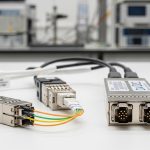
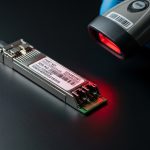
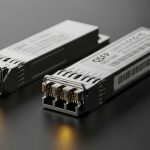
Most SMPTE 2110 deployments start with short-reach optics inside venues: stage to truck, control rooms to distribution, and patch panels to leaf switches. That is where 10GBASE-SR (short reach) and 10GBASE-LR (long reach) SFP modules dominate, because they map cleanly to OM3 or OM4 multimode fiber and to single-mode links when distance grows.
When you plan a live event fiber module strategy, validate the entire link budget: fiber type, connector losses, patch cord attenuation, and any splices. For multimode, the “headline reach” assumes a specific fiber grade and launch conditions; in the field, dust and patching practices are the real reach killers.
| Parameter | 10GBASE-SR (Typical for SMPTE 2110 short links) | 10GBASE-LR (Typical for longer venue runs) | What to verify in the datasheet |
|---|---|---|---|
| Wavelength | 850 nm | 1310 nm | Center wavelength tolerance and optical power |
| Nominal data rate | 10.3125 Gbps (10G Ethernet PHY) | 10.3125 Gbps | Matches your switch port speed and coding |
| Fiber type | OM3 or OM4 multimode | Single-mode (OS2) | Confirm fiber grade and core size |
| Typical reach | 300 m on OM3 / 400 m on OM4 | 10 km class | Use vendor reach specs, not marketing guesses |
| Connector | LC (common) | LC (common) | Connector type must match patch panels |
| Operating temperature | Commercial or industrial depending on module | Commercial or industrial depending on module | Confirm if your venue ambient exceeds spec |
| DOM support | Often supported (I2C with alarms) | Often supported (I2C with alarms) | Switch must read DOM reliably |
| Common example part numbers | Cisco SFP-10G-SR, Finisar FTLX8571D3BCL, FS.com SFP-10GSR-85 | Cisco SFP-10G-LR, Finisar FTLX1471D3BCL, FS.com SFP-10GLR-xx | Validate exact speed and optic class |
In practice, I treat SR as the default for “inside the truck or within the venue footprint” and LR when the run includes long trench pulls or fixed infrastructure. If you are unsure, run a conservative attenuation estimate and add margin for connector cleaning and patch changes.
Decision checklist: selecting a live event fiber module that passes rehearsal
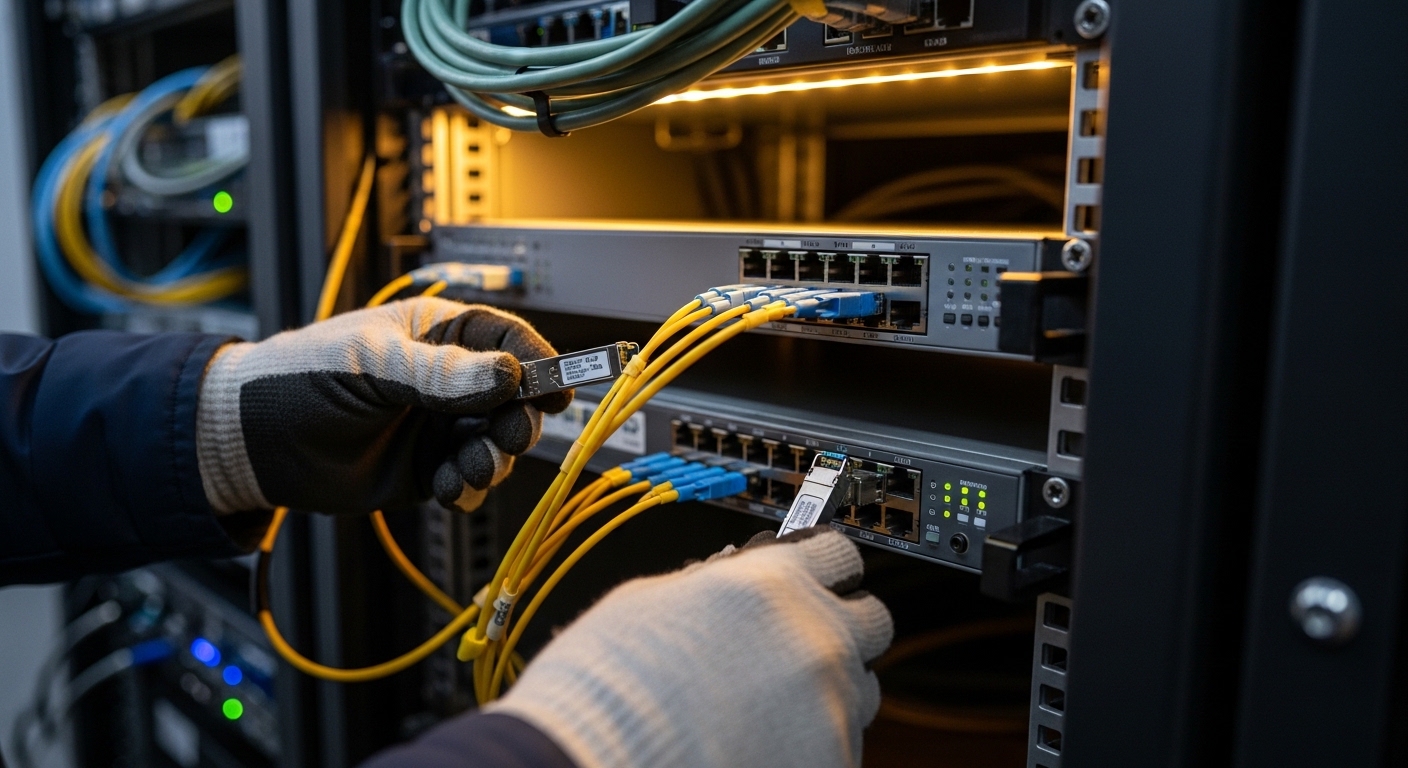
Engineers should evaluate optics using a repeatable checklist, not intuition. Below is the same order I use when approving parts for a live event network, because it reduces last-minute failures and vendor surprises.
- Distance and fiber type: measure planned run length and confirm OM3 vs OM4 vs OS2. Include patch cords and any slack loops.
- Switch compatibility: verify the exact switch model and software version supports the transceiver type. Some platforms enforce optics validation.
- DOM behavior: confirm whether the switch reads DOM fields (Tx power, Rx power, temperature) and whether it triggers alarms correctly.
- Operating temperature: industrial-rated optics are worth it when racks sit in sun-exposed areas or next to power amplifiers.
- Transceiver power budget: validate Tx launch power and receiver sensitivity. Don’t ignore connector loss and patch panel cleanliness.
- Vendor lock-in risk: OEM-only policies can raise cost; third-party can reduce BOM but must be validated in your lab.
- Failure mode handling: confirm you can hot-swap without destabilizing upstream PTP and multicast flows.
Pro Tip: In live venues, the most common “mystery link” is not a bad module; it is a marginal fiber cleaning workflow. If you see intermittent link flaps only after the first hour, inspect LC ferrules with a microscope and enforce a cleaning cadence before you blame optics.
Real-world deployment scenario: SMPTE 2110 over 10G optical links
Consider a 3-tier venue design for a mid-size concert: 2 stage distribution switches connect to 1 spine aggregation switch in the control area. Each stage switch provides 48 ports to stage boxes and 4 uplinks at 10G. The uplinks use a live event fiber module strategy: 10GBASE-SR SFPs over OM4 multimode for runs of 120 to 220 m including patch cords, and 10GBASE-LR SFPs for two longer fixed runs of 2.5 to 6 km between buildings.
Engineers also run PTP for SMPTE timing alignment and rely on multicast replication for video flows. During rehearsal, we monitor DOM thresholds on the switch and confirm Rx power stays within the vendor-recommended range; we also validate that the port admin state remains stable during module swaps. This approach reduced rehearsal-impacting optical incidents because the team pre-approved the exact SFP model numbers and fiber harnesses for each run.
Common mistakes and troubleshooting for SFP link instability
Optical problems often look like “network issues,” but the root cause is frequently physical. Here are concrete failure modes I have seen during live installs and how to resolve them.
Link up/down loops after hot swap
Root cause: Port optics validation or DOM mismatch on the switch; some platforms reject certain third-party modules or misinterpret DOM values. Solution: test the exact part number on the same switch model and software version. If needed, standardize on OEM optics for the critical uplinks and keep third-party spares only for non-critical access ports.
SMPTE stream artifacts only on specific channels
Root cause: Marginal optical power due to connector contamination or a slightly exceeded budget on one branch. The rest of the network seems fine, masking the issue. Solution: clean LC connectors, re-seat patch cords, then verify Rx power and error counters. If errors correlate with temperature swings, consider industrial-rated optics.
Works in the lab, fails during showtime
Root cause: Ambient conditions exceed the commercial operating temperature range, or modules experience vibration and imperfect seating in transport cases. Solution: choose modules with appropriate temperature class and use shock-resistant labeling and protective covers. Add a pre-show optics check procedure that reads DOM and confirms stable link negotiation.
Wrong fiber type assumption (OM3 vs OM4 vs OS2)
Root cause: Patch panels get re-used across events; a cable harness that is OM3 in one rack becomes OM4 in another, or a “single-mode” label hides a multimode run. Solution: document fiber IDs, test with a fiber identifier tool, and keep a mapping worksheet that ties fiber IDs to transceiver types.
Cost and ROI: OEM vs third-party live event fiber modules
Budget pressure is real, especially when you need spares for every uplink and every stage box. OEM SFP modules commonly cost more, but they reduce compatibility risk and speed up incident resolution. Third-party options can cut unit cost substantially, yet they require a validation cycle to prevent switch optics rejection.
In typical market conditions, a 10GBASE-SR SFP might land in a range roughly spanning $100 to $300 for OEM channels and $40 to $150 for validated third-party, depending on brand, temperature class, and DOM support. Over a season, ROI comes from fewer show-stopping incidents, reduced troubleshooting time, and lower failure rates when optics are matched to the right fiber and environment. Total cost of ownership should include cleaning supplies, microscopes, spare inventory strategy, and the engineering hours spent on lab validation.
FAQ
What wavelength should my live event fiber module use for SMPTE 2110?
For short indoor venue runs on multimode, 850 nm SR is common. For longer runs or where you use single-mode infrastructure, 1310 nm LR is typical. Always confirm your fiber plant type (OM3, OM4, or OS2) and validate reach with your vendor datasheet.
Do I need DOM support for SMPTE 2110 optics?
DOM is not strictly required for link operation, but it is highly valuable operationally. DOM lets you track Tx power, Rx power, and temperature so you can catch degradation before it becomes packet loss during a show. Ensure your switch firmware reads DOM consistently for the exact module model.
Will third-party SFPs work with my live event switch?
They can, but compatibility is not universal. Some switches enforce optics validation and may limit DOM interpretation or trigger port errors with certain vendors. The safe approach is to validate the exact part number on the exact switch model and software version in a staging lab.
How do I confirm my fiber budget is truly within spec?
Start with measured run length, then add estimated attenuation for connectors and patch cords. Compare that total to the transceiver vendor’s specified optical budget and receiver sensitivity. If you have any uncertainty, leave margin and clean connectors aggressively before show deployment.
What are the fastest troubleshooting steps when streams glitch?
Check switch port status and error counters first, then inspect DOM readings for Rx power and temperature. Next, clean and re-seat LC connectors, and test the link with a known-good spare module. Only after physical layer checks should you suspect timing or multicast configuration.
Should I standardize on SR or LR across the venue?
Standardizing can simplify inventory and reduce training complexity. However, SR and LR should be chosen based on actual distances and fiber type; forcing SR beyond budget is a reliable path to intermittent issues. A mixed approach is often best: SR for short runs, LR for longer fixed infrastructure.
If you want a dependable SMPTE 2110 optical layer, treat your live event fiber module like mission-critical infrastructure: validate compatibility, enforce cleaning discipline, and standardize part numbers for rehearsal. Next, review live media network governance to tighten change control, monitoring, and operational runbooks across your production season.
Author bio: IT and network operations leader with hands-on experience deploying SMPTE 2110 transport over switched Ethernet and monitored optical links in live venues. I focus on measurable reliability, optics compatibility testing, and enterprise governance that reduces show-impacting failures.