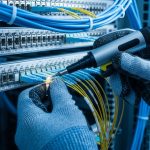
When an AI cluster grows, transceiver choice becomes a hidden bottleneck: wrong optics density, power draw, or reach can throttle training traffic. This guide helps network engineers and field technicians decide between SFP+ vs QSFP28 for high-speed frameworks, with concrete deployment checks, real failure modes, and selection criteria you can apply on-site.
Why AI fabrics stress transceivers differently than classic 10G
In leaf-spine and end-to-end RDMA designs, your transceivers see bursty, microsecond-scale traffic patterns rather than steady enterprise flows. For many deployments, the practical inflection point is moving from 10G SFP+ to 25G QSFP28 to increase bisection bandwidth without doubling link counts. The result is that optics budget, port density, and thermal design become as important as raw line rate.
In practice, AI frameworks (for example, distributed data parallel and pipeline parallel) can create synchronized all-to-all exchanges. That means link utilization can swing hard during validation and checkpoint phases, revealing marginal optics, oversubscription, or poor connector cleaning. Vendors often support multiple transceiver form factors, but the switch ASIC and optics compatibility matrix ultimately dictate what will pass link training reliably.
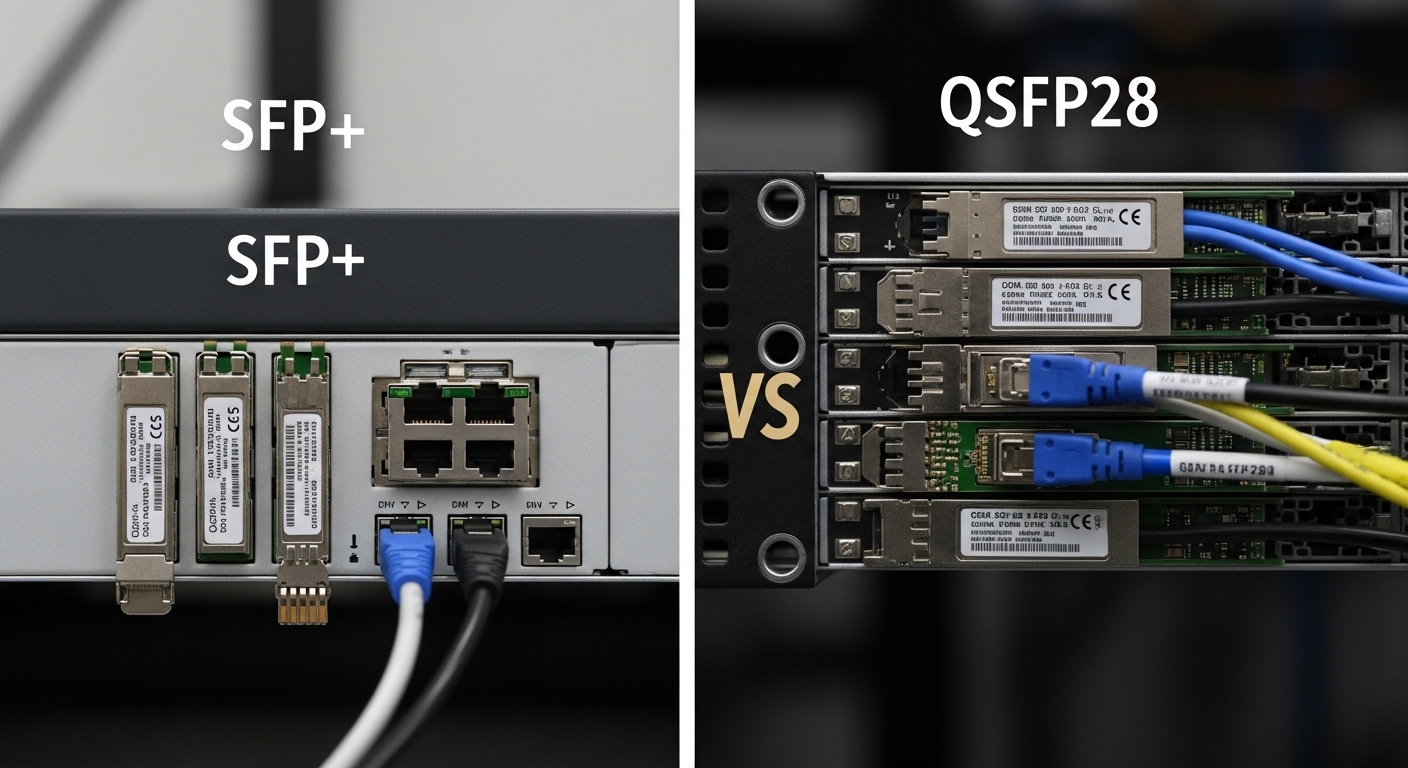
Core specs comparison: SFP+ vs QSFP28 in real networks
Below is a field-oriented comparison using common 10G and 25G optics classes. Always verify the switch vendor’s supported optics list and the specific transceiver part number, not just the form factor.
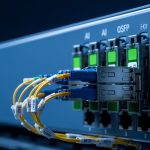
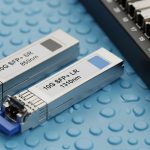
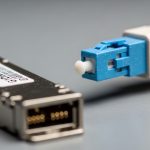
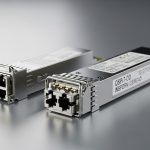
[[IMAGE:Macro photography of two fiber optic transceivers on a lab bench: an SFP+ module on the left and a QSFP28 module on the right, both with LC connectors visible, neutral gray background, crisp depth of field, cool white lighting, high detail, realistic reflections, shallow focus.]
| Parameter | SFP+ | QSFP28 |
|---|---|---|
| Typical line rate | 10G (10.3125 Gb/s) | 25G (25.78125 Gb/s) |
| Common optical reach (SR) | Up to ~300 m typical (OM3), ~400 m (OM4) | Up to ~100 m typical (OM3), up to ~150 m (OM4) |
| Connector types | LC duplex (most SR) | LC duplex (most SR) |
| Power envelope | Often ~0.8 W to ~1.2 W for SR | Often ~1.5 W to ~2.5 W for SR |
| Temperature range | Commercial and industrial variants; check module spec | Commercial and industrial variants; check module spec |
| Digital diagnostics | DOM (I2C, typically) via SFF-8472 | DDM/DOM via QSFP28 diagnostics (per standard) |
| Form factor | Single-lane pluggable | Multi-lane (4x lanes at 25G class) |
Standards grounding matters: SFP+ optical transceivers commonly align with IEEE 802.3 Ethernet specifications for 10GBASE-SR/SW, while QSFP28 aligns with 25GBASE-SR under IEEE 802.3 families. [Source: IEEE Standards]
Selection checklist: choosing for AI training and migrations
Use this ordered checklist during design reviews and during on-site optics swaps. It is faster than trial-and-error and reduces downtime.
- Distance and fiber grade: confirm OM3 vs OM4, then check the vendor reach table for your exact transceiver SKU.
- Switch compatibility: confirm the transceiver appears in the switch vendor optics list for that exact platform and software release.
- Port density and airflow: QSFP28 typically consumes more thermal budget per port; verify front-to-back airflow and fan profile settings.
- Power budget: add worst-case module power to the chassis envelope; AI racks often run near maximum during peak training.
- DOM/DDM support: confirm the switch reads diagnostics correctly (temperature, Tx bias, optical power) and that alarms map to your monitoring stack.
- Operating temperature: prefer industrial-rated modules for hot aisles or near exhaust zones.
- Vendor lock-in risk: third-party optics can work, but plan for a compatibility matrix, burn-in testing, and an RMA path.
- Migration path: if you are staging from 10G to 25G, validate whether mixed form factors are feasible in your fabric without odd oversubscription.
Pro Tip: In AI leaf-spine deployments, the most common “it links at 10% then flaps” issue is not the optics speed class; it is dirty LC connectors or marginal polarity. Clean and re-seat both ends, then re-check received power thresholds via DOM/DDM before replacing modules.
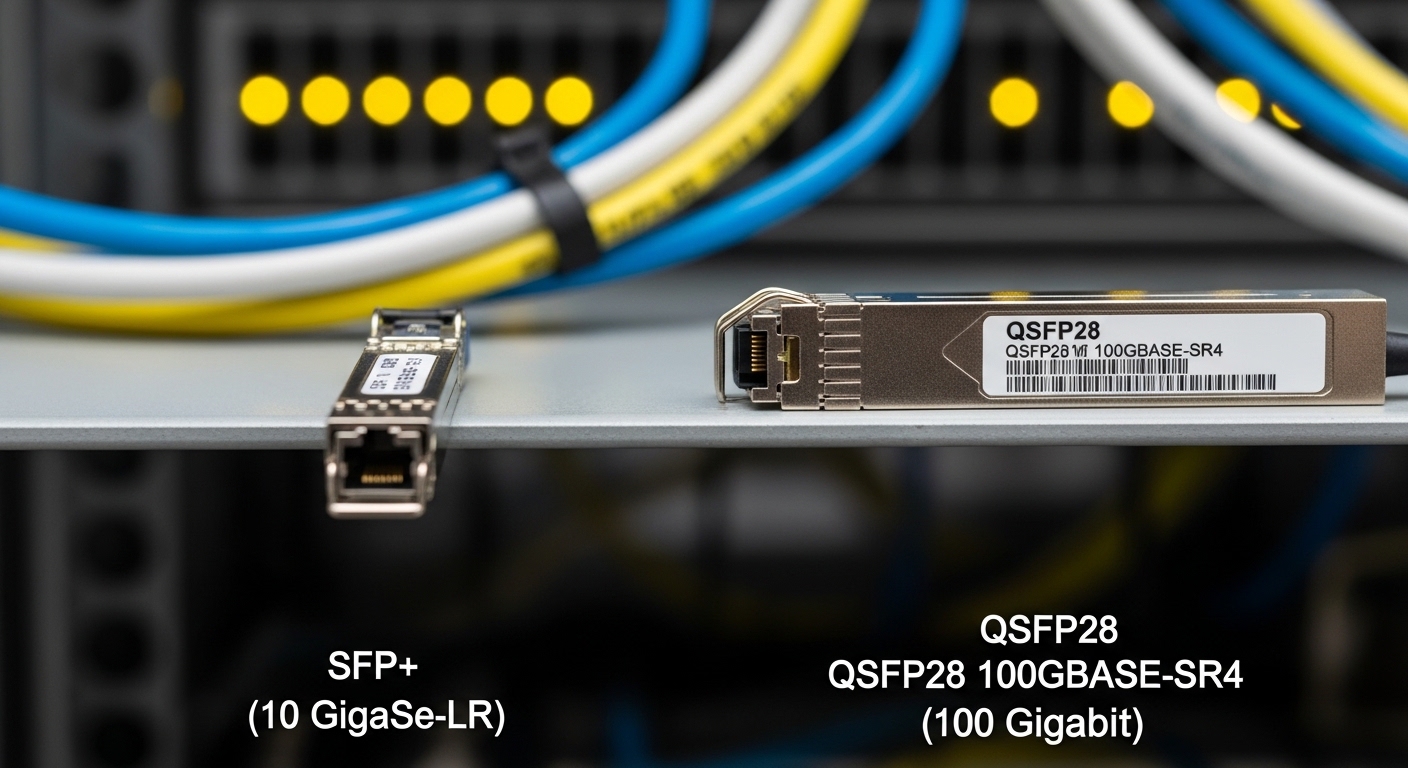
Deployment scenario: leaf-spine AI cluster with mixed uplinks
Consider a 3-tier data center leaf-spine topology with 48-port 25G ToR switches and 100G spine uplinks. Each ToR has 24 server-facing ports and 4 uplinks mapped to 100G via breakout or native 4x25G. In this environment, QSFP28 SR transceivers are used on the leaf-to-spine and leaf-to-aggregation segments within ~120 m on OM4, while SFP+ is retained for legacy servers and management networks at 10G. During a training run, you might see link utilization spike above 70% for short bursts, so thermal and optical margins must be stable under sustained power.
Field practice: we typically set the fan to a predictable profile during burn-in, then log DOM/DDM for at least 2 hours. For example, when swapping from Cisco SFP-10G-SR optics to FS.com SFP-10GSR-85 style modules, we validate that Tx bias and optical receive power remain within the switch’s alarm thresholds. [Source: vendor datasheets and switch compatibility guides for specific platforms]
[[IMAGE:Concept art style schematic of a 3-tier AI fabric: leaf switches at the bottom, spine switches in the middle, a central monitoring dashboard showing DOM/DDM graphs, arrows representing training traffic bursts, neon blue lines on dark background, high contrast, clean vector look, no text labels, cinematic lighting.]
Common mistakes and troubleshooting for SFP+ vs QSFP28
These are the failure modes that show up in real maintenance windows. Each includes root cause and a practical fix.
- Mistake: Assuming form factor equals compatibility. Root cause: QSFP28 or SFP+ modules may be electrically compatible but not supported by the switch firmware optics table. Solution: confirm the exact transceiver part number is listed for that platform and software version; update firmware if the vendor supports it.
- Mistake: Ignoring fiber polarity and connector cleanliness. Root cause: swapped Tx/Rx or contamination increases attenuation and causes link negotiation failures or CRC errors. Solution: clean LC connectors with validated procedures, confirm polarity using a polarity tester or known-good patching, then re-check received optical power via DOM/DDM.
- Mistake: Underestimating thermal impact. Root cause: QSFP28 modules often dissipate more power; in hot aisles, you can exceed module operating temperature causing intermittent errors. Solution: measure inlet/outlet temperatures, verify airflow direction, and adjust fan profile; replace with industrial-rated modules if needed.
- Mistake: Mismatched optic reach on the same patch plan. Root cause: using OM3-optimized optics on longer OM4 links or vice versa can push the link margin too close to the edge. Solution: audit patch lengths and fiber grade, then align transceiver reach class to the actual installed plant.
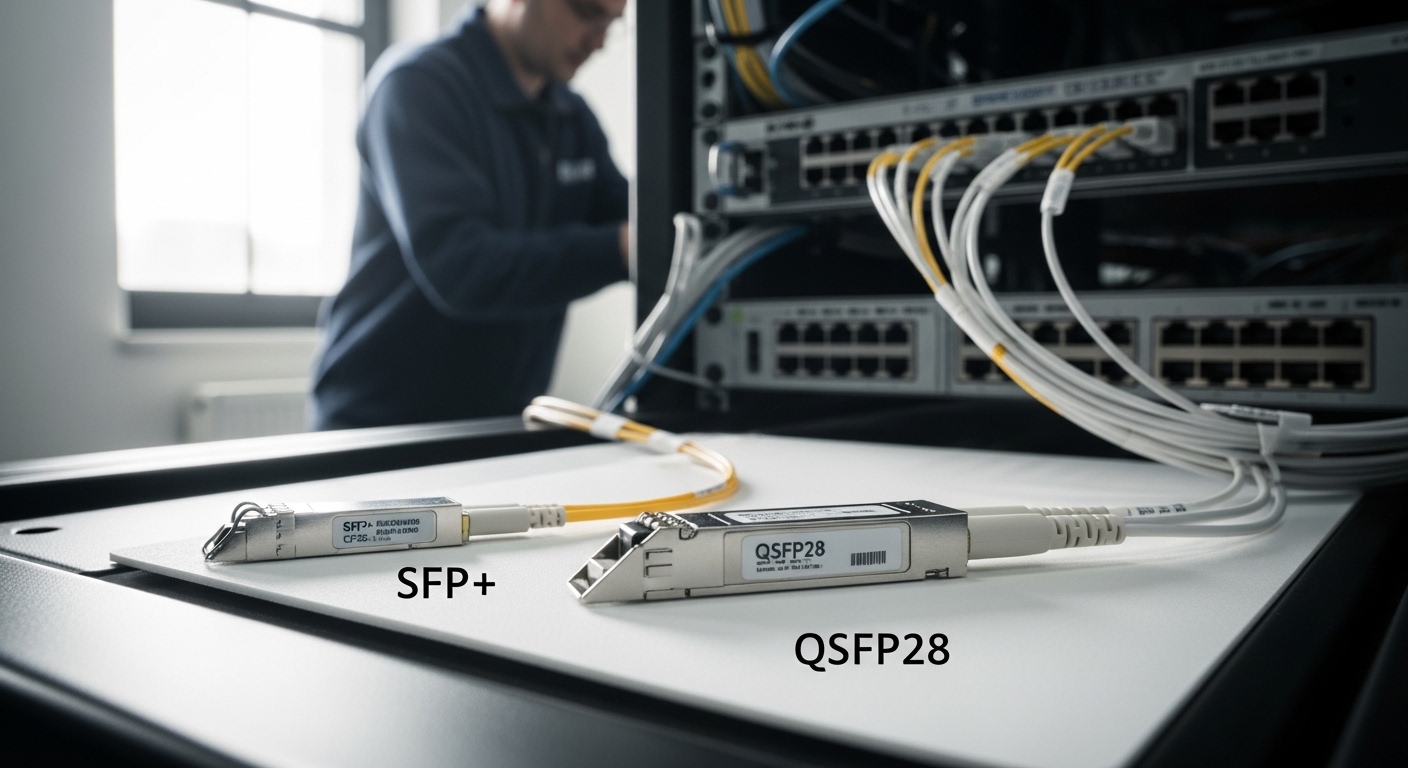
Cost and ROI reality: what you pay beyond the module
In many markets, third-party optics can be 20% to 50% cheaper per module than OEM equivalents, but you must budget for validation time and potential higher failure rates in harsh environments. QSFP28 SR modules are often more expensive than SFP+ SR modules, and the higher power draw can marginally increase cooling costs in dense racks. ROI typically comes from using higher-speed ports to reduce oversubscription and improve training time, not just from saving on optics purchase price.
Practical guidance: for OEM optics, expect higher unit pricing but smoother support. For third-party modules, select reputable brands with clear compliance and provide a controlled rollout: burn-in, DOM/DDM verification, and an RMA plan. If you are comparing options, check examples like Cisco SFP-10G-SR and Finisar/Flex optical part families, and third-party equivalents such as FS.com SFP-10GSR-85, then validate against your switch compatibility list. [Source: vendor datasheets and field compatibility reports]
[[IMAGE:Lifestyle scene in a data center aisle: a field engineer wearing PPE holds a QSFP28 module above an open network rack, LEDs on the switch faceplate, fiber patch cords neatly routed, realistic documentary photography, warm overhead lighting mixed with cool status LEDs, shallow depth of field.]
FAQ: SFP+ vs QSFP28 for AI networks
Q1: Can I mix SFP+ and QSFP28 in the same switch?
A: Many switches support both, but only specific port groups and optics types. You must check the platform’s optics compatibility and whether mixed speeds affect your fabric scheduling or oversubscription model.
Q2: Is QSFP28 always better for AI training?
A: Not automatically. QSFP28 gives more bandwidth per port, but it can reduce reach headroom and increase power per module. If your patch plant is short and you need density, QSFP28 is often the right move; if you need longer reach or lower power, SFP+ may still fit.
Q