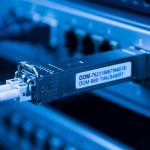
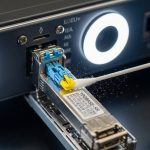
In telecom networks, the wrong `telecom transceiver` form factor can silently force higher power draw, shorter reach, and costly compatibility loops with your switch line cards. This article helps network engineers and early-stage ops teams map SFP and QSFP transceivers to real deployment patterns in access, metro, and aggregation environments. You will get practical selection criteria, a specs comparison table, and field troubleshooting patterns that show up during bring-up and maintenance.
Why SFP and QSFP telecom transceiver choices differ in telecom networks
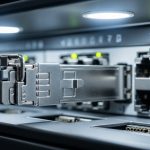
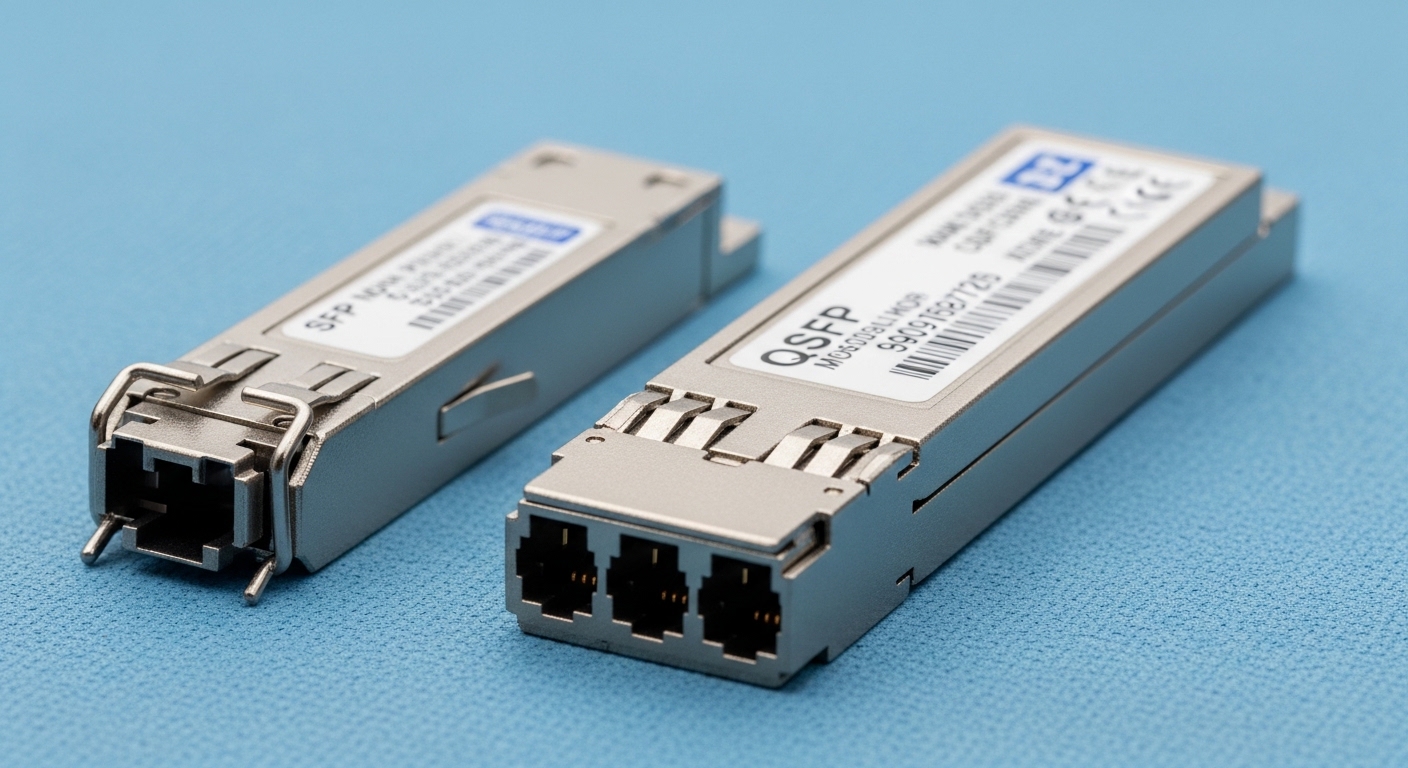
SFP and QSFP modules solve different density and power trade-offs. SFP is typically used for 1G to 10G optics (and some 25G variants), while QSFP commonly targets 40G and 100G class aggregation and high-capacity uplinks. In telecom, the “right” choice is rarely just reach; it is also about lane count, optics budget, thermal headroom, and how your platform enforces electrical interface standards.
From a standards perspective, most modern optics for Ethernet follow IEEE 802.3 link specifications for optical PHY behavior, including lane rates and optical/electrical characteristics. For example, 10GBASE-SR is defined under IEEE 802.3, and 40GBASE-SR4 uses four lanes with a parallel optics approach. Vendor implementations also add operational constraints such as DOM (Digital Optical Monitoring) support, laser safety limits, and module EEPROM behaviors.
In the field, the fastest path to PMF for an optics supply program is to treat optics like a governed dependency: validate with the exact switch/transport platform, confirm DOM readings in your NMS, and pre-measure optical loss against the installed fiber plant. That is how you avoid “it lights up” but fails under thermal cycling or during BER-sensitive maintenance windows.
Mapping SFP and QSFP telecom transceiver use cases to real network roles
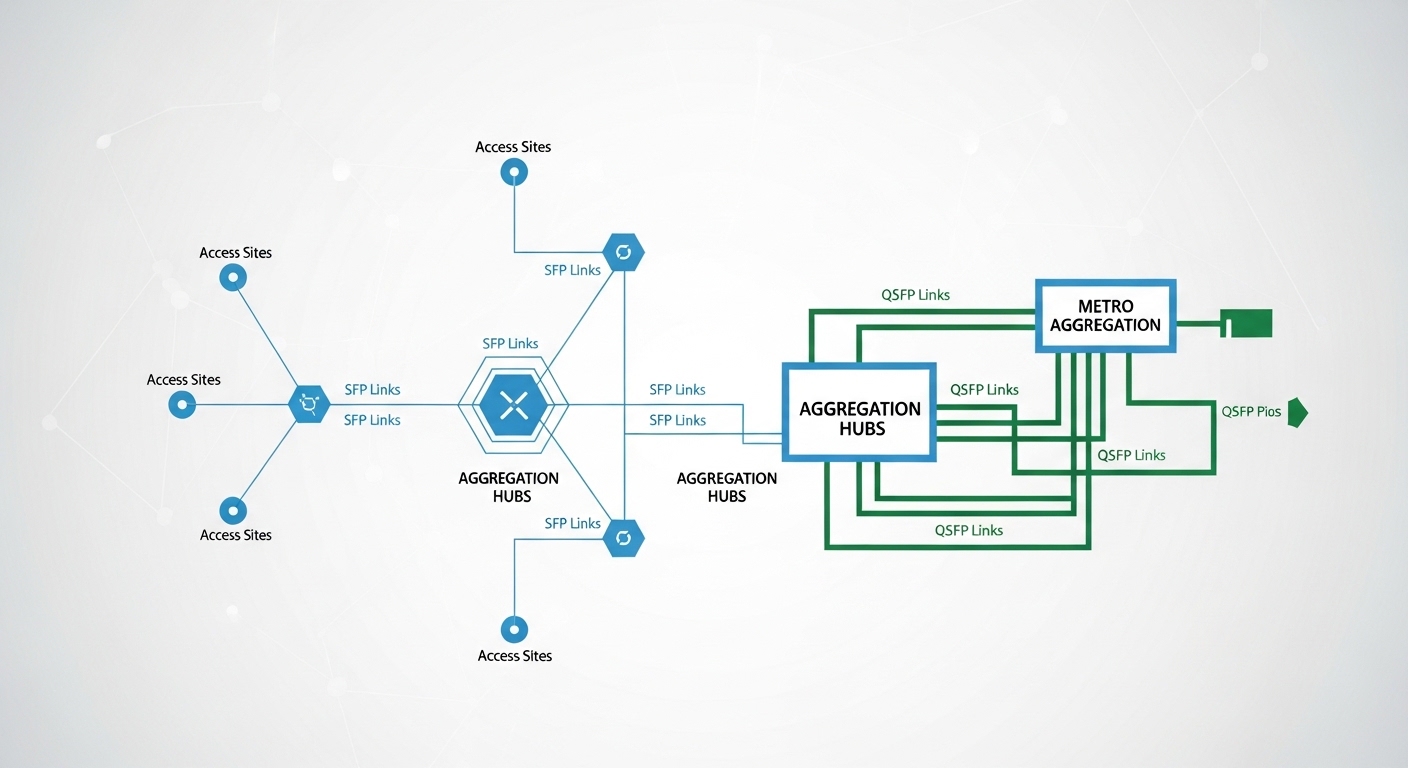
In telecom, you can think of transceiver selection as “where the optics terminate” plus “what the traffic profile expects.” Access rings and customer aggregation often use smaller form factors to optimize port density and cost per subscriber. Metro aggregation and core uplinks tend to favor QSFP-style higher-capacity optics to reduce switch fan-out and reduce the number of parallel connections.
Access and aggregation: why SFP shows up first
In many access and aggregation designs, SFP modules are selected because they align with 1G/10G service tiers and because platforms frequently offer SFP cages with predictable thermal behavior. Common patterns include 10G uplinks from aggregation switches to aggregation routers, or 1G uplinks from edge devices to aggregation nodes. When you are constrained by rack power and you need to run many ports at once, SFP’s simpler lane structure can reduce operational variability.
Operationally, SFP optics are also easier to standardize across mixed vendors when you are using OM3/OM4 multimode fiber in short reach scenarios. For example, 10GBASE-SR over multimode is commonly paired with optics around 850 nm using SR-class transceivers, such as Finisar FTLX8571D3BCL or FS.com SFP-10GSR-85, depending on distance and power class.
Metro and aggregation uplinks: why QSFP is the density lever
QSFP modules become compelling when you need more throughput per switch slot. In a leaf-spine-like telecom aggregation architecture, a QSFP uplink can replace multiple SFP uplinks, reducing switch cross-connect complexity and lowering the number of active optical terminations you must monitor. QSFP also fits well with 40G and 100G transport services where you want consistent oversubscription ratios and simpler provisioning.
In practice, 40GBASE-SR4 uses four lanes in parallel at roughly 10G per lane, and 100GBASE-SR4 similarly uses multiple lanes depending on the implementation. This lane aggregation affects optics budget calculations and how you interpret DOM laser bias and per-lane power. A telecom transceiver choice here is as much about deterministic diagnostics as it is about raw bandwidth.
SFP vs QSFP telecom transceiver specs: wavelength, reach, power, and temperature
The most common reason for late-stage integration failures is mismatched optics characteristics relative to your fiber plant and operating environment. Engineers should compare wavelength, reach category, connector type, optical power class, and temperature range before ordering. Also verify DOM support and whether your platform expects specific EEPROM fields and alarm thresholds.
| Category | SFP (Typical) | QSFP (Typical) |
|---|---|---|
| Common Ethernet classes | 1GBASE-SX, 10GBASE-SR, 10GBASE-LR | 40GBASE-SR4, 100GBASE-SR4, 40GBASE-LR4 |
| Wavelength (MM) | ~850 nm (SR) | ~850 nm (SR4) |
| Wavelength (SM) | ~1310 nm (LR) | ~1310 nm (LR4) or multi-wavelength variants |
| Reach (typical, MM) | 300 m to 400 m on OM3/OM4 (depends on spec) | 100 m to 150 m on OM3/OM4 (depends on generation) |
| Reach (typical, SM) | 10 km to 40 km (LR/ER class) | 10 km to 40 km (LR4/ER4 class, depends on optics) |
| Connector types | LC common for SR/LR | LC common for SR4/LR4 |
| DOM support | Often required for monitoring; verify compatibility | Often required; per-lane diagnostics may matter |
| Temperature range | Commonly commercial and industrial; verify operating spec | Same requirement; confirm module grade for outdoor cabinets |
| Power and thermal | Lower power per port; easier thermal margin in dense chassis | Higher aggregate power per slot; validate airflow assumptions |
As a concrete example, many SR optics at 850 nm are sold with “DOM compatible” claims, but you still need to validate DOM alarm thresholds and whether the switch firmware supports that specific DOM implementation. A QSFP SR4 module may also expose per-lane Tx/Rx power readings that your NMS expects to map to specific ports; if the mapping is off, you can miss a failing lane during a slow degradation event.
Pro Tip:
When fiber plant loss is near the margin, QSFP SR4 can “look fine” at initial link bring-up but fail later under temperature drift because per-lane bias and receiver sensitivity shift. Always compare your module vendor’s power budget against measured worst-case loss (including patch cords and mated connector IL) rather than relying on the generic reach label.

Selection criteria checklist for telecom transceiver procurement and deployment
To reduce integration loops, run the following ordered checklist for every SFP or QSFP order. This is the same sequence field engineers use to avoid “works in bench, fails in rack” outcomes.
- Distance and fiber type: Determine whether you are on OM3, OM4, or single-mode. Use measured end-to-end loss from your fiber test reports, not just planned route length.
- Optics class and wavelength: Match SR/LR/ER categories to your fiber type and expected reach. For MM at 850 nm, confirm that your installed fiber is graded for the transceiver’s reach requirement.
- Switch and line-card compatibility: Validate with your platform’s optics matrix. Even when both sides support IEEE 802.3, vendor-specific EEPROM fields and DOM behavior can differ.
- DOM and telemetry requirements: Confirm that your NMS can parse LOS, Tx power, Rx power, temperature, and alarm flags. For QSFP, check whether per-lane metrics are exposed and whether thresholds align with your monitoring workflows.
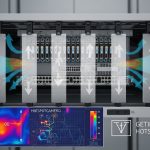
- Operating temperature and airflow: Validate industrial grade optics for outdoor huts or unconditioned cabinets. Confirm module power dissipation against your measured airflow and inlet temperature.
- Budget and TCO: Compare OEM vs third-party pricing, but include expected failure rate, RMA friction, inventory holding cost, and the labor cost of swaps.
- Vendor lock-in risk: Prefer optics that are explicitly validated for your hardware family. If you must mix vendors, standardize on compatible DOM implementations and document a fallback plan.
Cost and ROI: what engineers actually optimize with SFP vs QSFP
In many telecom programs, optics line items look small until you scale across hundreds or thousands of ports. Typical street pricing varies by generation and vendor channel: OEM SFP optics can range from roughly $50 to $200 per unit depending on reach and grade, while third-party compatible optics may land around $20 to $120. QSFP optics are usually more expensive per module because they aggregate more lanes and often target higher-speed PHYs; a realistic range is $150 to $600 OEM, with third-party options sometimes lower, but with higher integration variance.
TCO should include power and operational cost. QSFP optics can increase per-slot power draw and can force airflow upgrades if you run dense chassis at high utilization; that creates indirect costs in power distribution and cooling. On the other hand, QSFP can reduce the number of active connections versus using many SFP uplinks, lowering patching labor and potentially reducing failure surface area in the cross-connect.
For ROI, treat optics like reliability engineering, not just procurement. Track DOM trends for Rx power and temperature over time; when you correlate rising error rates or LOS events with specific vendors or lot codes, you can make evidence-based stocking decisions. That is how teams reduce “random RMA churn” and improve mean time to repair in production.
Common mistakes and troubleshooting for telecom transceiver deployments
Below are failure modes that show up during bring-up and maintenance, with root causes and fixes you can apply quickly.
Link comes up on the bench, then flaps in the rack
Root cause: Thermal margin mismatch. Bench environments often run cooler and with different airflow than the production chassis. QSFP modules can be particularly sensitive because aggregate power and per-lane behavior can drift with temperature.
Solution: Measure inlet air temperature and module temperature via DOM after 30 to 60 minutes. If module temperature approaches the vendor operating limit, adjust airflow, reseat the module, and confirm that fan curves match the production configuration.
“Works, but errors increase” after a fiber patch change
Root cause: Added connector insertion loss or wrong fiber type (OM3 vs OM4) leading to reduced receiver margin. Even if the link negotiates, BER can degrade under marginal optical budgets.
Solution: Re-run fiber OTDR or at least verify end-to-end optical loss with a calibrated test set. Replace patch cords and confirm correct connector cleanliness and mating. For MM at 850 nm, validate the fiber grade in the test report.
DOM alarms are missing or misinterpreted in the NMS
Root cause: DOM compatibility differences. Some third-party optics implement EEPROM fields slightly differently; the switch or NMS mapping can fail silently, so LOS or Tx power alarms do not trigger correctly.
Solution: Validate DOM parsing with a known-good module and confirm that alarms appear in your telemetry pipeline. If you use QSFP, verify per-lane statistics and ensure your alert thresholds match the vendor’s DOM scaling.
LOS events immediately after insertion
Root cause: Fiber polarity issues, dirty connectors, or using the wrong duplex orientation on LC connectors. For parallel optics, lane mapping errors can also occur when patch panels are reconfigured.
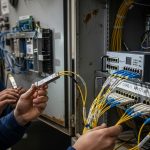
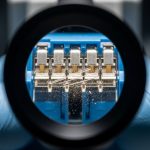
Solution: Clean connectors with approved fiber cleaning tools and inspect under microscope. Confirm transmit/receive direction and patch panel mapping, then re-test with a known-good link partner.
FAQ
What is the main difference between an SFP and a QSFP telecom transceiver?
An SFP typically carries one lane for common 1G to 10G Ethernet optics, while a QSFP aggregates multiple lanes for 40G and 100G classes. That lane aggregation changes how you evaluate optical budgets, DOM telemetry, and thermal behavior.
Can I mix OEM and third-party telecom transceivers in the same switch?
Sometimes yes, but you must validate compatibility with your specific switch model and firmware. Pay special attention to DOM parsing, alarm thresholds, and whether the platform enforces strict vendor checks in the optics matrix.
How do I choose between SR and LR for telecom links?
SR is usually used for short reach over multimode fiber at 850 nm, while LR targets longer reach over single-mode fiber around 1310 nm. Your decision should be driven by measured loss and connector/pigtail insertion loss, not the marketing reach label.
What DOM metrics should I monitor for reliability?
Monitor Tx power, Rx power, temperature, and link alarms such as LOS. For QSFP, also track per-lane trends if available, because a single degrading lane can increase errors before a full link failure.
Why do QSFP links sometimes fail when SFP links on the same fiber seem stable?
QSFP optics often operate with tighter receiver margin per lane and higher aggregate power sensitivity to thermal drift. If your fiber loss is near the threshold, QSFP can cross the reliability boundary earlier even when SFP stays within margin.
Do I need to follow IEEE 802.3 exactly when picking a telecom transceiver?
IEEE 802.3 defines Ethernet PHY behavior, but practical compatibility also depends on vendor-specific DOM and EEPROM implementation. Always validate against your hardware optics support list and test in a staging rack using your production fiber patch cords.
If you want faster PMF-style validation for your optics rollout, start by matching SFP and QSFP choices to measured fiber loss, platform compatibility, and DOM telemetry requirements, then run a controlled staging test before scaling. Next, use fiber-optic-transceiver-compatibility to tighten your compatibility process and reduce integration churn.
Author bio: I build and validate telecom switching and optical link systems in the lab and in production, focusing on repeatable bring-up, measured optical budgets, and deterministic monitoring. I also collaborate with field teams to turn transceiver failures into actionable procurement and firmware validation criteria.