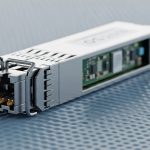
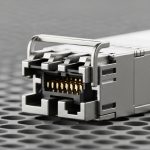
In an 800G rollout, you do not just pick “a transceiver.” You pick a lane architecture, a thermal envelope, and a fiber reach profile that must match switch optics and optics management. This guide helps network engineers and field technicians compare SFP and QSFP choices for modern 800G designs, with practical selection steps, compatibility caveats, and troubleshooting patterns seen during commissioning. Updated: 2026-05-01.
Where SFP and QSFP fit in real 800G architectures
Most 800G deployments use QSFP-family optics because the port needs multiple parallel lanes aggregated into a single high-rate interface. SFP modules are typically associated with 1G to 10G (or 25G variants in some designs), so they rarely appear as the direct physical layer for native 800G ports. Instead, SFP can show up upstream in a different layer (for example, aggregation) while QSFP carries the 800G spine or leaf uplinks.
In practice, the engineering question becomes: do you need QSFP for the 800G port, or can you segment the design into multiple lower-rate links using SFP (or SFP28/ SFP56) on a different topology boundary. If your switch chassis exposes only 800G QSFP-DD or OSFP-class interfaces, SFP will not be electrically compatible, regardless of fiber type.
Spec comparison that actually affects link bring-up
Engineers often compare “reach” and ignore lane count, optical power, and DOM behavior. For 800G, those details determine whether the link trains reliably and whether monitoring tooling can read temperature, bias current, and received power thresholds.
| Attribute | SFP (typical) | QSFP (typical for 800G) |
|---|---|---|
| Common data rates | 1G, 10G, 25G (varies by subtype) | QSFP-DD: 200G; 800G via aggregation/lane mapping |
| Role in 800G systems | Usually not direct 800G port; often used at other tiers | Direct fit for high-density uplinks; supports multi-lane operation |
| Optical form factor | Single-lane pluggable (or low lane aggregation) | High-lane aggregation pluggable (multi-lane optical) |
| Fiber types | Commonly SR over multimode; LR/ER over single-mode (depends on subtype) | SR4/FR4-class patterns and 800G-friendly lane groupings (depends on model) |
| DOM / monitoring | Typically supported; module-specific thresholds | Typically supported; crucial for link qualification and alarms |
| Operating temperature | Commercial and industrial variants exist | Similar split; verify switch vendor qualification |
| Connector | LC (most common) | Varies by optic; often MPO/MTP for multi-lane optics |
For concrete examples, look at vendor datasheets for QSFP-DD models used in 200G building blocks that are then combined into 800G port designs. For single-module part numbers, examples in the ecosystem include optics like Finisar and FS QSFP-DD SR4 variants (exact reach and lane mapping depend on the specific model). Reference: IEEE 802.3 and switch vendor optics compatibility guides.
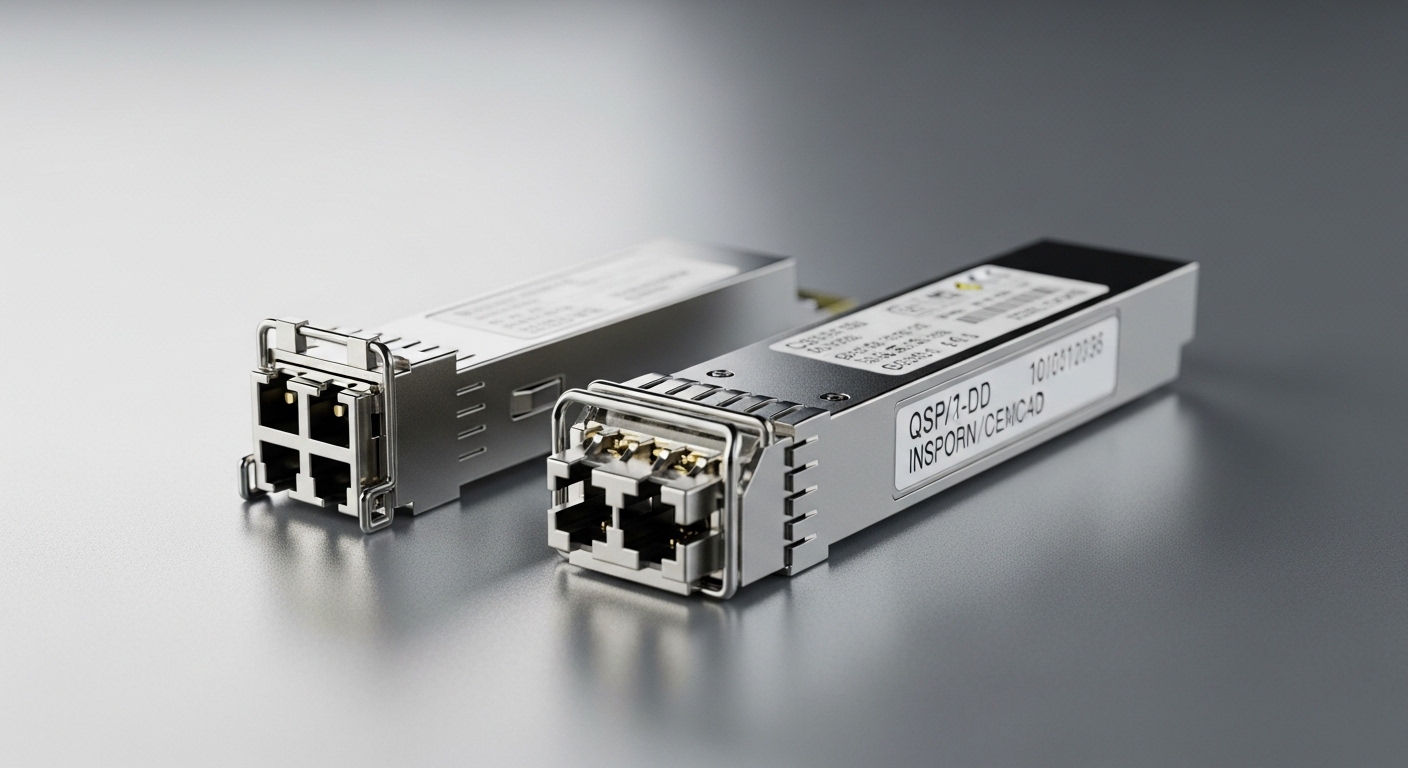
800G deployment scenario: leaf-spine with mixed tiers
Imagine a 3-tier data center leaf-spine topology with 48-port ToR switches uplinking to spine at 800G per pair. The leaf uses QSFP-DD optics for the 800G uplinks, each port requiring multi-lane lane grouping; the rack access layer uses SFP28/SFP56 for server downlinks. In one commissioning run, the team targeted OM4 multimode for short-reach uplinks and single-mode for longer campus extensions, with optics power monitored via DOM to confirm received power stayed within the switch’s receiver budget.
During acceptance testing, they verified link stability under temperature ramp: from 25 C to 60 C ambient in the row. They also validated polarity and MPO keying before enabling optics, because a single reversed MPO key can present as “link flaps” rather than a hard failure. The outcome was predictable: QSFP-based 800G uplinks trained consistently, while SFP modules remained confined to the access tier where the switch exposed compatible lanes and speed settings.
Selection checklist engineers use on day one
Use this ordered checklist before you order inventory or patch the first fibers.
- Port interface compatibility: confirm the switch model’s 800G port type (QSFP-DD, OSFP, or vendor-specific) and whether any SFP is supported for that exact physical interface.
- Distance and fiber plan: map required reach to the optic’s supported distance for OM4 or OS2; do not assume “LC means multimode.”
- Lane mapping and breakout model: 800G designs depend on specific lane groupings; verify the switch documentation for how 200G/400G optics combine into 800G.
- DOM support and telemetry: ensure the module provides required DOM fields and that the switch reads them without “unknown vendor” alarms.
- Operating temperature: select industrial vs commercial grade to match cabinet airflow; verify qualification lists.
- Connector and polarity: plan LC vs MPO/MTP; confirm keying, polarity method, and cleaning workflow.
- Budget and power: estimate total power per port and thermal load; QSFP multi-lane optics often have higher per-module power.
- Vendor lock-in risk: check whether third-party optics are on the switch vendor’s compatibility list to reduce RMA churn.
Pro Tip: In 800G bring-up, treat MPO/MTP polarity and cleaning as “first-class” failure domains. Many field incidents look like firmware problems, but root cause is often microscopic contamination or a reversed polarity adapter that still yields intermittent link training.
Common mistakes and troubleshooting tips (with root causes)
1) Using SFP on an 800G port path
Root cause: electrical interface mismatch—SFP speed and lane structure do not align with the switch’s 800G physical layer requirements. Solution: verify the switch optics compatibility matrix; move SFP to access tiers only, or replace with the correct QSFP-DD/OSFP optic type.
2) MPO polarity or keying flipped
Root cause: reversed MPO key or incorrect polarity adapter method causes partial lane mismatch; the link may train then drop under load. Solution: stop, inspect keying orientation, re-terminate or re-adapt using the documented polarity scheme, and clean both ends with approved wipes and inspection.
3) DOM/compatibility mismatch with third-party optics
Root cause: DOM implementation differences or unsupported vendor IDs can trigger alarms, reduced thresholds, or refusal to bring up. Solution: test a small lot in the target switch model, check DOM readouts, and prefer optics listed by the switch vendor for the exact port type.
Cost and ROI note for 800G optics choices
QSFP-based optics typically cost more per module than SFP, but the comparison must be “per delivered 800G capacity.” In many deployments, the ROI comes from reduced port count and simplified cabling density rather than raw module price. Typical budgeting ranges vary by vendor and reach class; third-party QSFP modules can be cheaper, but higher failure or incompatibility rates may increase total cost of ownership through swap time, truck rolls, and spares.
Power is part of the story: higher lane-count optics can add noticeable thermal load. In a dense row, that can translate into higher fan duty cycles and HVAC energy; field teams often track watts per port and compare against cabinet airflow limits during acceptance. Keep spares aligned with the switch vendor’s validated optics list to reduce downtime.

FAQ
Can SFP be used for 800G ports?
Usually no. Most native 800G ports require QSFP-DD or OSFP-class multi-lane optics with specific lane mapping. If a switch offers an 800G interface that accepts only QSFP-DD, SFP will be electrically incompatible.
When would I still use SFP in an 800G network?
SFP often belongs to access or aggregation tiers where the switch exposes SFP/SFP28/SFP56 lanes at lower speeds. You can pair SFP access links with QSFP-based 800G uplinks to keep cost and cabling manageable.
What matters more: reach or DOM support?
Both, but DOM support is often the silent deal-breaker during operations. Reach can be “within spec” yet fail bring-up if DOM fields or thresholds do not match what the switch expects, especially with third