Your current bottleneck might not be bandwidth on the switch ports, it might be the fiber plant. If you are planning a next-gen optical network and want to scale capacity without laying a whole new cable everywhere, this article breaks down how SDM fiber and spatial division multiplexing affect design choices, from link budgets to transceiver compatibility.
We will keep it practical: what engineers actually check, what goes wrong in the field, and how to estimate cost and ROI when you move from single-mode, single-core assumptions to multi-core or multi-mode spatial channels. This is aimed at network architects, field ops leads, and anyone doing optical planning for data centers or metro rings.
Why SDM fiber changes optical network design assumptions
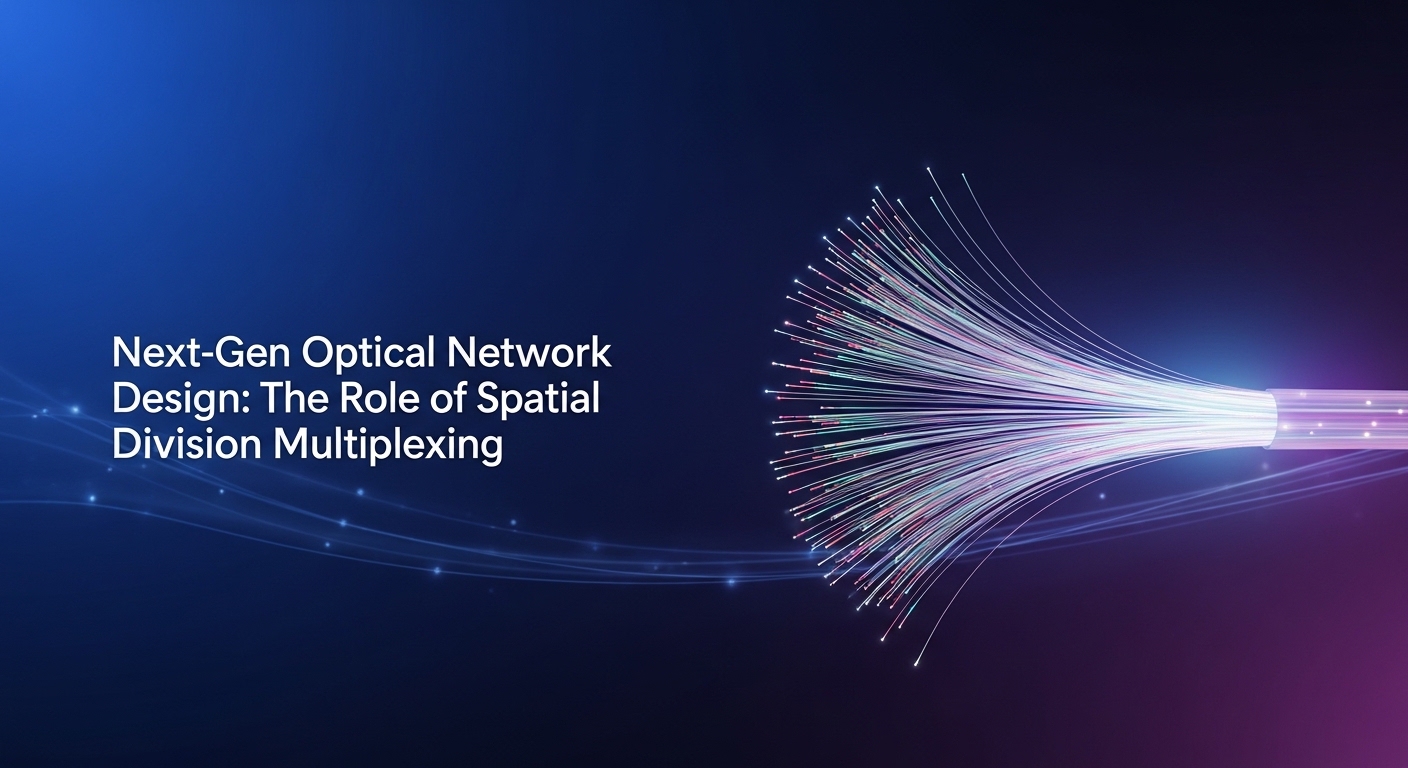
Traditional links often assume one spatial channel per fiber core (single-core SMF) and focus on wavelength division multiplexing (WDM) and modulation formats. SDM fiber adds multiple spatial paths inside the same physical cable or fiber type, increasing capacity by parallelizing signal paths. In practice, SDM can be implemented as multi-core fiber (MCF), multi-mode fiber (MMF), or using mode multiplexing concepts, depending on the vendor and deployment.
From a design standpoint, SDM shifts the limiting factors. Instead of only thinking about optical power budget and chromatic dispersion, you also budget for inter-channel crosstalk, differential mode delay (for mode-based SDM), and alignment/connectorization constraints (especially for MCF). IEEE 802.3 defines the Ethernet physical layer expectations, but it does not remove the reality that transceiver and fiber must match the operational assumptions in the vendor datasheets.
For standards context, Ethernet over fiber is governed by IEEE 802.3 PHY specifications for optics classes (for example, 10G/25G/40G/100G), while the detailed optical performance is defined by transceiver and fiber vendor documentation. If you are targeting coherent or advanced modulation modes, you also need to follow the receiver sensitivity and tolerances in the transceiver datasheet.
Spatial division multiplexing options: multi-core vs multi-mode
When people say “SDM fiber,” they usually mean there are multiple spatial channels available in the same fiber span. The two big buckets are multi-core fiber (multiple cores in one cladding) and multi-mode fiber (multiple guided modes in one core). Both can increase capacity, but they behave differently in deployment and operations.
Multi-core fiber (MCF) design considerations
MCF is attractive because each core can behave somewhat like its own independent path, letting you scale capacity similarly to adding more parallel fibers. However, you must manage core-to-core crosstalk and ensure the connectorization preserves core alignment. Many field failures come from “it clicked in” connectors that are not actually aligned to the intended core map.
Multi-mode SDM (mode multiplexing) design considerations
Mode multiplexing can pack multiple channels into a single core by launching distinct spatial modes. The catch is that mode coupling is sensitive to bending, stress, and temperature variations. If your route has tight bends, poor tray fill, or frequent vibration, you may see performance drift that looks like intermittent packet loss.
Key SDM specs to compare before you size your network
Different SDM products publish different parameters, but the most useful ones for planning are wavelength, reach, data rate per spatial channel, connector type, optical power consumption, and environmental operating range. Below is a comparison template you can use when you are evaluating candidate fiber and optics pairs.
| Spec | SDM Multi-Core Example | SDM Multi-Mode Example | Single-Core Baseline |
|---|---|---|---|
| Typical wavelength band | 850 nm or 1310 nm (depends on vendor) | 850 nm or 1310 nm (mode-based) | 850 nm (OM4/OM5) or 1310/1550 nm |
| Reach target | ~100 m to ~2 km depending on design | ~100 m to ~1 km depending on mode coupling control | ~70-400 m (OM4/OM5) or more in SMF |
| Capacity scaling lever | More spatial channels via multiple cores | More spatial channels via multiple modes | WDM and higher-order modulation only |
| Crosstalk metric | Core-to-core crosstalk (vendor-defined) | Mode coupling / inter-modal crosstalk | Lower spatial crosstalk by default |
| Connectorization | Core-aligned MCF connectors; strict polarity/core mapping | Mode-launch compatible connectors; bend tolerance matters | Conventional MPO/MTP or LC polarity rules |
| Operating temperature | Transceiver-dependent; often around -5C to 70C | Transceiver-dependent; mode stability may degrade with heat | Varies by optic class |
| Power / optics overhead | Often coherent or advanced receivers; higher power per link | Similar advanced receiver needs in many deployments | Lower power for simpler direct-detect optics |
Use the table as a checklist, not a promise. Actual reach and crosstalk depend on the exact fiber type, transceiver type, and installation practices. Always validate with vendor link calculators and test results.

Real-world deployment: designing SDM fiber links in a leaf-spine data center
Here is a scenario we have seen in practice. In a 3-tier data center leaf-spine topology with 48-port 100G ToR switches, you may have 16 uplinks per leaf in a staged rollout. If your existing OM4/OM5 footprint is saturated and you cannot add more parallel fiber bundles easily, SDM can be positioned as a capacity upgrade on the same route.
Imagine you have a spine ring with 600 m average span length via cable trays, and each link is upgraded from 100G to an SDM-enabled aggregate that effectively multiplies spatial channels. The planning team budgets for a link budget with vendor sensitivity and margin, but also adds a crosstalk allowance for the multi-core or mode-multiplexed path. During commissioning, field technicians run OTDR and connector inspection, then verify link stability under controlled patching cycles so that any core misalignment is caught before the change window ends.
In day-2 ops, you also watch for performance drift. If your SDM implementation is mode-sensitive, you monitor optical signal quality over time and correlate changes with rerouting activities, rack moves, or HVAC changes. In short: SDM can reduce trenching pressure, but it raises the importance of installation discipline.
Selection criteria and decision checklist for SDM fiber projects
If you want fast PMF-style validation for your network design, treat SDM selection like a series of measurable gates. Here is the ordered checklist engineers typically use:
- Distance and reach model: confirm end-to-end reach with the vendor link calculator, including connector loss and splice loss assumptions. If your spans vary (for example 200 m vs 900 m), plan separate validations.
- Signal type and transceiver pairing: ensure the SDM-capable transceiver matches the fiber type (MCF vs mode multiplexing) and wavelength band. Do not assume “any” transceiver works just because it is the same data rate class.
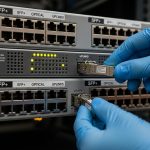
- Switch and optics compatibility: verify the exact model support in the switch vendor hardware compatibility list. Also check whether the optics require vendor-specific firmware behavior.
- DOM and monitoring: confirm digital optical monitoring support (DOM) and what parameters are exposed (for example receive power, bias current, temperature). If DOM fields are missing or scaled differently, your monitoring thresholds may be wrong.
- Operating temperature and thermal behavior: validate performance across your expected ambient range and check any vendor warnings about soak time or temperature cycling.
- Budget and power: include optics power draw and cooling impact. Advanced receivers can shift power budgets meaningfully at scale.
- Vendor lock-in risk: evaluate how much of the solution is tied to a single fiber-plus-transceiver ecosystem. Ask whether you can mix OEM and third-party optics and still meet the published link performance.
Pro Tip: In SDM deployments, the biggest “gotcha” is not the fiber spec on paper, it is the connectorization and patching workflow. If the connector system does not preserve the intended spatial channel mapping, you can pass basic link bring-up and still fail under load due to elevated crosstalk that only shows up when the spatial channels are simultaneously active.
Common mistakes and troubleshooting tips in SDM fiber links
SDM can be worth it, but the failure modes are different from single-core links. Here are field-tested pitfalls and how to respond.
Crosstalk spikes after re-patching
Root cause: core alignment or polarity mapping errors in multi-core connectors, or patch cords swapped without respecting the vendor’s core map.
Solution: re-verify connector labeling, use the vendor’s core-aligned patching procedure, and run a controlled loopback test per spatial channel if supported. If you have DOM, compare receive power and error counters before and after the change.
Works at room temperature, degrades in heat
Root cause: thermal sensitivity of mode coupling or receiver bias drift, especially if the transceiver is operating near its upper temperature bound.
Solution: check transceiver operating range in the datasheet, add margin to your link budget, and confirm your site thermal profile. In commissioning, do a soak test or schedule a performance check after thermal stabilization.
Intermittent errors during cable tray changes
Root cause: micro-bending or stress-induced mode coupling for mode-based SDM, or excessive bend radius in the routing.
Solution: enforce bend radius requirements from the fiber manufacturer, inspect for tight turns, and re-run signal quality tests after any tray work. If errors correlate with specific physical segments, isolate and replace the suspect span.
“Link up” but throughput is inconsistent
Root cause: receiver sensitivity mismatch, improper transceiver/fiber pairing, or an optics configuration mismatch (for example, wrong operational mode).
Solution: validate the optics part numbers and operating modes against the vendor’s compatibility matrix. Confirm that the switch is negotiating the intended physical layer profile and that monitoring thresholds match the optics’ scaling.
Cost and ROI note: when SDM fiber pencils out
Cost depends on whether you are doing OEM-only optics and fiber or mixing third-party components. In many deployments, SDM-capable optics cost more than baseline direct-detect modules, and the fiber system can require specialized connectors and patch panels, which increases upfront labor and spares.
As a rough planning range, SDM-enabled transceivers often sit in the “premium optics” bracket, commonly several hundred to over a thousand USD per module depending on data rate and reach class, while third-party options can be cheaper but come with higher validation overhead. TCO should include: (1) installation labor and testing time, (2) spares strategy, (3) power and cooling impact, and (4) expected failure rates tied to connectorization complexity. The ROI usually improves when you are capacity constrained and trenching or adding parallel fiber routes is the more expensive path.
For reference on optical Ethernet context, IEEE 802.3 is the baseline for PHY expectations, while vendor datasheets define actual optical performance and DOM fields. See [Source: IEEE 802.3] via IEEE 802.3 overview and typical transceiver behavior from vendor documentation such as [Source: Cisco] and [Source: Finisar] published datasheets for module specifications. For example, Cisco and Finisar commonly publish optical module specs and recommended usage conditions in their datasheets.

FAQ about SDM fiber for next-gen optical networks
How is SDM fiber different from WDM?
WDM increases capacity by using multiple wavelengths over the same fiber. SDM fiber increases capacity by adding multiple spatial channels (cores or modes) within the same physical fiber path. You can combine both, but SDM introduces additional crosstalk and installation constraints.
Will IEEE 802.3 guarantee SDM link performance?
IEEE 802.3 defines Ethernet PHY interfaces and requirements, but it does not define the SDM fiber physics or vendor-specific compatibility details. You still need to follow transceiver and fiber datasheets and validate with a link budget and field testing.
What transceiver monitoring should I expect with SDM optics?
Most modern optics expose DOM-like fields such as receive power and temperature, but the exact scaling and availability vary by vendor. Confirm which DOM parameters exist in your specific module model and whether your switch’s monitoring thresholds match those values.
What is the biggest installation risk with SDM fiber?
Connectorization and patching workflow. If the spatial channel mapping is not preserved, you can see elevated crosstalk and intermittent errors that only show up under full load.
Can I mix OEM and third-party optics with SDM fiber?
Sometimes, but it is not safe to assume compatibility. SDM systems can be more sensitive to transceiver calibration, mode launching conditions, and vendor-specific connector assumptions. Plan a validation test matrix before broad rollout.
How do I validate SDM links during commissioning?
Use connector inspection, end-to-end loss checks, and optical quality verification aligned with the vendor’s test method. Then run a traffic soak test that stresses all spatial channels simultaneously, not just a basic link-up check.
If you are planning capacity growth without ripping up the whole plant, SDM fiber is a powerful tool, but it rewards disciplined design and commissioning. Next step: map your current routes to a compatibility checklist using optical transceiver compatibility and DOM monitoring so you can validate early and reduce change-window risk.
Author bio: I have deployed Ethernet optics and fiber validation workflows in real data centers, including link bring-up, DOM thresholding, and change-controlled commissioning. I focus on fast PMF-style validation for network design decisions: measure, break it early, and iterate before you scale.