
If your 400G backbone is feeling fragile, the transceiver choice is often the hidden culprit. This article helps network and reliability engineers select the right QSFP-DD 400G option for 8-lane operation, then validate it with practical checks for optics, power, and compatibility. You will get a top list of proven transceiver types, a spec comparison table, troubleshooting pitfalls, and an engineer-style selection checklist.
Top 1: 400G QSFP-DD SR8 for short-reach leaf-spine links
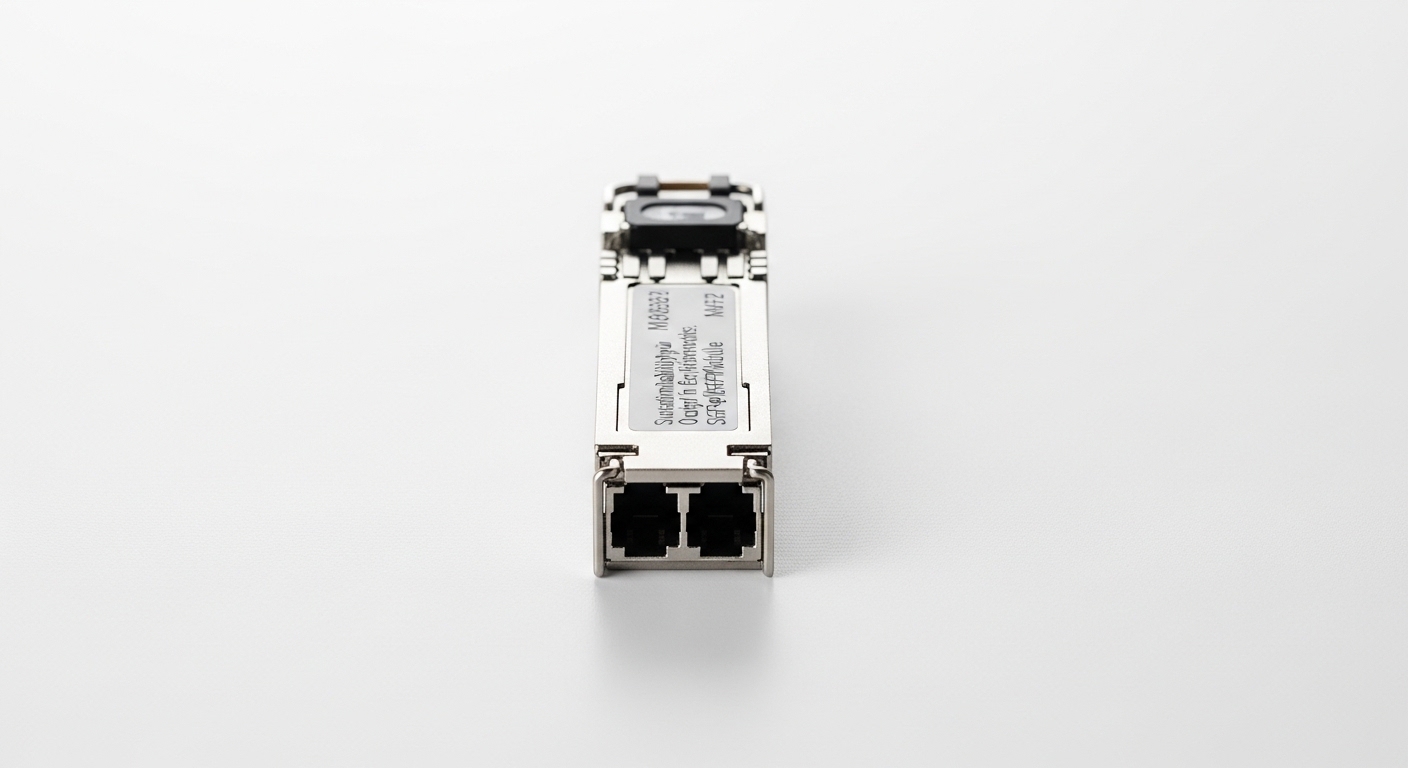
QSFP-DD 400G SR8 modules use eight lanes to carry 400G over multimode fiber. In the field, this is the most common choice for ToR-to-spine and spine uplinks when cabling is already deployed for short reach. Typical wavelengths are in the 850 nm band, and the connector is usually MPO-12 (sometimes MPO-16 depending on vendor implementation). Best-fit networks are where link budgets are forgiving and you want lower cost per port.
Key specs to look at include reach (often around 100 m to 150 m on OM4, depending on module and optics budget), operating temperature, and whether the module supports Digital Optical Monitoring (DOM). Also sanity-check that the switch vendor explicitly lists the module part number or a compatible vendor list.
- Pros: Lowest cost for short reach, widely supported, mature interoperability
- Cons: Limited to multimode distances; MPO polarity and cleaning matter
Top 2: 400G QSFP-DD LR8 for metro and longer campus spans
When you need more than multimode reach, QSFP-DD 400G LR8 uses eight lanes in the 1310 nm region for longer distances on single-mode fiber. This option is popular for campus aggregation, inter-building links, and metro edge segments where you can standardize on SMF. In practice, you will see LR8 used when the fiber plant is already SMF, and you want predictable performance without the cost of coherent optics.
Key specs include typical reach targets (often around 10 km), transmit power and receiver sensitivity from the vendor datasheet, plus temperature range for your installation environment. If you are in a hot aisle or unconditioned MDF/IDF, confirm whether the module is industrial or extended temperature rated.
- Pros: Longer reach on SMF, good for campus and metro edge
- Cons: Higher cost than SR8; requires careful budgeting and fiber quality
Top 3: 400G QSFP-DD DR8 for regional reach with SMF
DR8 sits between SR8 and LR8, targeting “regional” distances on SMF while keeping optics simpler than the longest-haul options. Engineers often choose DR8 when they want a safety margin over short-reach but do not want to pay for the full LR8 link budget. In brownfield deployments, DR8 can reduce the number of fiber splices needed compared to re-architecting with shorter segments.
Key specs to verify are the actual supported reach on the vendor module (not just the marketing line), link power class, and whether the switch’s optics management supports your module’s DOM format. DOM mismatches can cause alarms even when the link is physically good.
- Pros: Balanced reach, often easier than LR8 for cost
- Cons: Still SMF-only; must validate with your actual fiber attenuation
Top 4: 400G QSFP-DD FR8 for dark-fiber and flexible routing
FR8 is another 1310 nm-class eight-lane option, commonly associated with flexible routing and longer reach than DR8 depending on vendor. In reliability terms, this category can be attractive when your cabling runs are variable and you need to accommodate patch-panel changes. The important part is to treat the module as part of an end-to-end link budget that includes patch cords, connectors, and aging effects.
Key specs include specified reach, whether the module is rate-adaptive (some vendors support multiple speeds on the same physical interface), and the supported DOM thresholds. If your organization uses strict maintenance windows, confirm whether vendor firmware updates are required for compatibility with specific switch OS versions.
- Pros: Useful for flexible routing and mid-to-long reach SMF
- Cons: Requires disciplined optical cleaning and budget tracking
Top 5: 400G QSFP-DD 800G-class variants (8-lane performance focus)
Some optics families are marketed around 800G-class platforms, but still deliver QSFP-DD 400G service using eight-lane operation under the hood. In the field, this can matter when you are migrating: you may standardize on a platform that later supports higher aggregate throughput, while still running 400G today. Engineers should treat these as “platform-aligned” modules and validate the exact transceiver type and speed mode supported by the switch.
Key specs include lane mapping, supported link rates, and whether the optics is truly 8-lane 400G versus an 8-lane subset of a higher-mode module. Compatibility caveat: even if the physical connector matches, the switch firmware may enforce strict optics tables, so you should confirm with the vendor’s interoperability list.
- Pros: Migration-friendly standardization, consistent optics management
- Cons: Compatibility can be stricter; validate firmware and optics tables
Top 6: 400G QSFP-DD with strong DOM support for ops and MTBF tracking
Across all reach types, DOM quality can make or break your troubleshooting speed. Modules with robust DOM expose bias current, received power, temperature, and sometimes alarm thresholds that help you predict failures before they take ports down. From an ISO 9001 reliability mindset, this directly supports corrective action: you can correlate optic degradation trends with maintenance logs and environmental conditions.
Key specs to check include the DOM standard support (vendor-specific implementation details), alarm behavior, and whether the switch software surfaces those values via telemetry. If your telemetry stack uses gNMI/streaming telemetry, confirm the data model supports DOM fields you care about.
- Pros: Faster root cause analysis, better preventive maintenance data
- Cons: Telemetry depends on switch OS and vendor integration
Top 7: Reputable vendor modules vs OEM for TCO and failure management
When you scale to hundreds or thousands of QSFP-DD 400G ports, purchasing strategy becomes a reliability issue, not just a budget line. OEM optics often have the highest compatibility confidence, while third-party modules can reduce unit cost but may increase compatibility and RMA variability. For MTBF planning, treat each vendor as a distinct risk profile and track returns by lot code and switch model.
Key specs to verify include compliance with relevant optical interface standards (and vendor datasheet claims), temperature rating, and DOM alarm behavior. Also confirm whether the module is covered by a warranty that matches your operational lifecycle assumptions.
- Pros: OEM reduces integration risk; third-party can improve cost efficiency
- Cons: Third-party compatibility and telemetry support can vary by platform
QSFP-DD 400G spec comparison you can actually use
Specs vary by reach type, but these are the fields engineers typically validate before ordering. Always cross-check with the module datasheet and your switch vendor compatibility list.
| Module type (QSFP-DD 400G) | Nominal wavelength | Fiber type | Typical reach | Connector | Data rate / lanes | Operating temp | DOM |
|---|---|---|---|---|---|---|---|
| SR8 | 850 nm | OM4 / OM5 multimode | ~100 m to 150 m (vendor-dependent) | MPO-12 | 400G, 8 lanes | Often 0 to 70 C (check datasheet) | Commonly supported |
| LR8 | 1310 nm | Single-mode (SMF) | ~10 km | LC duplex (varies by vendor) | 400G, 8 lanes | Often -5 to 70 C (check datasheet) | Commonly supported |
| DR8 | 1310 nm | Single-mode (SMF) | ~2 km to a few km (vendor-dependent) | LC duplex | 400G, 8 lanes | Often -5 to 70 C (check datasheet) | Commonly supported |
| FR8 / platform variants | 1310 nm class | Single-mode (SMF) | Mid-to-long reach (vendor-dependent) | LC duplex or vendor-specific | 400G, 8 lanes focus | Often -5 to 70 C (check datasheet) | Commonly supported |
If you want concrete examples to sanity-check part numbers, look at vendor families like Cisco QSFP-DD 400G optics on Cisco’s compatibility pages and third-party optics such as Finisar/Fixtur names and FS.com offerings (part numbers vary by reach and connector). For standard context, see IEEE 802.3 for Ethernet PHY framing and link behavior. [Source: IEEE 802.3] [[EXT:https://standards.ieee.org/standard/802_3][anchor-text: IEEE 802.3 overview]]
Selection criteria checklist for QSFP-DD 400G 8-lane operation
- Distance and link budget: verify fiber attenuation at the wavelength, plus patch cord loss and connector/splice penalties.
- Switch compatibility: confirm the exact transceiver part number is listed for your switch model and OS version.
- 8-lane mapping behavior: ensure the switch expects 8-lane 400G on QSFP-DD, not a different lane arrangement.
- DOM support and telemetry: confirm your switch exposes DOM fields you need for alarms and preventive maintenance.
- Operating temperature and airflow: match the module rated range to hot-aisle conditions; confirm power dissipation and cooling.
- Vendor lock-in risk: weigh OEM integration confidence vs third-party cost savings; plan for RMA and spares strategy.
- Warranty and MTBF expectations: align warranty length to your maintenance cycle; capture failure data by lot and environment.
Pro Tip: In many deployments, the fastest path to stability is not “try a different vendor first,” but to compare received power from DOM across good vs failing ports. If the received power is already drifting toward the lower threshold while temperature is stable, you likely have a fiber contamination or connector wear issue rather than a defective transceiver.
Common mistakes and troubleshooting for QSFP-DD 400G
Here are real failure modes engineers see when bringing up QSFP-DD 400G links.
MPO polarity mismatch on SR8
Root cause: MPO-12 polarity or lane mapping is reversed relative to the switch expectation, causing link negotiation failures or excessive BER. Solution: verify polarity using an MPO polarity tester, then re-terminate or use the correct polarity patch cords. Clean both ends with an approved fiber cleaning workflow before retrying.
Using a module with the wrong reach class for the actual plant
Root cause: the label says “100 m,” but your patch cords, connectors, and splices add up to a higher loss budget than the vendor assumed. Solution: run a measured OTDR or at least a certified attenuation check, then compare the measured loss to the vendor link budget. If needed, switch to LR8/DR8/FR8 matching your fiber.
DOM alarms ignored until ports flap
Root cause: DOM thresholds are present but the switch configuration or telemetry pipeline is not alerting you early. Solution: enable optics alarms in your switch OS, route telemetry to your monitoring platform, and set alert thresholds for temperature and received power drift.
Temperature and airflow not validated
Root cause: hot-aisle recirculation raises module temperature beyond spec, accelerating laser aging and increasing error rates. Solution: verify airflow direction, check baffle integrity, and confirm measured module temperatures stay within datasheet limits under peak load.
Cost and ROI note: what engineers should budget for
In typical enterprise and data-center procurement, QSFP-DD 400G optics price
