If your 400G rollout is constrained by port density, power budgets, and optics lead times, QSFP-DD 400G modules become a procurement-critical component. This article helps network and infrastructure teams evaluate 8-lane 400G transceivers for real data center and campus backbones, with spec-level comparisons, risk factors, and troubleshooting patterns seen in field deployments. You will get a decision checklist you can use in vendor selection and an ROI lens for total cost of ownership (TCO).
How QSFP-DD 400G 8-lane signaling maps to real bandwidth
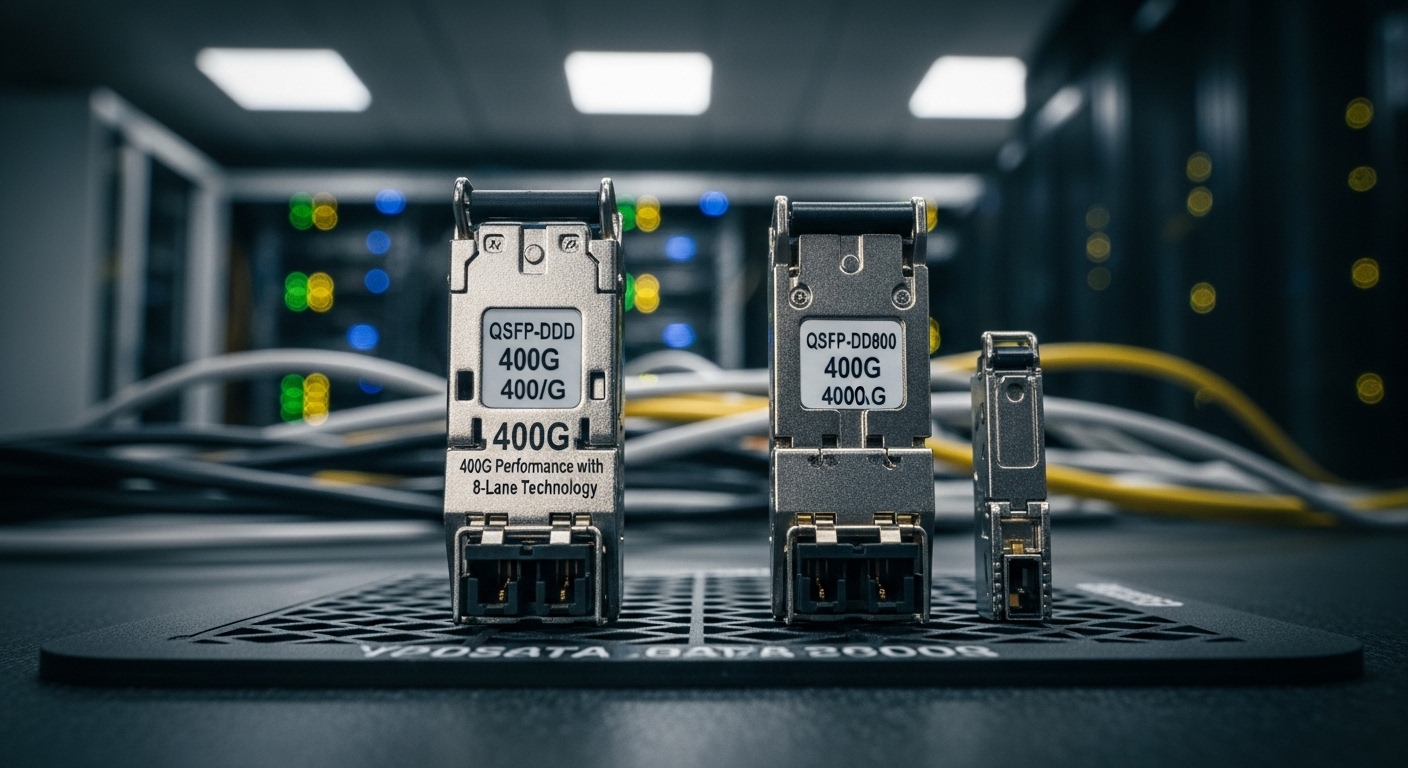
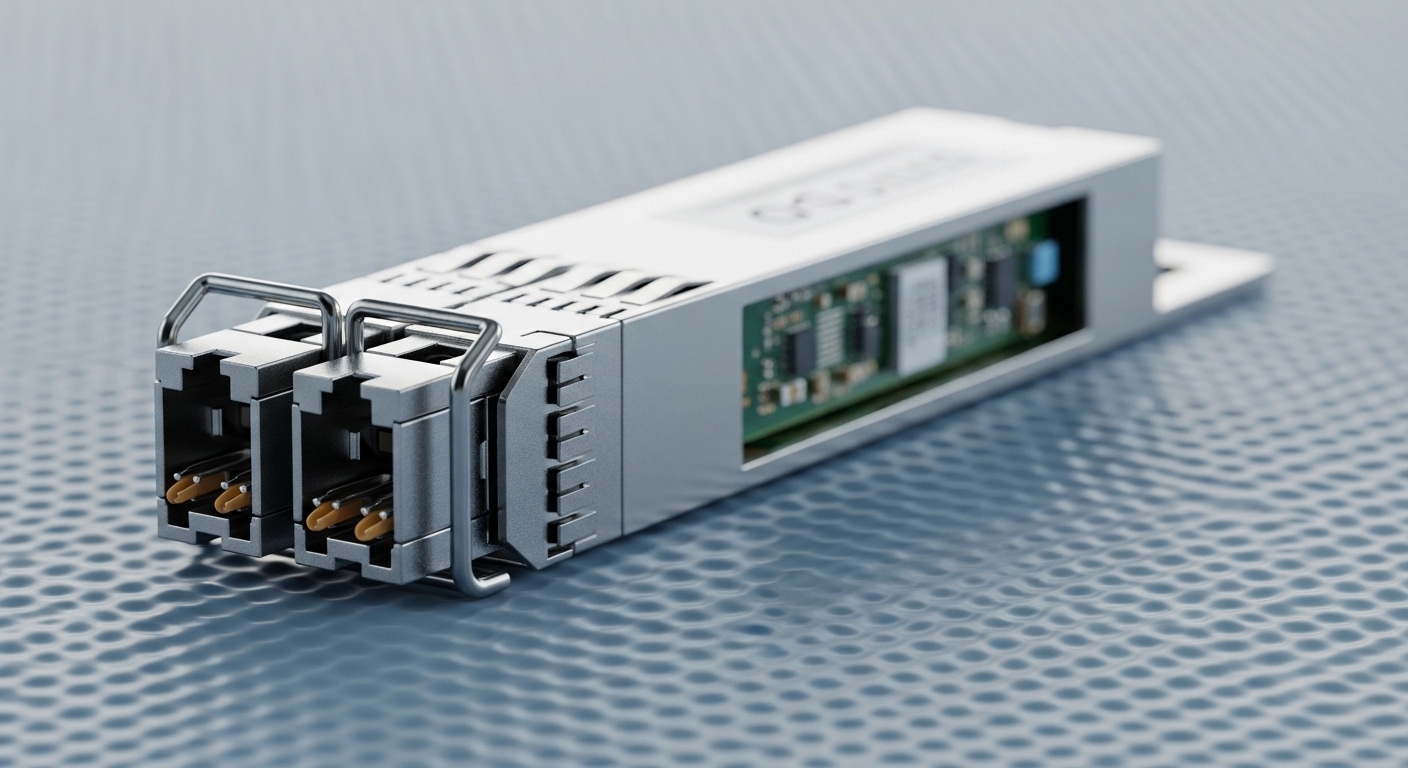
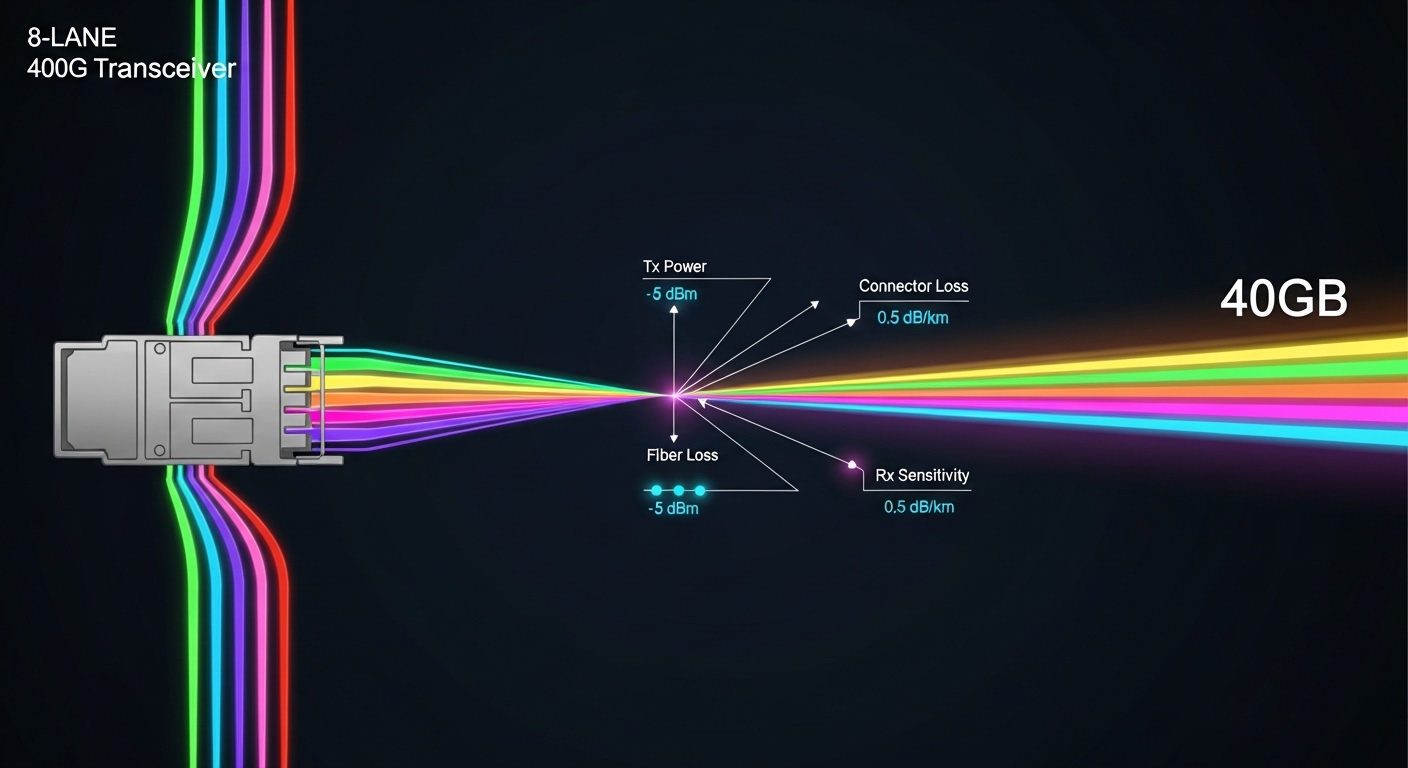
QSFP-DD 400G transceivers target 400G Ethernet and similar 400G client interfaces while using a form factor and electrical interface designed for high-density switches. The “8-lane” concept means the 400G payload is distributed across 8 parallel high-speed lanes between the host switch and the optics module. In practice, the host serializer/deserializer (SerDes) and the module’s lane mapping must match the switch vendor’s expected electrical pinout and retimer behavior.
From a procurement standpoint, the biggest operational question is not only optical reach, but also how the module’s lane rate and modulation format align with the switch’s PHY implementation. IEEE 802.3 defines Ethernet optical interfaces and link behavior, but the exact lane mapping and diagnostics can still vary by vendor implementation. Always validate against the switch’s approved transceiver list (or at minimum against documented electrical compatibility requirements) rather than assuming “QSFP-DD 400G equals QSFP-DD 400G.” ANSI/IEEE Ethernet optical interface references
Spec comparison that matters: reach, wavelength, power, and DOM
For QSFP-DD 400G, buyers typically choose between short-reach multimode and longer-reach single-mode variants. For multimode, wavelength is commonly centered around 850 nm (OM4/OM5 fiber), while single-mode variants use 1310 nm or 1550 nm depending on design. Power draw affects switch airflow and rack-level power density; DOM (Digital Optical Monitoring) affects operational visibility and incident response.
| Parameter | Typical QSFP-DD 400G SR8 (MMF) | Typical QSFP-DD 400G LR8 (SMF) | Typical QSFP-DD 400G ER8 (SMF) |
|---|---|---|---|
| Nominal wavelength | 850 nm | 1310 nm | 1550 nm |
| Reach (typical) | 100 m to 150 m on OM4/OM5 | 2 km to 10 km | 20 km to 40 km |
| Fiber type | OM4 or OM5 multimode | Single-mode (OS2) | Single-mode (OS2) |
| Connector style | Duplex LC (typical for optics cages) | Duplex LC (typical) | Duplex LC (typical) |
| Data rate / lanes | 400G aggregate, 8-lane optical interface | 400G aggregate, 8-lane optical interface | 400G aggregate, 8-lane optical interface |
| Optical monitoring | DOM via I2C/SFF multi-source patterns; vendor-specific thresholds | DOM via I2C/SFF multi-source patterns; vendor-specific thresholds | DOM via I2C/SFF multi-source patterns; vendor-specific thresholds |
| Operating temperature | Commonly commercial and extended variants; verify range | Commonly industrial/extended variants; verify range | Commonly industrial/extended variants; verify range |
| Typical power class | Often high-power class relative to older 100G optics; verify datasheet | Often similar power class; verify exact module | Often higher due to longer reach optics; verify exact module |
Procurement note: the table above reflects typical industry patterns for 8-lane QSFP-DD 400G optics, but real BOM decisions must be anchored to the exact vendor datasheet and the switch’s transceiver compatibility constraints. The safest path is to buy modules that explicitly list the target switch models in their compatibility guidance, or that are on the switch vendor’s validated optics list. SNIA storage and optics operational practices
Deployment scenario: leaf-spine 400G with mixed reach and strict airflow
In a 3-tier data center leaf-spine topology with 48-port 400G-capable ToR switches, an operator might deploy QSFP-DD 400G SR8 for leaf-to-spine within a 60 m structured cabling span on OM5, while using QSFP-DD 400G LR8 for spine-to-aggregation in a 3.5 km metro-style segment between buildings. Assume 96 active 400G links per spine pair; that is 192 QSFP-DD modules under peak utilization. Field experience shows that even if optical reach is adequate, thermal headroom can still be the failure driver: modules with higher power dissipation can push fan curves and raise transceiver temperature, accelerating laser aging and causing intermittent CRC bursts.
In this scenario, procurement should require DOM telemetry validation during acceptance testing: verify that reported transmit power and receive power are within vendor thresholds and that the switch logs do not show “unsupported module” or “DOM alarm” events. Also ensure you have a fiber plant verification step: measure end-to-end loss and connector cleanliness, because 400G error patterns often present as bursty link instability rather than immediate link down events.
Selection criteria checklist for QSFP-DD 400G buys
Use this ordered checklist when you compare OEM vs third-party QSFP-DD 400G 8-lane transceivers and when you negotiate delivery terms.
- Distance and fiber plant limits: confirm measured link loss and polarity/connector mapping; do not rely on “rated reach” alone.
- Switch compatibility: validate against the exact switch model and software release; confirm lane mapping and DOM alarm interpretation.
- Optics class and wavelength: SR8 at 850 nm for MMF, LR8/ER8 at 1310/1550 nm for SMF; match to the installed fiber type.
- DOM support and threshold behavior: ensure the module exposes standard DOM fields and that the switch can read them without false positives.
- Operating temperature and airflow assumptions: verify module temperature range and compare against measured transceiver cage temperatures in your racks.
- Supply chain lead time and allocation risk: request a firm ship date and buffer stock policy; ask whether vendors maintain last-time-buy commitments.
- Vendor lock-in and RMA friction: quantify warranty terms, RMA turnaround, and shipping costs for failed optics.
- Compliance and optics safety: confirm laser classification and regulatory compliance matching your deployment region.
Pro Tip: Field troubleshooting often reveals that “it negotiates but it flaps” is caused by marginal receive power caused by connector contamination or patch-cord aging. Before you assume a bad module, clean LC connectors, re-measure optical power, and compare DOM “Rx power” trends over several hours; optics that pass a short acceptance test can fail under sustained thermal soak.
Common pitfalls and troubleshooting patterns
Below are failure modes procurement and operations teams repeatedly encounter when deploying QSFP-DD 400G 8-lane transceivers.
-
Pitfall 1: Wrong fiber type or OM grade assumptions
Root cause: SR8 optics are specified for OM4/OM5 loss budgets; using legacy OM2/older patch cords can exceed link power penalties.
Solution: require measured link attenuation and vendor-accepted fiber cabling documentation; stage a rollback plan using SMF optics if needed. -
Pitfall 2: DOM alarms due to threshold mismatch
Root cause: third-party optics may report DOM fields that the host interprets differently, triggering “warning” states that correlate with elevated BER events under load.
Solution: confirm DOM field mapping on the target switch release; during acceptance tests, capture DOM readings during traffic bursts and watch for correlating alarms. -
Pitfall 3: Thermal headroom ignored during fan curve changes
Root cause: some racks change airflow during maintenance or power events; higher module power dissipation can increase transceiver temperature and reduce margin.
Solution: log temperature sensors and DOM laser bias current; set operational thresholds and align fan/power policies with optics thermal limits. -
Pitfall 4: Lane mapping compatibility not validated
Root cause: “works on one switch, fails on another” can happen when electrical interface expectations differ by vendor implementation.
Solution: run a compatibility test matrix across switch models; procure modules only after passing link bring-up and error-rate tests.
Cost and ROI: balancing module price against downtime and spares
Typical market pricing for QSFP-DD 400G optics varies widely by reach class and by whether you buy OEM or third-party. As a procurement planning baseline, SR8 modules often land in a lower price band than long-reach LR8/ER8 optics; OEM tends to cost more but can reduce compatibility and RMA friction. Third-party modules can be cost-effective, but you must budget for acceptance testing time, potential interoperability workarounds, and higher spares consumption if your environment runs hot or if your fiber plant is inconsistent.
TCO drivers for 400G optics include: (1) failure rate under your thermal and power conditions, (2) labor time to swap failed optics and re-clean connectors, (3) RMA logistics, and (4) warranty coverage duration. ROI improves when optics are compatible on the first attempt and when DOM telemetry reduces mean time to repair (MTTR). If your lead time is constrained, pay attention to allocation risk: buying “cheapest now” can backfire if you cannot replenish during a staged rollout.
FAQ
What does “QSFP-DD 400G 8-lane” mean operationally?
It means the 400G aggregate link is implemented across 8 parallel lanes in the transceiver-to-switch electrical/optical interface. Your switch and the module must agree on lane mapping and PHY behavior, so compatibility validation is essential.
Is SR8 at 850 nm always the best choice for 400G?
Not always. SR8 is cost-effective for short distances on OM4/