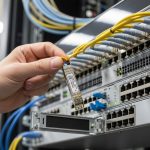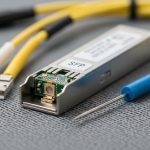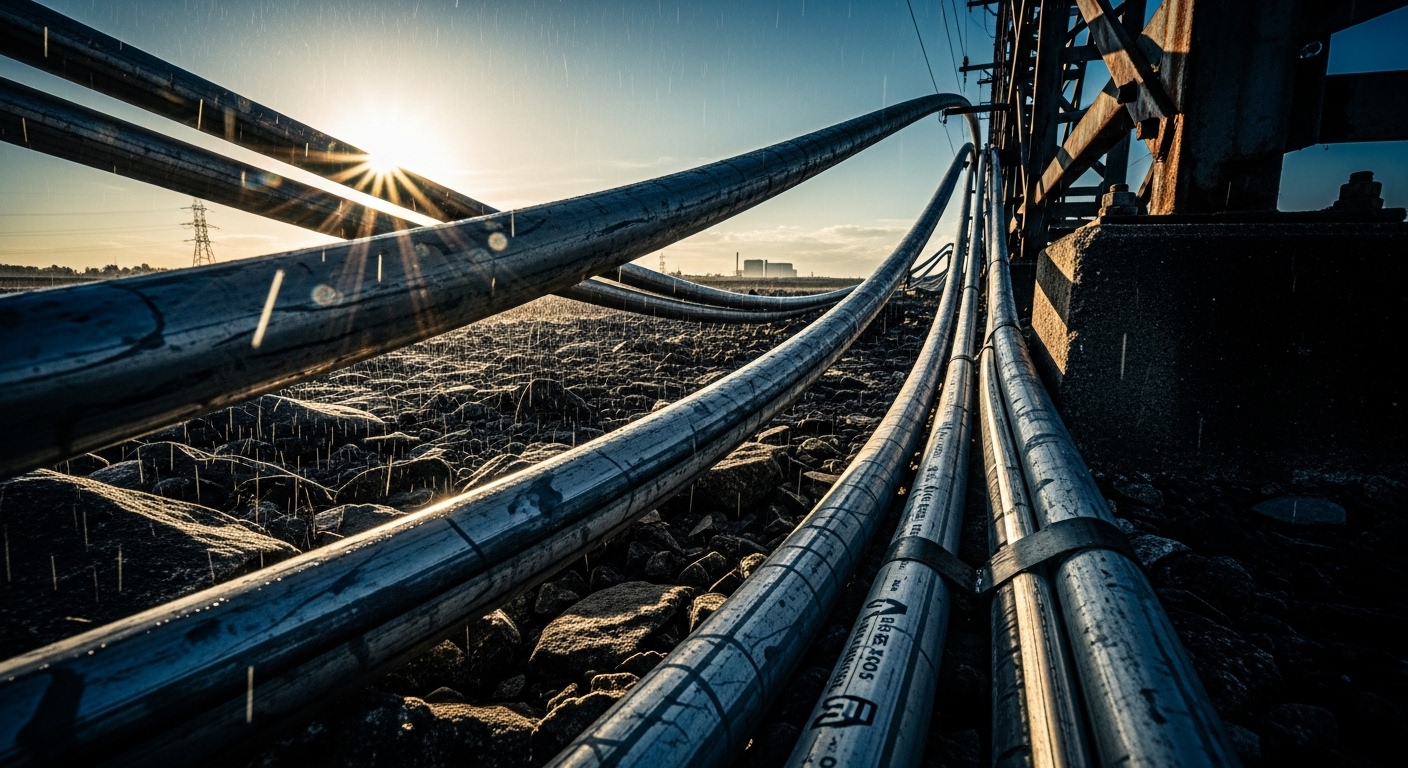
When an industrial site starts losing link stability, the root cause is often not the SFP module itself, but the path that light takes through harsh routing. This article helps field engineers, plant network owners, and integrators select outdoor armored fiber for industrial SFP deployments that must survive vibration, moisture, and temperature swings. You will learn the practical specs that matter, how to validate compatibility with switch optics, and how to troubleshoot the failures that show up after a few rainstorms and a few weeks of machine cycling.
Why outdoor armored fiber changes the odds for industrial SFP links
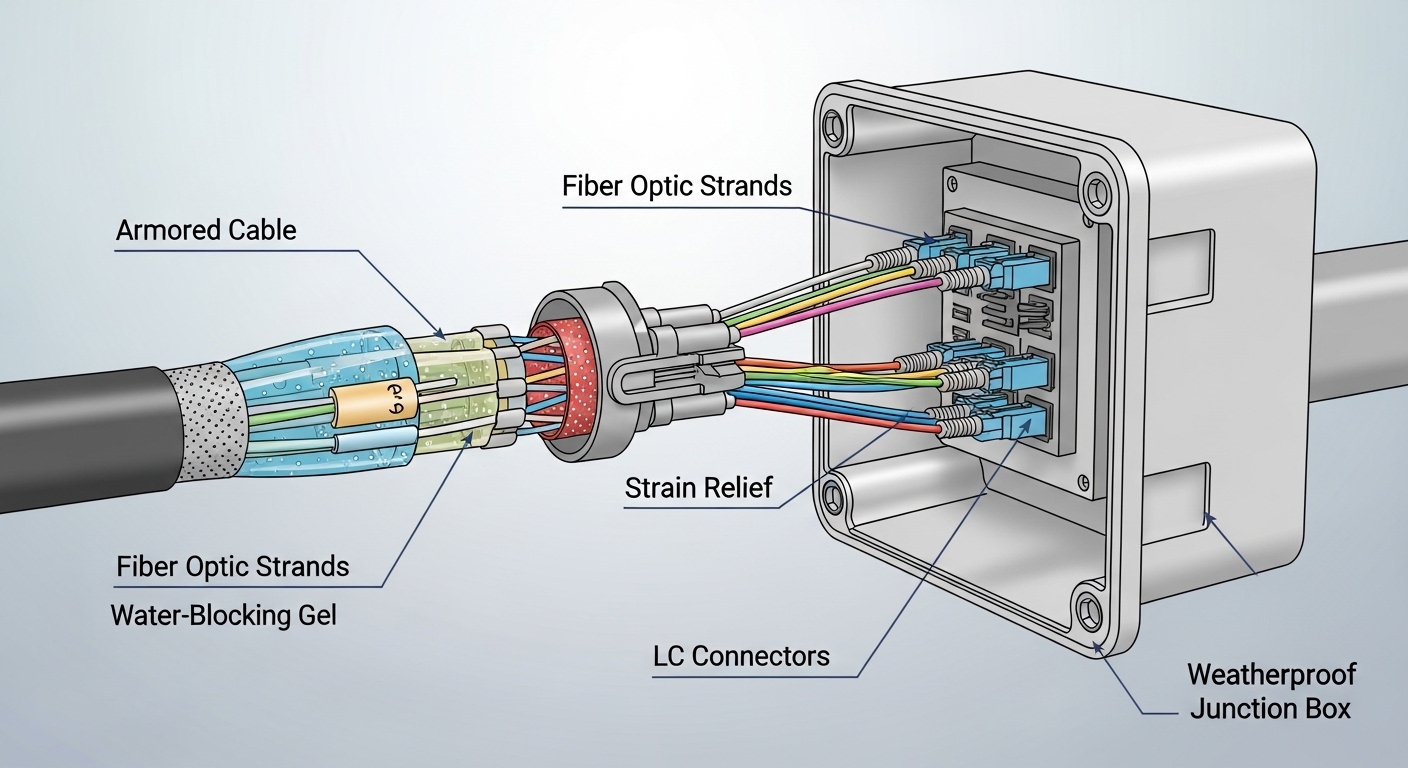
Industrial networks often run SFP-based Ethernet links across cable trays, poles, and machine rooms where the fiber can be pulled, bent, and occasionally hit by equipment. Outdoor armored fiber is designed to resist crushing loads and impact, while also improving resistance to water ingress compared with loose-tube indoor cable. In practice, the armored sheath helps preserve the fiber’s micro-bend sensitivity so your optical budget stays inside the margin defined by the IEEE 802.3 link budget for the chosen wavelength.
For SFP deployments, the optical interface is typically governed by IEEE 802.3 (for example, 10GBASE-SR and 10GBASE-LR link behavior) and by the SFP vendor’s datasheet for receiver sensitivity and nominal launch power. Your cable choice affects attenuation and reflective events at connectors and splices, which then affects whether the SFP’s receiver stays above threshold. The “right” armored fiber is the one that keeps insertion loss low and minimizes random events that trigger CRC errors and link drops.
Pro Tip: Before blaming the SFP, measure end-to-end loss with an OTDR and an optical power meter. If you see localized spikes near splice closures or armored entry glands, the cable may be fine electrically, but the terminations are generating excess reflectance and return loss penalties.
Key specifications to match outdoor armored fiber with SFP optics
Engineers usually start with the SFP type (10G SR, 1G SX, 1G LX, 10G LR, etc.) and then choose the cable parameters that fit the optical budget. The most common outdoor armored fiber choices for SFP optics are multimode OM3 or OM4 for short reach and single-mode OS2 for long reach. Armoring does not replace optical performance; it adds mechanical protection, so you must still meet attenuation and bend radius requirements.
Comparison table: typical armored fiber options for SFP deployments
| Fiber type | Typical wavelength | Nominal attenuation | Connector/termination | Armoring & protection | Operating temp range | Common SFP modules |
|---|---|---|---|---|---|---|
| OM3 multimode | 850 nm | ~3.0 dB/km @ 850 nm | LC/UPC or LC/APC (use UPC for MM) | Ripcord + steel/aluminum armor or corrugated steel | -40 C to +75 C (varies by vendor) | Cisco SFP-10G-SR, Finisar FTLX8571D3BCL |
| OM4 multimode | 850 nm | ~2.5 dB/km @ 850 nm | LC/UPC | Same armored outdoor constructions | -40 C to +75 C (varies) | FS.com SFP-10GSR-85 (example class) |
| OS2 single-mode | 1310 nm or 1550 nm | ~0.35 dB/km @ 1310 nm | LC/UPC or LC/APC (APC often for higher reflectance control) | Armored jacket + water-blocking gel | -40 C to +80 C (varies) | Cisco SFP-10G-LR, vendor 1310/1550 LR optics |
Optical budget reality: what you must account for
Your SFP datasheet gives a maximum reach based on typical link budgets, but industrial deployments add extra loss from armored routing. Count splice loss (commonly 0.1 to 0.3 dB per splice when done well), connector loss (often 0.2 to 0.5 dB per mated pair depending on quality), and added fiber attenuation from temperature and aging. Also include passive components like patch panels, enclosure bulkheads, and any tight bends required near cabinets.
If you are using 10G SR optics over multimode, keep in mind that the SFP’s internal launch conditions and the cable’s modal bandwidth interact. OM4 generally provides better margin than OM3 for the same reach because it supports more optical power distribution within the multimode profile. For outdoor routes with long ladder-tray segments, OS2 single-mode is often the safer choice even if the initial optics cost is higher.
Deployment scenario: leaf-spine edge links with SFP + armored fiber
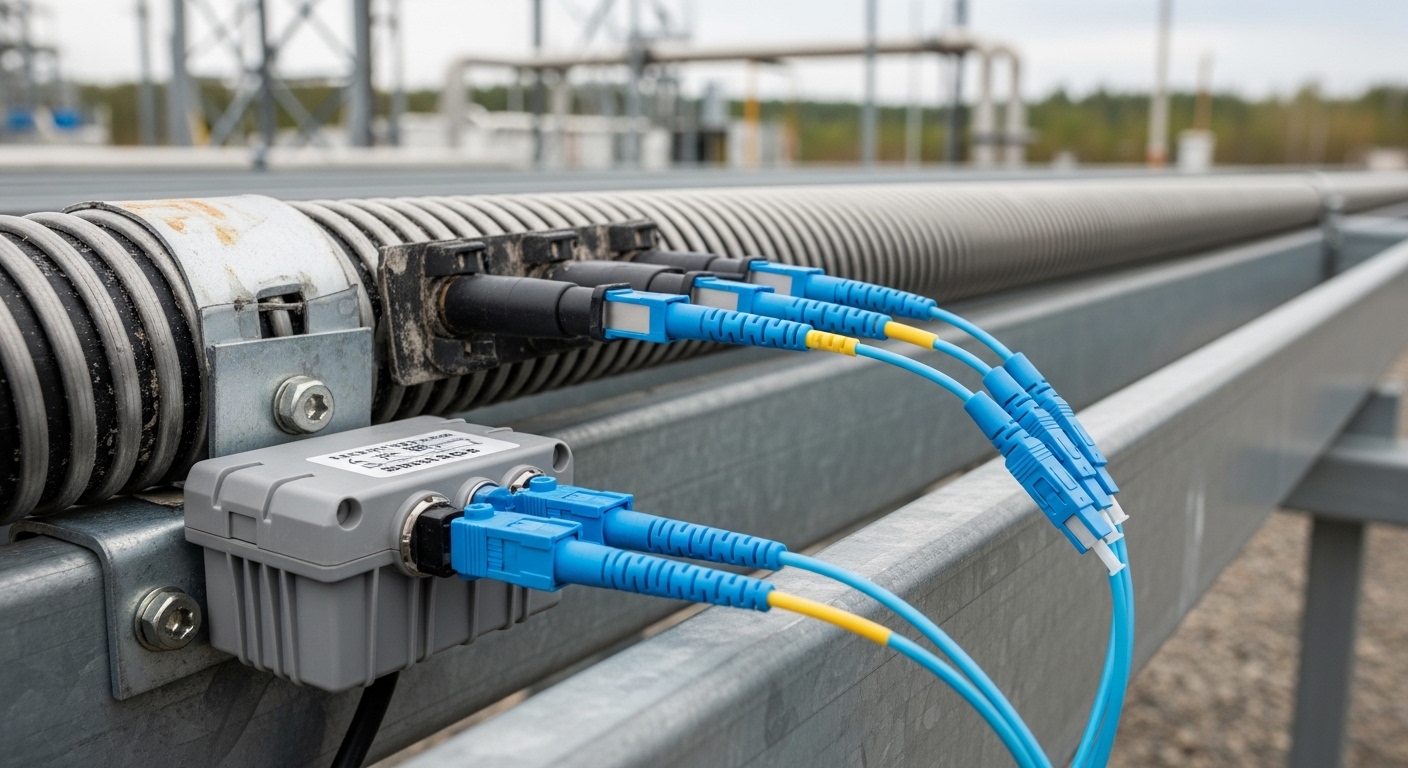
Consider a manufacturing campus with a 3-tier setup: two core switches, multiple distribution switches, and 48-port ToR switches in each production hall. Edge devices connect to machine controllers using 10G SFP+ uplinks, with runs of 300 to 1200 meters from a distribution closet to exterior cabinets on the yard fence line. The integrator uses 10GBASE-LR optics over OS2 armored fiber for the long outdoor segments, while keeping 10GBASE-SR over OM4 armored fiber for indoor-to-closet runs under 300 meters.
In this scenario, the field team installs fiber in armored conduit sections where vehicles and forklifts can physically contact the tray. Every cabinet entry uses a drip loop, a sealed gland, and a splice closure rated for outdoor use. After commissioning, they record baseline OTDR traces and store them with the SFP serial numbers and DOM readings, so later link issues can be correlated to changes in loss or connector reflectance.
When a storm hits, the most common failures are not total cable breaks but water ingress at terminations that degrade connector performance. By using armored outdoor fiber with water-blocking and by controlling bend radius during installation, the team keeps receiver margin stable. If CRC errors spike, they check for patch cord damage at the cabinet door and verify SFP DOM values like laser bias current and received power.
Selection criteria checklist for outdoor armored fiber in SFP projects
Engineers rarely choose cable by “armor thickness” alone. Instead, they match the cable to the SFP optics, then validate mechanical survivability for the route and enclosure environment.
- Distance and optical budget: confirm whether you need multimode OM3/OM4 or single-mode OS2; compare to SFP reach and include splices, connectors, and patch panels.
- Switch and SFP compatibility: check vendor compatibility matrices and whether the switch expects specific transceiver behavior (including DOM support).
- Connector strategy: decide LC/UPC vs LC/APC based on reflectance control needs; keep connector styles consistent end-to-end.
- Armoring and routing constraints: ensure the cable construction matches the mechanical environment (crush resistance, impact risk, and burial or conduit requirements).
- Water-blocking and enclosure ratings: verify outdoor ingress resistance and that your splice closures and glands are rated for the same environment.
- Operating temperature and sunlight exposure: check the datasheet for the jacket’s temperature range and UV resistance if the cable will be exposed above grade.
- DOM and monitoring needs: ensure the SFP supports DOM so you can track received power trends and catch degradation early.
- Vendor lock-in risk and spares planning: standardize on fiber types and connectorization; plan spares for both SFPs and patch cords to reduce downtime.
Common pitfalls and troubleshooting steps for outdoor armored fiber
Even with good hardware, field failures cluster around a few repeatable mistakes. Below are concrete failure modes with root causes and fixes that show up in industrial SFP deployments.
Pitfall 1: Mixing fiber types or mismatched optics
Root cause: installing OM3/OM4 cabling where single-mode OS2 optics were expected, or vice versa, which can cause severe link loss and unstable reception. Sometimes the cable marking is swapped during pull-through.
Solution: verify fiber type using a tester that can identify core/cladding specs, then label both ends and the splice closure. Confirm SFP wavelength (850 nm vs 1310 nm/1550 nm) against the cable type before energizing.
Pitfall 2: Exceeding bend radius during tray routing
Root cause: tightening the cable around sharp cabinet corners or using makeshift ties that compress the armored jacket, creating micro-bends. Optical attenuation increases, and the SFP receiver may hover near threshold.
Solution: follow the manufacturer’s minimum bend radius (for many armored cables it is on the order of tens of millimeters to low hundreds, depending on construction). Re-route the cable and retest with OTDR to confirm the loss profile returns to baseline.
Pitfall 3: Poor termination quality in weatherproof enclosures
Root cause: contamination on connector endfaces, improper polishing, or water ingress at bulkheads. In armored outdoor environments, condensation can form inside enclosures and migrate along fibers.
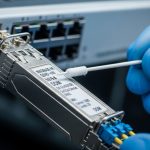
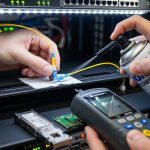
Solution: use proper cleaning procedures (lint-free wipes and approved cleaning tools), inspect with a fiber microscope, and replace suspect patch cords. If reflectance is high, re-terminate with correct connector geometry and verify with return loss measurements.
Pitfall 4: Overlooking SFP DOM warnings and ignoring gradual degradation
Root cause: ignoring received power drift until the link fully drops. Laser aging, vibration, and connector wear can reduce optical power gradually.
Solution: poll DOM periodically and set thresholds for action. If received power drops by a few dB from baseline, investigate connectors, patch panels, and enclosure entries before complete failure.
Cost, ROI, and what it really costs to keep the link alive
Pricing varies by fiber type, armor construction, and length, but a realistic budget range for armored outdoor fiber installed in industrial settings often ends up higher than indoor-grade cable because of conduit work, glands, and splice closures. As a reference point, third-party 10G optics like FS.com SFP-10GSR-85 or similar classes may cost less than OEM, but you must validate compatibility with your exact switch model and firmware revision.
For total cost of ownership, the biggest ROI comes from fewer truck rolls and faster restoration. If a link fails due to water ingress at a termination, replacing a single patch cord and re-cleaning connectors can be cheaper than replacing an entire run, but only if you built the system with accessible splice closures. Armored outdoor fiber can cost more per meter than indoor cable, yet it often pays back by preventing crush damage and stabilizing performance over years.
In many sites, the “hidden” cost is testing and documentation. Baseline OTDR traces and DOM logs add labor during commissioning, but they reduce mean time to repair later by narrowing the search to cable vs optics vs terminations.
FAQ about outdoor armored fiber for industrial SFP deployments
What fiber type should I choose for outdoor armored fiber with 10G SFP+
If your outdoor route is long or you need maximum margin, choose OS2 single-mode with 1310 or 1550 nm LR-class optics. For shorter runs under a few hundred meters, OM4 multimode with 850 nm SR-class optics can work well, but confirm exact reach against your SFP datasheet and include splices and connectors.
Do I need LC/APC or LC/UPC connectors for outdoor armored fiber
For most multimode SR links, LC/UPC is common. For some single-mode deployments, teams prefer LC/APC to reduce back-reflections, especially where connectors face each other through patch panels or where reflectance-sensitive optics are used. Match connector type across the link and follow your SFP vendor guidance.
How can I confirm the fiber is truly OS2 or OM4 after installation
Use labeling plus testing. A fiber identifier and OTDR can reveal differences in attenuation and reflectance characteristics; for formal acceptance, follow your organization’s test procedure and record results at commissioning for future comparison.
Will third-party SFPs work with my switch on outdoor armored fiber links
Sometimes yes, but it depends on the switch model and transceiver compatibility. Validate with your exact vendor SFP list or compatibility matrix, and confirm DOM behavior if your operations team relies on received power telemetry.
What is the most common cause of outdoor SFP link flaps
Often it is not the optics but the termination environment: water ingress, loose bulkheads, or damaged patch cords at enclosure doors. Check DOM trends, then verify connector cleanliness and run OTDR to detect localized loss increases.
How should I plan spares for industrial outdoor armored fiber links
Keep spare SFPs of the same type and wavelength class, plus spare patch cords and a small kit for connector cleaning and inspection. Also consider spare pre-terminated jumpers for cabinets so restoration does not require field re-termination during bad weather.
If you want a reliable industrial rollout, treat outdoor armored fiber as a full link system: optics, cable construction, termination quality, and monitoring all work together. Next, review industrial SFP compatibility and DOM to understand how to choose transceivers that match your switch behavior and telemetry expectations.
Author Bio: I have worked on field acceptance testing for SFP-based Ethernet links, running OTDR baselines, DOM telemetry checks, and termination rework in outdoor cabinets. I focus on practical engineering decisions that reduce downtime and make optical links measurable, not guesswork.