
In modern 3-tier and spine-leaf data centers, ports are upgrading to 400G faster than cabling and power budgets can comfortably absorb. This article maps the key optical trends behind 400G transceiver evolution, then projects what changes next as reach, power, and modulation formats converge. It helps network engineers, facilities teams, and procurement leads evaluate modules during migrations, especially when switching between vendors and switch ASIC generations.
From 100G lanes to 400G optics: what changed mechanically and electrically
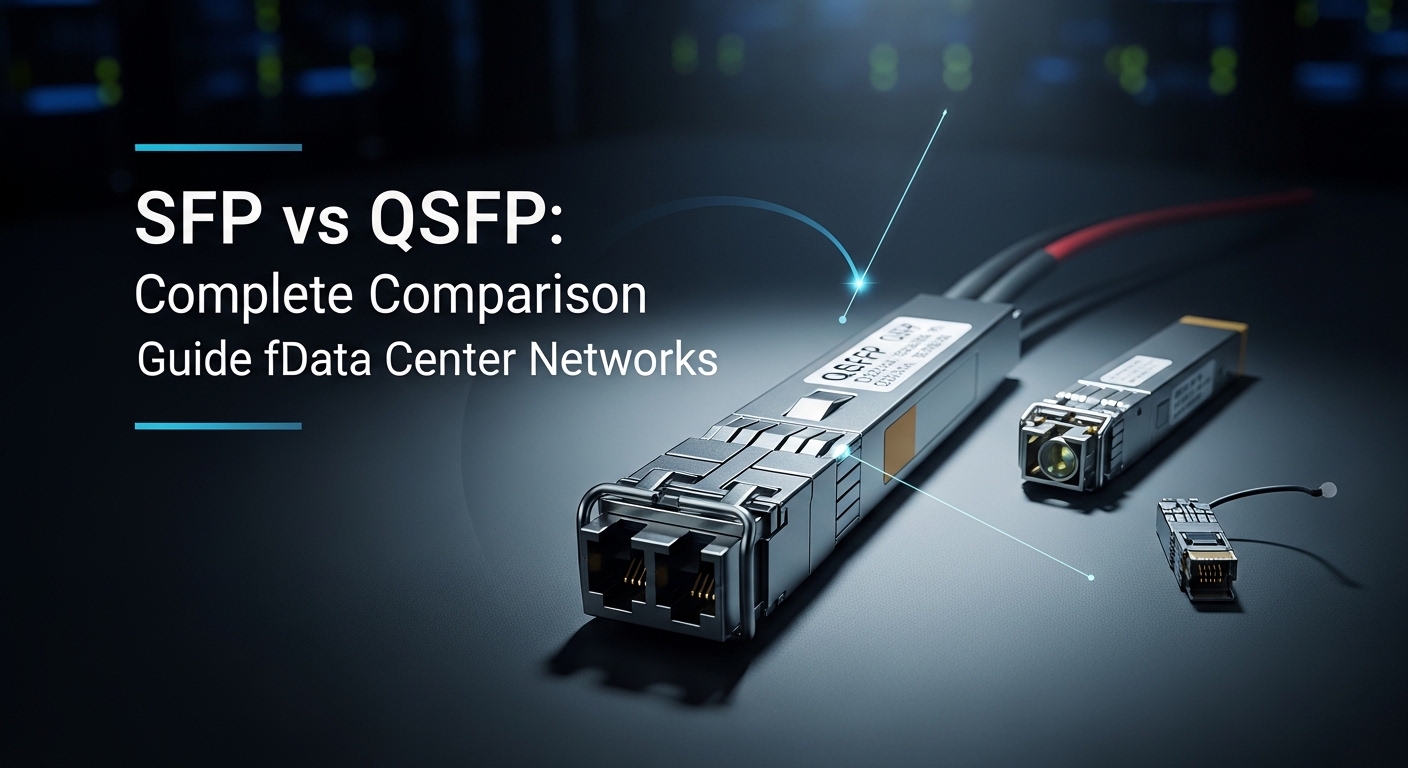
Early 400G implementations largely repackaged higher lane counts and improved optics to fit established module footprints. The operational shift is that 400G is no longer just “more fibers”; it is a co-design between the host SerDes, the module electrical interface, and the optics that must meet link budgets under harsh thermal constraints. IEEE 802.3 specifies Ethernet PHY behavior, while module standards define mechanical and electrical interfaces that strongly influence compatibility and power consumption; see IEEE 802.3.
In practice, the migration path is often: QSFP-DD and OSFP-class optics for direct-detect multimode and single-mode, then increasing use of coherent optics for long-haul and data-center interconnect where reach and fiber scarcity dominate. Vendor datasheets also show that 400G direct-detect modules typically trade off reach versus power and require strict launch conditions and cleaning discipline.
Direct-detect vs coherent: the optical trends that drive reach and cost
The dominant technical fork in 400G is whether the link uses direct detection (IM/DD) or coherent detection with digital signal processing (DSP). Direct-detect modules for short-reach and some extended-reach scenarios often use standardized wavelengths (e.g., near-850 nm for multimode or around 1310 nm for certain single-mode variants) and rely on tight optical budgets. Coherent systems, by contrast, can reuse spectrum efficiently and extend reach, but they introduce higher DSP complexity and stricter requirements for polarization handling and frequency stability.
From an engineering standpoint, coherent optics change operational workflows: you manage additional commissioning parameters, monitor DSP alarms, and ensure optical path stability. Still, as power and density improvements continue, coherent links become increasingly viable for data-center interconnect and metro aggregation where fiber count and cost per kilometer matter.
| Parameter | 400G Direct-Detect (QSFP-DD/OSFP class) | 400G Coherent (CFP2-DCO / pluggable coherent) |
|---|---|---|
| Typical detection | IM/DD (photodiode) | Coherent (DSP-based) |
| Wavelength bands | 850 nm (MM) or 1310/1550 nm variants (SM, depends on SKU) | C-band or O-band depending on model |
| Reach (typical) | From tens of meters (MM) up to ~10 km-class SM variants | Often tens of km up to 80 km-class in metro deployments |
| Fiber type | MMF (OM4/OM5) or SMF-28 depending on module | SMF-28; may require dispersion-aware planning |
| Power (module-level) | Generally lower than coherent, but varies by implementation | Higher due to DSP and coherent optics |
| Connector / optics | MT ferrules for MPO/MTP; LC for certain SM SKUs | Commonly LC/duplex or integrated optical interface per vendor |
| Operating temp | Commercial and extended options vary by vendor SKU | Depends on pluggable coherent form factor; often extended-grade |
Deployment reality: 400G upgrades in a leaf-spine fabric
Consider a leaf-spine deployment with 48-port 400G-capable top-of-rack switches at each leaf, aggregated into a spine using 2-tier redundancy. A common migration plan is to start with direct-detect 400G for intra-fabric links where you can keep cabling simple: OM5 MPO trunks for short reach and SMF for longer runs. Engineers typically enforce a link validation workflow: measure optical power at commissioning, verify polarity and MPO keying, and log per-lane receive power and error counters.
In one field-style scenario, each leaf-to-spine bundle uses 4x 100G equivalent capacity today and must transition to 400G to reduce port count and improve oversubscription behavior. Operationally, teams target stable thermal conditions so that module temperature stays within datasheet limits; a frequent trigger for marginal links is airflow misalignment after rack remounts or cable rework. For the optical trends driving this phase, module vendors are optimizing for lower per-port power and higher lane density, but the host-switch optics support matrix still governs what will work.
Selection checklist: how engineers choose 400G optics under optical trends pressure
When procurement meets engineering validation, the checklist matters because compatibility failures can cost days. Use the ordered decision steps below so you do not discover incompatibilities after installation.
- Distance and fiber plant constraints: confirm OM4 versus OM5 availability, and validate SMF route lengths and splice loss budgets.
- Switch compatibility and optics support: verify the exact switch model and software release that supports the module vendor and SKU; consult vendor compatibility matrices. Cisco Support provides examples of platform-specific guidance.
- DOM and monitoring requirements: ensure Digital Optical Monitoring support matches your telemetry tooling (thresholds, alarms, polling behavior).
- Power and thermal envelope: check module power draw and confirm front-to-back airflow meets the switch and transceiver operating temperature range.
- Reach class and link budget margin: validate transmitter optical power, receiver sensitivity, and any required penalty terms (connector, splice, aging).
- Operating temperature and derating: plan for seasonal variation; extended temperature SKUs are not automatically drop-in compatible.
- Vendor lock-in and supply risk: compare OEM modules versus reputable third-party options; include lead times and RMA rates in TCO.
Pro Tip: In 400G direct-detect deployments, the biggest “mystery” failures are often not transceiver defects but lane-level optical budget collapse caused by MPO polarity mistakes or dirty endfaces after repeated maintenance. Treat cleaning and polarity verification as a first-class change-management step, not an afterthought.
Common mistakes and troubleshooting in 400G optics
Even experienced teams hit predictable failure modes during 400G rollouts. Below are concrete issues with root causes and corrective actions.
- MPO polarity mismatch (root cause: keying/polarity confusion): symptoms include link flaps or one-way traffic. Solution: verify MPO key orientation, confirm polarity mapping (A-to-B versus vendor-specific conventions), and re-terminate or re-patch with documented polarity labels.
- Dirty connectors after cable rework (root cause: endface contamination): symptoms include elevated error counters and marginal receive power. Solution: inspect under fiber scope, clean with validated methods, then re-measure receive power per lane; repeat after any maintenance event.
- Thermal overstress (root cause: airflow blockage or high ambient): symptoms include intermittent link drops under load. Solution: restore airflow paths, confirm switch fan profiles, and ensure module temperature stays within the specified operating range.
- Host-software incompatibility (root cause: unsupported optics profile): symptoms include module not recognized or PHY instability. Solution: upgrade switch firmware to a version that supports the target module SKU, or select an optics profile explicitly listed for that platform.
Cost and ROI note: what optical trends mean for total cost of ownership
In typical procurement cycles, OEM 400G optics can cost more upfront than third-party modules, but the cost difference is rarely just the unit price. TCO is driven by failure rates, RMA logistics, downtime risk, and the engineering time spent on compatibility validation. In many data centers, the payback comes from reduced port count and improved oversubscription efficiency; however, if the optics plant requires frequent rework due to connector handling, labor can dominate savings.
As a rough planning heuristic, third-party direct-detect 400G modules are often priced below OEM, while coherent optics carry a larger premium due to DSP and optics complexity. Regardless of supplier, budget for spares and include cleaning supplies and inspection tooling in the program so that optical trends translate into operational stability rather than recurring troubleshooting.
FAQ: 400G optics decisions under optical trends
Which 400G optics should I start with for leaf-spine?
For most intra-fabric links, start with direct-detect modules that match your fiber type and reach class, then validate with the exact switch model and firmware version. If fiber scarcity or longer runs dominate, evaluate coherent options for interconnect segments.
Do I need to worry about DOM support?
Yes. If your NOC tooling relies on optical telemetry thresholds and alarm behavior, confirm DOM support and how it maps into your monitoring system. Mismatched threshold defaults can hide early degradation signals.
What is the most common cause of intermittent 400G link drops?
Intermittent drops frequently trace back to optical contamination or polarity errors, especially after patching or rack changes. Thermal problems and unsupported optics profiles also show up, but they often correlate with load or ambient changes.
Are third-party transceivers safe for production?
They can be, but only after compatibility testing on the specific switch platform and software release. Include burn-in testing and verify monitoring behavior, and maintain a clear RMA process to control downtime risk.
How do optical trends affect future-proofing?
Trends toward higher lane density, improved power efficiency, and wider adoption of coherent for longer reach mean that your platform roadmap should prioritize optics support matrices and firmware agility. Plan spares by form factor class, not just by wavelength.
Where should I look for authoritative module and PHY requirements?
Use IEEE 802.3 for Ethernet PHY behavior and consult vendor datasheets for module electrical and optical specs. For platform compatibility, rely on switch vendor optics support documentation and release notes.
Optical trends in 400G transceivers are reshaping how teams balance density, reach, and operational risk, with direct-detect dominating short-reach fabrics and coherent increasingly relevant for metro and interconnect. Next, validate your current fiber plant and switch compatibility using the checklist, then compare module SKUs using the spec table and your commissioning measurements via fiber optic transceiver selection workflow.
Author bio: Field-focused network optics researcher supporting multi-vendor 400G migrations,
