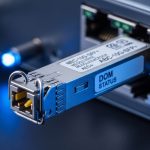
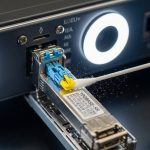
When an optical module shortage hits, the real cost is not the purchase price but the outage window: a failed link, a stalled provisioning task, and a missed maintenance window. This article helps data center and campus network engineers build a practical lead-time plan, so you can keep ports lit even when vendors ship late. You will get a top list of tactics, concrete operating details, a specs comparison, and troubleshooting patterns that show up in day-2 operations.
Top 8 lead-time tactics for optical module shortage resilience
Extended lead times for optical transceivers are driven by supply chain bottlenecks, constrained laser and driver components, and waves of demand from new builds and upgrades. The goal is to reduce your probability of being stuck with stranded optics by combining demand forecasting, inventory strategy, and compatibility validation. Below are eight tactics field teams typically deploy when the risk of optical module shortage becomes operationally visible.
Start with a link-by-link demand forecast, not a global count
Instead of ordering “N transceivers,” forecast by link: interface speed, vendor platform, fiber type, connector style, and expected replacement cycle. In a typical 3-tier data center (leaf-spine) you may see 48x10G ToR ports per rack; by month 6 of a scale-out, you can estimate the number of new optics needed based on rack additions and expected break-fix rate. A useful operational metric is the last 12 months of optics removals per 1,000 active ports, then apply it to your projected active port count.
For example, if you operate 6,000 active 10G SFP+ SR links and your historical failure rate is 2.5 removals per 1,000 ports per year, you would plan roughly 15 replacements per year plus spares for planned moves/adds/changes. During an optical module shortage, teams often add a buffer of 25–50% on top of the computed need to cover extended replenishment cycles.
- Best-fit scenario: multi-rack growth with steady operations and measurable historical failure/replace rates.
- Pros: fewer surprise emergencies, better purchasing cadence.
- Cons: requires clean inventory tagging and interface-to-optic mapping.
Build a compatibility matrix per switch and optic type
Lead time planning fails if you order optics that later cannot be deployed due to platform-specific compatibility checks. Many switches validate optics via EEPROM identity and Digital Diagnostics Monitoring (DDM) fields; some platforms also enforce vendor allowlists or require specific transceiver types (SFP+ vs SFP, QSFP+ vs QSFP28, SR vs LR). Your compatibility matrix should map: switch model, port type, supported wavelengths (e.g., 850 nm), reach class, and whether the platform expects DOM.
For operational rigor, validate against the switch vendor’s transceiver guidance and verify that optical parameters match: receive sensitivity class, nominal center wavelength, and DDM compliance. IEEE standards define electrical and optical behavior at the PHY level; for Ethernet over fiber, the relevant base is IEEE 802.3 plus module-specific optical interface specs. Use vendor datasheets and compatibility notes as the gating source of truth. anchor-text: IEEE 802.3 Ethernet over fiber standards
- Best-fit scenario: mixed vendor environments, frequent hardware refreshes, or strict change control.
- Pros: fewer “arrived but unusable” shipments.
- Cons: matrix maintenance is real work; stale entries create risk.
Compare optics by spec and reach class, then standardize SKUs
During an optical module shortage, standardization is a force multiplier: fewer SKUs means fewer compatibility permutations and faster replenishment. Standardize around reach classes that match your plant: for short-reach, 850 nm multimode optics are common; for longer distances, single-mode solutions reduce fiber constraints but increase cost variability. Also standardize connector type (LC is typical for modern data centers) and module form factor (SFP+, SFP28, QSFP28, QSFP56).
Below is a compact comparison of common short-reach options used in many leaf-spine and access designs. Always confirm exact behavior with your switch vendor’s supported list and the module datasheet.
| Optic type | Wavelength | Target reach | Form factor | Connector | DOM / DDM | Typical power | Operating temperature |
|---|---|---|---|---|---|---|---|
| SFP+ SR (10G) | 850 nm | Up to ~300 m (MMF, OM3) or ~400 m (OM4) | SFP+ | LC | Usually supported | ~0.8–1.0 W | 0 to 70 C (commercial) or wider per datasheet |
| SFP28 SR (25G) | 850 nm | ~100 m (OM3) or ~150 m (OM4) | SFP28 | LC | Usually supported | ~1.0–1.5 W | 0 to 70 C typical |
| QSFP28 SR (100G) | 850 nm | ~70 m (OM3) or ~100 m (OM4) | QSFP28 | LC | Usually supported | ~3–4 W | 0 to 70 C typical |
| CWDM4 / LR4 (100G) | Single-mode, 4 wavelengths | ~10 km typical class (varies) | QSFP28 | LC | Usually supported | ~4–6 W | 0 to 70 C typical |
Concrete examples of widely used module families include Cisco-branded optics such as Cisco SFP-10G-SR, Finisar parts like FTLX8571D3BCL, and third-party compatible optics such as FS.com SFP-10GSR-85. Treat these as reference points, not guarantees; always verify electrical and optical parameters in the specific datasheet and validate with the target switch.
- Best-fit scenario: when you can rationalize existing links into a small set of reach classes.
- Pros: fewer SKUs, reduced procurement complexity.
- Cons: re-standardization may require patching and documentation cleanup.
Pro Tip: In many production networks, the “real” bottleneck is not the transceiver itself but the fiber patch path and cleanliness state. During optical module shortage, teams that schedule connector cleaning and verify MPO/LC endface inspection before swapping optics reduce avoidable returns and speed up incident resolution.

Use multi-supplier procurement with controlled substitution rules
When lead times stretch, a single-source procurement strategy becomes fragile. For each standardized SKU, qualify at least two suppliers and define substitution rules: acceptable manufacturer families, DOM behavior requirements, and any known switch quirks. Many teams qualify one “primary” OEM and one “secondary” third-party model, then keep a short list of verified alternates. This reduces the chance that an optical module shortage becomes a hard stop.
Operationally, define a quarantine workflow: receive modules, verify part number and laser safety label class, check DOM readings under a controlled loopback or test harness, then stage into the spare pool. For switch platforms that enforce optic identity, substitution rules must match what the platform expects in EEPROM fields.
- Best-fit scenario: high-availability networks with strict maintenance windows.
- Pros: faster replenishment, less vendor lock-in risk.
- Cons: qualified alternates require upfront validation effort.
Stock as a risk portfolio: spares by criticality and MTTR
Inventory policy should reflect impact, not just port count. Create three tiers: Tier 1 links that affect core routing or top-of-rack uplinks; Tier 2 that affect redundancy; Tier 3 that are non-critical or easily rerouted. Then set spares based on MTTR (mean time to repair) and expected lead time. If your average replenishment lead time increases from 3 weeks to 12 weeks, the number of spares you need in Tier 1 may rise sharply.
Example: suppose Tier 1 has 120 10G SR links with a historical replacement rate of 1 per quarter, and your MTTR without spares is 8 business days. If lead time stretches to 10–14 weeks, holding 8–12 spares can prevent extended outage windows while you wait for replenishment. Tie spares to change windows: when you schedule migrations, temporarily increase spares for the migration period.
- Best-fit scenario: environments with measurable MTTR and tiered service impact.
- Pros: aligns spend with risk, reduces outage probability.
- Cons: requires disciplined tracking of usage and returns.
Contract for lead time visibility and buffer stock terms
Extended lead time is easier to manage when purchase orders include visibility and escalation clauses. Ask suppliers for confirmed ship dates, allocation policies during shortages, and options for partial shipments. If your contracts allow it, request vendor-managed inventory for standardized SKUs or reserve a buffer stock allocation that can be released during incidents.
Field teams often pair contracts with operational governance: a weekly optics shortage review that compares open POs to projected consumption and flags risk when “days of cover” drops below a threshold. A simple rule is to trigger re-order when days of cover falls below the worst-case lead time plus 10–15 days for receiving and validation.
- Best-fit scenario: large enterprises with procurement leverage.
- Pros: fewer surprises; better incident response planning.
- Cons: contract changes may require legal/procurement cycles.

Validate optics before deployment using DOM and link budgets
Before installing a replacement, confirm that the module’s DOM/DMM readings are within expected operational ranges and that the link negotiates correctly. For short-reach multimode systems, verify that your fiber type aligns with reach class (OM3 vs OM4) and that patch loss stays within the transmitter/receiver budget. Even when the module is “the same,” connector contamination can cause intermittent errors that look like an optic failure.
In practice, teams run a staged test: insert optics, check DOM values (transmit power, receive power, temperature) if available, then monitor interface counters for CRC errors and link flaps for a short observation window. If errors persist, inspect fiber endfaces with a microscope and clean using validated procedures.
- Best-fit scenario: when you have mixed inventory sources or frequent replacements.
- Pros: catches bad modules and fiber issues early.
- Cons: requires test discipline and basic fiber inspection tooling.
Plan migrations so you do not “discover” shortage during cutover
Upgrades and migrations can temporarily multiply optic demand due to re-cabling, temporary loops, and parallel runs. To avoid compounding an optical module shortage during cutover, schedule migrations around inventory availability and pre-stage optics to the staging site days in advance. Use a migration workbook that includes: which ports will be touched, the optic SKUs required, and what fallback option exists if an optic is delayed.
Where possible, reduce the number of optic swaps per cutover by keeping existing optics and only changing the minimal set of links needed to bring up the new fabric. For staged rollouts, keep “old” and “new” optics available until the new path is proven. This is especially important for QSFP28 and higher-speed optics where link training can be more sensitive to marginal optics and patch loss.
- Best-fit scenario: fabric upgrades, new rack onboarding, and capacity expansions.
- Pros: fewer emergency changes, smoother operations.
- Cons: requires careful cutover planning and documentation.

Common mistakes and troubleshooting tips during optical module shortage
Even with good planning, failures happen. The following pitfalls are common when teams respond quickly to an optical module shortage, and they include root causes and practical fixes.
-
Mistake: Installing a “compatible-looking” optic without switch validation.
Root cause: EEPROM identity or DOM/DMM fields do not match what the platform expects, or the module form factor is correct but the electrical interface class differs.
Solution: enforce a compatibility matrix per switch model and verify DOM support; test in a non-critical port before production change. -
Mistake: Assuming link errors mean a bad transceiver.
Root cause: dirty connector endfaces, damaged patch cords, or excessive patch loss cause receiver overload or sensitivity margin violations.
Solution: clean connectors with validated procedures, inspect endfaces with a scope, and measure link loss when available; monitor CRC and FEC-related counters after cleaning. -
Mistake: Ordering based on average usage, not peak cutover demand.
Root cause: migrations and rack onboarding create burst demand that exceeds steady-state forecast.
Solution: model peak weeks, add a buffer for parallel runs, and pre-stage optics for the migration window. -
Mistake: Ignoring operating temperature range differences.
Root cause: modules rated for commercial temperature may degrade or fail in hotter enclosures.
Solution: confirm module temperature specs and validate environmental conditions; if needed, procure extended temperature optics for high-heat zones.
FAQ
Q1: What causes an optical module shortage in the first place?
An optical module shortage is usually driven by constrained components (lasers, drivers, and packaging), upstream supply chain disruptions, and demand spikes from network expansions. Lead times extend further when multiple customers place orders at similar times and manufacturers allocate production capacity.
Q2: Can I swap third-party optics during a shortage without breaking compatibility?
Often yes, but only after validation. Many switches read EEPROM identity and DOM fields; if those fields or supported transceiver types do not match, the port may refuse link. Build and maintain a compatibility matrix per switch model and test alternates before relying on them.
Q3: How many spares should we hold for Tier 1 links?
Base it on criticality, historical replacement rate, MTTR, and worst-case lead time. A common field approach is to set days of cover targets: when cover drops below worst-case lead time plus receiving and validation time, reorder or release additional spares.
Q4: What should we check first when a new optic does not bring up the link?
Start with physical layer verification: connector cleanliness, correct fiber type and polarity, and whether the interface negotiated the expected speed. Then check DOM/DMM readings and interface counters for errors; if the optics pass diagnostics but errors persist, fiber loss or contamination is the likely culprit.
Q5: Are there standards we should reference for planning and validation?
For Ethernet over fiber behavior, use IEEE 802.3 as the baseline for PHY expectations. For module-specific behaviors, rely on vendor datasheets and switch vendor transceiver guidance; those documents define practical deployment limits that standards alone do not cover.
Q6: How do we estimate ROI during an optical module shortage?
ROI comes from reducing downtime and preventing emergency procurement at premium pricing. Even if third-party optics reduce unit cost, the total cost of ownership must include validation effort, return handling, and the operational risk of incompatibility.
Optical module shortage risk is manageable when you treat lead time as an engineering constraint: forecast by link, validate compatibility, standardize SKUs, and stock spares as a risk portfolio. Next, review how to reduce fiber errors with cleaning and inspection|how to reduce fiber errors with cleaning and inspection to cut the most common “false optic failures” during urgent replacements.
Author bio: I am a network reliability engineer and research scientist who has deployed transceiver fleets across leaf-spine data centers, focusing on optical diagnostics, fiber loss budgeting, and incident reduction under supply constraints. I write from hands-on operations experience, including field troubleshooting workflows and vendor-datasheet validation practices.