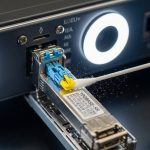
In telecom transport networks, the decision between 400G and 800G transceivers impacts not only line-card spend but also power, optics inventory, and outage risk. This optical module comparison helps network and field engineers evaluate real deployment constraints in DWDM and coherent metro fabrics. You will get a practical spec checklist, cost and ROI framing, and troubleshooting patterns seen during installs and link bring-up.
What changes when you move from 400G to 800G optics
The shift from 400G to 800G typically increases aggregate bandwidth per slot and per fiber pair, but it also tightens system budgets. Engineers must track optical reach, lane mapping, forward error correction behavior, and thermal limits inside the host chassis. In vendor datasheets and IEEE-aligned system requirements, the dominant risk is not the raw bitrate alone; it is whether the transceiver meets the host’s electrical interface and optical power requirements across temperature. For coherent transport, additional sensitivity to dispersion and OSNR is common; for short-reach pluggables, compliance with host retimer and CDR settings becomes critical.
Typical telecom contexts where this decision repeats
In metro aggregation, planners often upgrade leaf-spine router links or DCI gateways where fiber count is constrained. In transport, upgrades may be driven by higher-order modulation or higher channel counts, where optics must remain compatible with existing mux/demux and span loss. A third repeat scenario is data center interconnect between carrier PoPs, where power density and cooling margins are limiting factors. In all cases, you are effectively doing an optical module comparison across performance, operational limits, and total lifecycle cost.
Pro Tip: During acceptance tests, treat DOM telemetry as a commissioning signal, not just reporting. If the host reads DOM fields at boot and the optics later show intermittent LOS/LOF correlated with temperature ramps, you likely have a thermal airflow mismatch or marginal connector contact resistance, not a “bad optic.”
Key specifications to compare: 400G vs 800G
Start with a short list of specs that directly affect commissioning outcomes. For telecom, the most decision-relevant parameters are wavelength plan, reach class, modulation and coding type (for coherent), and optical power levels that must match the transceiver plus fiber plant. For pluggables, compare connector type, form factor, and the host’s supported interface mode. Finally, compare temperature range and power consumption because these drive cooling and spare strategy.
| Spec | 400G Coherent Pluggable (example class) | 800G Coherent Pluggable (example class) |
|---|---|---|
| Form factor | QSFP-DD / OSFP-class coherent (varies by vendor) | OSFP / QSFP-DD class, higher power variants |
| Data rate | 400G aggregate | 800G aggregate |
| Wavelength | Usually C-band or vendor-specific grids | Usually C-band; grid and channel plan must match |
| Reach class | Often metro to limited span counts (vendor-dependent) | Often similar reach class but with tighter OSNR budget |
| Optical power | TX output and RX sensitivity per datasheet; must meet link budget | Same categories, but typically stricter thresholds and higher consumption |
| Connector | LC or MPO-style depending on vendor and coherent implementation | Connector type depends on architecture; confirm in host BOM |
| Power (typical planning range) | Often lower than 800G; check exact vendor spec | Often higher; budget for thermal and PSU headroom |
| Operating temperature | Check host-qualified range; common telecom is extended | Check host-qualified range; higher power can reduce margin |
| Standards references | IEEE 802.3 alignment for electrical aspects where applicable | Electrical and management behavior must match host; vendor-specific coherent specs |
Because coherent transceivers are vendor-parameterized, use vendor datasheets for the final link budget rather than relying on “reach” labels alone. For interoperability, also consult host vendor interface requirements, including allowable optical power, DOM field mappings, and supported channel plans. If you are comparing non-coherent pluggables (for example, short-reach 400G/800G variants), the same discipline applies: confirm wavelength, reach, and host retimer support.
Recommended “minimum viable comparison” worksheet
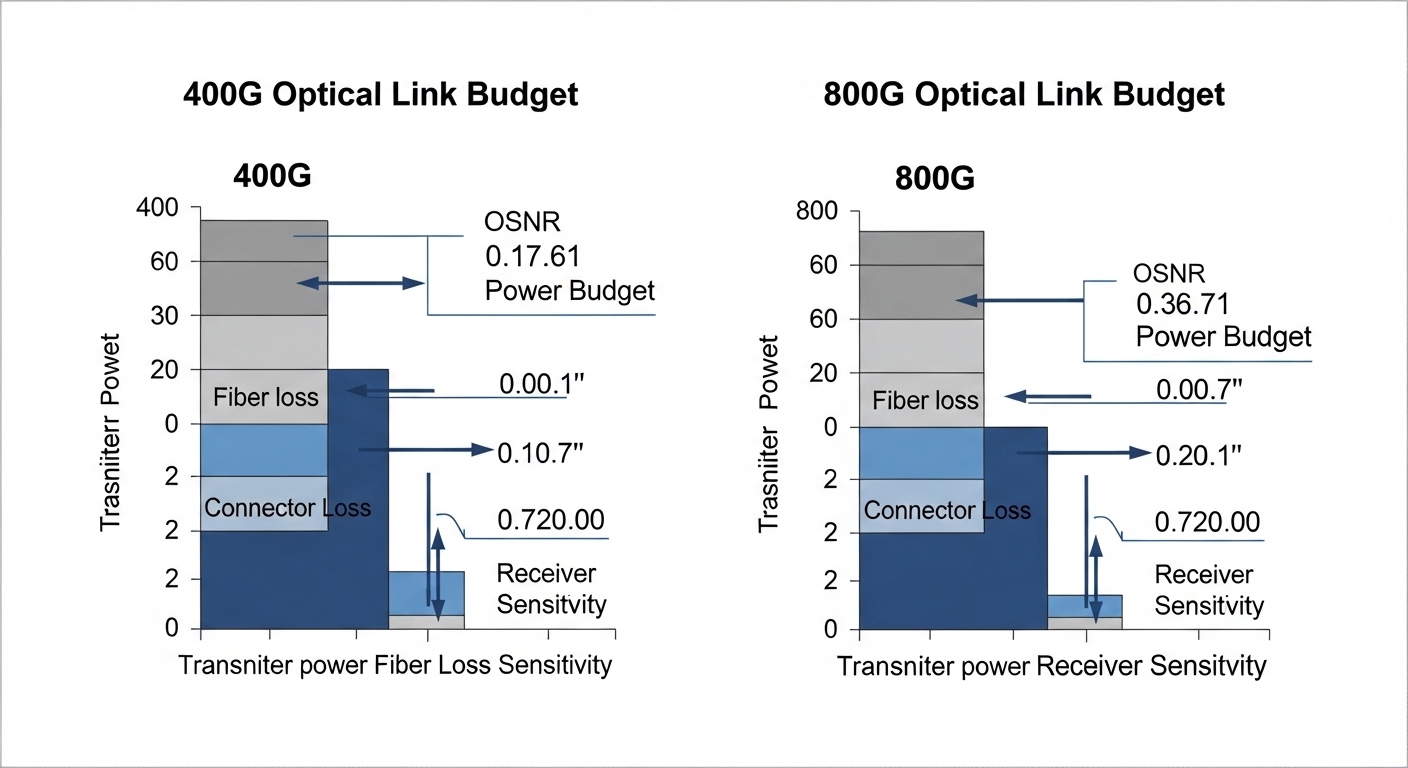
- Reach vs plant loss: verify span loss and connector losses; confirm OSNR or BER target where coherent applies.
- Power and thermal: compare module power and host cooling capacity; validate airflow direction and baffle fit.
- Host compatibility: confirm exact part numbers supported by the switch/ROADM line card (BOM or compatibility matrix).
- DOM and management: ensure the host supports DOM polling rate, alarm thresholds, and vendor telemetry fields.
- Connector and polarity: confirm LC vs MPO, polarity rules, and whether the host expects specific mapping.
Cost and ROI: how telecom planners should budget
In most deployments, the cost question is not “which optic is cheaper per port,” but “which option reduces lifecycle risk per delivered service.” 800G optics can lower the number of ports and potentially reduce chassis or switch fabric complexity, but they often carry higher unit price and higher power draw. That power increase can translate into higher cooling cost or earlier PSU upgrades, especially in constrained PoPs. Conversely, 400G can offer broader availability, easier spares, and sometimes smoother compatibility with older host firmware baselines.
Realistic price ranges and TCO framing
Actual market pricing varies by modulation format, reach class, and vendor sourcing model. As a planning baseline, many teams see OEM coherent optics priced at a premium over third-party compatible units, with typical purchasing bands ranging from hundreds to low-thousands of dollars per transceiver for short-reach non-coherent, and substantially higher for coherent metro/transport optics. For a fair optical module comparison, include: spare holding cost, expected infant failure rate, return logistics, and downtime cost during RMAs.
For example, if an 800G rollout reduces the number of active ports by half but increases power by a meaningful margin, you may break even when you factor reduced rack-level hardware and cabling labor. If your spares strategy relies on quick replacement, the availability differences between OEM and compatible suppliers can dominate ROI. Always confirm warranty terms, support escalation path, and whether firmware updates are required for alarm threshold calibration.
For standards context on Ethernet electrical expectations (where relevant), consult IEEE 802.3 and for optics electrical/management expectations, use host vendor transceiver support documentation. For connector and cabling practices, ANSI/TIA documents and fiber cabling guidelines are also relevant; use your site standard rather than generic assumptions. [Source: IEEE 802.3 working group documentation]

Selection criteria checklist for engineers comparing 400G vs 800G
Use the following ordered checklist to reduce surprises during bring-up and to avoid late-stage compatibility failures. This is the same sequence many field teams follow when they have limited maintenance windows and strict change control.
- Distance and impairment budget: confirm reach class and, for coherent, verify OSNR and dispersion assumptions against your real span records.
- Host switch compatibility: confirm the exact transceiver family and part number supported by the host line card. If the host blocks DOM or lacks channel plan support, the link will not train.
- Firmware and mode support: ensure the host firmware supports the modulation and coding modes required for the 800G option.
- DOM support and alarm thresholds: verify DOM polling behavior and whether the host uses specific alarm fields for maintenance tickets.
- Operating temperature and thermal headroom: check extended temp ratings and confirm airflow path with the vendor mechanical guide.
- Power and PSU margin: calculate worst-case module power at temperature extremes and verify PSU headroom for the whole line card population.
- Vendor lock-in risk: compare OEM vs third-party compatible options, warranty terms, and RMA turnaround time.
Common pitfalls and troubleshooting tips
Below are failure modes that repeatedly show up in the field during optical module comparison projects. Each item includes the most likely root cause and a direct corrective action.
Link comes up but degrades under temperature ramp
Root cause: thermal airflow mismatch, connector micro-motion, or a marginal optical power level that only fails at higher module temperature. Solution: verify baffle alignment, measure inlet-to-outlet temperature, re-seat the module with correct torque, and compare DOM temperature and power readbacks during a controlled ramp.
Host rejects the optic or shows “unsupported module” alarms
Root cause: DOM field mismatch, unsupported management behavior, or a host firmware baseline that does not recognize the vendor’s transceiver ID scheme. Solution: cross-check the host compatibility matrix and update host firmware only within your change-control window; ensure the module vendor’s DOM spec aligns with the host requirements.
Persistent LOS/LOF after optical patching
Root cause: polarity inversion, wrong connector type (LC vs MPO), or endface contamination causing elevated insertion loss. Solution: clean connectors with approved lint-free wipes and isopropyl alcohol where permitted, inspect with a microscope/inspection scope, and verify polarity mapping at both ends before re-running link training.
Link training fails only on 800G, but 400G works
Root cause: tighter OSNR or receiver sensitivity margin for 800G mode, plus real plant impairments (aging fibers, higher span loss, or stale patch cords). Solution: re-measure optical power and loss using calibrated meters, shorten the effective path where possible, and validate that the channel plan and grid match the coherent system configuration.
FAQ
How do I compare 400G vs 800G optics without guessing reach?
Use the vendor datasheet parameters plus your measured plant loss and span history. For coherent systems, validate OSNR and any dispersion assumptions tied to the modulation format. Then confirm the host line card supports the required channel plan and training behavior.
Are third-party compatible optics safe for telecom production networks?
They can be safe if the supplier provides host-qualified part numbers, DOM compatibility evidence, and a clear RMA process. However, you must validate with a proof deployment because some hosts apply stricter DOM alarm thresholds or firmware checks.
What DOM fields matter during commissioning?
Temperature, bias current, transmit power, receive power, and alarm/warning counters are the practical essentials. Also check whether the host exposes module vendor ID fields that determine compatibility and whether alarm thresholds match your maintenance workflow.
Why might 800G units draw more power than expected?
Power depends on the transceiver architecture, modulation mode, and whether the host enables full performance features at boot. Always use the exact module power spec for worst-case temperature and confirm PSU headroom for the full line card population.
What is the fastest way to isolate whether the issue is optic vs fiber?
Swap with a known-good transceiver of the same family and verify whether alarms follow the optic. Then measure insertion loss and inspect connector endfaces; contamination and polarity errors are common after patching.
Where do IEEE 802.3 standards fit into this comparison?
IEEE 802.3 primarily addresses Ethernet physical layer characteristics and electrical behavior where applicable. For coherent telecom optics, vendor-specific coherent specifications and host interface requirements are usually more decisive than Ethernet-only assumptions.
If you treat this optical module comparison as an engineering checklist—reach budget, host compatibility, DOM behavior, and thermal headroom—you can choose between 400G and 800G with fewer outages and cleaner acceptance tests. Next, review fiber optic transceiver compatibility to align transceiver selection with host firmware and cabling constraints.
Author bio: Field-practice network engineer focused on coherent and high-speed pluggable bring-up in carrier metro and data center interconnect environments. Hands-on experience with DOM telemetry, link budget verification, and failure analysis across OEM and compatible optics.