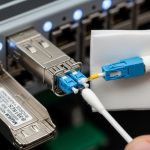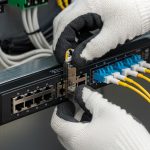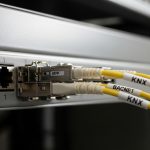
In an Open RAN build, the transceiver is where “it should work” becomes “it does work at scale.” This article helps network and radio-access engineers choose the right 400G transceivers for fronthaul and midhaul paths, with a comparison of common optics options, real deployment constraints, and field-tested troubleshooting. You will get a decision checklist, a cost and ROI view, and pitfalls that repeatedly show up during commissioning.

Open RAN reality check: where 400G transceivers live
Open RAN architectures push high bandwidth across multiple segments: fronthaul (very latency-sensitive), midhaul (more flexible timing), and sometimes aggregation toward centralized units. In many real sites, the radio baseband equipment and aggregation switches sit in the same building or nearby huts, but you still face strict constraints on optical budget, electrical lane rate, and vendor interoperability. IEEE 802.3 defines key physical-layer behavior for 400G Ethernet optics, and vendors implement those rules with specific optics, digital diagnostics, and optical power profiles. [Source: IEEE 802.3-2022 Ethernet specifications]
What “400G for Open RAN” usually means in practice
Most deployments map 400G to Ethernet transport patterns that carry RAN workloads over a leaf-spine or aggregation fabric. Engineers typically run either 400G SR8 (short reach over multimode fiber), 400G DR4 (short-to-medium reach over single-mode), or 400G FR4 (reach-optimized single-mode), depending on distance and fiber plant. The choice impacts not only link reach but also transceiver power, cooling, and transceiver compatibility with the exact switch ASIC and optics cage type. [Source: Vendor transceiver datasheets, including Cisco and Finisar/Finisar successors]
Pro Tip: In Open RAN rollouts, the first link failures are often not “bad optics.” They are mismatched optics profiles: a switch expects a specific fiber type and transmit power range, while a field-installed patch cord or an unexpected splice loss quietly breaks the optical budget. Always verify DOM readings (Tx/Rx power, bias current, and temperature) on day one, before you blame the module.
Performance head-to-head: SR8, DR4, and FR4 under the same 400G umbrella
At the physical layer, the main performance variables are reach, wavelength plan, connector type, and optical power consumption. For Open RAN, latency and jitter tolerances are usually dominated by switching and timing architecture, but link stability still matters because retransmissions and link flap events can cascade into control-plane instability. The optics you pick determine how much margin you have against aging fiber, connector contamination, and temperature drift.
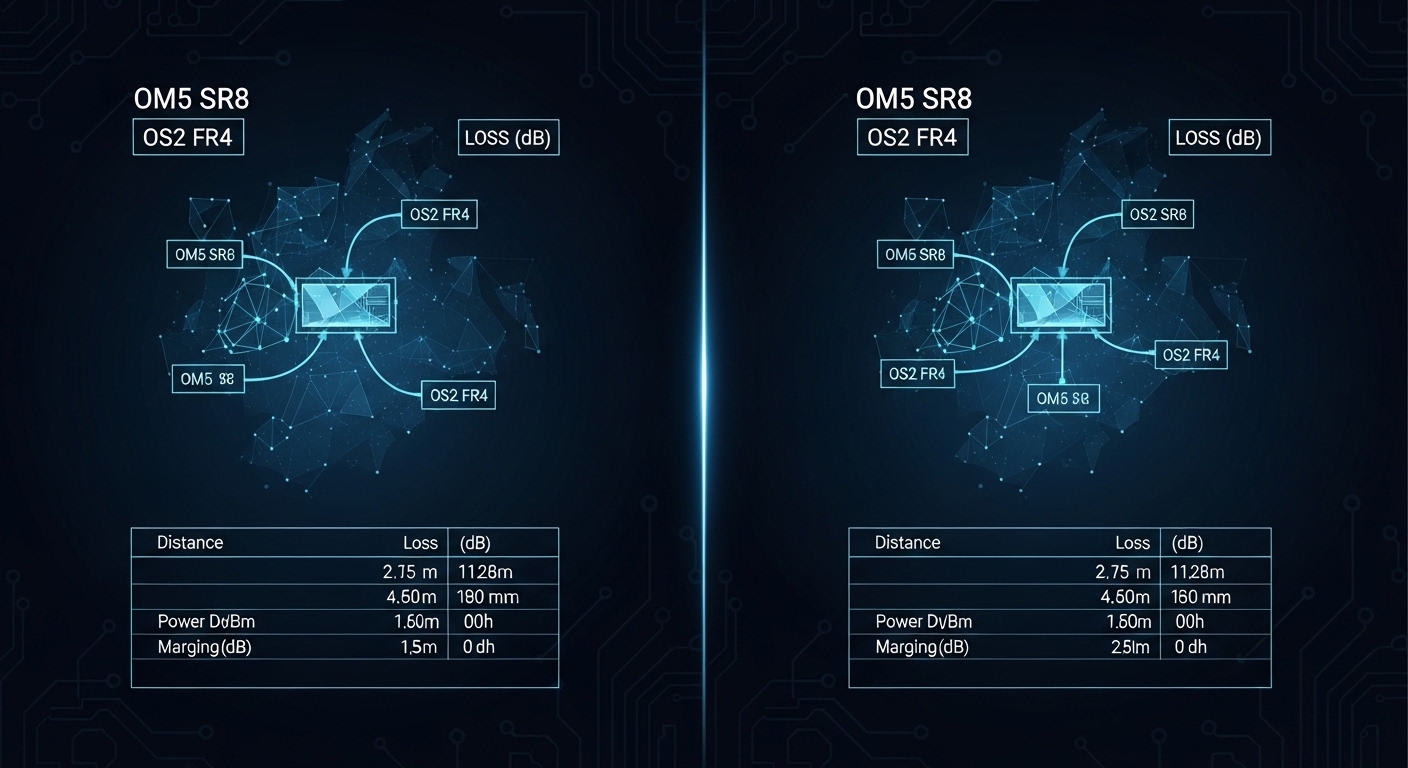
Key 400G optics comparison table (specs engineers actually use)
Use the table below to align your distance, fiber type, and expected optical budget. Always confirm the exact compatibility matrix for your switch model and optics cage.
| Optics type (400G) | Typical wavelength plan | Fiber type | Nominal reach | Connector | Typical DOM | Operating temperature | Representative module examples |
|---|---|---|---|---|---|---|---|
| 400G SR8 | Eight lanes, short-reach parallel | OM4 or OM5 multimode | ~100 m (OM4) to ~150 m (OM5) | LC | Yes (Tx/Rx power, bias, temp) | Commercial to industrial variants | Cisco SFP-400G-SR8 style (platform-dependent), Finisar/FS SR8 400G (verify exact part) |
| 400G DR4 | Four lanes, WDM | Single-mode (OS2) | ~500 m typical | LC | Yes | Commercial to industrial variants | Finisar/FS style 400G DR4 modules (verify part number) |
| 400G FR4 | Four lanes, WDM | Single-mode (OS2) | ~2 km typical | LC | Yes | Commercial to industrial variants | Finisar/FS style 400G FR4 modules (verify part number) |
These nominal reaches are starting points; real optical budgets depend on measured fiber attenuation, connector and splice loss, and whether you use pre-connectorized trunks or field-terminated patch cords. The IEEE 802.3 framework defines the electrical and optical interfaces, but the exact launch power and receiver sensitivity are vendor-specific and must be checked in the datasheet. [Source: IEEE 802.3 Ethernet physical layer guidance]
Switch and optics cage compatibility: “performance” includes fit
For 400G, the physical packaging is commonly QSFP-DD or similar high-density form factors. Your switch’s optics cage expects specific lane mapping and signal conditioning; even when two modules both claim “400G SR8,” lane ordering, polarity handling, and retimer behavior can differ. In day-two operations, DOM support matters for automation: Open RAN management stacks often pull Tx/Rx power and alarm thresholds to trigger maintenance workflows. [Source: Vendor DOM and interoperability documentation, e.g., Cisco and QSFP-DD vendor guides]
Cost and ROI: what you pay beyond the module price
Budget planning for Open RAN is where teams get surprised. The module line item is only the visible cost; total cost of ownership (TCO) includes spares, downtime during replacements, power draw for high-density racks, and the operational overhead of managing multiple optics types. In practice, SR8 multimode optics can be cheaper when your fiber plant is already OM4/OM5, while DR4/FR4 single-mode optics can win when you must traverse longer runs or avoid multimode patch complexity.
Realistic price ranges and TCO levers
Pricing varies by vendor, temperature grade, and certification, but engineers often see approximate street pricing ranges like $400 to $900 per 400G SR8 module and $600 to $1,400 per 400G DR4/FR4 module in mainstream channels (OEM-branded pricing can be higher). Third-party modules can cut capex, but you must account for the risk of intermittent compatibility issues and a longer validation cycle. Power is also non-trivial: if your platform draws several watts less per port due to more efficient optics, it can translate into measurable cooling savings at scale over a multi-year deployment.
For ROI, compare three scenarios: (1) OEM-only for fastest commissioning, (2) mixed OEM plus certified third-party modules with a strict validation plan, and (3) a single optics family chosen to standardize spares across sites. In Open RAN, standardization often reduces operational friction more than it reduces module price, because technicians can carry fewer spare SKUs and follow the same DOM alarm thresholds.
Compatibility and operations: DOM, alarms, and field service constraints
Open RAN operations rely on consistent telemetry. Most 400G optics expose DOM via I2C over the transceiver interface, typically providing Tx power, Rx power, laser bias current, and module temperature. Some systems additionally report internal status flags for compliance, aging, and threshold crossings. During commissioning, field engineers often use these values to confirm that the link is within the receiver sensitivity window and that the module is not drifting toward a threshold under local thermal conditions.
Decision checklist: ordered factors to weigh before purchase
- Distance and fiber type: confirm measured attenuation (dB/km) and connector/splice loss on the exact route.
- Switch platform compatibility: verify the exact switch model optics support list for QSFP-DD 400G optics.
- Optical budget margin: validate against worst-case temperature and aging; do not rely on nominal reach alone.
- DOM support and alarm behavior: ensure the transceiver reports expected thresholds and that alarms map cleanly into your monitoring.
- Operating temperature range: pick industrial grade when the equipment room sees high swings or direct airflow constraints.
- Vendor lock-in risk: if you must use OEM-only for interoperability, model the long-term spares cost and lead time.
- Spare strategy: minimize SKU count across sites to reduce swap time and reduce training overhead.
Where Open RAN teams validate first
Teams usually start with a pilot: one rack of RUs and one aggregation switch pair, using representative patch cords and the real fiber route. They then capture DOM logs for at least a 24- to 72-hour window while traffic patterns run at expected peak loads. If your monitoring stack supports it, correlate link-level errors with DOM threshold crossings to separate “optics aging” from “fiber cleanliness” issues.
Common mistakes and troubleshooting: how Open RAN optics failures happen
Below are recurring field issues, each with a root cause and a fix path that helps teams recover quickly without guessing.
Link comes up intermittently after cleaning, then degrades over days
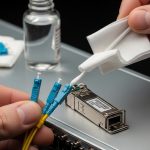
Root cause: Connector contamination is not fully cleared, often due to using the wrong cleaning method or reusing dirty patch cords. Mating cycles can also degrade ferrule polish quality.
Solution: Use lint-free swabs and validated cleaning cartridges for LC connectors, and inspect with a fiber scope if available. Replace the patch cord segment if DOM shows rising Tx power or falling Rx power toward threshold.
“Wrong optics family” behavior: SR8 installed but performance resembles misconfigured lane mapping
Root cause: The switch expects a specific lane mapping or polarity behavior for a given optic profile; a module that is technically “400G SR8” may still fail interoperability due to cage wiring or vendor-specific implementation details.
Solution: Confirm the module’s exact part number and the switch’s optics support list. If the platform supports it, verify polarity handling and lane order using the vendor’s guidance for QSFP-DD SR8 polarity conventions.
Optical budget is barely enough at room temperature, then fails during hot days
Root cause: Launch power and receiver sensitivity shift with temperature, and your initial test may have used favorable ambient conditions. Splice or connector loss can be higher than expected due to installation variability.
Solution: Measure and record DOM at the hottest expected operating window. If you see Rx power approaching low thresholds, reduce loss by replacing patch cords, improving splices, or moving to DR4/FR4 if the route justifies it.
DOM alarm mismatch: monitoring shows “warning,” but the switch logs show a different event cause
Root cause: Monitoring systems sometimes interpret transceiver diagnostic flags differently across vendors, leading to misleading automation triggers.
Solution: Align your monitoring logic with the vendor DOM field definitions. During pilot, validate that “warning” correlates with actual error counters at the interface.
Comparison decision matrix: which 400G transceiver option fits your Open RAN plan
The matrix below frames the trade-offs engineers face when choosing between SR8, DR4, and FR4 for Open RAN connectivity. Use it as a starting point, then confirm with your measured link budget and switch compatibility list.
| Reader type / constraint | Best-fit optics | Why it fits | Main risk to manage |
|---|---|---|---|
| Data center style Open RAN with OM4/OM5 installed and short runs | 400G SR8 | Lower complexity, fewer conversion steps, efficient for short distances | Patch cord cleanliness and multimode budget variability |
| Urban deployments with moderate distances between equipment rooms | 400G DR4 | Single-mode reach without the longest reach overhead | OS2 splice loss and WDM alignment within budget |
| Longer outside-plant runs or hard-to-reach paths | 400G FR4 | More reach headroom when fiber plant is uncertain | Higher module cost and stricter compatibility validation |
| Teams prioritizing fastest commissioning and simplest interoperability | OEM-aligned SR8/DR4 | Lower chance of cage profile mismatch and faster RMA cycles | Higher capex and potential vendor lead time |
Which option should you choose?
If your Open RAN site is inside a controlled equipment room with OM4 or OM5 already in place and the fibers are short, choose 400G SR8 to keep complexity and spares manageable. If your runs cross multiple rooms or moderate distances where multimode budget margin is tight, pick 400G DR4 and validate with measured OS2 loss. If you are dealing with long or less predictable routes, 400G FR4 usually reduces operational firefighting, even though the module price is higher.
Next step: before you buy, run a pilot validation on your exact switch model using representative patch cords, then capture DOM and link error counters for at least a day. For broader physical-layer context, see 400G optics reach vs optical budget and align your fiber plant plan to the same measurement method.
FAQ
What does Open RAN change about choosing 400G transceivers?
Open RAN increases the number of operational touchpoints: more links, more telemetry, and more sensitivity to link stability during commissioning. You should optimize for measured optical margin, consistent DOM behavior, and switch compatibility, not just nominal reach.
Should I start with SR8 or jump straight to DR4 for Open RAN fronthaul?
Start with SR8 only if your measured multimode route (including patch cords and splices) comfortably fits the optical budget with margin. If you already know your distances or fiber quality are uncertain, DR4 is often the safer choice because single-mode attenuation is more predictable.
Do I need OEM-only optics for Open RAN?
Not always, but you need a structured validation plan. Many operators use a mix of OEM and certified third-party optics after confirming compatibility on the exact switch model and confirming DOM alarm mapping.
How do I verify that a 400G link is within budget during commissioning?
Check DOM readings for Tx power, Rx power, and temperature, then correlate with interface error counters. If you have access to a fiber scope, inspect LC ferrules before and after cleaning, and re-measure after any patch cord changes.
What are the most common causes of 400G link flaps?
Most link flaps come from fiber cleanliness, marginal optical budget, or optics/switch interoperability quirks such as lane mapping and polarity expectations. Temperature-driven drift can also trigger failures late in the day if margin is thin.
How should I plan spares for Open RAN optics?
Standardize on one optics type per site wherever possible and keep a small pool of spares for each type. Include both module spares and known-good patch cord sets, because connector issues can mimic a failing transceiver.
Author bio: I have deployed and troubleshot Open RAN and high-density Ethernet optics in live telecom environments, validating transceiver DOM telemetry against link error counters during commissioning. My approach blends IEEE 802.3 physical-layer constraints with practical fiber plant measurement and field service playbooks.