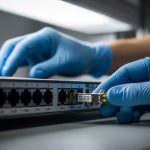
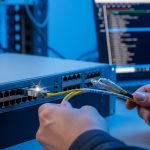
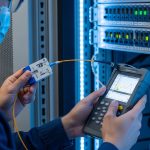
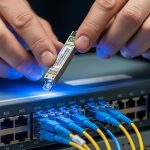
In modern data centers and enterprise networks, optical transceivers quietly drive uptime, power draw, and support costs. This article helps network owners and procurement teams compare OEM and third-party fiber modules through a practical fiber module ROI lens, with spec-level checks and field-tested troubleshooting. If you are planning a refresh of 10G, 25G, or 100G links, you will get an engineer-ready decision framework plus realistic cost and TCO ranges.
ROI starts with performance: OEM vs third-party optics, measured
At the physical layer, both OEM and reputable third-party transceivers can meet the same Ethernet link requirements when they match wavelength, reach, and interface standards. The difference usually shows up in process control, optical power stability, and how consistently modules pass vendor diagnostics and compliance routines. In real deployments, engineers often notice that third-party modules can be slightly more sensitive to marginal fiber plant conditions, dust, or connector cleanliness, which then creates higher truck-roll rates.
For example, a typical 10G SR deployment targets 850 nm multimode fiber using LC connectors, often with OM3 or OM4. If you are swapping hundreds of ports, even a small increase in early-life failures can erase projected savings. The IEEE 802.3 standard defines optical performance requirements by interface type, while vendor datasheets define the practical limits for optical power, receiver sensitivity, and thermal behavior. See [Source: IEEE 802.3] and your transceiver datasheets for the exact link budget assumptions. anchor-text: IEEE 802.3
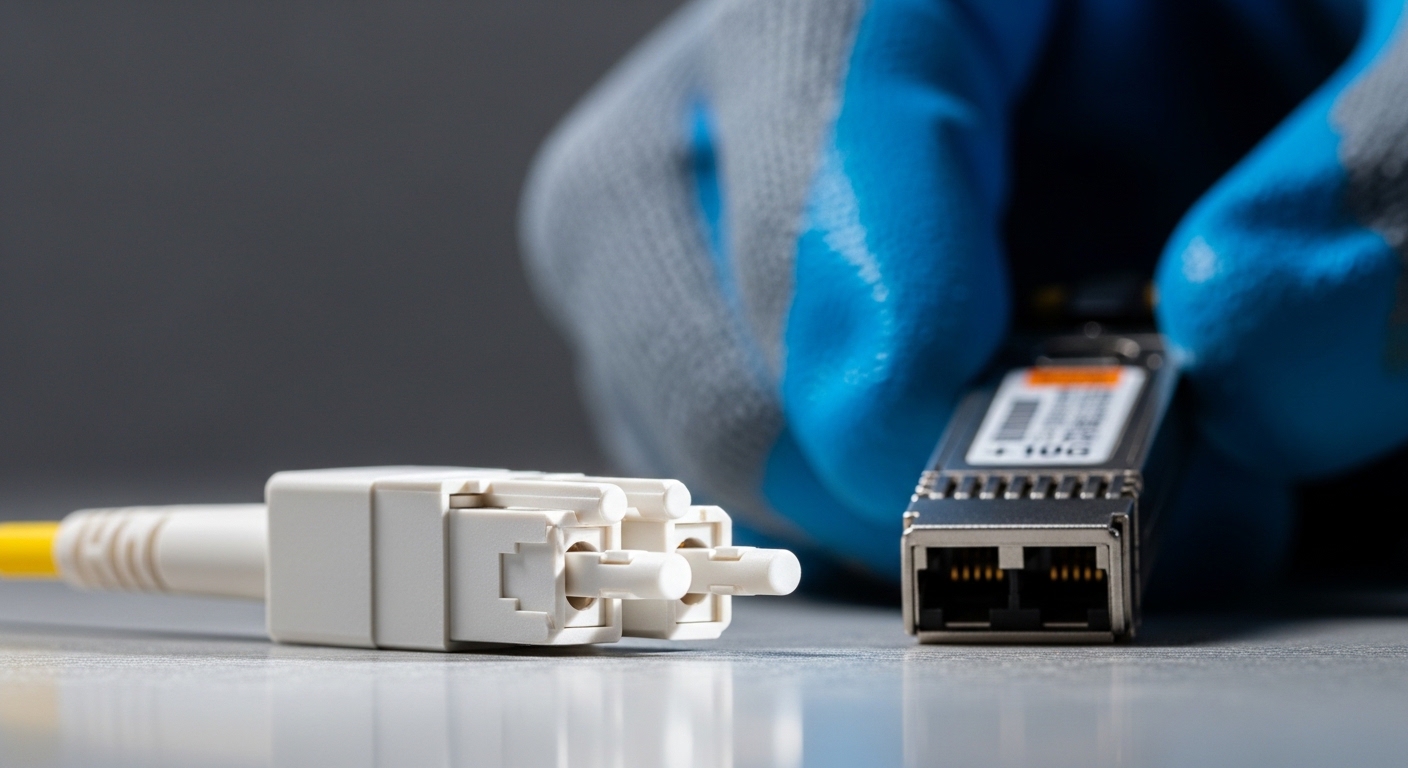
Quick spec anchor: common short-reach profiles
To make ROI comparisons concrete, use interface-matching rather than brand-matching. The table below compares representative short-reach modules frequently used in leaf-spine and ToR-to-spine links.
| Parameter | 10G SR (SFP+) | 25G SR (SFP28) | 100G SR4 (QSFP28) |
|---|---|---|---|
| Wavelength | 850 nm | 850 nm | 850 nm (4 lanes) |
| Typical reach | Up to 300 m (OM3) / 400-550 m (OM4) | Up to 100 m (OM3) / 150 m (OM4) | Up to 100 m (OM4) |
| Connector | LC | LC | LC (fanout) |
| Data rate | 10.3125 Gb/s | 25.78125 Gb/s | 103.1 Gb/s aggregate |
| Power (typical) | ~0.8–1.5 W | ~1.2–2.0 W | ~3.5–5.0 W |
| Operating temp | Commonly 0 to 70 C (commercial) or -40 to 85 C (extended) | Commonly 0 to 70 C / -40 to 85 C | Commonly 0 to 70 C / -40 to 85 C |
OEM modules like Cisco-branded parts (for example, Cisco SFP-10G-SR compatible assortments) and third-party options such as Finisar/Finisar-like and FS.com style equivalents (for example, FS.com SFP-10GSR-85 or Finisar FTLX8571D3BCL class parts) can both target the same optical profile. The ROI question is whether they behave identically under your switch diagnostics and your fiber plant conditions. Always verify with the vendor compatibility list for your exact switch model and software version.
Cost and TCO: where fiber module ROI is won or lost
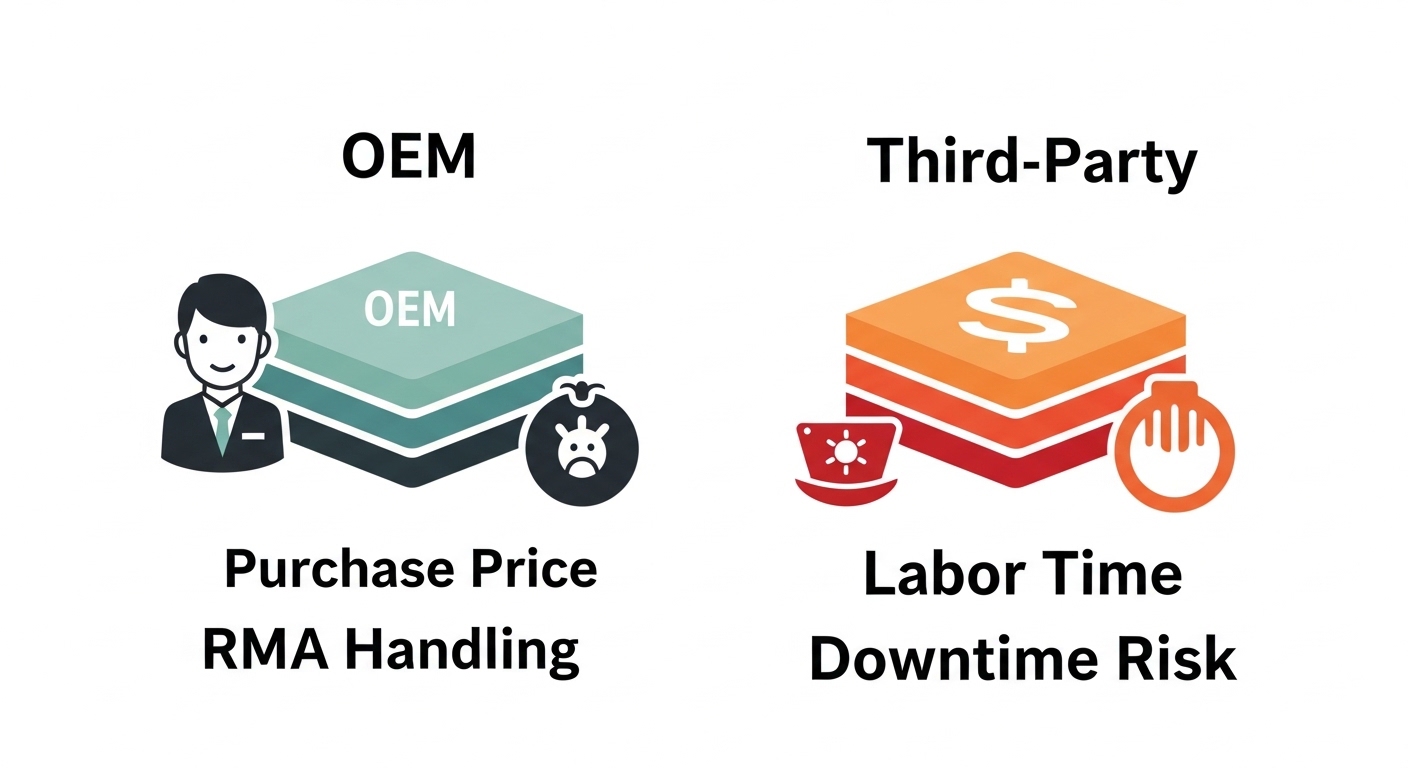
Third-party optics typically win on unit price, but TCO is driven by installation labor, incident frequency, and warranty logistics. A realistic ROI model includes: (1) purchase cost, (2) expected failure rate over your holding period, (3) support ticket and downtime cost, and (4) power and cooling differences. Even if both options draw similar wattage, the operational cost of a link that flaps or degrades can dominate savings.
In practice, many teams assume a warranty and then discover that RMAs take longer when the module is not on the switch vendor’s preferred list. OEM programs can also bundle faster exchange paths, documentation, and consistent DOM behavior. Third-party vendors can be excellent, but you should demand DOM data validation and a clear return process that matches your maintenance window constraints.
Realistic price bands and TCO math
Typical street pricing varies by density, volume, and temperature grade. As a rough planning range: 10G SR SFP+ often lands in the tens to low hundreds of dollars per module, while 25G SR SFP28 and 100G SR4 QSFP28 can cost substantially more. If you are buying 400+ ports, a $20 delta per module can be meaningful, but only if failure and support risk stays flat.
Field teams often model TCO over 3 to 5 years. If a third-party batch increases early failures by even 1 to 2%, the cost can exceed the purchase savings once you include on-site labor, spare module consumption, and downtime risk. Use your own RMA and incident history if available; otherwise, run a pilot with a statistically meaningful sample size.
Compatibility and DOM: the hidden gate to ROI
Switch vendors increasingly enforce optics compatibility through diagnostic behavior, module identification, and DOM reporting. DOM data includes laser bias current, received power, transmit power, and sometimes temperature thresholds. If a module’s DOM values are out of expected ranges or interpreted differently by your switch firmware, you may see link resets or “module not supported” events.
OEM modules are more likely to match a switch vendor’s internal calibration expectations. However, reputable third-party modules can still work reliably when they are built for the same interface standard and validated for the same platform. The key is not brand; it is whether the module passes your switch’s acceptance checks and your operational monitoring thresholds.
Decision checklist engineers actually use
- Distance and fiber grade: confirm OM3 vs OM4, connector type, and patch loss budget before buying.
- Switch compatibility: verify the exact switch model and software release on the optics compatibility list.
- DOM support and monitoring: confirm the module reports valid TX power, RX power, and temperature values in your platform.
- Operating temperature: match commercial vs extended grade to your air temperature and airflow profile.
- Budget and lead time: include expedited shipping and spare inventory costs if lead times are uncertain.
- Vendor lock-in risk: evaluate how many SKUs you must standardize to avoid future incompatibilities.
Pro Tip: Before scaling a third-party rollout, run a “DOM sanity test” in your monitoring system: capture baseline TX bias, RX power, and temperature across a 24-hour window under normal load. If your switch interprets thresholds differently, you will see it early as trend drift long before you see hard link failures.
Use-case reality: 3-tier data center rollout with controlled risk
Consider a 3-tier data center leaf-spine design with 48-port 10G ToR switches feeding 2 x 10G uplinks per rack, totaling 960 active SFP+ links. The team plans a refresh from older optics after a fiber relabeling project introduced higher patch loss variability. They budget $180 average per OEM module and $140 per third-party module, a $40 unit delta.
Instead of replacing all 960 ports at once, they pilot 120 ports with third-party modules, grouped by rack row to isolate airflow and patch panel differences. After 30 days, they compare incident tickets, link flaps, and module error counters, and they validate DOM power trends against the baseline for OEM modules. If the third-party batch shows no elevated error rate and DOM values remain stable, they scale to the remaining ports; otherwise, they revert for the affected rows and fix the fiber plant.

Common mistakes and troubleshooting that kills fiber module ROI
Even when optics are “compatible,” small operational mistakes can erase savings. Here are the most common failure modes and how teams resolve them.
- Mistake: buying the right wavelength but wrong fiber grade. Root cause: OM3 vs OM4 mismatch and higher patch loss. Solution: verify end-to-end insertion loss with a light source and power meter; re-terminate or replace patch cords if margin is low.
- Mistake: ignoring connector cleanliness. Root cause: dust on LC ferrules increases backscatter and reduces receiver margin, causing intermittent link events. Solution: clean with approved fiber cleaning tools, inspect with an inspection scope, and replace suspect patch cords.
- Mistake: assuming DOM behavior is identical across vendors. Root cause: different calibration or interpretation of thresholds triggers “module” warnings or proactive resets. Solution: compare DOM trends for both OEM and third-party modules under the same load; adjust alert thresholds only after validating stability.
- Mistake: deploying without a software compatibility check. Root cause: firmware updates can change how optics are validated. Solution: lock a tested software baseline during pilot, then validate after upgrades in a staging environment.
Decision matrix: which option maximizes fiber module ROI?
Use this head-to-head matrix to decide based on your operational priorities.
| Criteria | OEM transceivers | Third-party transceivers |
|---|---|---|
| Up-front unit cost | Higher | Lower |
| Compatibility likelihood with switch diagnostics | Typically highest | High with validation, variable without |
| DOM consistency for monitoring | Often aligns best | Can differ; verify with pilot |
| Pilot risk and rollout speed | Lower risk | Higher risk unless pre-qualified |
| Warranty and RMA experience | Often faster and documented | Can be good; confirm turnaround terms |
| Best-fit scenario | Mission-critical uptime targets | Large-scale cost control with tested processes |
Which Option Should You Choose?
If you run mission-critical links with strict uptime SLAs, choose OEM for the first wave or for the most sensitive sites, because compatibility and support pathways reduce operational variance. If you manage a large fleet and can run a structured pilot with DOM sanity tests, cleanliness verification, and software compatibility checks, third-party can deliver strong fiber module ROI by lowering acquisition cost without sacrificing reliability.
Next step: build a pilot plan that matches your topology and risk tolerance, then document acceptance criteria in your change management process using network optics TCO playbook.
FAQ
Does fiber module ROI depend more on price or uptime? It depends on your incident cost. If downtime and truck-rolls are expensive, even a small increase in module-related events can outweigh unit savings.
How do I verify compatibility beyond “it works”? Validate against your exact switch model and firmware, then compare DOM power and temperature trends over at least 24 hours under normal load. Also confirm link stability counters and alarm behavior.
Are third-party modules safe for 25G and 100G? They can be, but 100G SR4 and higher-speed optics are less forgiving of marginal fiber plants. Run a pilot with enough ports to capture variability across patch panels and airflow zones.