If your optical links are intermittently erroring, drifting in power, or triggering opaque vendor alarms, your team likely lacks a consistent way to translate raw transceiver telemetry into operational decisions. This article helps network engineers and field technicians implement ML transceiver analytics using standard optics telemetry (DOM), vendor-compatible thresholds, and a measurable deployment workflow. You will learn what to collect, how to model link health, and how to validate outcomes against IEEE Ethernet error counters and optical power trends.
Prerequisites: what you must have before ML transceiver analytics
Before you train any model, ensure you can reliably ingest per-lane telemetry from pluggable optics and correlate it with network-layer performance. In practice, teams succeed when they treat the optics telemetry pipeline as a production system: timestamps, data retention, and backpressure handling matter as much as the ML algorithm.
From a standards and compatibility standpoint, plan around DOM support (Digital Optical Monitoring) and your switch or transceiver platform’s telemetry export path. Most modern platforms expose DOM readings via telemetry protocols or logs, but the exact field names, sampling rates, and units vary by vendor and software release.
Hardware and optics prerequisites
- Switches with DOM visibility: confirm your platform can read RX/TX power, temperature, and bias current per transceiver, and can export them to your telemetry system.
- Transceivers with known DOM behavior: verify that the optics model supports DOM and that measurements are stable over temperature.
- Fiber plant characterization: have at least basic link loss estimates or OTDR results so your model can separate “optics aging” from “fiber damage.”
- Reference optics types: for a baseline, many teams start with 10G/25G SR and LR optics whose DOM fields are well understood.
Software and data prerequisites
- Telemetry collector: use an agent or collector that supports time synchronization and durable buffering (for example, a Prometheus-compatible pipeline or vendor telemetry streaming).
- Feature store: store raw DOM samples and derived features (rolling means, slopes, z-scores).
- Error counter access: collect interface counters such as symbol errors, FCS errors, and CRC errors at the same time granularity.
- Labeling strategy: define “failure” events using operational signals (link flap, admin down, repeated retransmits, or vendor optical warnings).
Expected outcome: you can produce a synchronized dataset where each optics instance has time-aligned DOM metrics and Ethernet error counters, enabling ML transceiver analytics to learn causal patterns rather than coincidences.
Implement the ML pipeline: telemetry ingestion, feature engineering, and scoring
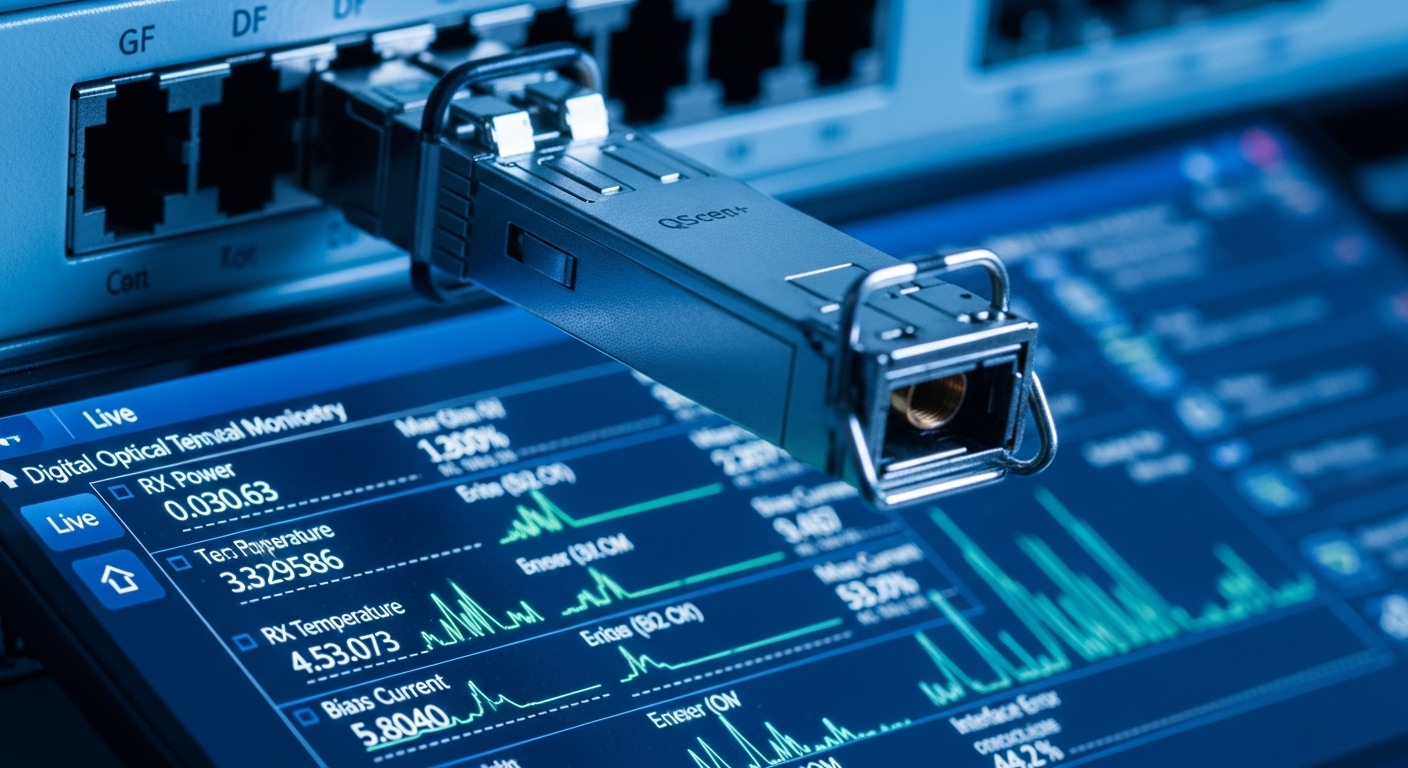
ML transceiver analytics is most effective when you treat it as an operational scoring system, not a one-time prediction. A robust workflow ingests DOM samples, engineers features that capture drift and volatility, then outputs actionable alerts tied to link health and capacity risk.
In field deployments, teams typically start with interpretable models (anomaly detection with clear thresholds) before moving to more complex forecasting. This reduces the “black box” risk and speeds up adoption by operations staff.
Step-by-step implementation workflow
- Define telemetry schema: map DOM fields to a canonical schema (for example, temperature in degrees C, RX power in dBm, bias current in mA). Normalize units across vendors.
- Set sampling interval: if your switch exports DOM every 30 to 60 seconds, align feature windows to that cadence (for instance, 15-minute rolling windows yield 15 to 30 samples).
- Engineer drift features: compute rolling slopes for RX power and temperature, plus “rate of change” features like delta RX power per hour.
- Engineer volatility features: compute rolling standard deviation for RX power and bias current to detect unstable lasers or marginal optics.
- Add network-layer correlation: join DOM features with interface CRC/FCS error counters sampled at the same cadence; create binary features for “error bursts.”
- Train anomaly detection: start with unsupervised approaches (for example, isolation-based anomaly detection) using “healthy” periods per link.
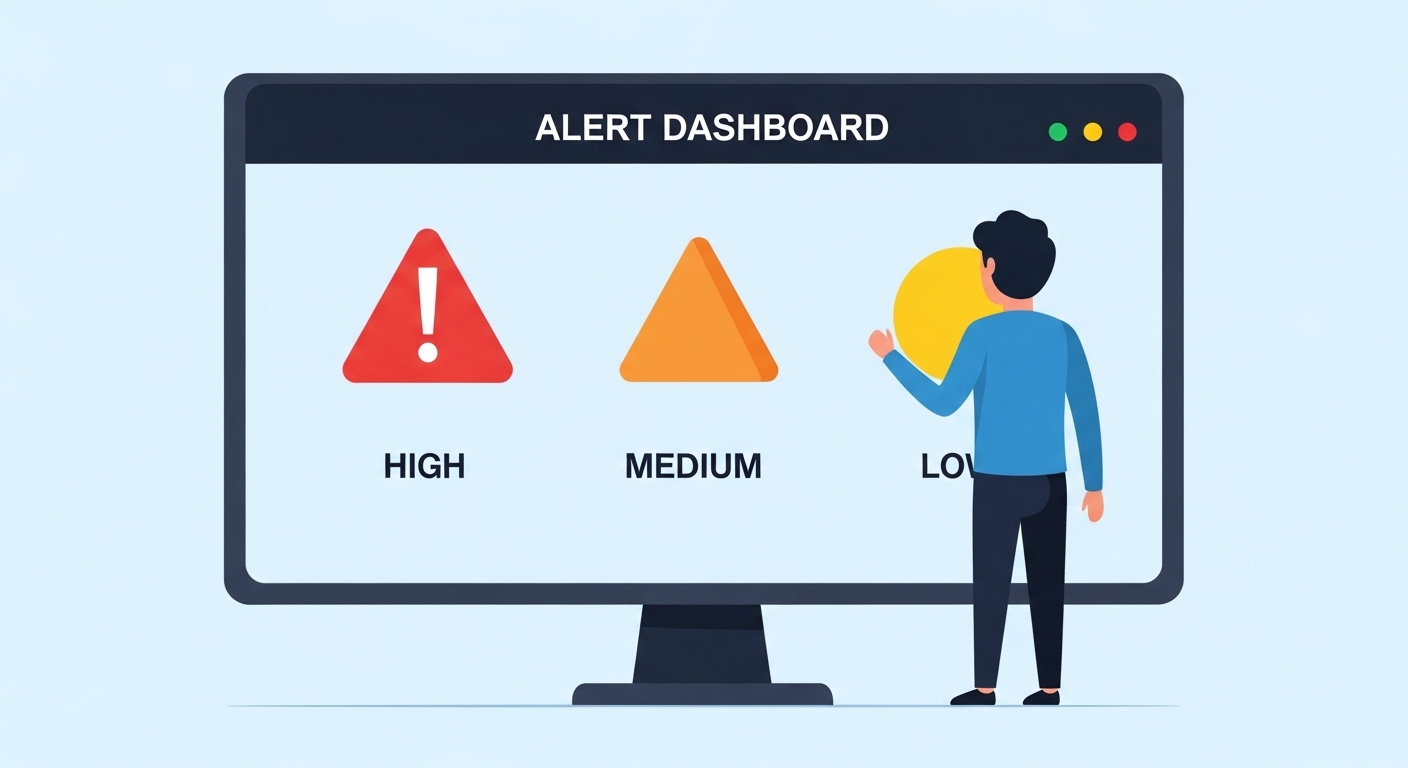
- Calibrate thresholds: translate model scores into operational severity levels using historical incident windows.
- Deploy as an alerting service: route high-severity scores to your NOC tooling with the optics identity, last good time, and top contributing features.
Expected outcome: you can generate a per-link health score and a reasoned alert payload (for example, “RX power drift -1.8 dB over 10 days with rising CRC errors”) that engineers can act on without guesswork.
Why ML transceiver analytics works better than static thresholds
Static thresholds (for example, RX power minimum and temperature maximum) are useful, but they fail when optics degrade gradually and link budgets vary by fiber length and connector cleanliness. ML transceiver analytics can detect patterns such as accelerating RX power slope or increasing bias current volatility that precede hard failures.
When you include network-layer error counters, you also reduce false positives from harmless temperature swings or short-term receiver noise.
Pro Tip: In production, many teams get the best early-warning results by training per-link models that learn each transceiver’s baseline behavior, then using cross-link features only for ranking. This avoids overfitting to a global pattern where different vendors and fiber plants have different “normal” DOM signatures.
Choose optics and read telemetry safely: specs, compatibility, and limits
ML transceiver analytics depends on consistent telemetry quality. If you mix optics types with different DOM behaviors, or if your switch software misinterprets fields, your model may learn artifacts rather than aging signals.
Start by standardizing optics families and documenting their DOM field semantics. Then verify that your switch platform supports the required DOM fields and that your telemetry export preserves units and timestamps.
Key optics specifications to track in your dataset
For Ethernet over fiber, your model’s features are grounded in optical physics: wavelength, reach, and link budget determine the expected RX power range, while temperature and bias relate to laser aging. Below is a practical comparison for common deployments.
| Example optic | Data rate | Wavelength | Typical reach | Connector | DOM telemetry | Operating temp | Notes for analytics |
|---|---|---|---|---|---|---|---|
| Cisco SFP-10G-SR | 10G | 850 nm | ~300 m (OM3) | LC | Yes (DOM) | 0 to 70 C (typical) | Track RX power drift and temperature slope; DOM fields are widely supported. |
| Finisar FTLX8571D3BCL | 10G | 850 nm | ~300 m (OM3) | LC | Yes (DOM) | 0 to 70 C (typical) | Use per-link baselines; watch for bias current volatility after vibration events. |
| FS.com SFP-10GSR-85 | 10G | 850 nm | Up to ~400 m (OM4) | LC | Yes (DOM) | 0 to 70 C (typical) | Validate DOM scaling and units on your specific switch OS build. |
| Common 25G SFP28 SR (vendor-dependent) | 25G | 850 nm | ~70 m (SMF not implied; SR is MMF) | LC | Yes (DOM) | 0 to 70 C (typical) | Higher sensitivity to link budget; ML should incorporate BER or FEC error counters if exposed. |
Expected outcome: you can select a limited set of optics and verify DOM telemetry semantics, improving the reliability of ML transceiver analytics features.
Compatibility and standards references
At the Ethernet layer, the physical coding and error semantics are defined by IEEE Ethernet standards for 10G and beyond, while optics monitoring is typically implemented via vendor DOM interfaces. For the network-layer side of your training labels, rely on counters defined by your switch OS and aligned with IEEE error reporting behavior.
For higher-layer correlation, ensure your interface counters map to CRC/FCS error definitions rather than vendor-specific “misc errors.” For DOM fields, use vendor datasheets and your switch documentation for the exact scaling and update cadence.
Relevant references include: IEEE 802.3 Ethernet standard portal and vendor documentation for your transceiver and switch models, such as Cisco and Finisar datasheets. [Source: IEEE 802.3 standard portal]
Real-world deployment scenario: leaf-spine fabric with optical drift early warnings
Consider a 3-tier data center leaf-spine topology with 48-port 10G top-of-rack switches, each serving 96 servers via 10G links. Suppose you have 200 active uplinks and 4 spares per pod, and you observe that roughly 1 to 3 links per month show rising CRC errors before they fully fail.
Your switch OS exports DOM telemetry every 60 seconds. You ingest RX power, temperature, and bias current for each transceiver, and you poll interface counters every 60 seconds. Over 8 weeks, you label incidents when an uplink experiences link flaps or sustained CRC bursts exceeding your operational threshold (for example, CRC errors above a configured rate for 10 consecutive minutes).
After deployment, your ML transceiver analytics model flags a “degradation approaching threshold” score at least 3 to 7 days before the link goes hard down. Field teams replace the optics during scheduled maintenance windows, reducing unscheduled outages and improving mean time to repair because the replacement is planned rather than reactive.
Expected outcome: measurable reduction in incident-driven optics swaps, with alerts that provide clear optical context rather than only “interface errors.”
Selection criteria and decision checklist for ML transceiver analytics
Not every environment benefits equally from ML. You should evaluate whether your telemetry quality, error visibility, and operational process can absorb and act on alerts.
- Distance and link budget: ensure your optics and fiber lengths produce stable RX power margins; ML works best when baseline behavior is consistent.
- Data rate and optics class: higher-speed optics (25G and beyond) often require tighter correlation with BER or FEC counters if available.
- Switch compatibility: confirm DOM fields are readable and correctly scaled on your exact switch OS version.
- DOM support and telemetry export: verify update intervals, missing-field behavior, and whether telemetry is per-lane or aggregated.
- Operating temperature range: if your racks run hot, include temperature as a primary feature to avoid misclassifying thermal drift.
- DOM read reliability: assess how often telemetry becomes unavailable during link transitions or transceiver insertion.
- Vendor lock-in risk: if you rely on a specific vendor telemetry schema, plan a compatibility layer so you can switch optics or switch OS without retraining everything.
- Operational integration: ensure NOC tooling can route alerts with optics identity and recommended action steps.
Expected outcome: a practical go/no-go decision that aligns ML transceiver analytics capabilities with your operational constraints.
Common pitfalls and troubleshooting tips (top failure modes)
Field failures are often caused by telemetry mismatches, incorrect labeling, or assuming that DOM drift always maps to link degradation. Below are the most common mistakes teams make, with root cause and solutions.
Failure mode 1: Model flags false positives due to inconsistent DOM scaling
Root cause: different transceiver vendors or switch software builds may report RX power in different units or with different offsets. The model then learns “unit artifacts” as drift.
Solution: validate one transceiver end-to-end by comparing DOM RX power to an external optical power meter reading at the receiver end (within expected tolerances). Normalize units in your feature pipeline before training.
Failure mode 2: Alerts do not correlate with real failures because labels are wrong
Root cause: teams label “failure” based on a single event like a brief link flap, even though the root cause is a switch port reset or a maintenance action. The ML model learns the wrong associations.
Solution: define incident labels with duration and error thresholds, such as sustained CRC or FCS bursts for a minimum window, and exclude known maintenance periods.
Failure mode 3: Telemetry gaps cause the model to miss the early warning window
Root cause: DOM telemetry export can pause during transceiver insertion, port state transitions, or when telemetry collectors experience backpressure. Your feature windows become incomplete.
Solution: implement a completeness check (for example, require at least 80 percent of samples in the rolling window) and mark missing windows explicitly to prevent misleading scores.
Failure mode 4: Confusing fiber issues with optics aging
Root cause: connector contamination or a damaged patch cord can cause RX power changes that look like optics degradation, especially when the model is trained globally.
Solution: incorporate fiber change events into features (manual change logs), and use per-link baselines. If possible, correlate with OTDR or cleaning records when RX power drops abruptly.
Expected outcome: fewer false alerts and better trust in ML transceiver analytics outputs, leading to higher adoption by operations teams.
Cost and ROI: what you can realistically expect
Budget varies widely based on telemetry tooling and whether you build or buy the ML layer. In many data centers, the incremental cost comes from telemetry storage, model hosting, and staff time for labeling and validation.
Transceiver replacements themselves typically dominate TCO when failures occur unexpectedly. In practice, OEM optics for 10G SR often cost more than third-party equivalents, but OEM replacement may reduce compatibility surprises and support friction. A realistic approach is to start with a limited set of optics and validate DOM behavior before scaling to broader third-party purchases.
As a rule of thumb, teams often achieve ROI when ML reduces unscheduled outages and accelerates planned maintenance. If your operational cost per incident is high (for example, downtime penalties, incident escalation time, or SLA penalties), even a modest reduction in failure rate can justify the ML telemetry pipeline quickly.
Expected outcome: a defendable business case that balances optics procurement strategy, telemetry infrastructure, and incident reduction.
Pro Tip: Track the cost of “wrong replacement” as a first-class metric. Many teams optimize only for alert precision, but the operational ROI improves most when you measure how often alerts lead to confirmed optics faults versus fiber cleaning, connector rework, or port configuration changes.
FAQ
What exactly counts as ML transceiver analytics?
It is the use of machine learning to interpret transceiver telemetry (DOM metrics like RX power, temperature, and bias current) together with network error counters to score link health and predict degradation. In practice, it outputs alert severities and recommended actions based on learned patterns rather than single static thresholds.
Do I need to retrain models every time I swap optics?
Not always. If your optics family and DOM telemetry semantics remain consistent, you can retrain periodically (for example, monthly) and keep per-link baselines. If you introduce a new vendor or switch OS version that changes telemetry scaling, you should validate first and retrain to avoid feature drift.
Which DOM metrics are most useful for early warning?
Teams commonly start with RX power drift, temperature slope, and bias current volatility. When available, correlating these with CRC/FCS errors and interface error bursts improves precision and reduces false positives.
Will third-party transceivers break my analytics pipeline?
They can, if DOM fields differ in scaling, missing-field behavior, or update cadence. The safe approach is to validate telemetry semantics on your exact switch OS build and normalize units before training.
How do I prove the ML system is working?
Use incident-based evaluation: measure lead time before failures, reduction in unscheduled outages, and the fraction of alerts that result in confirmed optics faults. Also track false alert rate and the operational cost of wrong replacements, not just model accuracy.
What standards should I reference for error behavior?
For Ethernet error semantics and behavior, reference IEEE Ethernet standards and your switch OS documentation for counter definitions. For optics telemetry, rely on vendor datasheets for DOM fields and on your platform’s telemetry export documentation for units and scaling.
In summary, ML transceiver analytics becomes reliable when telemetry is normalized, labels are operationally meaningful, and alerts are integrated into maintenance workflows. Next, you can deepen your implementation by reviewing optical telemetry collection best practices and aligning data retention and sampling intervals with your change management process.
Author bio: I am a research scientist who has deployed telemetry-driven monitoring systems in production data centers, validating ML signals against Ethernet error counters and optical power measurements. I focus on rigorous evaluation, operational integration, and field-safe troubleshooting so analytics leads to measurable outcomes.