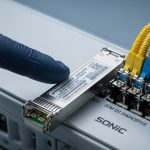
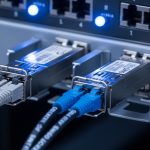
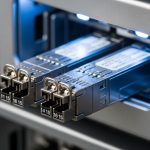
Nothing ruins a surveillance rollout faster than a “mystery no-link” at 3 a.m. when the cameras are already mounted and the client is already asking for answers. This article helps IT and field teams choose the right IP camera transceiver (focused on SFP-based long-distance CCTV and IP surveillance fiber networks), so your links come up on the first try and stay up through weather, heat, and the occasional human who unplugs the wrong thing. You will get practical selection criteria, troubleshooting patterns, and an ROI view that does not rely on wishful thinking.
Top 8 IP camera transceiver picks for long-distance SFP fiber CCTV links
Engineers rarely struggle with “which cable do I buy” — they struggle with “which optical module matches my switch, my budget, my distance, and my tolerance for future regret.” Below are eight common SFP-family options that map well to real IP camera transceiver deployments, with the typical best-fit scenario and the tradeoffs you actually care about.
10G SFP+ SR (850 nm) for short-to-mid camera runs
Key idea: Use multimode fiber (MMF) and short wavelengths to keep cost low when the camera-to-switch distance is modest. Typical SR optics target 850 nm and rely on MMF, so they are popular for intra-building CCTV where you can control fiber type.
Best-fit scenario: A campus building with a 3-tier design: edge PoE switches at each floor, aggregation at the IDF, and runs of 300 m to 600 m over OM3 or OM4. If you are mixing camera vendors, SR optics are often the most forgiving “default” for stable links.
Pros: Lower module cost, abundant MMF inventory, good availability. Cons: Limited reach versus long-haul optics, depends on fiber grade (OM3 vs OM4 matters).
Example models: Cisco SFP-10G-SR, Finisar FTLX8571D3BCL, FS.com SFP-10GSR-85.
1G SFP SX (850 nm) for legacy camera uplinks
Key idea: Many older CCTV designs still run at 1G for camera aggregation. SX optics at 850 nm are the classic MMF choice when you cannot justify a 10G upgrade.
Best-fit scenario: A retail chain with IP cameras that output 1G copper or 1G fiber uplinks. You consolidate at a small NVR rack where the uplink budget is tight and the distance is under a few hundred meters.
Pros: Cheap and widely supported. Cons: Lower throughput headroom for future camera upgrades (higher bit rate streams).
Reference standards: Ethernet optics align with IEEE 802.3 link behavior; exact optical performance is vendor datasheet territory. anchor-text: IEEE 802.3
1G/10G SFP LX (1310 nm) for longer MMF-to-SMF transition zones
Key idea: 1310 nm optics are common when you need more reach and can move to single-mode fiber (SMF) or use specific fiber plant conditions. LX typically targets SMF and extends reach beyond 850 nm optics.
Best-fit scenario: A site where cameras are in separate buildings and you have SMF from the conduit splice to the head-end. You might still prefer SFP over bigger form factors because the switch bays are fixed.
Pros: Better reach than 850 nm MMF optics; robust for building-to-building runs. Cons: Requires SMF plant; can be more expensive than SX/SR.
Example models: Finisar and Cisco LX-family optics exist in multiple vendor SKUs; always verify wavelength and reach in the datasheet before checkout.
10G SFP+ LR (1310 nm) for typical SMF camera backhaul
Key idea: LR optics at 1310 nm are a workhorse for SMF backhaul. They are often the “boring but correct” IP camera transceiver choice when the distance is too far for SR but not so far that you need the expensive stuff.
Best-fit scenario: A warehouse with cameras on the yard perimeter. You run SMF from a pole-mounted junction to a nearby aggregation switch for 1 km to 10 km class distances (depending on the optical budget and fiber quality).
Pros: Great balance of cost and reach; widely compatible. Cons: You must budget for splice loss, connector loss, and aging margin.
Reference: Vendors provide link budgets, including typical transmit power, receiver sensitivity, and recommended maximum loss. anchor-text: IEEE 802.3 working group
10G SFP+ ER (1550 nm) for difficult long-distance CCTV runs
Key idea: ER optics at 1550 nm are designed for longer reach over SMF. This is where the IP camera transceiver stops being “simple” and becomes “optical budgeting with feelings.”
Best-fit scenario: A multi-building industrial complex where some runs include long conduit routes and older splices. You need 10 km to 40 km class performance (model dependent) and you want to avoid hauling active electronics mid-span.
Pros: Long reach; fewer intermediate electronics. Cons: Higher cost; requires careful optical budget planning and usually tighter cleanliness standards.
SFP BiDi (single-fiber, 1310/1550 nm) for constrained fiber pairs
Key idea: When the field plant has only one fiber available, BiDi optics use different wavelengths for transmit and receive over a single strand. This can be a lifesaver for CCTV retrofits.
Best-fit scenario: A city retrofit where you inherit a duct with only one usable fiber per route. You replace copper extenders with fiber and use BiDi optics to restore full-duplex.
Pros: Uses one fiber strand; excellent for retrofit constraints. Cons: Must match exact BiDi wavelength pairing (Tx/Rx direction matters); wrong pairing equals silent sadness.
Vendor note: BiDi optics have strict wavelength pairs and often require “A/B” labeling match. Always confirm model directionality in the datasheet.
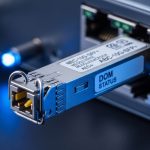
SFP with DOM support for camera fleet monitoring
Key idea: Digital Optical Monitoring (DOM) lets you read transmit power, receive power, and sometimes temperature via I2C on supported switches. In large CCTV deployments, this helps predict failures before they become incident tickets.
Best-fit scenario: A 200-camera installation where you want an automation rule: if receive power drops below a threshold, open a ticket and schedule a fiber cleaning or splice repair. You reduce downtime and avoid “it’s blurry today, who knows why” incidents.
Pros: Better operational visibility; improved MTTR workflow. Cons: DOM compatibility depends on the switch and the optic; third-party optics may have partial DOM support.
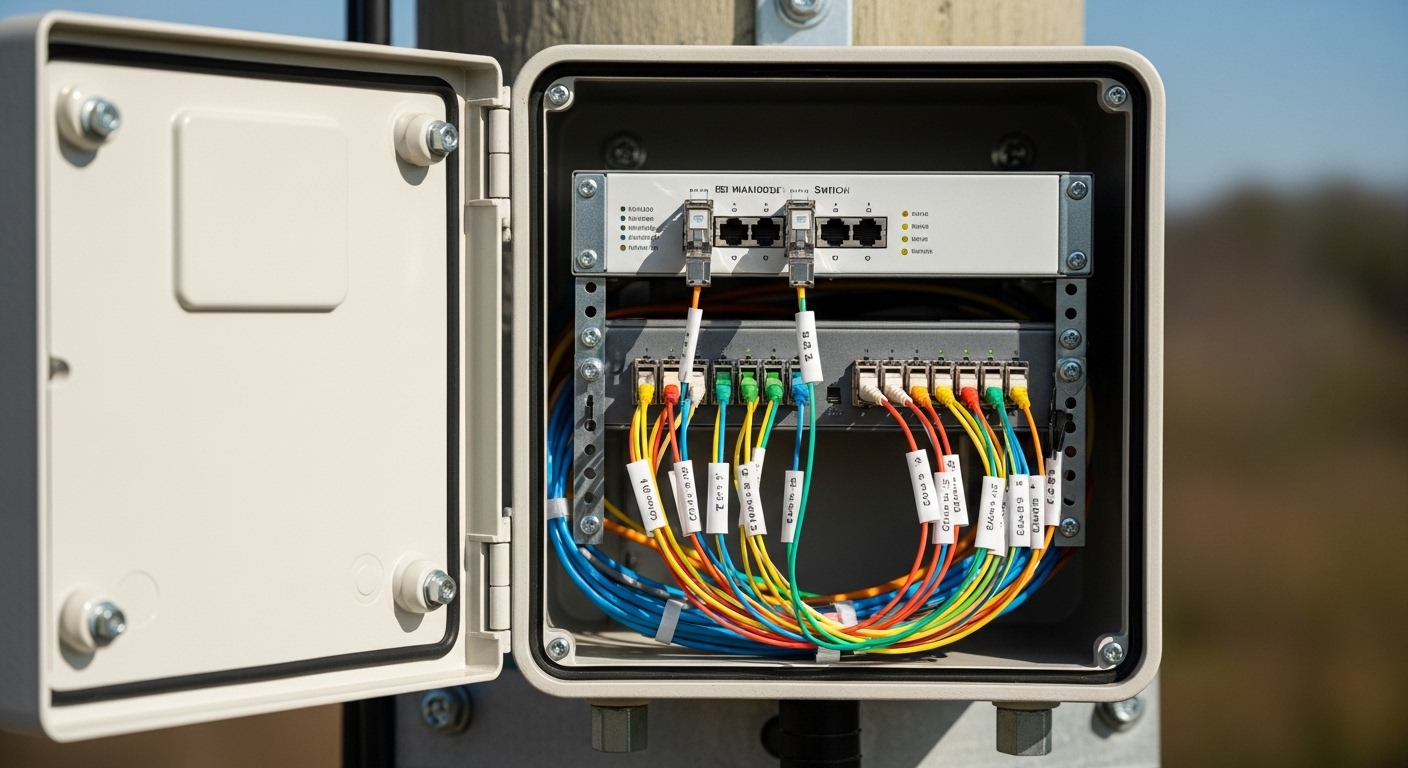
Hardened SFP optics with extended operating temperature for outdoor poles
Key idea: If the transceiver lives in an outdoor enclosure, temperature range matters. Many SFPs are specified for typical data center conditions, not “sun-baked metal box with insects.”
Best-fit scenario: Outdoor IP cameras mounted on poles with small weatherproof housings near the camera. The transceiver is in a media converter or managed switch inside the enclosure, and the enclosure can hit extreme temperatures.
Pros: Fewer thermal failures; better uptime. Cons: Specialized models can cost more; still verify enclosure temperature and airflow assumptions.
Practical note: Validate the enclosure’s internal temperature using a field sensor during peak sun hours, not just the ambient forecast.
Specs that actually decide link success: wavelength, reach, power, and temps
Optical specs are not trivia; they determine whether your link budget survives splice losses, dirty connectors, and the aging of fiber plant. For an IP camera transceiver decision, you should compare wavelength, reach rating, fiber type, connector style, transmit power, receiver sensitivity, and temperature range.
| Option (Typical SFP Class) | Wavelength | Fiber Type | Reach Rating | Connector | DOM | Operating Temp |
|---|---|---|---|---|---|---|
| 1G SX | 850 nm | MMF (OM3/OM4) | ~550 m (model dependent) | LC | Often optional | Typical commercial |
| 10G SR | 850 nm | MMF (OM3/OM4) | ~300 m to 400 m (model dependent) | LC | Often optional | Typical commercial |
| 10G LR | 1310 nm | SMF | ~10 km (model dependent) | LC | Often optional | Typical commercial |
| 10G ER | 1550 nm | SMF | ~40 km (model dependent) | LC | Often optional | Typical commercial |
| BiDi SFP | 1310/1550 nm pair | SMF (single strand) | ~10 km class (model dependent) | LC | Often optional | Typical commercial |
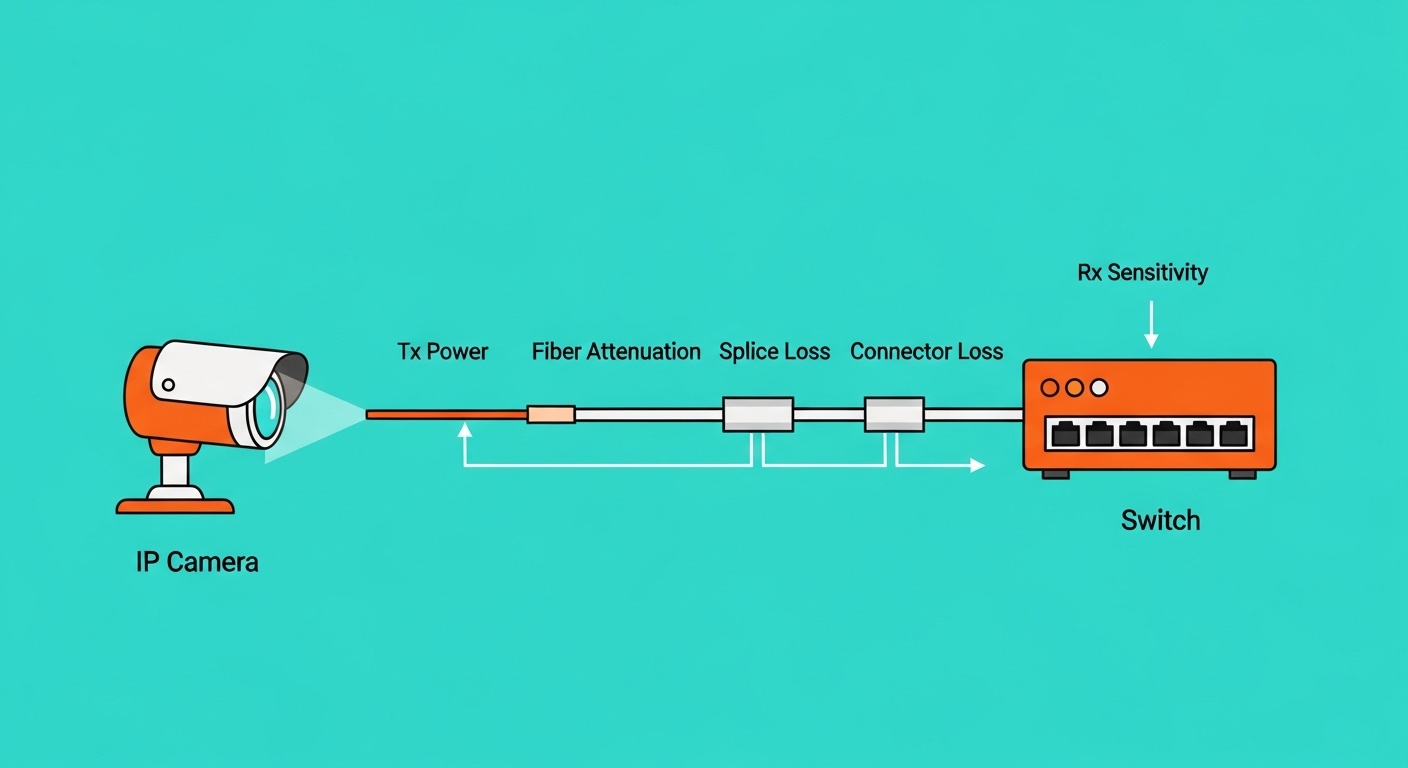
What to look for in datasheets: transmitter output power (dBm), receiver sensitivity (dBm), and worst-case optical budget in dB. Also check the minimum link distance and whether the optic requires a specific fiber type (OM3 vs OM4, single-mode core specs, and connector cleanliness requirements).
Pro Tip: In CCTV fiber runs, the most common “it should work” failure is not distance — it is connector loss from inconsistent cleaning. Use a fiber scope before blaming the IP camera transceiver; a single contaminated LC can easily eat multiple dB of your budget.
Selection criteria checklist for SFP long-distance camera links
If you want fewer truck rolls and fewer “we need to re-patch everything” moments, follow a decision checklist. This is the same order I see in field plans that actually ship.
- Distance and fiber type: confirm measured run length and whether you have MMF (OM3/OM4) or SMF. Use OTDR or a certified fiber tester, not a tape measure plus optimism.
- Data rate and switch port capabilities: ensure the SFP speed matches the switch (1G vs 10G). Verify whether the port supports SFP+ and the required transceiver type.
- Optical budget: compare worst-case loss (dB) against vendor specs for Tx power and Rx sensitivity. Include splice count and connector count with margins.
- DOM support and monitoring needs: if you want real-time optics health, confirm DOM compatibility with your switch model and your management stack.
- Operating temperature: for outdoor enclosures, verify the optic’s temperature range and estimate enclosure internal temperature during peak sun and cold snaps.
- Connector and patching: confirm LC vs other connector types, and validate that patch cords and adapters are consistent with the plant.
- Vendor lock-in risk: decide between OEM and third-party based on your procurement policy, RMA process, and expected fleet size.
- Cyber-physical operations: if cameras are safety-critical, plan spares and define thresholds for optics monitoring alerts.
Common mistakes and troubleshooting patterns that waste hours
Here are failure modes I have personally seen in CCTV and IP surveillance fiber network deployments. Each one includes root cause and a practical solution.
Wrong fiber type assumption (MMF vs SMF)
Root cause: The team selects an 850 nm SX/SR optic thinking “fiber is fiber,” but the plant is SMF or mixed cable grades, causing excessive attenuation and weak receive power. Link may flap or never come up.
Solution: Verify fiber type in the building records and confirm with testing. If you have SMF, prefer 1310 nm LR or 1550 nm ER optics. If you have MMF, ensure it is OM3 or OM4 and choose 850 nm SX/SR accordingly.
BiDi mismatch on a single-fiber retrofit
Root cause: BiDi optics must be paired correctly (direction and wavelength pairing). Swapping them can produce a link that never stabilizes or shows link up but no traffic due to severe optical imbalance.
Solution: Label optics at install time and confirm the vendor’s Tx/Rx wavelength mapping. Use a power meter or scope readings to validate receive levels on both ends.
Dirty connectors and “it worked yesterday” syndrome
Root cause: Dust on LC ferrules creates micro-reflections and high insertion loss. Outdoor enclosures add pollen, insects, and humidity cycles that accelerate contamination.
Solution: Always clean with lint-free wipes and approved cleaning tools, then re-test. If you have intermittent issues, inspect with a fiber scope and replace patch cords that show scratches or persistent contamination.
DOM expectations vs actual switch behavior
Root cause: You install a third-party IP camera transceiver expecting DOM health alerts, but the switch either does not read it or returns limited telemetry. Engineers then miss early degradation.
Solution: Validate DOM compatibility during a pilot. Check the switch documentation for supported transceiver vendor lists and DOM behavior. If DOM is critical, test with your exact optic SKU before scaling.
Temperature surprises in outdoor housings
Root cause: The optic is rated for commercial temperature only, but the enclosure internal temperature exceeds spec during summer. Performance degrades until the link drops.
Solution: Measure internal enclosure temperature with a sensor during peak conditions. Select an optic with extended temperature rating and consider airflow or thermal design changes.
Cost and ROI: how to budget an IP camera transceiver without regret
Pricing varies by speed, wavelength, reach, and whether you need DOM and extended temperature. As a realistic range, an OEM 1G SX or 10G SR SFP often costs less than 10G LR/ER optics, while long-haul and BiDi can cost more due to tighter performance requirements and laser components.
Typical ballpark ranges (per SFP module): third-party optics might land in the low tens to low hundreds of dollars, while OEM long-haul modules and extended-temp variants can be higher. In a project with 100 camera uplinks, that difference becomes a real line item.
TCO reality check: The cheapest optic is the one that does not cause truck rolls. If a marginal reach choice leads to intermittent link failure, the labor cost dwarfs the saved module price. DOM can also reduce downtime by enabling proactive replacement, which improves ROI by reducing incident-driven maintenance.
Compatibility caveat: Third-party optics can be fully functional, but some switches enforce vendor compatibility lists or have quirks with DOM. Always run a pilot test and confirm link stability and telemetry behavior under your exact switch model.
Ranked summary: best IP camera transceiver choice by deployment constraint
Use this quick ranking table to decide fast. “Best” depends on your dominant constraint: distance, fiber availability, monitoring needs, or environmental stress.
| Rank | Transceiver Option | Primary Constraint It Solves | Best-Fit Scenario | Main Limitation |
|---|---|---|---|---|
| 1 | 10G SR (850 nm) | Lowest cost with MMF | Within-building camera backhaul under a few hundred meters | Reach depends heavily on OM3/OM4 and budget |
| 2 | 10G LR (1310 nm) | Balanced reach on SMF | Common SMF backhaul for yard and perimeter runs | Must budget splice and connector loss |
| 3 | 1G SX | Legacy uplinks | Older NVR or access switches at 1G | Throughput headroom for future upgrades |
| 4 | 10G ER (1550 nm) | Long distance over SMF | Hard long runs without intermediate electronics | Higher cost and tighter operational discipline |
| 5 | BiDi SFP | Single-fiber retrofit | Constrained fiber pair availability | Must match exact wavelength pairing and direction |
| 6 | SFP with DOM | Operational monitoring | Large camera fleets with alerting workflows | DOM compatibility depends on switch |
| 7 | Hardened extended-temp SFP | Outdoor temperature stress | Pole-mounted or enclosure-based deployments | Higher cost; still verify enclosure internal temps |
| 8 | 1G LX (1310 nm) | Reach on SMF for older links | 1G links where 850 nm is insufficient | Not ideal if you plan to scale to 10G |
FAQ
What is an IP camera transceiver in a CCTV fiber network?
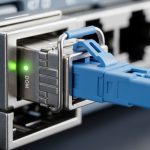
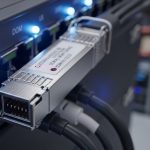
An IP camera transceiver is the optical module that converts Ethernet signals into light on fiber so IP cameras and NVRs can communicate over distance. In many CCTV designs, SFP modules are used for their flexible port density and straightforward switch integration.
Should I choose 10G SR or 10G LR for camera uplinks?
Choose 10G SR if you have MMF (OM3/OM4) and your measured distance is within the vendor’s reach and optical budget. Choose 10G LR if you have SMF and need reliable reach for yard, corridor, or building-to-building backhaul.
How do I calculate optical budget for an SFP link?
Start with the vendor-provided transmit power and receiver sensitivity, then subtract expected losses: fiber attenuation per kilometer, splice loss per splice, and connector/adaptor loss. Add a margin for aging and cleaning variability, and validate with test equipment like an OTDR and power meter.
Do I need DOM support for IP surveillance?
DOM is not mandatory for basic link operation, but it can materially reduce downtime in large deployments by enabling real-time optics health and early warning. If you want alerts, confirm DOM compatibility with your exact switch model before standardizing.
Can I mix OEM and third-party optics in the same CCTV switch?
Often yes, but compatibility and DOM behavior vary by switch vendor and model. The safe approach is to pilot the third-party optics in your specific environment and confirm link stability, telemetry availability, and RMA workflow.
Why does a fiber link come up but cameras still do not stream?
Common causes include VLAN or QoS mismatches, duplex/speed mismatches on the switch side (less common with optics), or an optical link that is “barely good” due to high loss or poor cleaning. Re-check optics receive power and confirm network config on the NVR and camera VLAN paths.
If you want the fastest path to stable CCTV fiber links, start with measured distance and fiber type, then select an SFP class that matches wavelength and budget, and finally validate with a pilot test. Next step: review the practical planning checklist in fiber optic transceiver selection for IP cameras.
Author bio: I have deployed fiber CCTV links in real data closets and outdoor enclosures, measuring loss, validating optics, and fixing the “it should work” failures with scope and budget math. I write from the perspective of reducing downtime and maximizing ROI, not collecting transceiver trivia.