If your high-speed network is missing throughput or behaving like a moody teenager, fiber modulation is often the culprit. This article helps network engineers, field techs, and architects compare modulation approaches for short-reach and long-reach optics, so you can make reliable choices on real hardware. You will get a practical spec comparison, deployment scenario, troubleshooting pitfalls, and an engineer-style decision checklist.
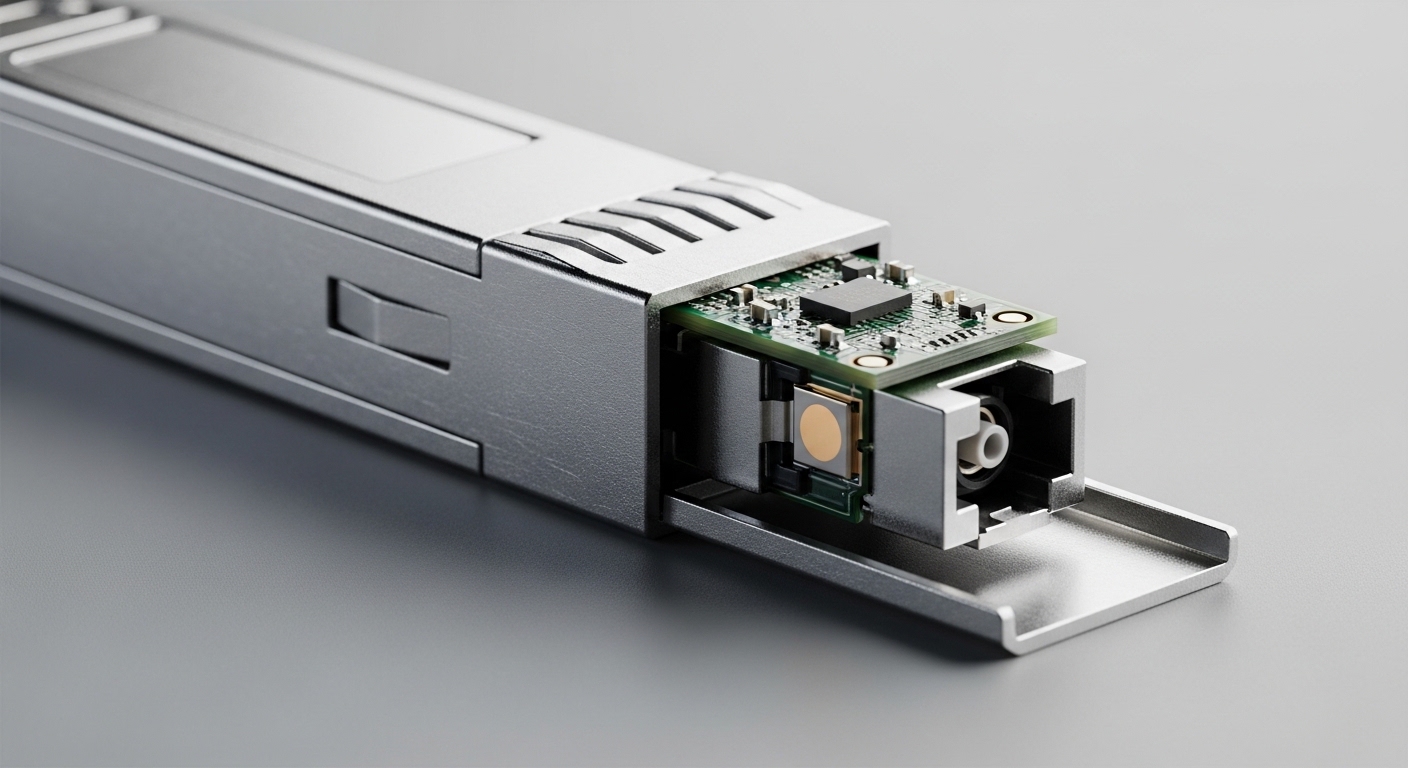
Fiber modulation basics: what changes between link types
Fiber modulation is the method used to encode data onto an optical carrier and then recover it at the receiver. In practical deployments, the “technique” you choose is less about vibes and more about how many bits you can squeeze through a given optical bandwidth while staying inside the link budget. Modern short-reach systems often rely on advanced digital modulation and equalization to fight dispersion, reflections, and limited receiver sensitivity.
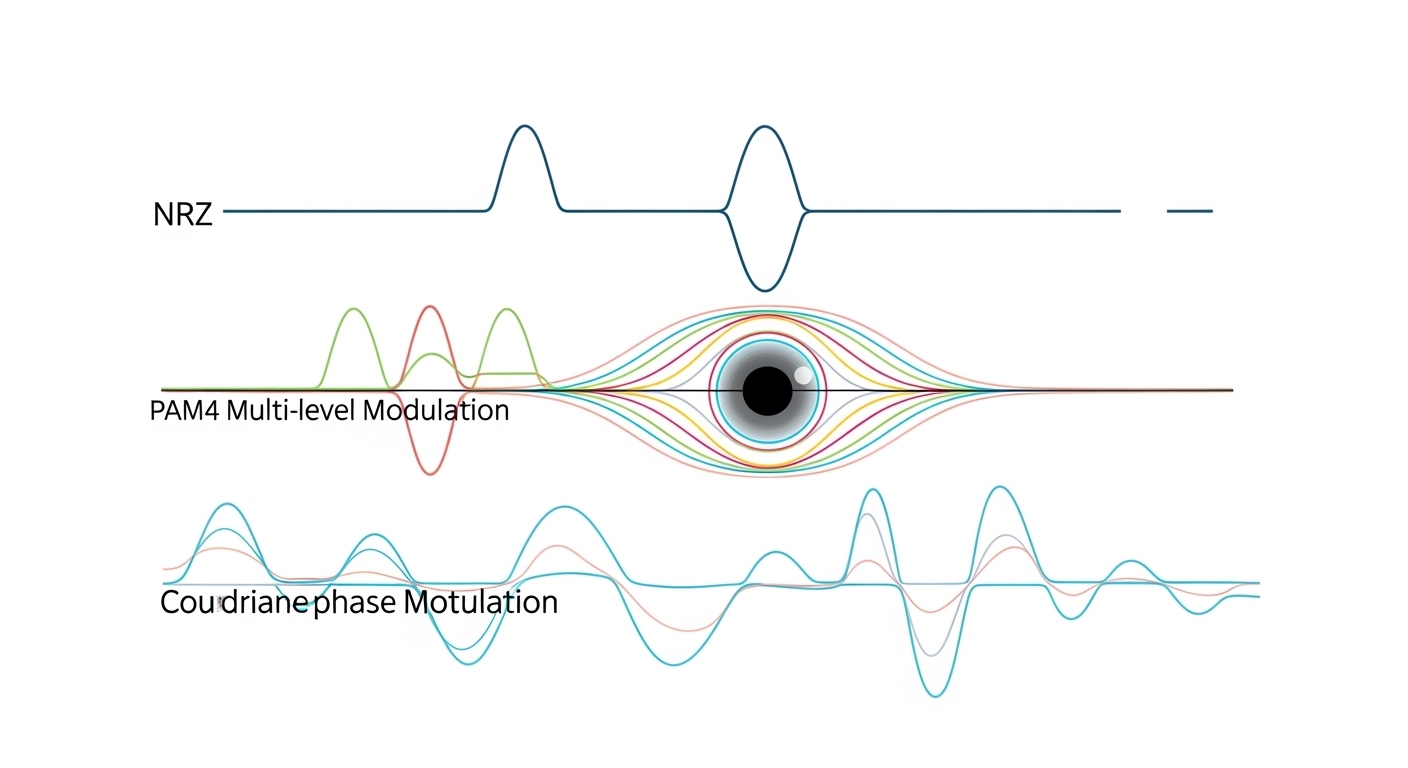
In the world of Ethernet optics, the IEEE 802.3 family defines physical layer behavior for specific line rates and reach classes, while optics vendors implement modulation formats and digital signal processing (DSP) to meet those specs. For example, 10GBASE-SR is typically aligned with intensity modulation and direct detection (IM/DD), using NRZ-like signaling in many generations, whereas higher rates and longer reaches increasingly use multi-level signaling and stronger DSP.
Key reality: the modulation format affects sensitivity, tolerance to chromatic dispersion, and how aggressively you need receiver equalization. That directly impacts which SFP/QSFP/CFP transceivers will interoperate cleanly with your switch or router.
Where modulation meets physics
For IM/DD systems, the receiver detects intensity variations, so the transmitter often uses an electrical-to-optical conversion that drives a laser or modulator. The optical signal then encounters fiber impairments: attenuation, chromatic dispersion, polarization mode dispersion (PMD), and nonlinear effects at higher powers. Even if you have a “perfect” optical budget on paper, poor modulation choice can make the link fail due to receiver overload or insufficient eye opening.
Performance head-to-head: NRZ, PAM4, and coherent tradeoffs
To compare fiber modulation techniques fairly, you need to look at how they map to link rate, reach, and required DSP. Below is a simplified, engineering-friendly view of what you typically see across common Ethernet optics generations.
| Modulation approach | Typical Ethernet usage | Data rate examples | Reach class (typical) | Receiver style | Connector / wavelength examples | Operating temperature |
|---|---|---|---|---|---|---|
| IM/DD with simpler multi-level (often NRZ-like) | 10G–25G short reach | 10G, 25G | ~70 m to 300 m over OM3/OM4 (depends on optics) | Direct detection | 850 nm, LC/PC | -5C to 70C (varies by vendor) |
| PAM4-style IM/DD (multi-level) | 50G–200G short reach (and some metro) | 100G, 200G | ~50 m to a few hundred m over MMF depending on OM grade | Direct detection with heavy DSP | 850 nm (MMF), LC/PC | -5C to 70C (common) |
| Coherent (advanced phase/amplitude modulation) | Long-haul and high-capacity metro | 100G, 200G, 400G+ | Many tens to thousands of km (depends on optics and fiber) | Coherent detection with DSP | 1550 nm band, LC | Vendor-dependent, often industrial and commercial options |
In the field, the “best” option is rarely the one with the most marketing adjectives. For short-reach data center links, PAM4-like approaches can deliver higher throughput per lane, but they demand cleaner optics, tighter jitter tolerance, and more forgiving equalization behavior from the switch. For long-haul, coherent modulation pays off because it can separate signal from noise and compensate impairments digitally.
Source guidance: IEEE 802.3 specifies electrical and optical link requirements for Ethernet PHYs, while vendor datasheets specify transmitter power, receiver sensitivity, and supported DOM behavior. Start with the IEEE clause relevant to your target Ethernet speed and reach, then verify with the transceiver datasheet.
References you can trust: IEEE 802.3 standards portal and [Source: IEEE 802.3]. For optics parameters, check the specific vendor datasheets for your exact module model.
Use-case matchup: data center MMF vs metro SMF
Let’s make this concrete. In a 3-tier data center leaf-spine topology with 48-port 10G ToR switches feeding 25G aggregation and 100G uplinks, you might run 850 nm MMF for most leaf-to-spine segments. Suppose your average leaf-to-spine distance is 90 m over OM4 with patch cords and a couple of connector mated pairs. In that environment, IM/DD with simpler modulation (often NRZ-like) tends to be forgiving during upgrades because it tolerates modest connector variation and aging.
Now switch to a metro scenario: you have a 12 km route over SMF with dispersion and a strict SLA for packet loss. Here, coherent modulation typically wins because it can compensate impairments using DSP, and it supports higher spectral efficiency. If you try to force a direct-detection approach across this distance, you often discover that “it links up” is not the same as “it stays stable under temperature swings and traffic bursts.”
Field observation from deployments
On hot-plug events, the link training and equalization behavior of PAM4-like optics can be sensitive to receiver settings in the host switch. I have seen cases where a third-party 100G SR module trained at first, but after a firmware update changed the host’s DSP parameters, the same optics began to show intermittent CRC errors. That is not a mystical curse; it is compatibility and calibration.
Compatibility and cost: what engineers actually check before buying
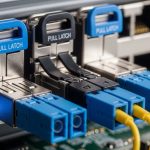
Even when two optics “both support 100G,” fiber modulation choices can still cause surprises due to DSP requirements, receiver bandwidth, and host firmware tuning. Compatibility is not only about the physical form factor (SFP, QSFP28, QSFP56, CFP2) but also about the electrical interface and how the host expects the modulation format to behave.
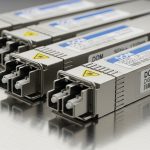
Let’s anchor this with real, commonly referenced module examples. For 10G SR, you might see Cisco SFP-10G-SR or Finisar FTLX8571D3BCL class optics, and third-party options like FS.com SFP-10GSR-85. These typically target 850 nm MMF using IM/DD, and they are designed around specific reach and power budgets. For PAM4-based higher-speed optics, the exact modulation and DSP equalization requirements vary widely, so you must confirm the module is rated for your host and link type.
Cost and ROI note (because CFOs also have eyes)
Typical street pricing varies by region and vendor, but as a rough ballpark: a 10G SR SFP module might cost in the range of $30–$120 depending on brand and DOM support, while higher-speed PAM4 optics (50G/100G/200G SR families) can be $200–$1,500+ per module. Coherent pluggables or transceivers can be significantly higher, especially when paired with the required optics and line-side hardware.
ROI comes from fewer truck rolls, lower failure rates, and faster upgrades. OEM optics often cost more but can reduce integration risk. Third-party optics can be cost-effective, yet the total cost of ownership may rise if you spend time on intermittent link issues, firmware compatibility checks, or replacements due to marginal performance under temperature extremes.
Decision matrix: pick based on your link reality
| Scenario | Recommended modulation direction | Why | Main risk |
|---|---|---|---|
| 10G–25G short reach over OM3/OM4 | IM/DD with simpler signaling | Good tolerance, mature ecosystem | Connector cleanliness and budget overrun |
| 50G–200G short reach where density matters | PAM4-like IM/DD with DSP | Higher throughput per lane | Host DSP compatibility and jitter tolerance |
| Metro or long-haul high capacity | Coherent modulation | Digital compensation of impairments | Higher cost and power, more complexity |

Selection criteria checklist: the order engineers should follow
- Distance and fiber type: confirm MMF OM grade or SMF span length, then map to the reach class your IEEE PHY requires.
- Link budget and optical power: use vendor Tx power and Rx sensitivity, then include worst-case losses from connectors, splices, and patch cords.
- Switch or router compatibility: verify supported transceiver list or interoperability guidance; pay attention to firmware dependencies for PAM4.
- DOM support and monitoring: ensure the host supports Digital Optical Monitoring and that your module provides calibrated thresholds.
- Operating temperature: check both module spec and the host cage thermal behavior; high density can quietly reduce margin.
- Vendor lock-in risk: evaluate long-term availability and replacement lead times; test one spare to avoid surprise downtime.
- Test plan before rollout: plan at least one end-to-end BER or error-rate validation window after deployment.
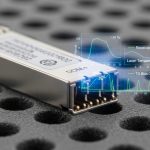
Pro Tip: If you are deploying PAM4-like fiber modulation optics, do not judge success by “link up.” Validate eye-margin indirectly via host counters (CRC/FEC events, link retrains, and error bursts) during temperature ramps and full traffic load. Many intermittent failures only show up after the host DSP converges under real stress.
Common mistakes and troubleshooting tips (with root causes)
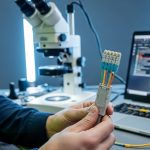
1) Dirty connectors masquerading as modulation issues. Root cause: contamination increases insertion loss and back-reflections, shrinking eye opening. Solution: clean and inspect with a microscope before swapping optics; re-terminate if you see scratches or residue.
2) “It fits” optics mismatch in host DSP settings. Root cause: modulation and DSP equalization requirements differ across vendors; host firmware may expect specific jitter tolerance characteristics. Solution: cross-check transceiver compatibility lists, update firmware in a controlled sequence, and test with known-good optics for baseline counters.
3) Budget math that forgot the boring stuff. Root cause: patch cords, extra connectors, and splices were counted optimistically, leaving no margin for aging and temperature. Solution: recalculate using worst-case loss from your cabling documentation and include safety margin recommended in optical link planning practices.
4) DOM thresholds set for someone else’s module. Root cause: monitoring thresholds do not match the transceiver’s calibrated behavior, leading to false alarms or missed degradation. Solution: confirm DOM support mode, validate threshold configuration, and compare telemetry trends between OEM and third-party modules.
Which option should you choose?
If you run primarily 10G and 25G short-reach links in a data center, choose IM/DD-style optics with simpler signaling because they are mature, cost-effective, and forgiving. If you are pushing dense 50G–200G short-reach uplinks and need capacity, select PAM4-like optics only after you confirm switch compatibility and plan a real validation window with error counters. For metro or long-haul where distance and impairment compensation dominate the problem, coherent modulation is usually the sane choice even if it costs more, because it buys you stability and reach.
Next step: map your current cabling and target PHY in a quick audit, then compare candidate modules using the selection checklist. If you want a related topic, see fiber transceiver for practical transceiver buying and validation workflows.
FAQ
Q: What exactly does fiber modulation change in an Ethernet link?
Fiber modulation changes how data is encoded onto light and how the receiver reconstructs it. That affects sensitivity, tolerance to distortion, and how much DSP equalization is required in the host or module. In practice, it determines whether your link stays stable under real traffic and temperature.
Q: Can I mix OEM and third-party optics safely?
Often you can, but mixing increases the chance of incompatibility, especially for higher-speed PAM4-like optics. Validate with your switch firmware version and check DOM behavior and error counters after deployment. Test one spare before scaling.
Q: How do I choose between short-reach and coherent solutions?
Use short-reach IM/DD when your reach is within MMF or short SMF budgets and you want lower cost and simplicity. Choose coherent when you need long reach, higher capacity, or impairment compensation that direct detection struggles to handle. Your distance, fiber type, and SLA drive the decision.
Q: What should I monitor to detect modulation-related problems early?
Monitor link retrains, CRC errors, FEC correction events (if applicable), and DOM telemetry trends such as laser bias current and received power. Look for error bursts during temperature ramps and during peak utilization rather than only at idle.
Q: Are there standard references I should cite in design docs?
Yes: cite the IEEE 802.3 clause for your PHY and reach, and the specific vendor datasheet for each optic model. For operational planning, include ANSI/TIA cabling practices as applicable to your structured cabling environment. This reduces “tribal knowledge” and makes audits less painful.
Q: How much margin should I keep beyond the stated reach?
Keep margin for worst-case connector losses, patch cord variability, and aging. A practical approach is to design so you are not near the minimum receiver sensitivity at end-of-life conditions, especially for multi-level modulation where eye opening can be fragile.