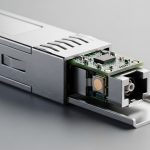
You are replacing copper xDSL loops with fiber, but the hardest part is rarely the splice count; it is the transceiver and optics strategy that must match your DSLAM, OLT/aggregation, and plant distances. This article helps ISP network engineers and field managers plan a DSLAM fiber upgrade by comparing transceiver options, reach budgets, and operational risks. You will get concrete selection criteria, troubleshooting steps from real installs, and a decision matrix to choose the right path quickly.
Transceiver strategy: xDSL handoff vs fiber aggregation paths
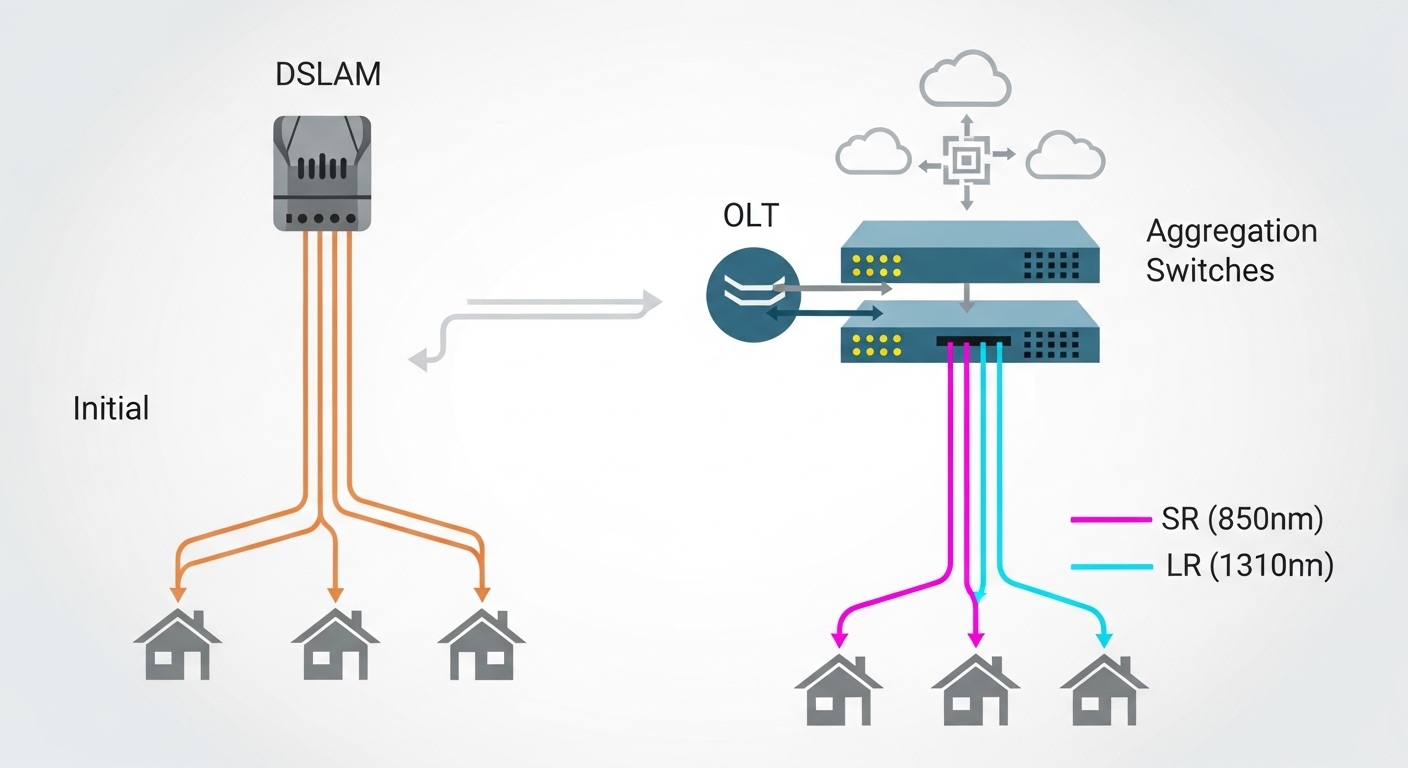
In an xDSL-to-fiber migration, your “old world” is copper loop termination at the DSLAM, and your “new world” is fiber termination at an OLT or an aggregation switch. The key architectural question is where the service maps after migration: direct aggregation into a metro core, or staged handoff at regional distribution. For optics, that means you must align the transceiver type, optical reach, and connector system (LC vs SC) to the actual fiber plant loss and patching scheme.
Practically, most ISPs deploy one of these patterns during a DSLAM fiber upgrade:
- FTTC/FTTB style: customer-facing fiber termination at curb/remote nodes, with aggregation uplinks to a regional switch.
- FTTH/GPON or XGS-PON: customer termination at an OLT, with uplinks to aggregation or IP edge.
- Point-to-point fiber: where you move a whole service segment off copper and connect it to Ethernet handoff ports.
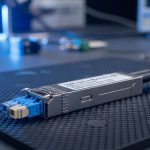
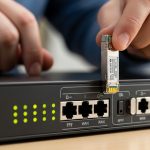
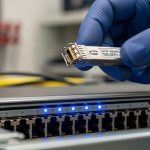
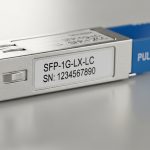
From a transceiver standpoint, the migration typically changes your port technology mix: copper SFP (or RJ45) disappears, replaced by fiber transceivers such as 1G/10G SFP, 10G SFP+ SR, 25G/40G optics for higher density, or PON-specific optics at the OLT. Your optics plan must also consider DOM (Digital Optical Monitoring) support, because DOM visibility is what keeps alarms actionable when you start seeing marginal link budgets.
Performance comparison: SR vs LR vs PON optics for upgrade reach
Engineers often start with “how far is the run,” but the correct approach is to compute a link budget that includes fiber attenuation, patch loss, splice loss, and aging margin. For a DSLAM fiber upgrade, you will commonly see multimode fiber in shorter building runs and single-mode for longer outside plant. The transceiver choice then follows the reach class: SR for short reach, LR/ER for longer single-mode, and PON optics for the access layer.
| Module / Use | Data Rate | Wavelength | Typical Reach | Fiber Type | Connector | DOM | Operating Temp |
|---|---|---|---|---|---|---|---|
| SFP-10G-SR (example) | 10GbE | 850nm | ~300m to 400m (varies by OM) | OM3/OM4 MMF | LC | Often supported | 0 to 70C (typical) |
| 10G SFP+ LR (example) | 10GbE | 1310nm | ~10km | OS2 SMF | LC | Often supported | -5 to 70C (typical) |
| GPON OLT optics (example) | 2.5G/1.25G | 1490/1310nm | 20km class (system-limited) | SMF | SC/APC or LC (vendor-specific) | Usually vendor-specific | -40 to 85C (typical) |
| XGS-PON optics (example) | 10G/2.5G | 1577/1270nm | 20km class (system-limited) | SMF | SC/APC or LC (vendor-specific) | Vendor-specific | -40 to 85C (typical) |
Compatibility hinges on vendor optics tables and transceiver EEPROM programming. For Ethernet uplinks from your DSLAM fiber upgrade staging switches, SR and LR choices matter most. For GPON/XGS-PON, the optics are constrained by the PON system requirements, including wavelength plan, split ratios, and receive power thresholds.
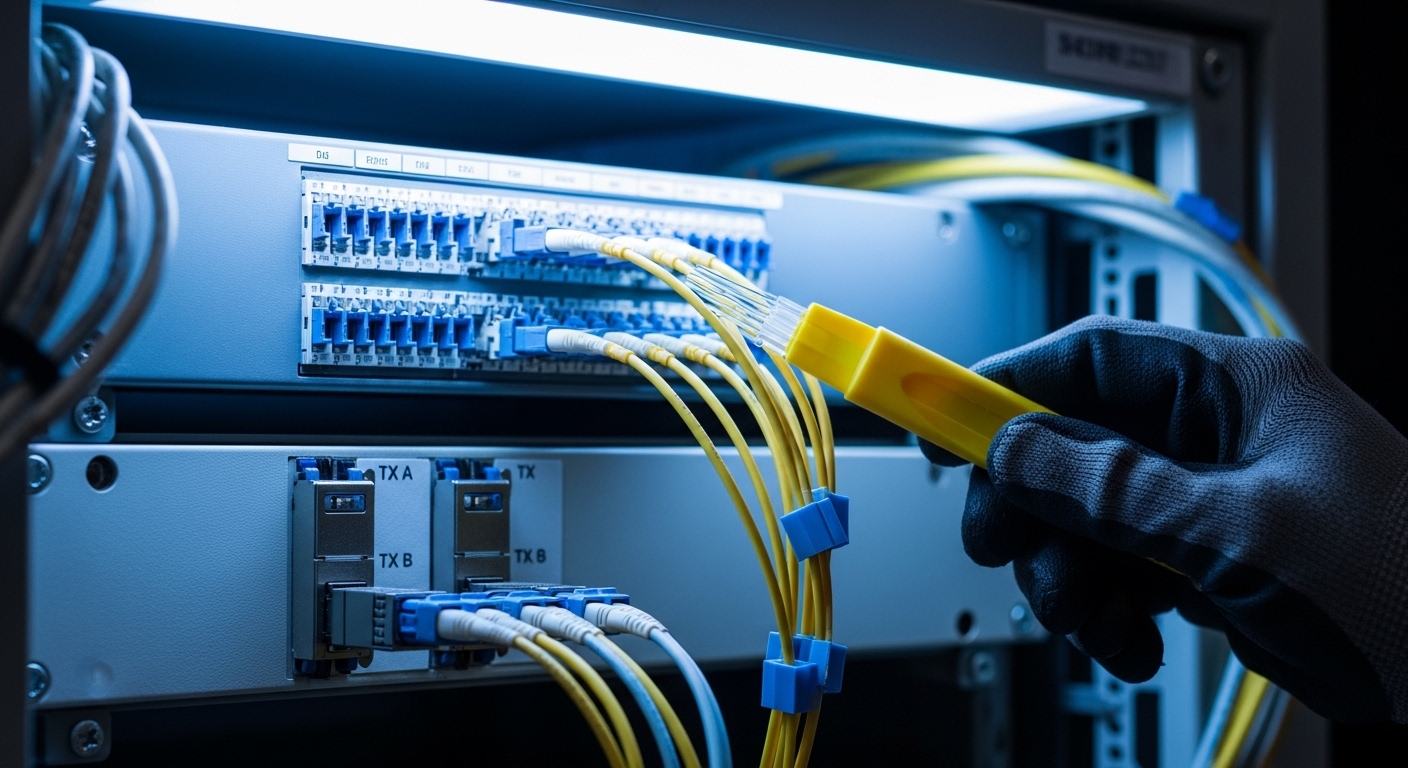
Pro Tip: During a DSLAM fiber upgrade, do not “eyeball” optics reach. Cleanliness and connector geometry (especially APC vs UPC) can swing your received power by several dB, which is enough to turn a link that should pass into one that flaps under temperature cycling.
Cost and ROI: OEM optics vs third-party during large rollouts
Cost is not just purchase price; it is field failure rate, warranty handling, and time-to-replace. OEM optics often cost more, but they tend to align tightly with platform compatibility checks and have predictable alarm behavior. Third-party optics can reduce capex, yet some platforms enforce strict transceiver vendor IDs or require specific firmware compatibility, which can stall installations.
In a typical ISP rollout, a 10G SFP+ LR module might land in the broad range of $200 to $600 for OEM-branded units, while third-party equivalents may be $80 to $250 depending on vendor and warranty. For PON optics, pricing is usually higher and more platform-locked due to system-level calibration. The ROI math should include:
- Spare inventory TCO: how many spares you must hold per site and how quickly you can source them.
- Power and cooling impact: optics power draw and switch PSU efficiency at scale.
- Truck roll cost: time spent swapping optics due to compatibility mismatches or poor DOM alarms.
Also remember that PON optics are part of a system budget, not just a link budget. If your split ratio and reach are already tight, a cheaper module with slightly different launch power or receiver sensitivity can push you out of spec.
Compatibility and standards: matching optics to switch and plant realities
When planning a DSLAM fiber upgrade, compatibility is where projects succeed or stall. Confirm three things before you pull fiber: (1) the transceiver electrical interface (SFP/SFP+/QSFP), (2) the optical connector and fiber type, and (3) the platform’s supported optics list. The IEEE Ethernet physical layer standards (e.g., 10GBASE-SR and 10GBASE-LR) define electrical and optical characteristics, but vendors still add operational constraints through firmware.
For Ethernet over fiber uplinks, you can reference IEEE 802.3 for baseline module behavior, and then validate your specific switch platform’s optics support. For PON, the optics follow the OLT vendor’s system design rather than “generic Ethernet optics.” For standards and baseline expectations, see: IEEE 802.3 10GBASE-SR/LR physical layer and ITU-T G.984 GPON series (system context) .
Field checklist for before you order
- Distance and link budget: fiber attenuation (dB/km), patch loss, splice loss, and margin for aging.
- Switch compatibility: confirm the exact transceiver part numbers in the vendor compatibility matrix.
- Connector and fiber type: LC vs SC; APC vs UPC for PON; OM3/OM4 vs OS2.
- DOM support: ensure the switch reads DOM fields and raises correct thresholds for RX power.
- Operating temperature: plan for -5 to 70C typical, and consider -40 to 85C for harsh outdoor enclosures.
- Vendor lock-in risk: decide whether to standardize on OEM optics for PON and allow third-party for Ethernet uplinks.
Common pitfalls / troubleshooting: what breaks first in a DSLAM fiber upgrade
In the field, optics issues are rarely “mystery failures.” They follow patterns you can predict. Below are the most common failure modes I see during a DSLAM fiber upgrade, with root causes and fixes.
-
Pitfall 1: Link flaps after reconnection
Root cause: contaminated connectors or damaged fiber endfaces after repeated patching.
Fix: clean with approved fiber cleaning tools, verify endface with inspection scope, and replace any connector with scratches or chips. -
Pitfall 2: “Installed but not recognized” transceiver alarms
Root cause: platform rejects optics based on EEPROM ID, DOM format, or vendor policy.
Fix: use optics from the switch vendor’s supported list; if using third-party, verify DOM compatibility and firmware release notes. -
Pitfall 3: Marginal RX power leads to high FEC/CRC errors
Root cause: link budget overrun due to extra patch cords, bad splices, or too little launch/receive margin for temperature swings.
Fix: re-measure with an optical power meter and OTDR; correct patching losses, replace worst splices, and adjust route to reduce total dB. -
Pitfall 4: Wrong connector polish for PON (APC vs UPC)
Root cause: reflectance mismatch causes degraded receiver performance and unstable ranging.
Fix: ensure the correct APC connectors on the PON-facing side and validate polarity/attenuator placement per OLT guidance.

Which option should you choose? (decision matrix for real upgrade profiles)
Use the matrix below to map your environment to a practical optics strategy. This is meant to reduce change risk during a DSLAM fiber upgrade while keeping capex under control.
| Reader profile | Typical scenario | Best optics approach | Why |
|---|---|---|---|
| ISP with mixed plant, many short inside runs | MMF in buildings, SMF outside | SR for MMF uplinks + LR for SMF uplinks | Optimizes reach and cost while staying within link budgets. |
| ISP deploying GPON/XGS-PON access | OLT-driven split ratios and ranging | Vendor-approved PON optics only | PON optics are system-calibrated; strict compatibility reduces ranging instability. |
| ISP scaling fast with budget pressure | Large number of Ethernet uplinks | Third-party allowed for Ethernet optics with DOM verified; OEM for PON | Controls capex while avoiding high-risk PON incompatibilities. |
| ISP with harsh environments | Outdoor cabinets, wide temperature swing | Extended-temp optics with verified DOM thresholds | Reduces early-life failures and supports predictable monitoring. |
Decision checklist before final purchase orders
- Have you validated the exact transceiver part numbers supported by your DSLAM/OLT/aggregation platform?
- Did you compute link budget using measured fiber loss, not “nameplate” assumptions?
- Did you confirm DOM thresholds and alarm interpretation in your monitoring system?
- Did you standardize connector polish types (APC/UPC) and labeling to prevent patching errors?
If you are migrating customers off copper and building a stable access and aggregation layer, prioritize optics that will survive real-world splicing, cleaning, and temperature cycling. Start with vendor-approved PON optics for the access layer, then use SR/LR Ethernet optics that match your measured plant and platform compatibility to complete the DSLAM fiber upgrade with minimal downtime.
FAQ
What optical reach do I need for a DSLAM fiber upgrade from neighborhood cabinets?
Compute it from measured fiber attenuation plus patch and splice losses. In many deployments, inside-building distances fit SR (850nm) on OM3/OM4, while outside plant commonly needs LR (1310nm) on OS2.
Can I use third-party transceivers during the migration?
You can for Ethernet uplinks if the switch platform supports them and DOM fields match what your monitoring expects. For GPON/XGS-PON optics, use vendor-approved modules because system calibration and ranging behavior are more sensitive.
How do I verify optics are working before cutover?
Measure optical power at both ends, check DOM readings, and run link tests with traffic while monitoring CRC/FEC counters. Also inspect connector endfaces; many “mystery” errors are actually contamination.
What is DOM and why does it matter for DSLAM fiber upgrade operations?
DOM provides real-time telemetry such as laser bias, received power, and temperature. In operations, DOM lets you set thresholds and detect degradation early, which reduces outage time during large migrations.
What causes high error rates right after a new fiber install?
The most common causes are dirty connectors, damaged fiber ends, and underestimated patch/splice loss. Use an optical power meter and OTDR to isolate which segment is outside the budget.
Do IEEE standards guarantee interoperability with all vendors?
IEEE defines baseline physical layer behavior, but vendor platforms can enforce stricter optics compatibility rules through EEPROM IDs and firmware. Always validate against your specific platform’s optics compatibility list.
Updated: 2026-05-01. If you want the safest path, start with the platform compatibility matrix and build a measured link budget, then standardize optics types across your migration waves using the decision matrix above. For the next step, review fiber plant link budget and testing to tighten your cutover plan and reduce rework.
Author bio: I have spent 15+ years designing and troubleshooting ISP access and aggregation networks, including GPON and Ethernet uplinks. I focus on practical fiber testing, optics compatibility, and routing/switching workflows that keep migrations predictable under field conditions.