Replacing transceivers is easy; guessing which one will fail next week is not. This article shows how a digital twin SFP approach turns optical module telemetry and optical physics into actionable predictions for fiber links. It helps network engineers, field technicians, and operations teams design maintenance plans that reduce downtime and mystery outages.
Why a digital twin SFP beats “swap and pray” in fiber networks
In real deployments, failures rarely announce themselves with a neat error message. Instead, you see gradual optical degradation: rising transmit power variance, receiver sensitivity drift, increased bit error rate under stress, or temperature-induced behavior changes. A digital twin SFP models the module and link behavior so you can forecast when performance will cross a threshold, not just react after it crosses the alarm.
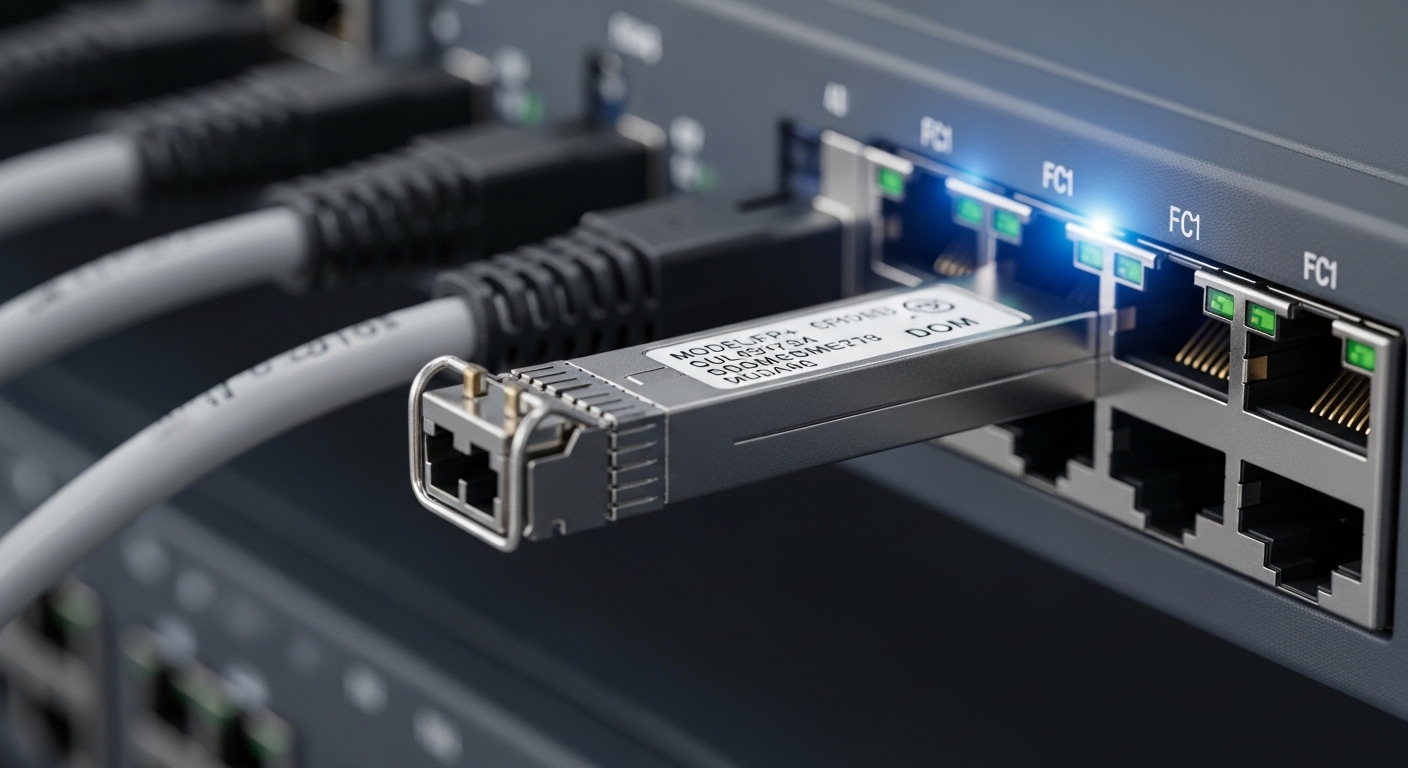
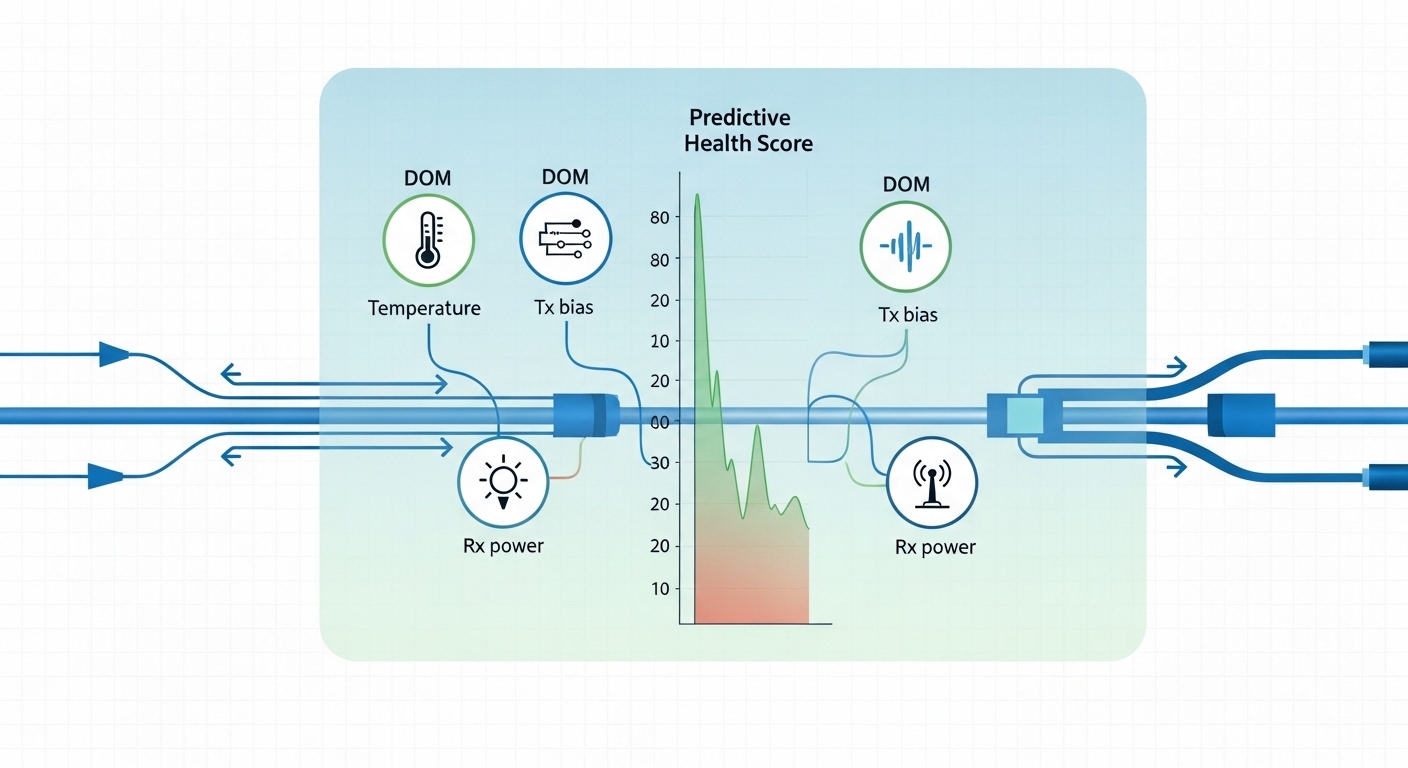
Practically, the twin fuses three streams: (1) SFP/SFP+ digital diagnostics (DOM) readings such as Tx bias current, Tx power, Rx power, module temperature, and sometimes laser age; (2) link-layer indicators such as interface error counters and optical alarms; and (3) physics-based constraints like fiber attenuation, connector losses, and optical budget. IEEE 802.3 defines Ethernet PHY behavior, while vendor datasheets define transceiver electrical and optical operating ranges.
For authority, see IEEE 802.3 for relevant Ethernet PHY concepts and optics expectations, and consult vendor DOM documentation for the exact diagnostic register meanings. Example references: IEEE 802.3 and Finisar technical resources.
Pro Tip: Many teams model only Tx power drop, but field failures often show up earlier as Tx bias current creep combined with stable Tx power. That means the laser efficiency is degrading while output is temporarily “held” by control loops. Tracking bias-to-power ratio in your digital twin can buy weeks of lead time before alarms trigger.
Telemetry inputs and model mechanics: what your digital twin SFP must measure
A workable twin starts with the data you can actually pull. Most SFP/SFP+ modules expose DOM via I2C, and network gear reads it through platform-specific drivers. Typical DOM parameters include module temperature, Tx bias current, Tx optical power, Rx optical power, and sometimes laser wavelength and vendor-specific fields. The exact availability depends on module type and vendor implementation.
Model mechanics then translate telemetry into predicted link health. A common pattern is to define a health score that blends normalized drift rates and margin to thresholds. For example, if your twin expects Rx power to remain above a minimum sensitivity threshold with a defined optical budget, it can forecast the time until a “margin breach” given temperature trends and bias drift.
To make this concrete, below is a comparison of typical 10G SFP optical module categories you might twin in a predictive maintenance program. It is not exhaustive, but it helps you set realistic boundaries for reach, optics, and operating conditions.
| Module type | Wavelength | Typical reach (MMF/SMF) | Data rate | Connector | DOM diagnostics | Operating temperature | Example part numbers |
|---|---|---|---|---|---|---|---|
| 10G SR (MMF) | 850 nm | Up to ~300 m (OM3) / ~400-500 m (OM4, depending on link) | 10.3125 Gb/s | LC | Tx bias, Tx power, Rx power, temp | ~0 to 70 C (typical) | Cisco SFP-10G-SR, FS.com SFP-10GSR-85 |
| 10G LR (SMF) | 1310 nm | Up to ~10 km | 10.3125 Gb/s | LC | Tx bias, Tx power, Rx power, temp | ~0 to 70 C (typical) | Finisar FTLX8571D3BCL, Cisco SFP-10G-LR |
| 10G ER (SMF) | 1550 nm | Up to ~40 km | 10.3125 Gb/s | LC | Tx bias, Tx power, Rx power, temp | ~0 to 70 C (typical) | Finisar FTLX1471D3BCL (varies by vendor) |
Note the twin must respect these boundaries. If your model assumes “infinite headroom,” you will predict miracles and then get humbled by reality when temperature excursions, aging, and fiber cleanliness do their thing.
Deployment blueprint: building a predictive maintenance loop around digital twin SFP
Let’s walk through a realistic environment. In a 3-tier data center leaf-spine topology with 48-port 10G ToR switches, you might run 40 active 10G SR links per leaf for server connectivity and 8 uplinks to the spine. Assume each leaf uses 10G SR transceivers over OM4 multimode fiber with LC connectors, and the facility runs a typical hot-aisle pattern.
You deploy a telemetry collector that polls DOM values every 60 seconds from the switch management plane. You also collect interface error counters (CRC errors, link resets) from SNMP or native telemetry at the same cadence. Your twin then estimates optical margin by combining measured Rx power with a stored baseline optical budget (including measured insertion loss and known patch panel losses). After a two-week training window, the twin begins forecasting the “crossing time” when Rx power approaches the practical sensitivity limit under expected temperature patterns.
Operationally, the loop works like this: when the twin predicts a margin breach within, say, 14 to 30 days (configurable by risk tolerance), it triggers a maintenance ticket. A field engineer verifies fiber cleanliness and connector condition, checks for recent patch changes, and schedules a planned swap rather than an emergency replacement. This can reduce mean time to repair (MTTR) because the team is not scrambling to find a compatible part at 2 a.m.
Model calibration steps you can actually run
- Baseline per module: Capture initial DOM ranges for temperature, Tx bias, and Tx power after warm-up. Store at least 1,000 samples per module over several days to capture normal drift.
- Define thresholds: Use vendor specs for absolute limits and your own empirical alarms for “degrading trend.” Example: alert when bias current drift rate exceeds a learned threshold for three consecutive windows.
- Link-aware budget: Calibrate optical budget per link using measured Rx power at install time. Include connector inspection results and patch panel characteristics.
- Forecast method: A simple and effective approach is trend extrapolation on bias-to-power ratio plus temperature normalization, validated against past replacements.
- Feedback loop: After a swap, compare predicted vs actual failure timeline and adjust model parameters.
Selection criteria checklist: choosing SFP modules that support a useful digital twin
Not every optics choice will behave nicely under a digital twin. Selection is part technical, part operational, and part “will this vendor’s DOM lie to me.” Use this ordered checklist during procurement and architecture planning.
- Distance and fiber type: Pick SR for short MMF and LR/ER for longer SMF. Verify the link meets reach with margin after connector losses and patch cord length.
- Switch compatibility: Confirm the host switch supports the module type and DOM reading. Some platforms accept third-party optics but with reduced telemetry or alarm behavior.
- DOM support and granularity: Ensure you can read Tx bias current, Tx power, Rx power, and temperature. If DOM values are missing or poorly scaled, your twin becomes a guessing machine.
- Operating temperature range: If you run near the upper limit (hot aisles, direct airflow blocks), choose modules with appropriate temperature grade and verify airflow design.
- DOM accuracy and calibration stability: Vendors differ in how DOM values map to true optical power. Calibrate with an optical power meter during installation when possible.
- Vendor lock-in risk: Evaluate whether OEM-only optics are required for full DOM and alarm support. Third-party modules can reduce cost, but may complicate diagnostics.
- Reliability history: Prefer modules with documented field reliability, consistent manufacturing, and clear datasheets for aging behavior and absolute maximums.
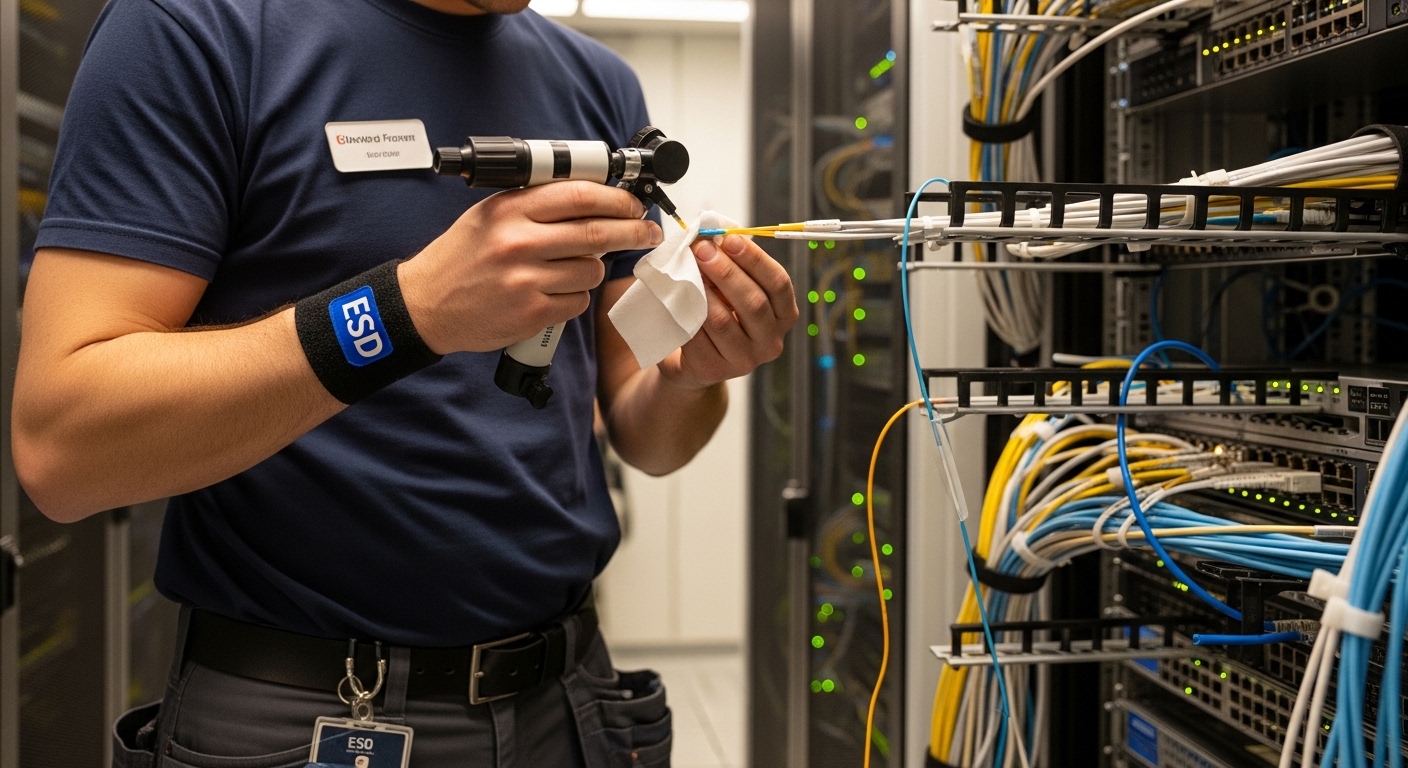
- Connector and optics cleanliness strategy: A twin can predict laser aging, but it cannot predict a dirty connector unless your Rx power trend reflects it. Pair optics with a fiber cleaning SOP.
For examples of real modules, engineers often compare Cisco and Finisar families for 10G LR/SR. Specific part numbers include Cisco SFP-10G-SR and Finisar FTLX8571D3BCL for 10G LR; third-party options like FS.com SFP-10GSR-85 can be cost-effective but should be validated in your exact switch model.
Common pitfalls and troubleshooting tips (because reality loves plot twists)
Here are failure modes teams actually hit when deploying a digital twin SFP program, with root causes and fixes.
Pitfall 1: Twin predicts laser aging, but the culprit is a bad connector
Root cause: Rx power drops due to connector contamination or micro-misalignment, not laser degradation. The twin misattributes the event to bias drift.
Solution: On any “margin breach” alert, schedule a fiber inspection and cleaning. Then re-baseline the link Rx power and compare whether Tx bias drift continues after cleaning.
Pitfall 2: DOM telemetry is available, but it is not comparable across vendors
Root cause: DOM scaling and calibration methods differ. Your model trained on OEM optics may misinterpret third-party DOM deltas as aging.
Solution: Train per module family or vendor, and normalize features. If your platform reports DOM in standardized units inconsistently, create a per-vendor calibration curve using optical power meter readings.
Pitfall 3: Temperature chaos breaks your forecast
Root cause: Hot-aisle airflow changes, blocked vents, or seasonal HVAC adjustments alter module temperature. The twin forecasts failure based on temperature-driven bias changes that would have stabilized.
Solution: Include environment telemetry: rack inlet temperature, switch exhaust temperature, and fan speed profiles. In the twin, normalize optical parameters to temperature and retrain after significant HVAC changes.
Pitfall 4: Thresholds are set too aggressively, causing noisy tickets
Root cause: You alert on absolute Rx power rather than margin-to-threshold under expected operating conditions. Normal aging and transient link events generate false positives.
Solution: Use trend-based alerts (drift rate, bias-to-power ratio) and require persistence across multiple polling windows. Add a second signal like rising CRC errors to confirm impact.
Cost and ROI note: what predictive maintenance costs and what it saves
Budget reality check: a digital twin SFP program costs more than “buy optics.” You need telemetry collection, storage, analytics, and process time. Software tooling can be lightweight if you start with existing telemetry pipelines and a rules engine, but a full predictive model might require a data platform and engineering time.
On optics cost, OEM 10G transceivers often land around $60 to $150 per module depending on vendor and temperature grade, while third-party options might be $25 to $80 for validated equivalents. Total cost of ownership (TCO) includes labor for replacements, emergency shipping, and downtime risk. Predictive maintenance aims to shift from reactive swaps to planned swaps, reducing downtime events and minimizing “wrong part” delays.
ROI typically improves when you have: high transceiver counts, limited spare inventory, strict uptime requirements, and enough historical telemetry to learn drift patterns. If you only have a handful of links or rarely replace optics, the model overhead may not pay back quickly.
FAQ: digital twin SFP questions engineers ask before they bet the network
How do I get DOM data for a digital twin SFP in practice?
Most switches read SFP/SFP+ DOM via I2C through the platform’s management interface. You can pull telemetry using SNMP OIDs or vendor-native telemetry (streaming gNMI/telemetry depending on platform). Validate that you can read Tx bias, Tx power, Rx power, and temperature for your exact transceiver family.
Will a digital twin SFP work with third-party optics?
Often yes, but not always. Third-party modules may have different DOM scaling, fewer diagnostics, or different alarm thresholds that affect your twin’s assumptions. The safe approach is to run a calibration phase in a lab or staged production area and train separate models per module family.
What thresholds should I alert on without generating ticket spam?
Use drift-based and ratio-based signals first, like bias-to-power ratio and persistent changes in Rx power margin over multiple polling windows. Combine optics signals with error counters such as CRC errors to confirm impact. Start with conservative thresholds and tune after you see how many alerts match actual failures.
Does the digital twin predict connector contamination events too?
It can, indirectly. If contamination causes Rx power to drop, the twin will forecast a margin breach, but it may attribute the cause incorrectly unless you pair it with operational checks. Add an automated workflow: inspect and clean connectors when the twin predicts failure and then verify whether Tx bias drift continues.
How often should I poll DOM for a useful twin?
A common starting point is 30 to 60 seconds. Faster polling can increase overhead and noise, while slower polling can miss short-term drift signatures. The right cadence depends on your cooling stability and how quickly modules degrade in your environment.
Which standards should I reference when designing the model?
For Ethernet behavior and PHY expectations, reference IEEE 802.3. For optics and absolute operating limits, rely on vendor datasheets and DOM documentation for your module types. If you standardize polling and alarm logic across teams, document it internally with measured values and calibration notes.
Digital twin SFP deployments succeed when they respect optical physics, validate DOM behavior, and connect predictions to disciplined field workflows. Next step: map your current optics inventory to a model plan using optical transceiver predictive maintenance.
Author bio: I have deployed DOM-based telemetry pipelines and predictive replacement workflows in real data centers, including calibration with optical power meters and staged rollouts. I also audit failure postmortems to ensure the digital twin learns from reality, not wishful thinking.